State lawmakers in Ohio have managed to pull Canada into America’s heated culture wars, urging the U.S. government to put this country on a religious-freedom watchlist — largely because of pandemic-related restrictions.
State lawmakers in Ohio have managed to pull Canada into America’s heated culture wars, urging the U.S. government to put this country on a religious-freedom watchlist — largely because of pandemic-related restrictions.
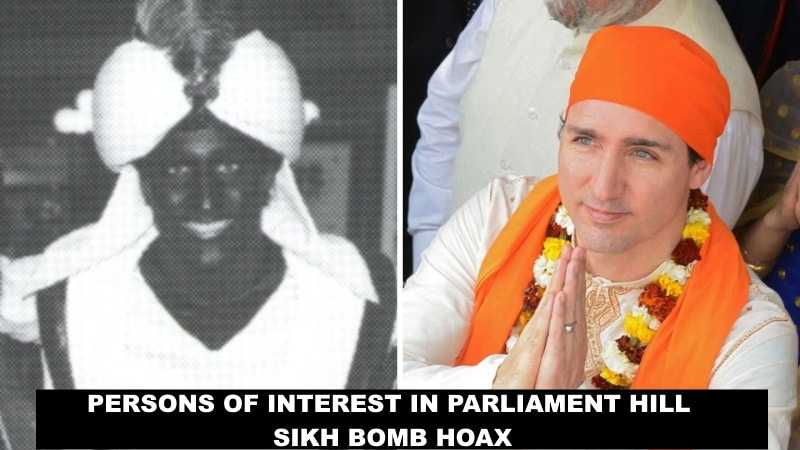
The bogus Parliament Hill bomb threat targeted organizers of a Sikh rally planned for Saturday, with four law enforcement sources telling Global News the tip was related to “Sikh extremism.”
Manveer Singh and Parminder Singh, two organizers of an event to commemorate the 1984 massacre of Sikhs in India, were the two suspects detained after police received what they believed to be “credible” information of explosives in vehicles near the parliamentary precinct.
TORONTO – Nearly one in four homeowners say they will have to sell their home if interest rates go up further, according to a new debt survey from Manulife Bank of Canada.
The survey, conducted between April 14 and April 20, also found that 18 per cent of homeowners polled are already at a stage where they can’t afford their homes.
Over one in five Canadians expect rising interest rates to have a “significant negative impact” on their overall mortgage, debt and financial situation, the survey found.

Two-thirds of Canadians on the right of the political spectrum say that most stories in the news cover their beliefs unfairly, while less than one-quarter of Canadians on the left of that spectrum say the same, a recent survey found.
The survey also found that two-thirds of Canadians on the right say they don’t trust most of the stories in the news, while only one-fifth of Canadians on the left say the same.

An investigation into a “potential threat” that led to the lockdown of Parliament Hill for a time was in its second day Sunday, after police in Ottawa determined there was no danger to public safety.
Police initially deemed that the threat Saturday afternoon was credible. Members of Parliament, senators and their staff were told to “shelter in place” as officers closed off streets while they investigated a “suspicious incident” and a “potential threat in the Parliament Hill area.”
Since then, multiple sources briefed on the situation have told CBC News that police are now investigating whether the source of the threat was a hoax. They’re also trying to determine if the tip that led to the massive police response was just a bad tip, according to the sources, who spoke on the condition they not be named because they’re not authorized to go on the record.
I watched the breathless headlines on the weekend and my gut kept telling me hoax or dry run.
Related… The gig is up! Feds need a new look for covert operations of a suspicious nature
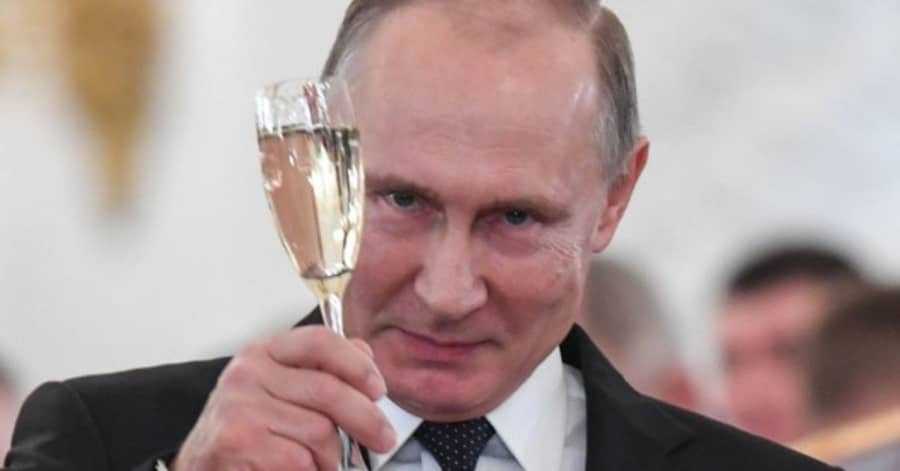
The Canadian government, which has repeatedly emphasized the need to politically and diplomatically isolate Moscow over its military assault on Ukraine, nevertheless sent a senior representative to take part in the Russian embassy’s Russia Day party on Friday in Ottawa.
The reception took place at the embassy on Charlotte Street – recently rebranded Free Ukraine Street by the City of Ottawa – even as protesters outside the gates decried Russian President Vladimir Putin’s invasion of his country’s smaller neighbour.
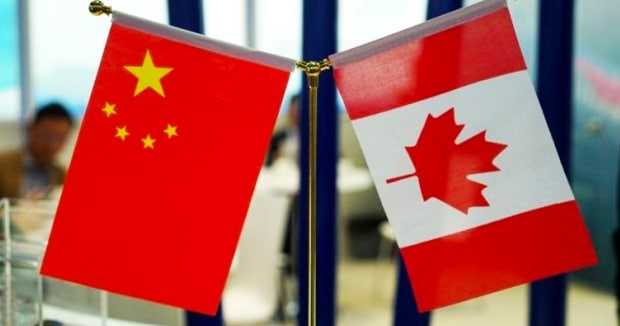
When Margaret McCuaig-Johnston first began speaking out against the Chinese communist regime’s human rights abuses, the former senior government official had been “a friend of China for 40 years” and had “helped them develop their innovation capacity.” Today, she says “Canadians should speak truth to power every time they meet with Chinese officials.”
Not sure the ChiComs are gonna care one way or the other.
When Ontario Liberal Leader Steven Del Duca said he would resign in the wake of last week’s provincial election, he became the latest addition to a big group of Canadian party leaders to get only one kick at the electoral can.
I think the better question is how do these duds get elected leader to begin with?
Guns are for hunting and target practice, but never for self defense, Canadian Prime Minister Justin Trudeau said this week, continuing his crusade against firearms.
Trudeau, who is pushing a sweeping measure aimed at freezing the sale, purchase, or transfer of handguns in Canada, told the Pod Save America podcast his country takes a completely different view of firearms than its southern neighbor. No one in Canada has a right to defend themselves, their family or their property with a firearm, Trudeau declared.
Trudeau is why you buy guns.
The decision to prosecute a recent attack on a Mississauga mosque as a terrorism offence is an unusual step that may be difficult to prove in court, terrorism experts say.
Proving that 24-year-old Mohammad Moiz Omar committed a terror offence when he allegedly attacked worshippers at the Dar Al-Tawheed Islamic Centre earlier this year will require prosecutors to argue a complex and “rarely used” clause in the Criminal Code. That clause, which has been in place since 2001, “essentially requires proof of a political or religious motive and attempts to intimidate a population,” said Kent Roach, a University of Toronto law professor and policing expert.
Still no info on what exactly has given police cause to make the terrorism case.

A group representing Canadian ranchers says their industry has been unfairly singled out by proposed new regulations that would require packaged ground beef to be sold with a health warning label.
Health Canada is proposing to introduce mandatory front-of-package nutrition labelling for foods high in sodium, sugar and saturated fat.
OTTAWA – Canada’s chief public health officer said Friday there were 112 cases of monkeypox across Canada and all of those infected were male.
There were 98 cases in Quebec, nine in Ontario, four in Alberta and one in British Columbia, with other suspected cases being investigated, Dr. Theresa Tam told a briefing.
Tam said the National Advisory Committee on Immunization recommends that people who may be at high risk of exposure get vaccinated.
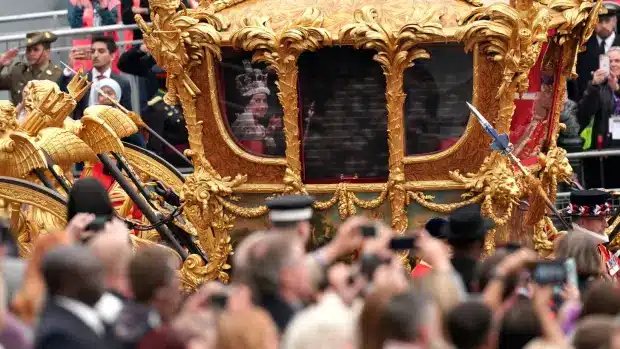
On June 5th 2022, Canada’s 96-year-old Head of State, Queen Elizabeth II (her full title, per the Royal Style and Titles Act (R.S.C., 1985, c. R-12): “Elizabeth the Second, by the Grace of God of the United Kingdom, Canada and Her other Realms and Territories Queen, Head of the Commonwealth, Defender of the Faith”) appeared at her Platinum Jubilee pageant riding in the Gold State Coach, “an opulent 260-year-old gilded horse-drawn carriage” built in 17621. Surrounding the coach were the four postilions, nine walking grooms, six footmen, and four Yeoman of the Guard carrying their long partisans. Eight of the grooms walked beside the horses. The more ornately dressed footmen walked beside the body of the coach2. Emanating out from this inner sanctum was a throng of endless ceremonial figures, police officers, journalists and adoring spectators taking photos and videos.
There was only one problem: the gilded carriage was empty. Or rather, the situation was even stranger. It contained only a hologram. An image of Her Royal Majesty captured at her 1953 Coronation (70 years ago) waved mechanically at the dutifully assembled crowd, standing in for the increasingly absent hereditary monarch of 15 countries and territories worldwide, including Canada, the most populous nation ruled by the British Monarchy outside the United Kingdom.
When the Trudeau government invoked the Emergencies Act to quash the peaceful Freedom Convoy, they made a number of wild claims to rationalize its use of the never-before-used act. Since then, Trudeau’s narrative about why the government needed these unprecedented powers has crumbled – the convoy was not funded by foreign donors or terrorists, the protesters had nothing to do with the arson attempt in Ottawa and to this date – not a single police force has confirmed the government’s claim that the police requested the government to invoke the act.
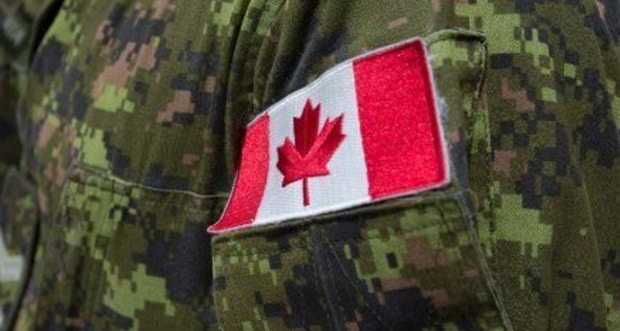
Canada has fallen so short of its NATO commitment to devote 2 per cent of annual economic output to military spending that it would cost $75-billion over the next half-decade to catch up, a new report by a parliamentary budget watchdog says.
The North Atlantic Treaty Organization is a military alliance dedicated to the collective defence of its 30 members, including Canada. In 2006, NATO defence ministers agreed to commit a minimum of 2 per cent of their gross domestic product to defence spending to ensure the alliance’s readiness. In 2014, they renewed that commitment.
Parliamentary Budget Officer Yves Giroux says there’s no chance Canada will meet its NATO goal over the next five years with the government’s current level of military spending.
