
All the Boston Marathon jihad murderer Dzhokhar Tsarnaev did was murder three people; why is everyone being so mean to him? Young Tsarnaev is suffering, and he wants you to feel his pain: CBS Boston reported Wednesday that he has filed a hand-written lawsuit claiming that he has been mistreated in prison. This complaint shows that the killer, besides being a confirmed jihadi with the deaths of several infidels on his record, has also mastered what has proved to be in many cases the most lucrative game of all: the game of victimhood.
USA

Huawei and 5 other Communist Slave State firms designated as threats to US national security
A United States government regulator overseeing the communications industry labelled five Chinese telecommunications companies a “threat to national security” on Friday, including Huawei Technologies and ZTE Corp.
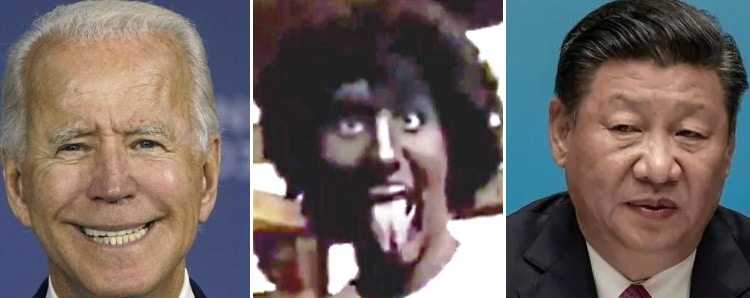
Announcing the designation, the Federal Communications Commission (FCC) said that telecommunications products and services provided by the companies posed “an unacceptable risk to US national security or the security and safety of US persons.”
Included alongside Huawei and ZTE in the list were Hytera Communications Corp, Hangzhou Hikvision Digital Technology, and Dahua Technology Co.
Good news, not for the hostages, not for Trudeau but then who cares about Trudeau.
‘Get right before you get left, boomer’: Marines backtrack after jumping into Fox host Tucker Carlson’s row with Pentagon
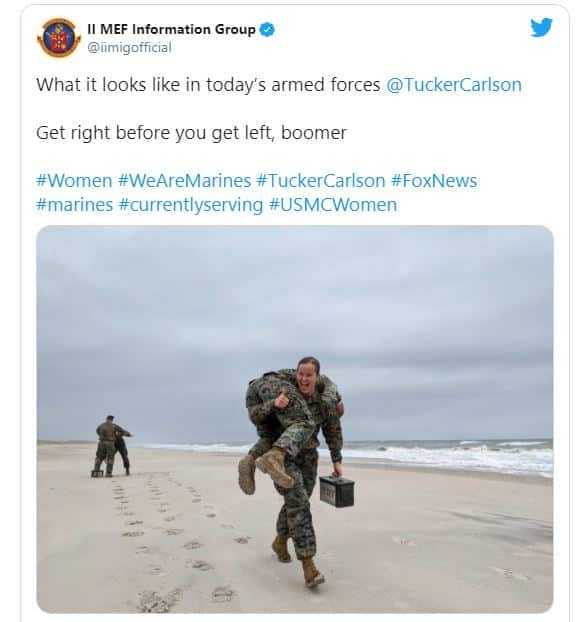
The US Marine Corps is adjusting its aim after facing public backlash over suggesting that men critical of the Pentagon’s mission creep towards wokeness should serve, get pregnant, and only then speak on the issue.
“What it looks like in today’s armed forces [Tucker Carlson], Get right before you get left, boomer,” the Marines tweeted on Friday, accompanying the tweet with an image of a smiling female officer carrying a fellow officer.
The destruction of society’s institutions on the parade ground.
Mexico: smugglers use bracelets to track migrants as they cross US border
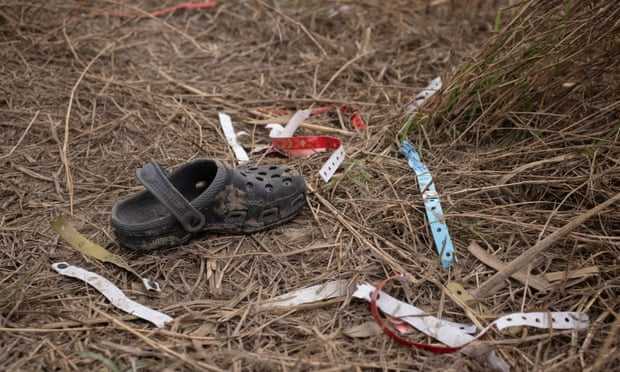
Along the banks of the Rio Grande in the scrubby grassland near Penitas, south-east Texas, hundreds of colored plastic wristbands ripped off by migrants litter the ground, signs of what US border officials say is a growing trend among powerful drug cartels and smugglers to track people paying to cross unlawfully into the United States.
The plastic bands – red, blue, green, white – some labeled “arrivals” or “entries” in Spanish, are discarded after migrants cross the river on makeshift rafts, according to a Reuters witness. Their use has not been widely reported before.
Betcha Joe gets 10%.
‘Largest investigation in American history’: 100+ people to be charged in storming of US Capitol, court filings say
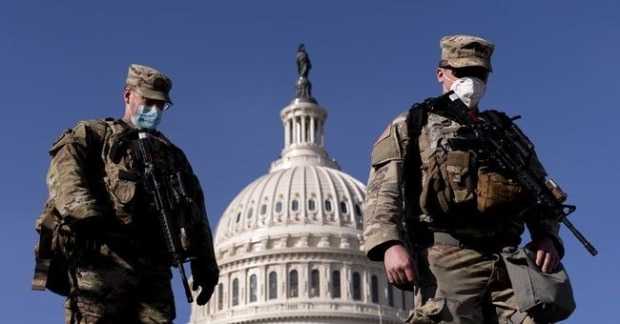
At least another hundred people connected to the January 6 storming of the US Capitol are expected to be charged with a variety of crimes, according to prosecutors.
“The investigation continues and the government expects that at least one hundred additional individuals will be charged,” claimed the prosecutors in court filings first reported by Fox News on Friday, noting that 300 people have already been charged and that the Justice Department is also “investigating conspiratorial activity” that may have taken place before the riot.
‘We’re going to lose fast’: U.S. Air Force held a war game that started with a Chinese biological attack

Last fall, the U.S. Air Force simulated a conflict set more than a decade in the future that began with a Chinese biological-weapon attack that swept through U.S. bases and warships in the Indo-Pacific region. Then a major Chinese military exercise was used as cover for the deployment of a massive invasion force. The simulation culminated with Chinese missile strikes raining down on U.S. bases and warships in the region, and a lightning air and amphibious assault on the island of Taiwan.
Clyburn Background Check Bill Would Allow FBI To Indefinitely Delay Firearm Transactions
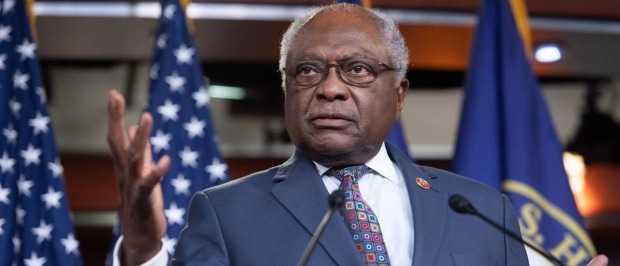
Should the government be able to deny your right to obtain a firearm, simply by failing to complete a mandatory background check? Anti-gun Rep. James Clyburn (D-S.C.) apparently thinks so.
On March 1st, Clyburn introduced H.R. 1446, the so-called “Enhanced Background Checks Act.” Under the bill, the FBI could indefinitely block federally licensed dealers (FFLs) from transferring firearms, simply by failing to provide decisions on the background checks FFLs are required to run on their customers.
REPORT: Entire Staff Of Nevada Democratic Party Quits After Socialists Win Key Leadership Positions
After Nevada Democratic Party Chair Judith Whitmer won her seat Saturday, party executive Alana Mounce sent her an email announcing the entire staff was quitting, The Intercept reported. Those who quit en masse included every employee and their consultants, each of whom took severance checks with them, according to the Intercept.
Do We Even Have A Republic Anymore?
The idea of a republic is that the people, through their representatives, get to make the laws that govern the country, but it appears that’s no longer a thing. What if you made a law, and no one enforced it? Is there even any point to the exercise? And if we can make all the laws we want and not have them enforced except in the limited manner that the people hired to enforce them choose, are we even a free country?
‘Active threat’: Chinese hackers target 30,000 US entities

At least 30,000 US organisations including local governments have been hacked in recent days by an “unusually aggressive” Chinese cyber-espionage campaign, according to a computer security specialist.
The campaign has exploited recently discovered flaws in Microsoft Exchange software, stealing email and infecting computer servers with tools that let attackers take control remotely, Brian Krebs said in a post at his cybersecurity news website.
Migrants Wearing Biden T-Shirts Demand Entry in U.S.
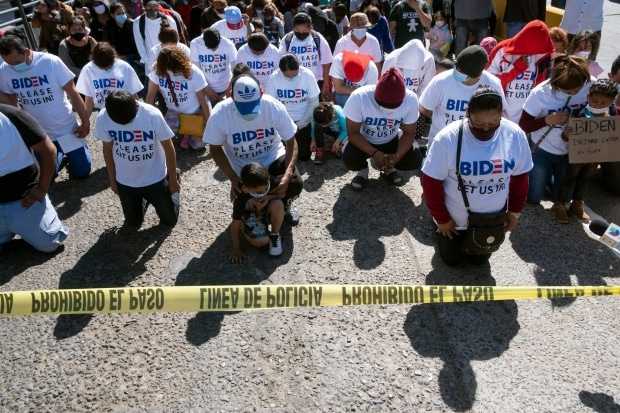
Wearing t-shirts with Biden’s 2020 presidential campaign logo and the words “Please let us in!” the group of foreign nationals held signs that read “Biden — please let me enter.” In interviews with AFP, some of the foreign nationals said Biden ought to allow them to enter the U.S. while they await their asylum claims as the Department of Homeland Security (DHS) has done with others.
108 Illegal Immigrants Released by Border Patrol in Texas Tested Positive for COVID-19: Officials
More than 100 illegal immigrants released into Texas by the U.S. Customs and Border Protection have tested positive for the CCP virus, or the virus that causes COVID-19, since late January, officials said.
Felipe Romero, a spokesperson for Brownsville, Texas, told Fox News that 108 migrants tested positive for the CCP virus since Jan. 25—when rapid testing for the virus began. That represents about 6.3 percent of the total undocumented migrants who were rapid-tested in Brownsville’s bus station, the official said.
The return of American anti-anti-Islamism
Biden’s recalibration of Saudi Arabian ties betokens disaster for the US and the west
America’s former Secretary of State, Mike Pompeo, has denounced as a “reckless” move and “political stunt” the Biden administration’s release at the weekend of a declassified report by the Office of the Director of National Intelligence implicating the Crown Prince of Saudi Arabia, Mohammed bin Salman, in the killing of the Saudi writer, Jamal Khashoggi in 2018.
Justice of the peace and three others arrested on 150 counts of voter fraud in Texas

Medina County Justice of the Peace Tomas Ramirez was arrested last month and is facing one count of organized election fraud, one count of assisting voter voting ballot by mail, and 17 counts of unlawful possession of a ballot or ballot envelope.
Biden’s getting exactly the border crisis he asked for
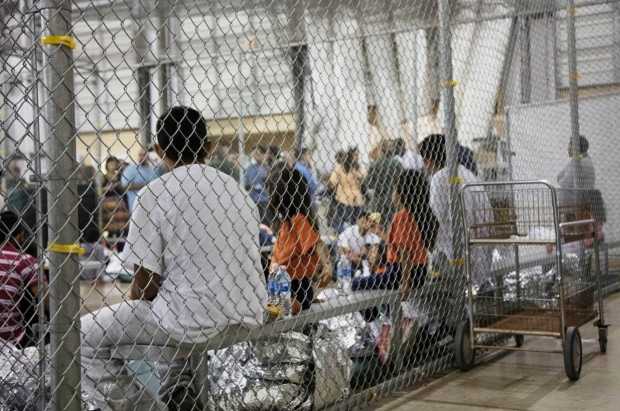
A new year, a new president, a return of an old problem: unaccompanied children crossing the border in droves.
Thousands of children — usually older teens, 16 or 17, but Border Patrol agents report increasing numbers of kids younger than 13 — are arriving each month from Central America.
On Thursday, a Customs and Border Protection staffer reportedly told top Biden administration officials to expect a peak of 13,000 unaccompanied minors to cross the border in May — the highest level ever.