Carney government wins crucial confidence vote on budget

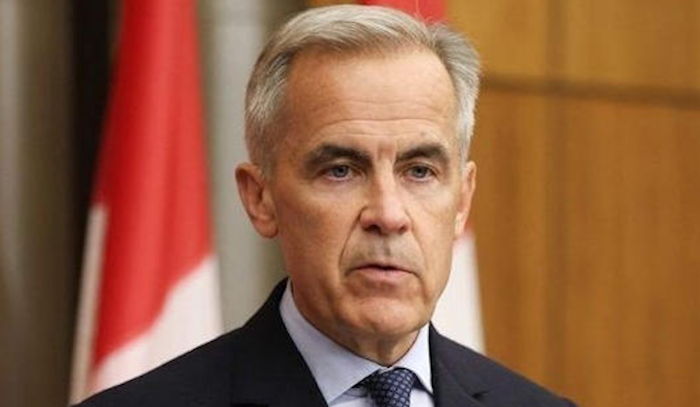
Prime Minister Mark Carney’s minority government budget passed a third and crucial confidence vote on Monday evening thanks to the support of the Green Party and multiple abstentions, averting the possibility of a federal election at the end of this year.

Share

Federal refugee employment program faces ‘extremely long, ballooning wait times’

Instead of waiting months, a federal program is now taking years to process the applications of refugees who are living overseas and have a job waiting for them in Canada.

As a result, some Canadian businesses are unable to fill positions, while skilled refugees are also in limbo and risk exploitation, arrest or detention.

In 2018, the federal government launched the Economic Mobility Pathways Pilot (EMPP) for employers facing skill shortages to recruit internationally from within refugee populations. If approved, the individual is given permanent residency and can immigrate to Canada with their spouse and children.


No Canadian citizens to train? BS.  This is just another cheap foreign labour scam.

“Canadian Business’ should not be involved in setting immigration policy.

Share

TAYLOR: Why does Ottawa want to put ca$h out of business?

St-Viateur Bagels is Montreal’s oldest bagel shop. Local foodies, celebrities and international tourists all flock to its famous shop in the city’s Mile End neighbourhood for its holey creations. “This is an artisanal product — hand-made and baked in a wood-fired oven,” said co-owner Vince Morena proudly. But once inside, there’s only one way for those hungry customers to get their hands on a firm, chewy wood-fired bagel. As Morena explained, “it is cash only.”

Share

Mark Carney lost the battle over Brexit. Now he’s losing to Trump

The ‘high priest of Project Fear’ is struggling to shield Canada’s industrial heartlands from US tariffs

Mass lay-offs at Canada’s rail freight-carriage maker National Steel Car are expected to hit a little bit before Christmas.

After Donald Trump imposed tariffs on steel imports to the US in the spring, the manufacturing plant in Hamilton, Ontario, has had no new orders.

“The building I’m in is working on number 290 of a 300-car order. We’ll be done by the first week of December and then we will be laid off,” says Jonas Barry, 51, who has worked at the factory for the last eight years. “Probably most of the plant will be laid off.

Share

‘Fury from Alberta and Saskatchewan’: Western patience wearing thin over lack of Alberta pipeline plan

Prime Minister Mark Carney rolled out a second wave of “nation-building projects” on Thursday and an oil pipeline from Alberta was not on the list.

Patience is wearing thin in western Canada, even as Alberta Premier Danielle Smith says her government is “still working” with the Carney government to advance a bitumen pipeline to tidewater.

Share

GUNTER: Carney’s major projects more PR than ‘nation building’

When Prime Minister Mark Carney announced the creation of his Major Projects Office (MPO) in August, he said it would unleash projects essential to the national economy “at speeds not seen in a generation.” The MPO would achieve this in two ways, by streamlining regulatory approval of new projects and unlocking private-sector investments in projects that would boost the country’s GDP and reduce our dependence on trade with the U.S.

Share

McGuinty not ruling out fighter jet purchases from several companies with F-35 decision still pending

Defence Minister David McGuinty says Canada isn’t ruling out diversifying its fighter-jet purchases from more than one company in order to fulfil capability requirements.


“We’re grateful for any forthcoming offer that comes forward,” McGuinty told CTV Question Period host Vassy Kapelos in an interview airing Sunday. “If anybody walks into Canada tomorrow from a sovereign wealth fund or with a joint venture in mind or is looking to set up a company in Canada to create 10, 20, 30, 40, 50,000 jobs, game on.”

What a load of BS.

Share

Quebec immigration minister threatens to cut social assistance to benefit sponge asylum seekers and force them to TROC

Immigration minister reiterates threat to cut social assistance for asylum seekers

Due to the “sustained arrival of a significant number of asylum seekers” in Quebec, Immigration Minister Jean-François Roberge is reiterating his threat to cut social assistance if Ottawa does not reimburse him for the associated expenses.

He refused to say when he would carry out the threat.

“When people have their work permits and months go by, they remain on social assistance, they don’t have jobs, they have trouble putting down roots here, and ultimately, the Quebec government will significantly reduce social assistance so that these people are encouraged to go to another province,” the minister explained at a news conference on Thursday morning.


Rest assured Chow and her puppet masters are licking their chops at the prospect of acquiring more bargaining chips.

Share

Climate Climbdown: Sacrificing the Canadian Economy for Net Zero Goals Others Are Abandoning

In 2015 the newly elected Justin Trudeau government signed the Paris Climate Agreement, which commits signatory countries to “increasingly ambitious climate action” aimed at limiting the forecast increase in global average temperature to 1.5°C by the end of the century. The following year Trudeau’s Liberal government imposed the Pan-Canadian Framework on Clean Growth and Climate Changewhich included more than 50 measures aimed at “reducing carbon emissions and fostering clean technology solutions.” Key among them was economy-wide carbon “pricing” – Liberal-speak for taxes on Canada’s industries and every citizen.

Share

Here are four ways Mark Carney can dodge an election and pass his budget

OTTAWA — Heading into the weekend before a crucial budget vote, it was not clear how Prime Minister Mark Carney’s minority Liberal government would survive a confidence showdown on Monday and prevent a snap election during the upcoming holiday season.

Two sources told the Star on Friday that the government had no assurances how Monday’s confidence vote on this month’s federal budget will go. But the Liberals are still projecting optimism that their minority administration can win the vote and proceed with a $581-billion spending plan that opposition parties have criticized for its big deficits and tens of billions of dollars in spending cuts.

Share

SNOBELEN: Canada’s crisis requires bold action, not Carney’s timid budget

You can tell a lot about a government by how it embraces a crisis.

Canadians deserve leadership that seizes crises as opportunities, not policies that play it safe. Yet the Carney Liberals’ first budget demonstrates timidity instead of bold action.


They’re managing the decline in the hope we won’t go berserk on them.

Share

What will the federal government’s Major Projects Office do — and will it succeed?

Prime Minister Mark Carney announced this week a second round of projects he’s recommending get fast-tracked by his government’s Major Projects Office (MPO) as part of his promise to reduce Canada’s economic reliance on the United States.

Thursday’s announcement saw multibillion-dollar energy and natural resources proposals brought to the top of the pile, but there are still questions about what a referral to the MPO actually means.

Part of the confusion lies in the government’s choice of language. So far, Carney has referred projects to the MPO that he’s deemed of “national importance” or “national significance.”

Share

Ottawa’s operating spending — not capital — driving deeper deficits: PBO

OTTAWA – The parliamentary budget officer projects Ottawa will blow past the new fiscal anchors set out in last week’s 2025 federal budget.

Interim budget officer Jason Jacques says in a new analysis of the budget that Ottawa is set to run an average deficit of $64.3 billion over the next five years — double the level set out in the federal government’s last fiscal update in late 2024.

Despite Prime Minister Mark Carney’s talk of shifting government spending to capital investment rather than operating costs, Jacques says the deeper deficits are being driven by new day-to-day program spending.

Share