Canada and the EU is an alliance of weakness that will cost Carney

Canada and the EU is an alliance of weakness that will cost Carney

It will be a “comprehensive partnership” covering trade, security and diplomacy.

Ursula von der Leyen, the European Commission’s president, is expected to announce a new deal with Canada in her state of the union address next week.

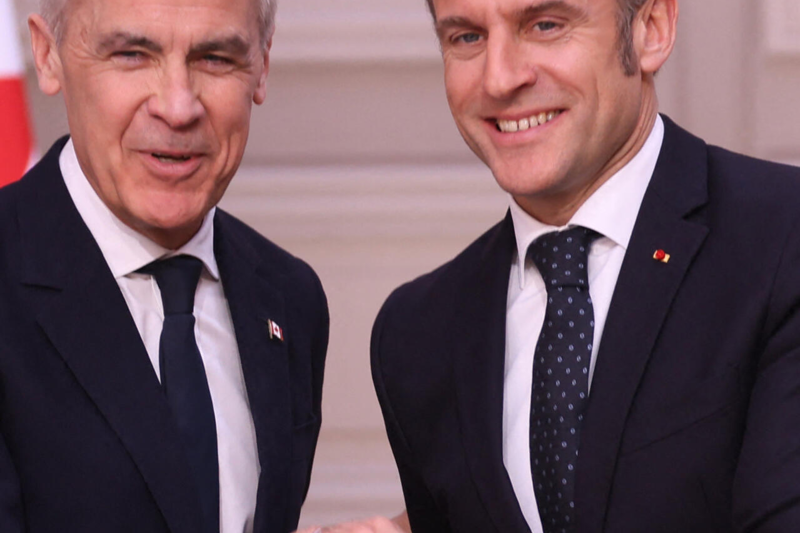
Before long, she will be shaking hands with Mark Carney, the Canadian prime minister, and the Ode to Joy may be ringing out across Ottawa.

But this may not be the miracle agreement it’s cracked up to be.

Share

Michael Taube: Carney’s EU mistake is nearly complete

Michael Taube: Carney’s EU mistake is nearly complete

Prime Minister Mark Carney described Canada as the “most European of non-European countries” at a joint summit in Brussels last summer. This eye-raising remark led some political pundits and columnists (including me ) to speculate that his personal mission wasn’t to improve relations with the U.S., but to jump into the “waiting arms” of the European Union.

If that was his ultimate goal, it seemed rather unrealistic from the very beginning.

Share

Mark Carney’s Audacious Bid to Make Canada an ‘Associate Member’ of the EU

Mark Carney’s Audacious Bid to Make Canada an ‘Associate Member’ of the EU

Shortly after Canada and America became embroiled in the worst bilateral trade war in their modern history, the secure phones of Europe’s top leaders lit up with a trans-Atlantic call. Mark Carney was pushing to take Canada’s relationship with the EU to the next level—a bold gambit to rewire the economic cabling of the Western alliance.

For months, the Canadian prime minister had held private conversations with almost every major European leader—from France to Italy, Germany and Scandinavia and even some of the continent’s lesser-known royals—on how to more deeply plug Canada and its 41 million people into Europe’s 27-nation club.

Now, Carney was accelerating Canada’s pivot to Europe, matchmaking a shotgun marriage to offset the pain of its divorce with America. In effect, a threat to make Canada the 51st state is pushing America’s northern neighbor so close to Europe that leaders have begun to half-in-jest dub it the EU’s newest member.

Share

MACLEOD: Trading the US for Europe — Carney’s transatlantic fantasy will cost Alberta dearly

MACLEOD: Trading the US for Europe — Carney’s transatlantic fantasy will cost Alberta dearly

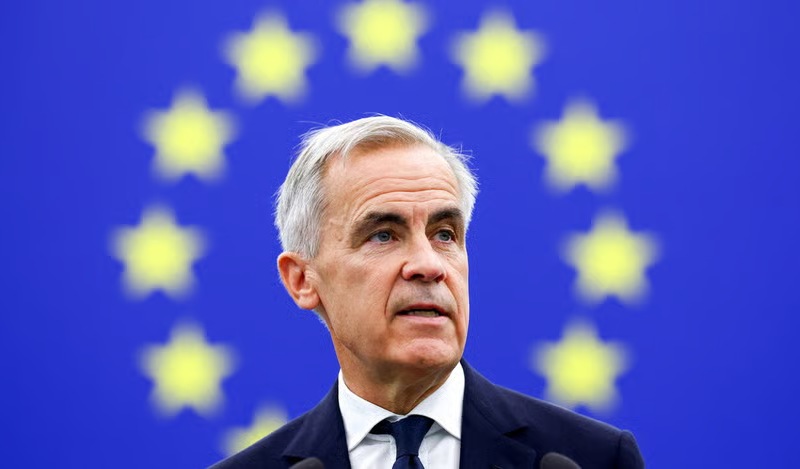
Prime Minister Mark Carney is heading to Strasbourg as Canada and the European Union prepare a sweeping new partnership. He will attend European Commission President Ursula von der Leyen’s State of the Union address on September 16 and address the European Parliament the following day.

Share

BARBER: EU annexation by stealth — Mark Carney sold out Canada to Brussels and Beijing

BARBER: EU annexation by stealth — Mark Carney sold out Canada to Brussels and Beijing

Prime Minister Mark Carney met with President Obama in Toronto in May 2026. He also met with Alex Soros at the same time. Alex Soros, son of financier George Soros, is assuming his father’s role as president of the Open Society Foundation (OSF). The OSF is criticized by four European countries for alleged interference in domestic politics. George Soros’s Super PAC, personal donations, “dark money” contributions, and the OSF have provided millions of dollars to the Democratic National Committee. In addition, Alex Soros and Huma Abedin (Chief of Staff for Hillary Clinton) met with Minister of Industry Mélanie Joly and former ambassador Frank McKenna (Chair of Brookfield Corp. and Deputy Chair of TD Bank Group) on July 13. Prime Minister Carney also hired Maia Johnson, who now serves as Senior Special Advisor for the US. Ms. Johnson is a longtime Democrat political operative, having worked on the presidential campaigns of Hillary Clinton, Joe Biden, and Kamala Harris. This appears to be the first instance an American Democrat operative has been appointed to such a senior advisory position within the Canadian government.

(Incognito)

Share

EU faces 300,000 factory job cuts as China ‘colonises’ supply chains, industry warns

EU faces 300,000 factory job cuts as China ‘colonises’ supply chains, industry warns

Job losses in EU manufacturing will rapidly increase unless Brussels stops the “colonisation” of industry by Chinese component manufacturers, a leading industry trade body has warned.

Eurometal predicts 300,000 job losses in manufacturing in the rest of 2026 because of expanding competition from China, which is now enjoying a record €1bn-a-day trade surplus with the bloc.

On Monday, Eurometal will bring its concerns to decision-makers in Brussels, staging a protest using 10 symbolic coffins in a procession around the European Commission headquarters.

Share

As Donald Trump’s trade war rages, Mark Carney looks to the European Union — and it’s looking back

As Donald Trump’s trade war rages, Mark Carney looks to the European Union — and it’s looking back

Canada and Europe are having a moment. The timing could not be better.

With the Canada-U.S. trading relationship moving from aggression to open hostility, Foreign Minister Anita Anand was huddling in Ireland this week with her European counterparts.

While U.S. President Donald Trump drafts angry social media posts, Prime Minister Mark Carney is drafting a speech he’ll deliver this month to the European Parliament

Share

EU’s ability to defend against invasion remains in doubt, finds official report

EU’s ability to defend against invasion remains in doubt, finds official report

The EU’s ability to respond to a foreign invasion by 2030 remains in doubt due to a continuing reliance on the US and fragmented national defence systems, according to a report from its official auditor.

The European court of auditors (ECA) said the EU was much better prepared than before Russia’s full-scale invasion of Ukraine of 2022, but achieving its goal of defence readiness by the end of the decade would be difficult.

“Achieving defence preparedness in the EU by 2030 remains challenging,” said Marek Opioła, an ECA member who led the review of the EU’s defence policy published on Thursday. “There are still major difficulties such as fragmented national systems or industrial bottlenecks. We also still rely on the United States.”

Share

When Iceland Said No to Brussels

When Iceland Said No to Brussels

“It is generally held that few nations have endured oppression and tyranny with greater politeness than the Icelanders. For centuries … they lived in understanding accommodation with oppression, without ever making an attempt at rebellion. To no nation was the very concept of revolution more alien. Icelanders were always ready to kiss the rod that struck them hardest, and to believe that the most cold-blooded executioner was their truest source of help and their safest refuge.”

So wrote Halldór Laxness in 1933, more than two decades before becoming Iceland’s only Nobel laureate in literature. Ninety-three years later, Icelanders appear to have misplaced some of their famous politeness.

Share

Iceland Rushes Aboard the EU Sinking Ship

Iceland Rushes Aboard the EU Sinking Ship

As the “Big Three” convened in Potsdam in July 1945, Britain counted votes from its first postwar parliamentary elections. Prime Minister Winston Churchill departed for London, soon to be replaced by Labour leader Clement Attlee. Stalin, confident that Western elections could be rigged or substantially influenced, was especially astonished at the result; he reportedly suspected it was a ruse of British intelligence. Having led the country through its darkest hour, the war hero Churchill was unceremoniously booted from office.


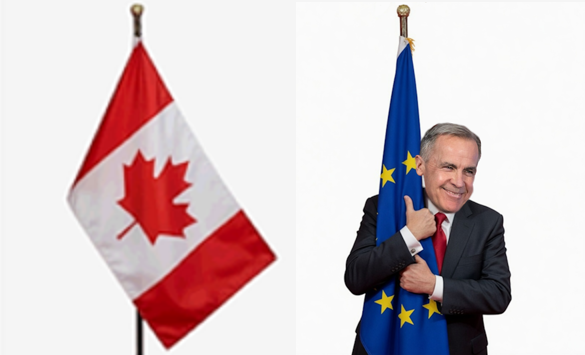
Carney lusts for the EU even though it’s possible that Europe will be lost.

Share

What If Canada Joined the E.U.?

What If Canada Joined the E.U.?

In February, 2025, I met with a delegation of Canadian ministers visiting Washington, D.C. Their aim was to convince the Trump Administration, at the outset of its second term, of the virtues of collaboration and coöperation, even though President Trump had already signalled his intent to target a large number of Canadian exports for new tariffs. François-Philippe Champagne, then Canada’s Minister of Innovation, Science, and Industry, stressed to me how difficult it would be to untangle the American and Canadian economies—enmeshed, as they are, in supply chains that run back and forth across the border and which were built on deeply held assumptions of mutual benefit. “If you want to achieve that vision of the ‘golden age’ of America,” Champagne said, quoting a tagline that Trump often deployed at the time, but which he rarely uses today, “If you want to make life more affordable for Americans, if you want to be more innovative, more competitive, Canada is not a problem. Canada is part of the solution.”


We are not a Euro-state and so forbidden from membership.

Even if considered a separation referendum for all of Canadian provinces should be mandatory.

Share

Europe in Free Fall

Europe in Free Fall

On February 14, 2026, US Secretary of State Marco Rubio delivered a laudatory speech about Europe and its legacy at the Munich Security Conference. He noted, however, that Europe is weakening. “We don’t want our allies to be weak,” he said.

His remarks initially were well received by the European political leaders and journalists in the room; not for long. Several journalists soon mentioned that, while Rubio appeared friendlier toward Europe than US Vice President J.D. Vance’s had been a year earlier, he was still “arrogant” in presuming that Europe needed advice on how to be stronger.

Share

Canada-EU: Closer trade ties to counter Trump?

Canada-EU: Closer trade ties to counter Trump?

The latest salvo in US President Donald Trump’s freewheeling trade war could have disastrous effects for Canadian business. But the new tariff threats may also open up trade opportunities elsewhere, with China and the EU in a strong position to benefit.

Trump’s planned 50% tariff on a range of imported goods ranges from wine to hockey sticks but does not include other key sectors such as energy, potash and fish.

It is expected to impact about 5%, or $20 billion (€17.5 billion) worth, of goods and “the impact could be devastating for the people in businesses involved,” Julian Karaguesian, an economics lecturer from Canada’s McGill University, told DW.

Share

German car industry warns of job collapse unless ‘bold decisions’ made to address Chinese threat

German car industry warns of job collapse unless ‘bold decisions’ made to address Chinese threat

The German car industry has warned of a potential collapse of employment in the sector in Europe unless society and workers accept that “bold decisions” are needed to address competition from the Chinese and other rivals.

Volkswagen is preparing to formally propose up to 100,000 job losses, a move that has triggered a wave of protests.

The statement from the German Association of the Automotive Industry (VDA), which appears timed to coincide with this meeting, went as far as to say that handing some of the country’s car plants over to foreign ownership could be a way to save jobs.


I’m sure Carney will do just fine.

Share