The Star Asks … Should Canada forgive the Taliban?

Habibullah, a Taliban soldier in Afghanistan, remembers setting land mines at age 17 on his first day of fighting near Kandahar. “I saw a Canadian tank explode and knew I had killed for the first time,” he remembers with remorse.

Three of his friends also died that day in 2009 — at the hands of Canadians, he says.

Habibullah, 30, says he forgives Canada for fighting the Taliban. He hopes Canadians can forgive him, too. “Now we must give our hands to each other,” he says.

HMA

Share

Ottawa and White House in talks to stop future trucker blockades, top U.S. envoy says


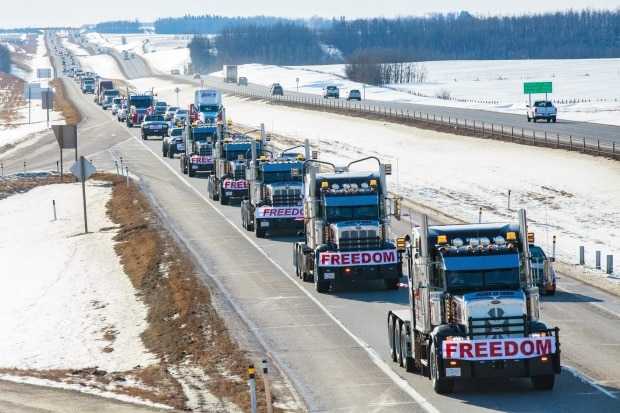
OTTAWA —Canada and the U.S. are in detailed security talks to ensure there’s no repeat of trucker blockades led in part by “right-wing extremists” who “wanted to overthrow the government,” says Washington’s envoy to Canada.

Ambassador David L. Cohen said the blockades, particularly at the Windsor-Detroit border in early February, raised “significant concerns” within the Biden administration and among American manufacturers about the reliability of cross-border supply chains.

Cohen strongly condemned the protests and voiced concerns they could happen again. He also said Canada and U.S. government officials are looking at how to eliminate jurisdictional snafus that complicated law enforcement efforts to stop the blockades, along with measures to tackle the disinformation that fuelled the protests in the first place.

HMA

Share

Canada’s new budget expands gov’t regulations on crowdfunding, review of cryptocurrency

The Liberal Canadian Finance Minister’s budget includes an investigation into cryptocurrency while also compelling crowdfunding sites to report “suspicious transactions.”

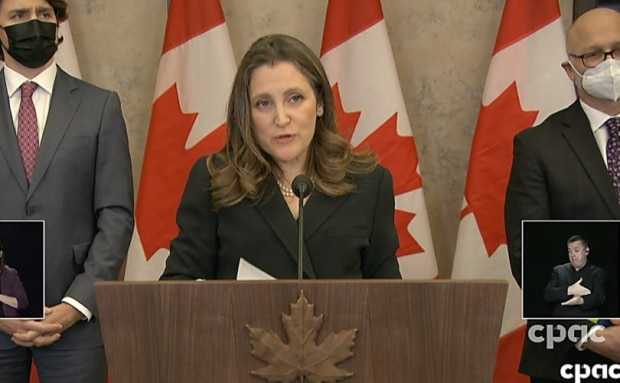
Mirroring some of the financial actions taken under the Emergencies Act, the budget that Finance Minister Chrystia Freeland announced yesterday said a “legislative review” into cryptocurrency will be launched on top of the implementation of stricter regulatory measures on crowdfunding sites and payment processors.

Share

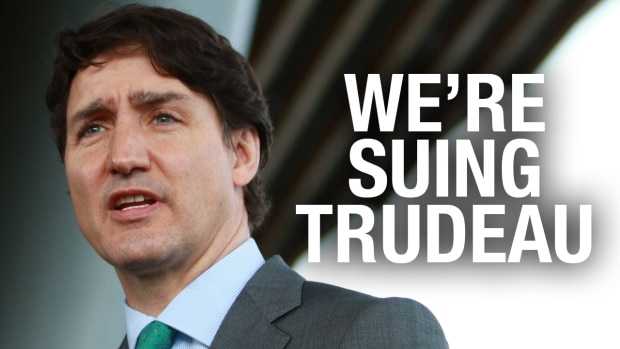
Rebel News is suing Justin Trudeau

Justin Trudeau’s hand-picked government censorship panel has just declared that Rebel News journalists are not “qualified” to be news media. We just learned, that over the past year, Trudeau has spent countless tax dollars on a hand-picked team of government censors who were “studying” Rebel News in secret — they never reached out to us or spoke with us or interviewed us.

Share

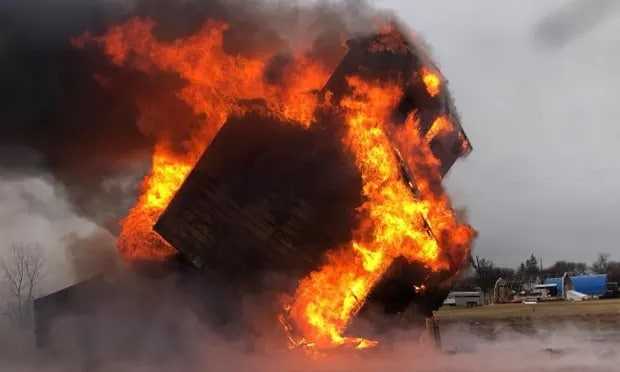
Heartbreak as Canada’s oldest ‘prairie castle’ is destroyed by fire

Canada’s oldest wooden grain elevator has been destroyed in a fire, dashing hopes of reclaiming its wood and preserving a piece of the country’s farming history.

Troy Angus, who bought a pair of dilapidated elevators at municipal auction, last month announced plans to salvage and repurpose thousands of pieces of wood and metal that made up the bulk of the structures, often called “prairie castles” for their towering, regal appearance on the vast landscape.

Justin probably thought it was a church.

Share

Ottawa’s Proposed Bills to Curtail Online Harms ‘Oblivious’ to Reality: Former CRTC Chairs

Any attempts to regulate the internet should steer clear of trying to manage what people have to say, for at best it leads to a quagmire of legal wrangling, while at worst it leads to suppression of free speech by the government, say former chairs of the Canadian Radio-television and Telecommunications Commission (CRTC).

“Early efforts in Canada to create federal regulatory frameworks for the Internet, such as Bill C-10 and the ‘online harms’ proposals, were oblivious to this reality and widely panned as a result,” said Konrad von Finckenstein and Peter Menzies, former CRTC chair and vice-chair respectively, in a recent paper on how to address online harms while still protecting free speech.

Share

Government execs want more money and less work during COVID

A record number of public sector executives making six-figure taxpayer-funded salaries have complained they are not being paid enough for having worked through the COVID-19 pandemic.

Since the pandemic began, the number of executives working for the government has grown by over 21%. Today, there are a record 7,900 executives employed in the public sector.

Share

Prohibiting demonstrations will stamp out social justice activism

It’s one of the oldest plays in the book — a crisis is followed by new laws that are intentionally broad enough to be applied to just about anybody considered inconvenient.

That’s what we’re seeing with the Ontario government’s Bill 100, Keeping Ontario Open for Business Act, a piece of legislation that could do little more than stamp out and criminalize many labour actions, like strikes and picket lines, and critically important demonstrations on issues including racial justice and meaningful climate action.

Share

Conservatives blast Liberal budget as NDP strives to balance criticism with support

Conservative interim leader Candice Bergen said Thursday that Canada’s most pressing problems aren’t addressed in the new federal budget — which she claimed had been heavily influenced by NDP ideology.

“We were looking for controlled spending, which would in turn control inflation,” Bergen told reporters outside the House of Commons after the budget was tabled.

“It is an irresponsible budget. It is a typical, classic, NDP spend-and-tax budget.”

Share

Canada is failing to teach its military history

The teaching of Canadian history in the nation’s universities is in trouble. Course enrolments have been and are continuing to fall dramatically and the numbers of history majors have collapsed. This, it is said, is true in all areas of historical study, not least in the history of Canada.

Why? First, there are few jobs for history graduates. A sensible student will opt for business or IT or law where they might even be able to make a living from their studies.

But there are likely many additional reasons and one surely is that historians have been working for decades to turn their discipline away from narrative and towards theory. Narrative tells a factual story while theory posits an abstruse rationale for what did or did not occur. The theorists prevail. Another reason is that the woke Canadian historians, now apparently the majority in the profession, have turned away from national history. The York University history calendar ungrammatically says it all: “Our courses focus on the thematic areas of indigeneity, culture, gender, social, political, environmental and sexuality.”

Share

Trudeau’s Ethnic Community Preferences Define Legacy Of Social Division

For six-plus years media has been covering up a definitive aspect within the leadership style of Justin Trudeau. Throughout the time period, a social standard has quietly been maintained: government and media refuse to make reference Canada’s Anglophone communities.

Let us contrast this with treatment of 3rd World communities. Day after day, references to Sikh, Chinese and Muslim communities colour the flavour of media presentation. Quebecois culture, identity and heritage are a coveted commodity. But never an explicit reference Anglo-Canadians. For unspoken political reasons, this remains taboo.

Share

Freedo’s Budget

A budget for an uncertain world – Geopolitical risks puts economy at risk

Finance Minister Chrystia Freeland on Thursday presented a much more prudent budget than anticipated because of “uncertainty” in then world.

The Liberals cut back on some of their many campaign promises last fall and will not meet NATO’s defence targets in order to provide a declining debt-to-GDP ratio.

The federal deficit is now at $52.8 billion for 2022-2023, slightly less than expected in last fall’s economic update at $58.4 billion. Even though the government benefited from an additional $14.3 billion dollars thanks to inflation and high prices generating revenue in taxes, Freeland chose to stay nimble and not spend all of the extra money in the government’s coffers.

Share