

Canada’s Corrupt Liberal Government

Snowbirds to be grounded following 2026 season until new aircraft arrive

Canada’s iconic Snowbirds demonstration squadron will be grounded following the 2026 flying season until new aircraft arrive, the country’s defence minister said Tuesday.
In a statement, David McGuinty did not say how long it will take to replace the outdated CT-114 Tutor jets, which have been part of the air force inventory since the 1960s.
The turbo-prop Swiss-made CT-157 Siskin II has been chosen as the replacement for the Snowbird squadron. The aircraft is already on order and being delivered for use in the air force’s initial pilot training aircraft.
Update First production test flight of a RCAF CT-157 Siskin II (Pilatus PC-21)
We will procure the CT-157 Siskin II (Pilatus PC21) for the future Snowbirds team. During the onboarding period, the RCAF will continue to support air shows and events across Canada with aircraft and personnel. https://t.co/4GfMMabPlc pic.twitter.com/5qZolOv5eV
— Canadian Armed Forces (@CanadianForces) May 19, 2026
h/t Mauser
Montreal academic Gad Saad tells Joe Rogan he’s moving to the U.S.

Gad Saad, a longtime Concordia University professor known for his outspoken criticism of “woke” politics as well as his denunciations of antisemitism, has announced he’s moving this summer to the United States.
Can’t argue with that tweet.
Hamas memos show Canadian-funded charities worked with terror group, NGO says
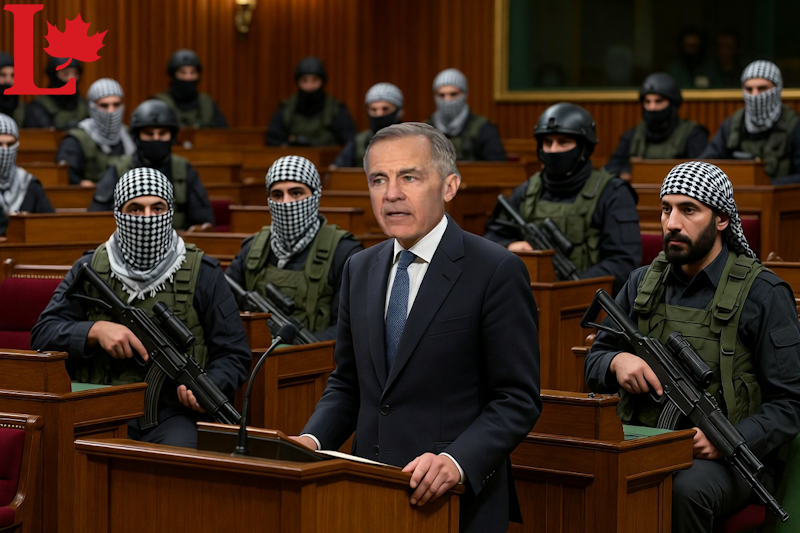
According to a report by an Israeli NGO, Hamas’s own internal memos show it has been working in tandem with Canadian government‑funded charities and non‑governmental organizations.
The documents, which the Israeli army says it seized during its Gaza counteroffensive, detail how the terror organization allegedly infiltrated and exploited international NGOs operating in the Strip.
Western civilization is under siege in Canada, activist warns
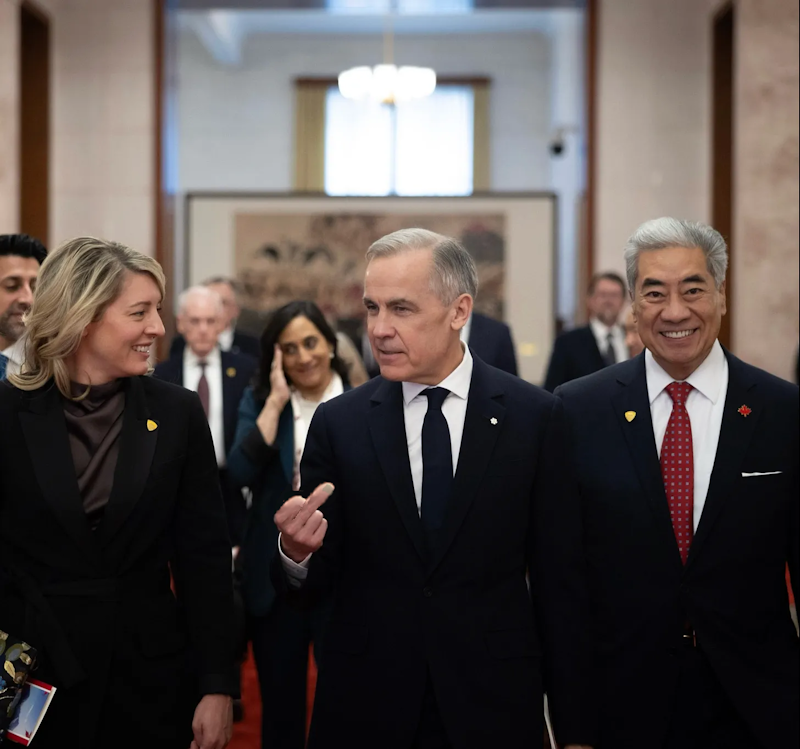
WASHINGTON, D.C. — Canada is grappling with debates over national identity and security as well as international trade. Ottawa is navigating U.S. tariffs and Donald Trump’s threats of higher trade duties ahead of this July’s review of the Canada-U.S.-Mexico Agreement, while also managing populist and separatist movements, hate crimes, and broader pressures on national cohesion.
Feds spend $13 million on African businesses to promote ‘gender equality’ and ‘climate action’

The feds have committed a whopping $13 million to be spent on warehousing facilities in Africa — without most taxpayers even knowing.
The spending was announced in March by Global Affairs Canada, and will continue to be given in increments until 2033.
Immigration levels linked to housing demand as Canada adds more than 80,000 homes for new arrivals

New federal figures show Canada required tens of thousands of housing units last year to accommodate newly arrived permanent residents, adding further pressure to an already strained housing market.
Blacklock’s Reporter says a report from the Immigration, Refugees and Citizenship Canada estimates that the 395,000 people granted permanent residency in 2025 required roughly 81,560 housing units — equivalent to just over one-third of all urban housing starts recorded that year.
Bill C-22 Surveils Ordinary Canadians While Leaving Cartel Networks Untouched

OTTAWA — When The Bureau published its analysis of Bill C-2 last fall, the diagnosis was unsparing.
Ottawa had confused expansion of state power over ordinary Canadians with the enforcement tools Canada actually needs to confront the Chinese Triads, Mexican cartels, and hostile-state networks that have turned Canadian cities into operational platforms for the hemisphere’s most dangerous criminal organizations. The government has now repackaged that same flawed instinct under a new number. Bill C-22, the so-called Lawful Access Act, deserves the same verdict.
h/t Mauser
Defence Minister expected to lay out future of Snowbirds’ jets on Tuesday
Offensive to Liberals, Transvestites and Jihadis[/caption]Temporarily grounding Canada’s iconic Snowbirds may be required to ensure the aging planes don’t weigh on broader military operations, says a former chief of defence staff.
Tom Lawson, also a former fighter pilot, offered his view ahead of Defence Minister David McGuinty’s planned Tuesday announcement on the fate of the aerobatic flying unit known for its red-and-white jets.
Chipping away like termites.
Ottawa still pledging to double construction pace despite home building headwinds
OTTAWA – The federal Liberal government is sticking to its pledge to double the pace of home building even as headwinds buffet the construction industry.
Prime Minister Mark Carney promised in his 2025 election platform to make investments that would double the pace of housing construction over the next decade to drive down the costs of rent and home ownership.
Hateful liars.
Why would anyone want to join the EU?
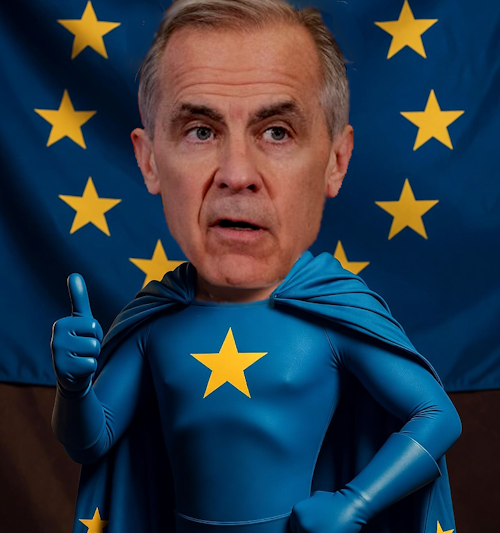
As prime minister, Mark Carney claims to be guided by pragmatism, albeit “principled pragmatism.” But his enthusiastic pursuit of deeper alignment with the European Union risks selling out Canadian sovereignty for romantic symbolism and a mountain of red tape.
In his now-famous speech in Davos, Carney said that “nostalgia isn’t a strategy.” Yet his approach to the EU reveals a deeply nostalgic view of Europe as a vibrant counterweight to North American realities. But the numbers say Europe’s economy, far from being vibrant, is in decline. Forecasts for this year project growth of one per cent or less. The EU is beset by stagnation, demographic decline, high energy costs and chronically poor competitiveness. Why would Canada seek even tighter alignment with a bloc that’s in decline when it already enjoys comprehensive trade access through the Canada-EU Comprehensive Economic and Trade Agreement (CETA) and other multilateral channels?
Canadian-funded programs in occupied Ukraine causing activists to be disappeared into Russian custody

Canadian-funded programs in occupied Ukraine accused of putting activists at risk
The Canadian government says it is taking seriously allegations that programs it funded to promote pro-Ukrainian sentiment in Russian-occupied areas of Ukraine put the lives of activists in danger.
The Kyiv Independent reported last month that a pair of Canadian-backed programs known as Yellow Ribbon and Zla Mavka had resulted in the persecution and detention of pro-Ukrainian activists in occupied parts of southern and eastern Ukraine, where Russia’s FSB security service has a heavy presence. The fate of some activists who reportedly disappeared into Russian custody remains unknown.
Your tax dollars at work.
Canadian Developers Set A Record For Completed & Unsold New Homes

Canadian real estate went from a speculative asset with global demand to a glut in just a few years. Canada Mortgage and Housing Corporation (CMHC) data shows completed and unabsorbed inventory rose in April.
Builders are now sitting on the most completed and unsold new homes in the country’s history—and there’s a lot more supply in the pipeline.
With a possible referendum looming, Carney and Smith find common ground on carbon pricing

On Friday morning in Calgary, Mark Carney and Danielle Smith shook hands, then signed and posed with official copies of an “implementation agreement for the Canada-Alberta memorandum of understanding,” an eight-page document bound up in profound questions of climate change, resource development, economic sovereignty and national unity.
“Today is a good day for Alberta,” the Alberta premier said. “And it’s a good day for Canada.”
“Today,” the prime minister said, was about “building trust in a Canada that works” — a country “rooted in co-operative federalism, where we build together, pragmatically and ambitiously, to achieve our shared ambitions.”
Why Mark Carney and Europe are doubling down on each other
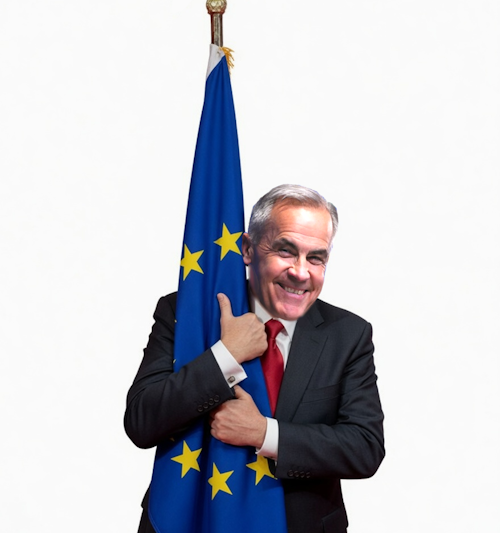
No sooner were the words out of Prime Minister Mark Carney’s mouth than one French news magazine dubbed them “a breath of fresh air from Canada.”
“It is my strong personal view,” the Canadian leader said, “that as the international order (is) rebuilt … it will be rebuilt out of Europe.”
Carney was speaking in Armenia earlier this month at a meeting of the European Political Community. A leader who has dubbed his country “the most European of non-European nations” flubbed his lines slightly but got his point across, enchanting his all-European audience.
Carney smells profit from a decaying corrupt continent. There’s a reason his kind likes “Free Trade” and hates tariffs.