Britain’s Speech Police: How the State Learned to Fear its People

Britain’s Speech Police: How the State Learned to Fear its People

Many of us in Britain still flatter ourselves that we live in a free country. Although the UK isn’t quite a police state (not yet anyway), neither is it a country in which the individual can any longer speak without glancing over his or her shoulder. The old compact of a liberal society was simple – the state punished genuine criminality, while opinion was left to the rough justice of argument, satire and public disagreement.

Share

More than 60,000 arrested in ‘chilling curb of free speech’ as damning report exposes zealous policing of social media as ‘Orwellian mess’

More than 60,000 arrested in ‘chilling curb of free speech’ as damning report exposes zealous policing of social media as ‘Orwellian mess’

A major free speech row erupted last night after it was revealed that more than 60,000 people have been arrested over the past five years for ‘communications offences’ – some as trivial as viewing disparaging TikTok videos.

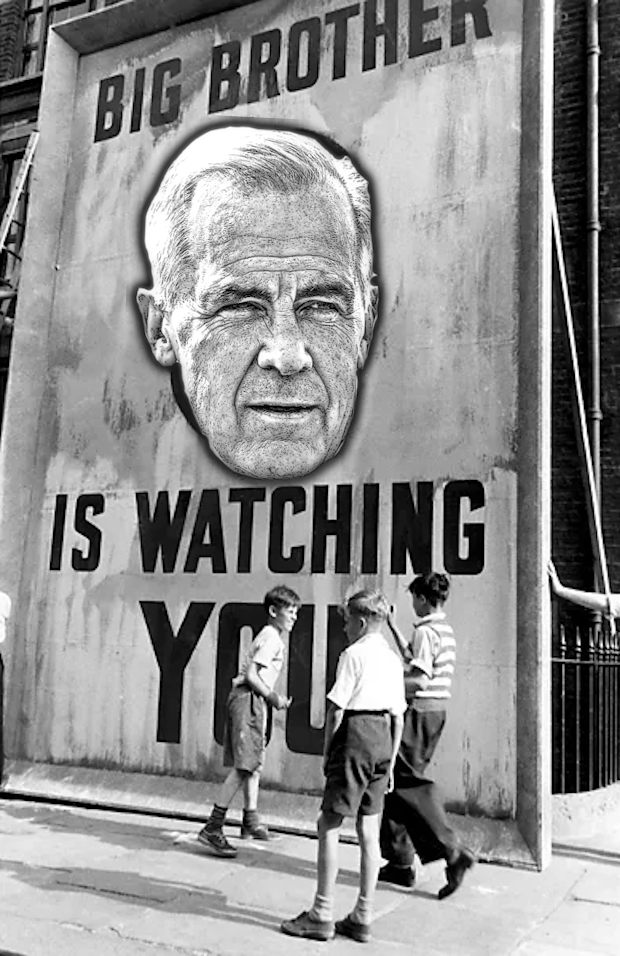
The astonishing figure has been described as ‘Orwellian’, and having a ‘chilling effect’ in stifling opinions online.

The statistics – to be published in a hard-hitting report this week – also highlight the chaotic implementation of rules on ‘malicious’ messaging, with some police forces making 14 times more arrests under the powers than others.

Share

WHISSELL: Copying Britain’s broken ‘social cohesion’ model is a suicide mission for Canadian freedom

WHISSELL: Copying Britain’s broken ‘social cohesion’ model is a suicide mission for Canadian freedom

I don’t want to live in the United Kingdom (UK).

I’m certain most Canadians would say the same thing if you asked them. So why is the Canadian government, and particularly Heritage Minister Marc Miller, taking cues on so-called “social cohesion” from the UK’s Labour Party? Isn’t the UK a royal mess?

Share

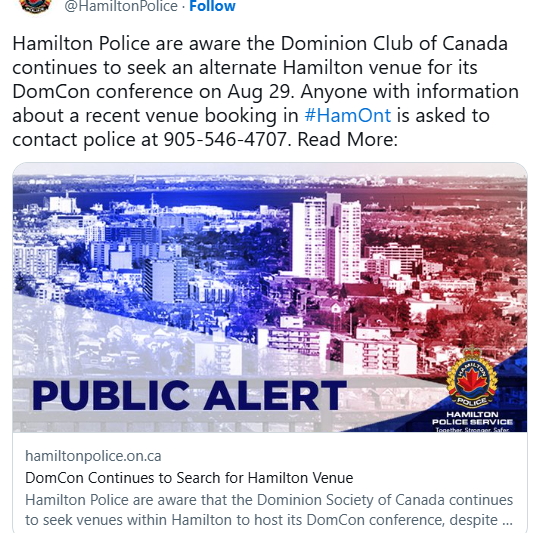
Justice Centre warns Hamilton mayor, police over efforts to block DomCon conference

Justice Centre warns Hamilton mayor, police over efforts to block DomCon conference

The Justice Centre for Constitutional Freedoms is warning the City of Hamilton and its police service that efforts to prevent a controversial political conference from being held in the city may violate Charter-protected freedom of expression.

Lawyers funded by the Justice Centre sent a warning letter to the city and Hamilton Police Service after Mayor Andrea Horwath and police publicly opposed the Dominion Society of Canada’s DomCon conference, scheduled for Saturday.

Share

Jamie Sarkonak: Police reprimand of anti-immigration event undermines democracy

Jamie Sarkonak: Police reprimand of anti-immigration event undermines democracy

During the summer of 2021, Hamilton Police officers looked on as a group of Indigenous sovereigntists tore down the city’s Sir John A. Macdonald statue and sawed right down the middle of its face. Instead of arresting the numerous parties to the crime right then and there, they waited, eventually laying a charge on a 56-year-old who was absolved months later through a stay of proceedings.

Share

Americans have turned against police cameras that track license plates, new survey shows

Americans have turned against police cameras that track license plates, new survey shows

When Justin Cowgur, a city council member in Centerton, Arkansas, was asked two years ago to vote on a contract to install Flock license-plate readers, he found it easy to say yes. The Republican wine seller believed the artificial intelligence-powered cameras — which record passing cars’ plates into a database that officers can search to investigate crime — could help ease the strain on their understaffed police force and keep his bedroom community safe.

But lately, he’s come to regret the deal, saying he no longer trusts the company with the huge amount of data its roadside cameras collect. Earlier this month, after a parade of residents voiced concerns about their privacy and the system’s risk of abuse, he and other members voted unanimously to cancel the contract.
Share

Woman flagged by ID scanner as nationwide ‘public safety concern’ after incident in Winnipeg bar

Woman flagged by ID scanner as nationwide ‘public safety concern’ after incident in Winnipeg bar

Privacy experts are raising concerns after a Winnipeg bar flagged a woman as a nationwide public safety concern through its ID scanning system, which led to her being denied entry to a Calgary Stampede venue in July.

Alexandra, a Montreal-based lawyer, went to the Riverside bar in St. Vital on June 6, where a person working security scanned her driver’s licence at the door using a Patronscan ID scanner.

She said she was not told why they were scanning it and had no idea an incident later that evening would lead to a flag that potentially banned her from bars across Canada.


This is creepy.

Share

Licence plate readers have sparked outrage in the U.S. Now they’re being installed across Canada

Licence plate readers have sparked outrage in the U.S. Now they’re being installed across Canada

Brampton Mayor Patrick Brown recently celebrated the installation of a network of powerful police surveillance cameras capable of scooping up personal data from unsuspecting drivers.

Automated licence plate recognition (ALPR) systems at 50 intersections would make the city, in Brown’s words, “the safest place to call home and the most inconvenient place in Canada for organized crime to operate.” And he said they had overwhelming support from participants in a telephone town hall.

But in the U.S., the same AI-driven technology has become a scourge.

Share

Vandals are destroying license-plate cameras as anger over surveillance rises

Vandals are destroying license-plate cameras as anger over surveillance rises

Adam Heimerman kept seeing the surveillance cameras on his way to work as a river guide in East Tennessee, and the sight rankled him.

More than 130,000 of the automatic license-plate readers now dot the country, according to the crowdsourced tracker DeFlock.org. The artificial intelligence-assisted devices have been embraced by law enforcement as powerful investigative tools but widely denounced by the public over privacy concerns.

Share

Montreal police take down high-powered surveillance camera after Radio-Canada story

Montreal police take down high-powered surveillance camera after Radio-Canada story

Montreal police are quietly growing their network of AI-powered tools to track vehicles and people across the city, raising questions about public transparency and privacy rights.

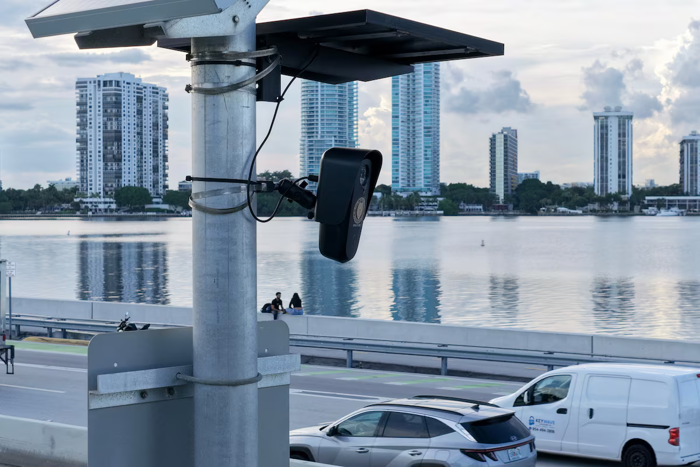
A high-powered camera able to scan and identify vehicles was spotted earlier this week by a Radio-Canada reporter, on a lamp post along Henri-Bourassa Boulevard in Montreal’s Rivière-des-Prairies neighbourhood.


Car based scanners capable of running license plate searches at a high rate has been in use for some time If I recall correctly.

This Canadian version of a Flock style system means we the criminal public can be surveilled 24/7.

I wonder what Toronto’s police use?

Share

France: Top watchdog blocks social media ban for children

France: Top watchdog blocks social media ban for children

France’s highest constitutional authority on Friday struck down the ban on social media for children under 15.

The Constitutional Council ruled that the flagship policy of President Emmanuel Macron’s second term infringed on freedom of expression.

“By prohibiting minors under the age of 15 from accessing certain online services, the law inherently requires every person, even an adult, to prove their age before accessing them,” it said in its decision.


Good news from France is rare.

Share

Flock boss admits surveillance firm took too long to act over police abuse

Flock boss admits surveillance firm took too long to act over police abuse

Flock, the US surveillance firm, is rolling out new safeguards to prevent police misuse of its technology which, its founder and chief executive admits, should have happened sooner.

Police have used Flock to track romantic partners and stalk strangers, leading to growing public backlash against the company. It has also been used to find stolen cars and missing people.

Asked whether it had taken Flock too long to protect tens of thousands of its cameras, licence plate readers and drones from police abuse, Garrett Langley said: “Yeah… yes.”

Share

Heritage Minister Marc Miller sought UK briefings on Labour ‘social cohesion’ plan

Heritage Minister Marc Miller sought UK briefings on Labour ‘social cohesion’ plan

Heritage Minister Marc Miller arranged confidential briefings on the United Kingdom Labour government’s plans to combat division, extremism and hate during a July trip to Britain, according to an Access to Information memo.

The discussions included a Labour government “social cohesion” action plan that singled out what it described as “digital grifters” and “politicians of grievance” as having an interest in promoting division.


As we’ve witnessed in Britain “Social Cohesion” means two tiered justice and the criminalization of dissent.

Share

Dems and Republicans unite behind a common enemy: Flock cameras that are ‘documenting everybody all the time’

Dems and Republicans unite behind a common enemy: Flock cameras that are ‘documenting everybody all the time’

In our intensely divided moment, there’s one thing that the right and left seem to agree on: they hate Flock cameras.

The cameras are installed in most urban areas across the country and record the license plate number of every car that drives past them, storing information about people’s movement in a database, for use by local governments and police departments.

According to the company, Flock has 120,000 active cameras across the United States. Many police departments and investigators claim they make solving crimes and locating individuals easier than ever.

Share

‘I’ve definitely lost followers’: influencers face backlash over Meta ‘pervert glasses’ content

‘I’ve definitely lost followers’: influencers face backlash over Meta ‘pervert glasses’ content

It was hardly an offensive video. Amid the buzz of the Tour de France finale, Oliver Hooson filmed himself whipping up a delicious-looking flat white for a fellow cycling enthusiast. But after posting the footage on social media, the comments that soon rolled in were a real shock. “PERV,” read one. “Out here pushing creep glasses,” said another. His mistake? Documenting the moment with Meta’s “spy glasses”.

Share