

Steven Guilbeault has pulled off his greatest anti-oil stunt. The former Greenpeace activist is now Canada’s minister of environment and climate change.
Steven Guilbeault has pulled off his greatest anti-oil stunt. The former Greenpeace activist is now Canada’s minister of environment and climate change.
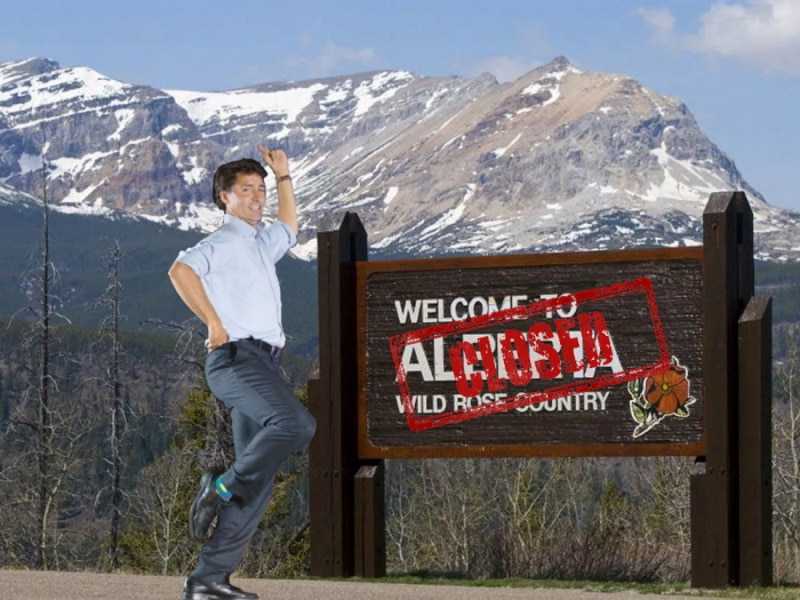
Tuesday’s cabinet announcements are a disaster for Alberta – and also for Canada.
No, I don’t mean what’s good for Alberta is good for Canada. That’s a bad Liberal habit – confusing partisan self-interest with the national interest.
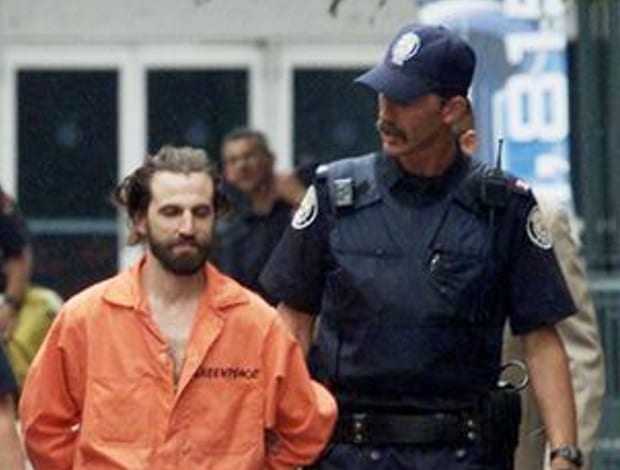
It is somewhat apropos that Prime Minister Justin Trudeau announced his new cabinet less than a week after Alberta released its “Report of the Public Inquiry into Anti-Alberta Energy Campaigns.” As detailed in that report, a central figure in the crusade to shut down oilsands development was Trudeau’s new environment minister, Steven Guilbeault, which exposes the prime minister’s past rhetoric about the need to strike a balance between the economy and the environment as meaningless.

It’s the question on every Canadian’s lips– or at least every Canadian shut out of affordable housing thanks to the market’s obscene price escalation under Justin Trudeau’s Liberals. Does the re-elected prime minister and his coterie of home-owning and house-flipping MPs actually give a damn about whether housing is affordable for anyone who isn’t already wealthy? If his latest cabinet appointments are any indication, the answer is a resounding “no.”
Upperdate: Who’s who in Justin Trudeau’s 2021 cabinet
Update: Anand to defence, Joly to foreign affairs: Trudeau announces major cabinet shakeup
OTTAWA—Justin Trudeau is kicking off his third mandate with two big moves, promoting environmental activist Steven Guilbeault to head up the Liberal government’s ambitious climate action plan, and moving Marc Garneau, the foreign affairs minister out of cabinet, the Star has learned.
A government source confirmed the moves which are to come in a cabinet shuffle to be unveiled later this morning that is expected to promote backbenchers and rookies and shuffle some veterans to start Trudeau’s third mandate focused on climate action, housing, and economic recovery.

OTTAWA — An organization that received $5.8 million from the federal government to help job seekers from under-represented communities is refusing to say if it paid the prime minister’s mother, Margaret Trudeau, to speak at an event it held this month.
She appeared in Elevate.ca’s Think2030 series, on October 14, to speak about mental health and the effects of the pandemic.
In this fundamental of governance we discover a great political paradox. Yet, despite all evidence, no one ever speaks of it. Certainly not establishment media, or so-called “experts” in our academic world.
What has transpired is revolutionary. Public opinion as manifest in the will of the majority has lost all political relevance. Examples are found in immigration policy, refugee intake, carbon taxation, internet censorship and countless other social issues.
No reasonable observer should expect government to adhere to every desire of the general public. In 2021, this privilege is reserved for the smallest slivers of our population. The result is a social inversion of giant proportions.
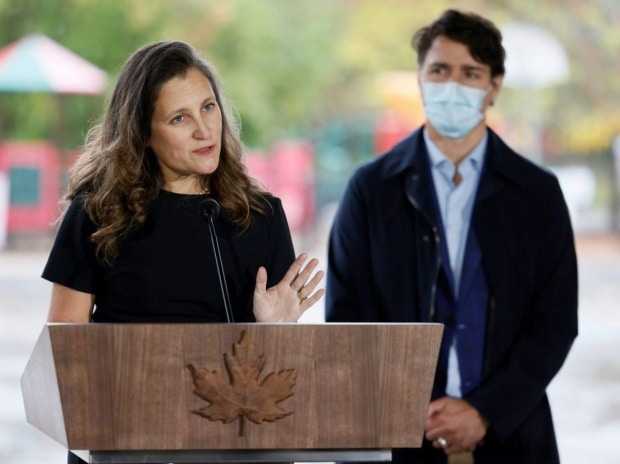
In the logistics and delivery industry, it’s called the “last mile” problem. The greatest number of complications usually occur during the final steps of getting a package to your door.
I think that’s where we’re at with the pandemic. We’re close to the last mile and that’s what’s making so many people testy.

David Dickson, a retired Liverpool police officer who now runs a cybersecurity firm in Alberta, has been keeping up over the last several months with the Alberta government’s COVID-19 data and various flaws, edits, and omissions he has uncovered over time. Recently he also noticed the Canadian federal government making similar alterations to their COVID-19 data.

Originally the Department of Public Safety gave a contract to IBM Canada to create a framework for the program costing taxpayers $1.1 million. Several months later, that contract increased by $395,6000 after signing onto optional services.
The Canadian Taxpayers Federation (CTF) has since called the wasteful spending a “boondoggle” for the government.
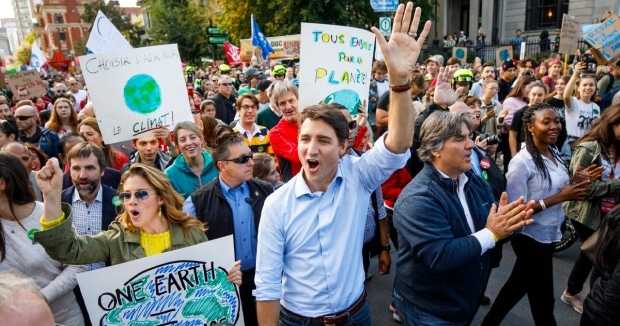
As Justin Trudeau’s government seeks to “decarbonize” Canadian industry, the Liberals are advancing what they call a “just transition” devoted to “helping workers and communities thrive in a net-zero carbon economy.” While it sounds noble, it’s an initiative based on the idea of phasing out jobs in Canada’s oil and gas sector. Moreover, it neglects to recognize the work being done by the energy industry, such as investing in carbon capture and storage, which reduce emissions without punitive carbon taxes.

Canada may extend the deadline of a program created this year to give temporary residents working in key sectors a route to permanent residency, and is considering expanding the program’s eligibility to include refugee claimants, Canada’s immigration minister told Reuters on Thursday.

Being populist to me means listening to people who actually work for a living, not just those who have the luxury lifestyle of being paid to give opinions, which really isn’t work. One of the things that bothers me about elitists is their refusal to use plain language. And I don’t believe it’s because they’re smarter; smart people believe in communicating effectively and clearly. The over-use of jargon, the invention of fake words and using complicated words where simple ones will do, isn’t about improving communication, it’s about making it harder, to keep out outsiders. Use jargon; use acronyms; denounce other people’s language as obsolete or even racist. That’s a form of elitism.
It was on Aug. 15, 2021, that Canadians were alerted by their leader to a “pivotal moment,” one that was “maybe the most important since 1945, and certainly in our lifetimes.” What were the elements that gave our leader grounds for declaring that out of all the moments we have had since the Second World War — of which there were many — this moment was the “most important”?

I’d like to start with an excerpt from a recent public document. It’s a bit longish but you need to catch the flavour of the thing. It has a magnificently “certain” tone, speaks of vast issues, asserts a Universalist impact, and has dread warnings for our country, Canada. Then I will offer a quiz.
