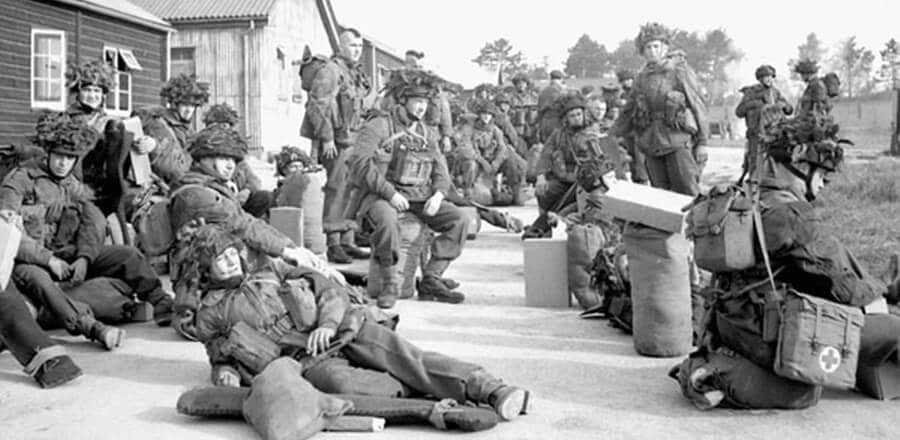
The Battle for the Village of Varaville
The Battle for the Village of Varaville

Regardless of what the critics say, aircraft carriers will continue to be indispensable to our national security.
Midway Airport. Some think its name comes from being “midway” between New York and the West Coast. Others mistakenly think it is named for the “Monsters of the Midway,” Alonzo Stagg’s legendary University of Chicago Maroon football teams, the name later adopted by the Super Bowl champion 1985 Chicago Bears.
Actually, it is named for the decisive blue water naval engagement that turned the tide of World War II in the Pacific. Eighty years ago this month, June 4-6, 1942, a combined Japanese fleet that included four aircraft carriers, one light carrier, and 11 battleships prepared to destroy U.S. naval airpower in another surprise attack near Midway Island, a lonely Pacific outpost 1,500 miles from Pearl Harbor.
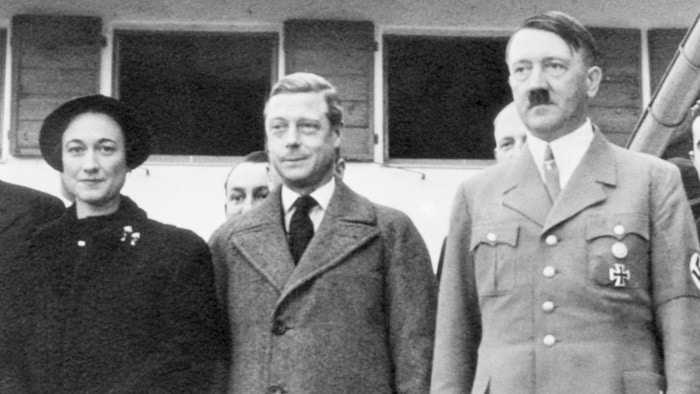
Long-standing rumors that Edward VIII aided the Nazis after being forced to abdicate have been given new credence by evidence that he passed critical information to the Germans and urged them to continue “severe bombing” of the country, paving the way for him to return as head of a puppet government.
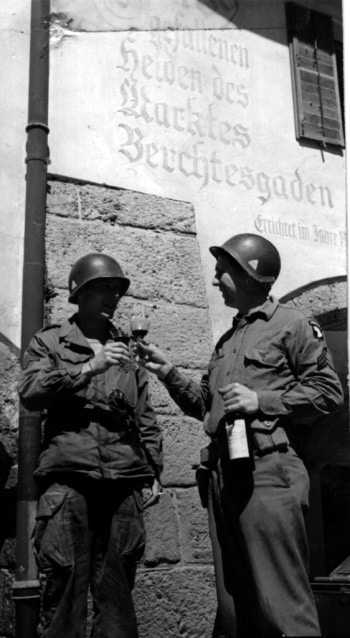 A US spymaster inadvertently helped the Nazis develop one of the most effective disinformation campaigns of the second world war by spreading rumours about Hitler’s plans for a Where Eagles Dare-style Alpine redoubt, a historian with access to classified US military records has found.
The myth that the Nazis were amassing weapons and crack units of 100,000 fanatical soldiers in the spring of 1945 for a last stand in the Austro-Bavarian Alps was without any basis in fact but had a powerful hold on the imagination of American and British military leaders, who feared it could prolong the war for years.
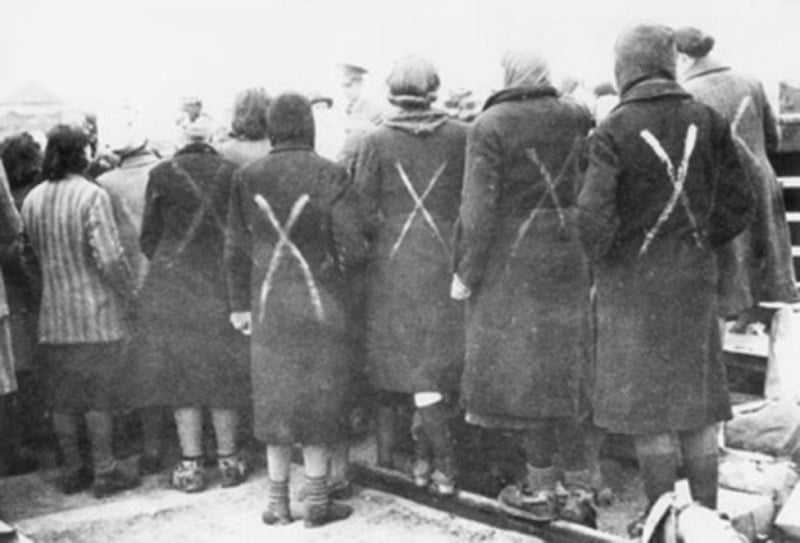
Gwen Strauss was enjoying a leisurely lunch with her 83-year-old great-aunt, Hélène Podliasky.
Hélène was French and Gwen, an American author, lives in France.
It was 2002 and the conversation turned to Hélène’s past. Gwen knew her great-aunt had worked in the Resistance in France during World War Two, but didn’t know anything about that time in her life.
Hélène told the story of how she was captured by the Gestapo, tortured and deported to Germany to a concentration camp. As the allies drew near, the camp was evacuated and she was forced to walk for miles on a Nazi death march.
“Then I escaped with a group of women,” she said briefly.

December 7 will mark the 80th anniversary of the Japanese surprise attack that killed 2,403 American service members, dealt a grievous blow to our fleet, and forced the United States into World War II. As we mark this anniversary, our inadequate response to China’s military build-up shows that we are not taking the lessons of that infamous day seriously.
Nine years ago, while stationed at Joint Base Pearl Harbor-Hickam, I put on my whites and took part in the annual Pearl Harbor Remembrance Day commemoration. Watching the ceremony, I must admit that the horrors of that attack seemed quite distant. More than the beautiful tropical setting, I knew that I was a part of the most dominant naval force in human history. With the Cold War long past, no other country could threaten America’s fleet.
The forgotten history of Pearl Harbor – Why Japan’s attack on the US 80 years ago was not a surprise.
In a straight line between the US and Japan, Hawaii is the first piece of land due west of San Francisco. In 1941 its shallow-water port, Pearl Harbor, provided the best place to anchor in the whole Pacific. There, at 7.49am (local time) on 7 December of that year, a first wave of torpedo bombers began to destroy the US Pacific Fleet.
The Second World War revolved around not just Europe and the Atlantic, nor even the Pacific, but the whole of Asia, too. Japan occupied Korea from 1905 to 1945, and in 1931 it used Korean troops when invading Manchuria, a vast territory of China north-east of Beijing. By 1937, in the then capital of China, Nanjing, Japan had killed 300,000 inhabitants in six weeks. By 1939, it had taken over the large island of Hainan, off China. By the next year, it had invaded French Indochina (now Vietnam, Laos and Cambodia).
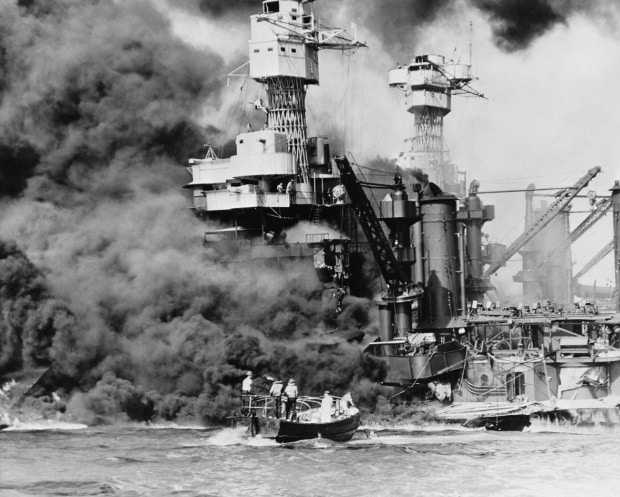
“The Führer was surprised — he clearly had no foreknowledge of the date and time of the attack — and ecstatic.”
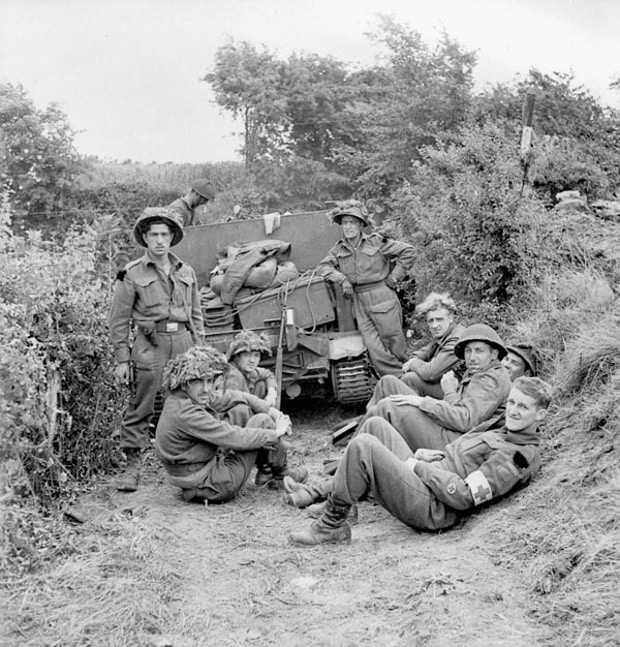
World War II concluded more than 75 years ago, and although there have been regional conflicts where Canadian soldiers have served since then, there’s been no war that tested the willingness of all young Canadians to go to the front lines to defend freedom if called upon.
Retired Lt.-Col. John Selkirk, who spent decades in the reserves and also taught at the Royal Military College of Canada, expressed confidence that Canada would respond to a contemporary threat.
I am not so optimistic, Canada is a 5th column now.
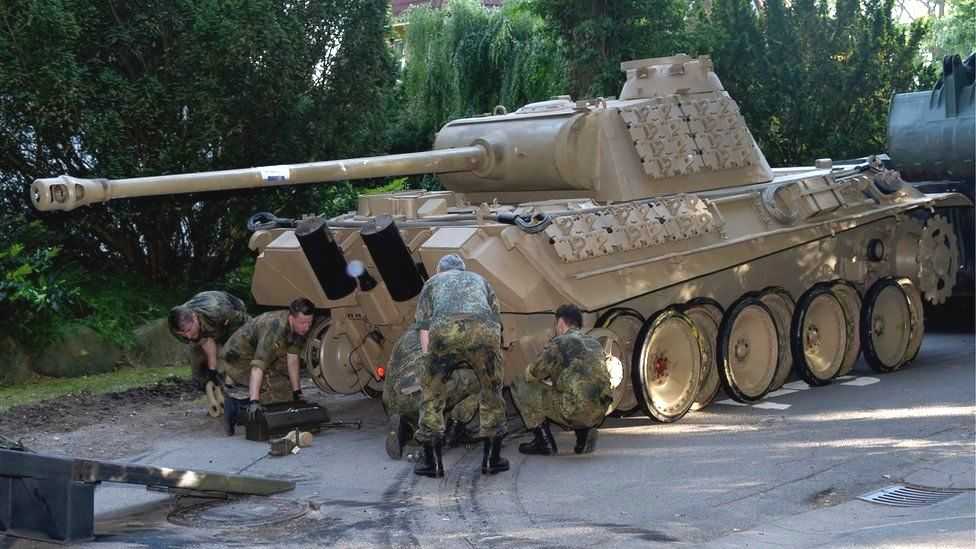
Acting on a tip about stolen Nazi art, German investigators raided a home near the northern German city of Kiel in 2015. Instead, they discovered an underground garage containing a World War II-era Panther tank, a torpedo, mortars, anti-aircraft guns, more than 1,500 rounds of ammunition and other weapons.
I posted on this previously but have come across some interesting history about the tank’s origins. Seems it was one of several cobbled together by the British in German factories at wars end and transported to the UK for evaluation. See the video below. I follow historian Mark Felton on YouTube, he posts a lot of interesting stuff.
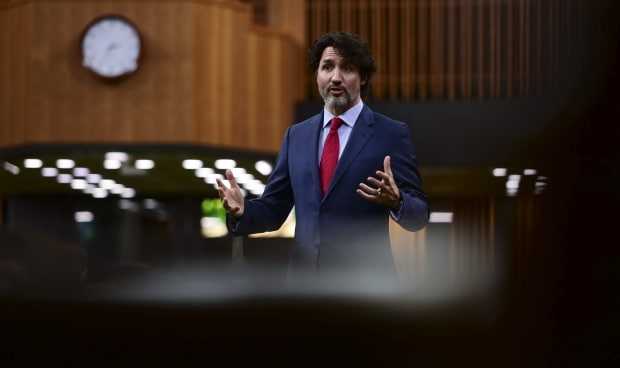
In a virtual meeting, Trudeau confirmed the date of the apology with some family members of Canadians of Italian background who were interned during the war.
The Daily Caller’s Lisa Bennatan went to Paris, France, and asked Parisians whether they are grateful for the United States’ help during World War II.
The poster is from Vichy France, referencing de Gaulle, then of the Free French forces, it translates roughly as “He embraces us only to slaughter our sons and companions”
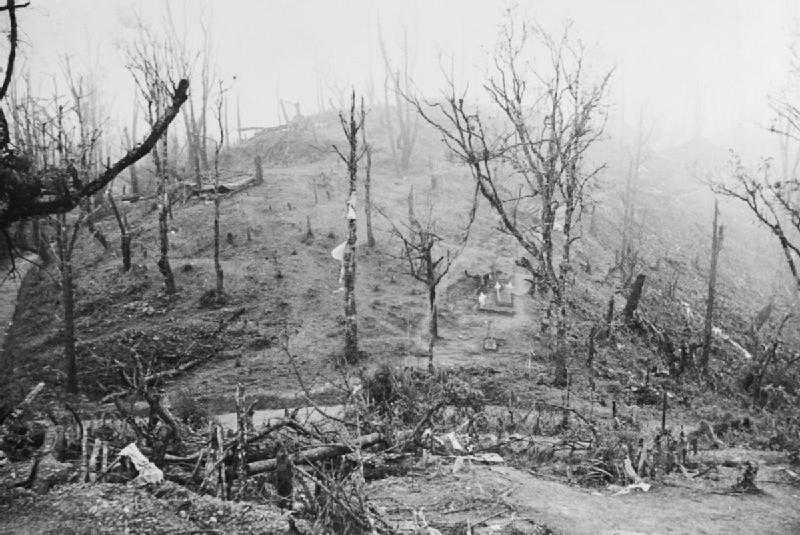
Captain Robin Rowland was 22 when his regiment was deployed to the north-eastern Indian town of Kohima. It was May 1944, and a small group of British-Indian soldiers was under assault by an entire division of Japanese forces.
Capt Rowland, now 99, vividly remembers approaching the town, following a trail of devastation to the front line.
“We saw abandoned trenches and destroyed villages, and as we moved forward the smell of death was everywhere,” he said.
I read this book late last year – Road of Bones: The Siege of Kohima 1944 – The Epic Story of the Last Great Stand of Empire
The battle was a major feat of arms for the vastly outnumbered British and Indian troops but also for the Japanese if you consider the terrain they had to cross and the fact that their generals lied to them about resupply. They really did starve and the author provides an excellent glimpse into the Japanese view of things much of which was every bit as rancid as we’ve come to understand. I was surprised to discover the “Traitorous General” Kōtoku Satō who ignored his commanders and ordered his soldier’s to retreat back into Burma was not executed though he did endure bouts of public shaming initiated by the truly guilty long after the war. His post-war personal journey of atonement to his troops for having lead them to a disaster he foresaw is recounted revealing him to be anything but typical of Japanese militarism.
“Face” and emperor worship played such a significant influence in Japanese lives that the depth of belief is difficult for me to grasp. In another book dealing with the battle of Okinawa I read in disbelief that a Japanese army officer held on to the hope that the Imperial Navy would arrive to blast the American fleet laying siege to the island. He had never heard of Midway or knew that the Japanese Navy was long defeated by that stage of the war. A stranded naval officer he befriended told him the truth of Japan’s situation. Still he fought on to the bitter end surviving only because he was captured having passed out from wounds.
The book gives a good sense of the pending collapse of Britain’s empire in India. Many saw it coming others not so much. The common soldier seemed to understand better than most that Indian independence was a foregone conclusion and they simply weren’t wanted there. In fact the Japanese had their own “Indian Army” on their side. Still they fought and triumphed against great odds because they were good soldiers fighting not for ideology or empire but only to get it done and go home.
It’s a worthwhile read.
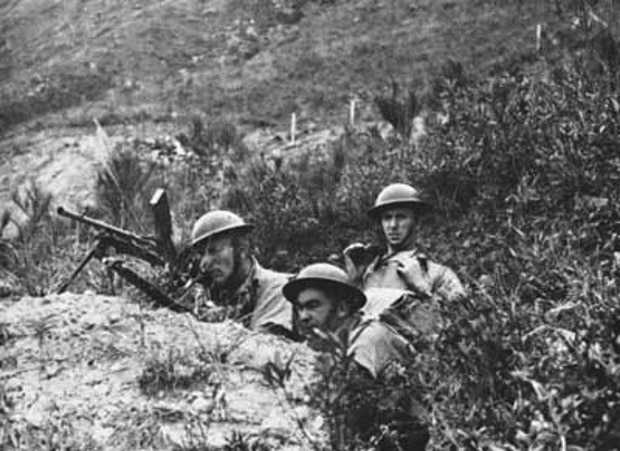
By December 22, Mount Cameron, several miles north of Reid’s Regimental Aid Post, had become the linchpin of West Brigade’s defensive line as the Japanese forced their way from the east. The position was held by only 100 Winnipeg Grenadiers, reinforced by a platoon of British Royal Engineers — all that could be spared. After raining Mount Cameron’s defenders with artillery and mortar fire, the Japanese attacked during the evening with 1,000 troops. The Grenadiers and Royal Engineers fought back ferociously, but a Japanese breakthrough on their right flank threatened to encircle their position and forced their withdrawal northward to Wan Chai Gap. In his postwar debriefing in October 1945, Reid recalls the confusion of this night…
