Today, it’s a field of grass. But soon, it’ll be the site of the first mosque in this Japanese town.
“It makes me worry about how our community might change,” says long-time resident Noriko Izumizawa.
Plans to build an Islamic religious site in Fujisawa, a laid-back seaside town about an hour’s drive south of Tokyo, have sparked a wide range of emotions.
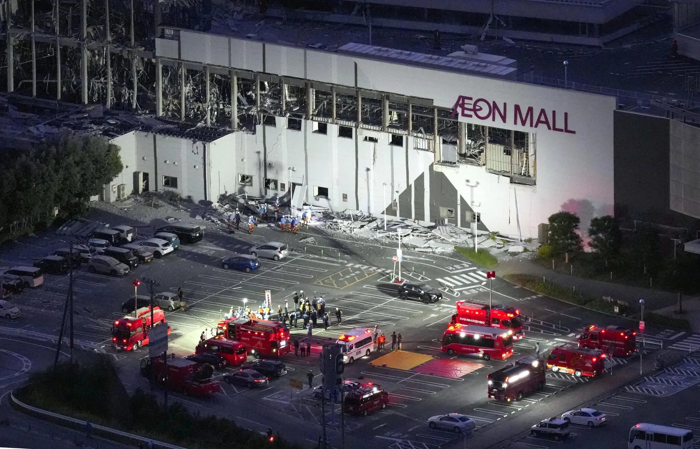
A 6.8-magnitude earthquake has shaken south Japan, leaving at least 50 people injured. Some are trapped and presumed dead inside a shopping mall.
The earthquake hit the Kumamoto prefecture on the southern Kyushu island late on Tuesday afternoon, knocking out power to thousands of homes and damaging roads, bridges and buildings.
Japan’s prime minister, Sanae Takaichi, told reporters authorities were still assessing the extent of the damage in the area, which was devastated by another deadly quake a decade ago.
Japan quake damage seen from the air
Kumamoto fire and police services are assessing damage from the magnitude 7.1 earthquake that struck southwestern Japan on July 28.
Japan seems cautious of its powerful neighbor across the East China Sea: The National Diet has decided to overhaul its entire intelligence-gathering system. This is one of the key initiatives of the current Japanese Prime Minister, Sanae Takaichi. She aims to expand this institution’s capabilities and centralize those efforts. The focus goes beyond counterterrorism; Takaichi reportedly also wants to know if the island nation is being surveilled and who might be spying. This is not new: everyone engages in these activities, whether adversary or ally
Japan, in the 1980s, was supposed to be the future. Its industrial groups, protected by dense networks of banks, suppliers and friendly shareholders, were praised as more patient, more loyal and more strategic than America’s purportedly short-term capitalism. Germany, meanwhile, was sold as the humane alternative to Anglo-Saxon brutality: strong unions, worker participation, industrial discipline, export prowess and a “social market economy” that allegedly reconciled capitalism with solidarity.
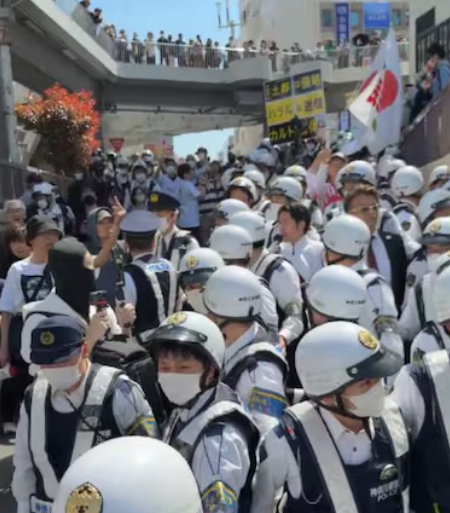
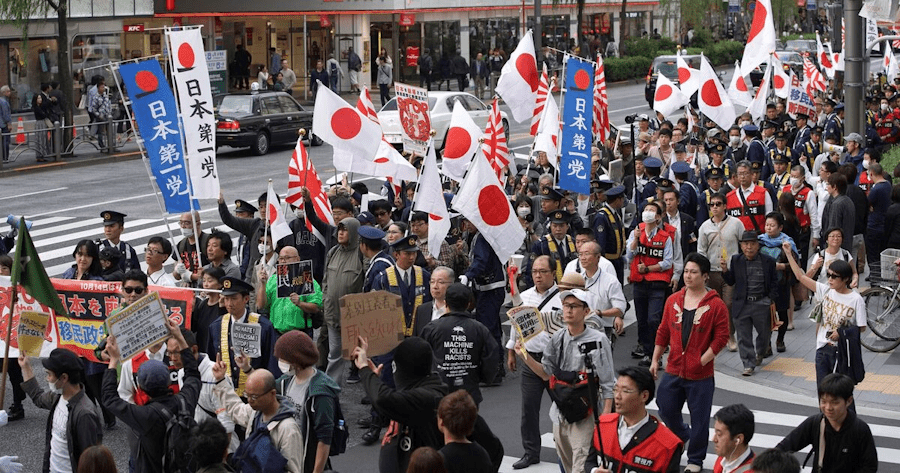
That the Japanese will not allow pro-jihad, pro-Sharia elements to take over their country in the name of diversity and political correctness is clearly evident from a wave of viral videos showing large crowds in Fujisawa taking to the streets to oppose a proposed mosque project which is expected to be one of the largest mosques in the area.
An article posted at a well known “conservative” website evoked an interesting comment. The article was about Japanese prime minister Sanae Takaichi’s proposals to raise the bar to Japanese citizenship for foreigners. Proposed requirements include increasing the length of residency in Japan and language proficiency.
With respect to language proficiency, the U.S. has had English language and civics test requirements for citizenship since the 1930s. If the prime minister’s proposal is approved by the legislature (the Diet), then Japan will have finally caught up with the U.S. and other European countries. Whether language tests and so on effectively screen out undesirable candidates is not known. How have they worked out in the U.S.?
At the beginning of the month, multiple news sources hailed the 64-year-old Sanae Takaichi as the soon-to-be first female prime minister of Japan. She is the president of the conservative Liberal Democratic Party (LDP). The LDP has dominated Japanese national politics since the 1950s. This unprecedented run, with only two brief exceptions, was not always based on a parliamentary majority. The LDP often formed a coalition with the Komeito Party, a socially conservative-centrist party, which is associated with the Buddhist organization Soka Gakkai. At the last minute, this long-standing LDP-Komeito coalition fell apart, and it appeared that Sanae Takaichi would not become prime minister. However, the LDP formed a new alliance with the Democratic Party for the People (DPFP). This party is considered centre-right and more conservative than Komeito. Following the new alliance, Prime Minister Sanae Takaichi took office on October 21.
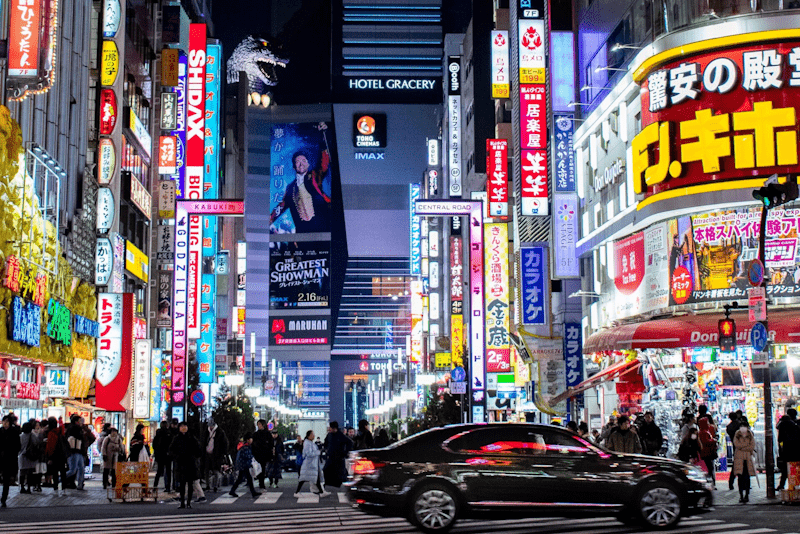
Visit Japan and it feels affluent and successful. Roads look like they were tarmacked and painted the night before, and everyone seems to be driving a new (or perhaps just very clean) car. Levels of public safety and trust remain high.
Cities such as Tokyo are abuzz with high-end shops and restaurants. And for all that it’s a tourist-board cliché, Japanese culture really does run the gamut from the timelessness of temples, shrines and festivals through to cutting-edge fashion, architecture and visual media.
An ever-increasing number of tourists — rising to 36.9 million last year — find that all this is available at surprisingly low cost. Japan has had nothing like the high inflation of the UK and US, and the yen remains weak. Find the right restaurant and a sumptuous multi-course meal is yours for the price of a large McDonald’s back home.
In a highly unusual development for Japan, anti-immigration protesters this weekend marched through the streets of major cities including Osaka. These demonstrations followed growing fears that the government is planning to massively increase the numbers of African visa recipients in the country. The demonstrators, waving banners and placards that read “end mass immigration” and “protect the Japanese people”, were entirely peaceful. But the fact that such action occurred at all is a sign of a growing nervousness among the Japanese that their country’s traditionally strict immigration policy and low number of yearly arrivals may not be guaranteed in the future.
The country has had nine consecutive years of declining births despite government efforts to halt the demographic crisis
It was a story of extraordinary national renewal. After decades in the grip of military imperial rule, millions dead in a war that traversed oceans and two cities flattened by atom bombs, the Japanese people picked themselves up and made babies.
Between 1945 and 1965, a nascent democracy flourished, the economy boomed and Japan’s population rocketed from 72 million to almost 100 million. By the turn of the millennium, the mountainous archipelago, the vast majority of whose population is squeezed into lower-lying coastal areas, was home to 127 million people, four times the population of Canada, which is 26 times larger.
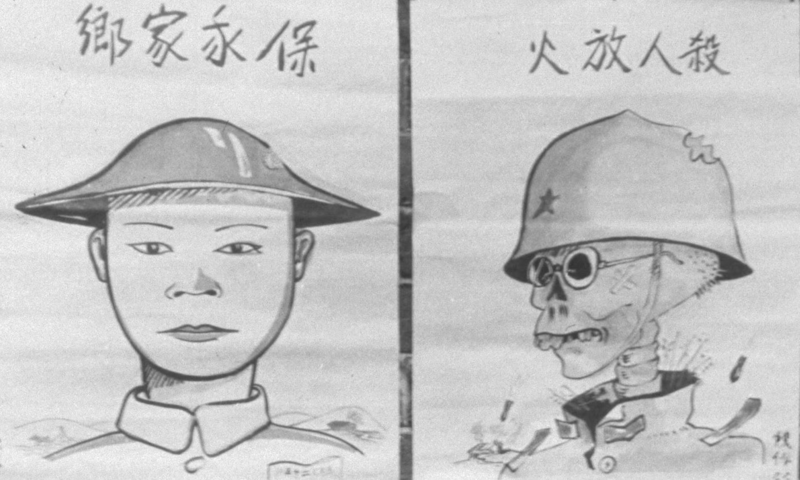
Anti-Japanese Museum in Canada Draws Criticism from Lawmakers
On May 27, 2025, Liberal Democratic Party lawmaker Masahisa Sato raised concerns in the House of Councillors Foreign Affairs and Defense Committee over a museum in Canada run by a Chinese-Canadian organization. It was not the first time he had done so. The museum, he said, conspicuously promotes anti-Japanese narratives through exhibits shown to large numbers of local high school students. He first raised the issue at an April 17 committee session.
According to those familiar with the matter, the museum in question opened in June 2024 in Toronto, Ontario. Called the Asia Pacific Peace Museum, it was reportedly spearheaded by a local Chinese-Canadian organization called Alpha Education. Its exhibits include references prominently reflecting China’s viewpoint on the Nanjing Incident and comfort women.
Fact: Japan was a brutal aggressor that committed war crimes on a massive scale in China.
Their treatment of allied prisoners of war while inhuman pales in comparison to the Rape of Nanking and other grotesqueries.
China went communist and the west needed allies post WW II so Japan’s atrocities were largely swept under the rug.
But why does Toronto have to have a Museum dedicated to this war?
Has it become fashionable that all ethnic groups rekindle their historic blood-feuds here in the Magic Kingdom of Multiculturalism and Diversity?
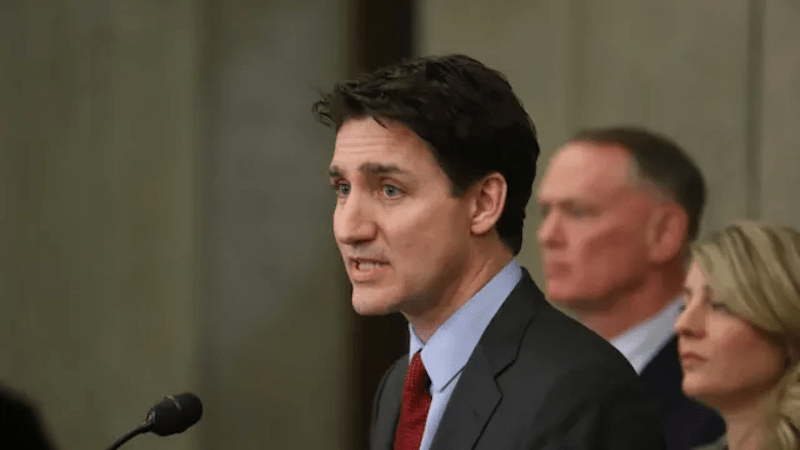
Donald Trump is offering Japan something that Canada, under Justin Trudeau, refused to and we will be poorer because of it.
While meeting with Japanese Prime Minister Ishiba Shigeru on Friday, the U.S. President mentioned several trade initiatives with Japan – but specifically exporting liquified natural gas to Japan.
This is the very deal Japan asked Canada for two years ago, in an attempt to wean their country off of Russian and Middle Eastern products. Trudeau refused their request, but on Friday, Trump boasted of what he says will be a great deal for America.
Trump gets cool stuff, Junior gets us laughed at.
NEW: The Prime Minister of Japan gave President Trump a super special gift called the “Eternal Helmet,” a golden samurai helmet created by a company in the Prime Minister’s hometown
“The Japanese government’s order came with two specific requests: (1) The helmet had to be… pic.twitter.com/lH11t9D9X8
A dispatch from Tokyo, where citizens follow unwritten rules
There is no litter on the streets of Tokyo—and also no litter baskets. That combination tells us much about how this great city maintains its quality of life. Here, public order is preserved not primarily by the authorities, but by citizens. In contrast with today’s New York, Tokyo relies on norms.
Tokyo’s lack of litter baskets has a back story, one the city shares with New York: a terrorist attack. In March 1995, a death-cult group released deadly sarin gas on three lines of the Tokyo subway system, including one adjacent to Japan’s parliament, the Diet. The rush-hour attack killed 13 and sickened more than 1,000 others. Officials, concerned that litter baskets might be used for bombs and future attacks, removed them.
Faced with crises in housing, health care and a stagnant economy, Canadians may feel like their challenges are insurmountable. But solutions may not be that hard. To see how we might do things differently, we could look to Japan’s cities for ideas.
Take the two capitals, for starters. Ottawa has about a million residents, Tokyo some 14 times that. Yet Tokyo occupies less space. You would think that with that kind of density Tokyo, which after all is one of the world’s great metropoles and a global corporate and financial hub, would be an expensive place to live. Yet average house prices are lower there than in Ottawa.
Japan appears to be transitioning from a homogenous society to embrace ‘diversity and inclusivity’ by ushering in “an era of mass foreign immigration.”
It’s set to be a massive change for a country that was still up until recently 97.5% ethnic Japanese, according to the CIA World Factbook.
A Bloomberg report details how rapidly declining native birth rates, an aging society and a chronic labor shortage is fueling the importation of millions of foreigners who “are changing the face of Japan.”



 Japan appears to be transitioning from a homogenous society to embrace ‘diversity and inclusivity’ by ushering in “an era of mass foreign immigration.”