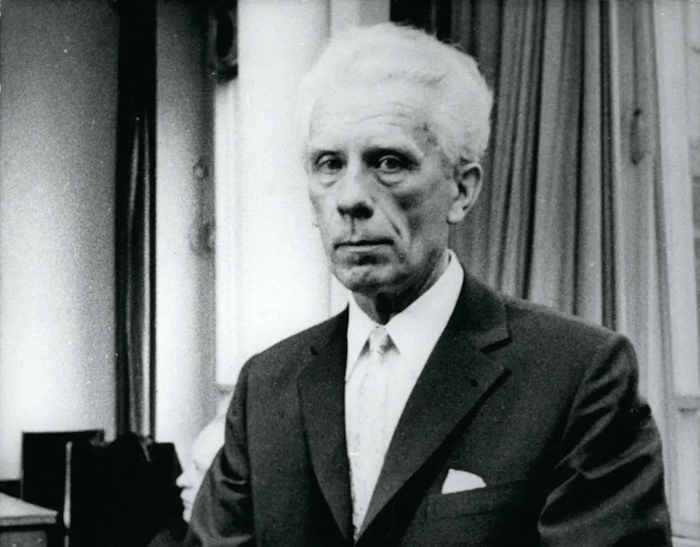
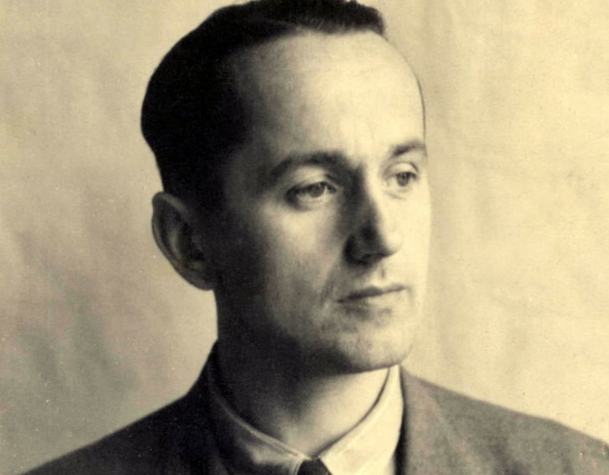
In 1949, Kazimierz Moczarski, a leading member of the Polish resistance, was in his fourth year of incarceration when he was moved into a cell with two Nazis at Warsaw’s Mokotów prison. One of them was Jürgen Stroop – a war criminal and SS general who had led the infamous destruction of the Warsaw ghetto and was responsible for the murder or capture of more than 56,000 Jews. They shared the same four walls for 255 consecutive days.
WW II History
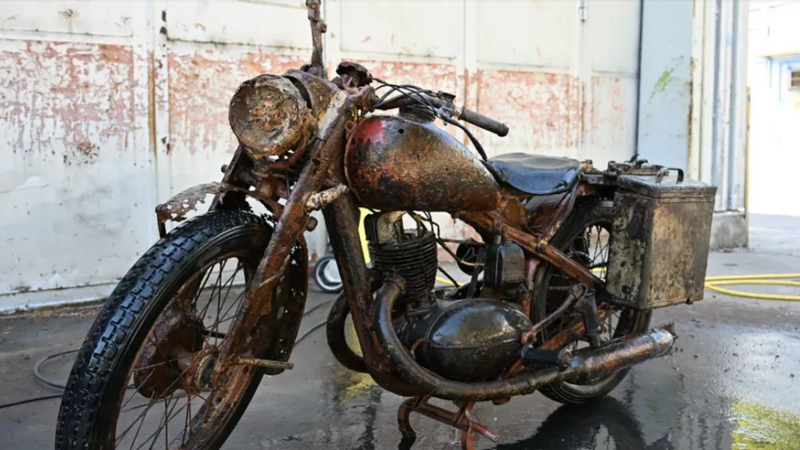
Danube river’s low water levels reveal remains of WWII soldiers and motorcycle
The bodies of two World War Two German soldiers have been found in Budapest’s Danube river, due to record-low water levels after an intense drought.
Found alongside their remains were the identification tags of the two soldiers, a largely intact German army Wehrmacht motorcycle, a wedding ring and a Kuban shield – a combat badge of the Wehrmacht, the German War Graves Commission said.
The remarkable finds have sparked hope that some families could finally discover the fates of their ancestors, more than 80 years on from the war.
The Daring Mission to Recover World War II POWs From the Bottom of the Ocean
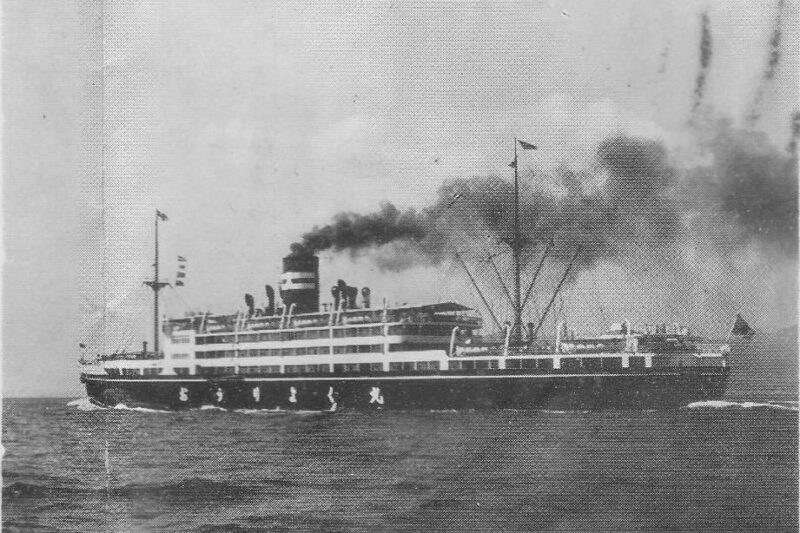
SUBIC BAY, Philippines—Petty Officer First Class Taylor Lucas was nearly 80 feet underwater, inside the wreckage of a Japanese liner used to transport captured American soldiers and sailors in World War II.
In the darkness, the U.S. Navy diver dug through mud, wood and steel. There was so much sediment floating around that a flashlight was no use.
Suddenly, he touched something that felt different.
Lost memoir of Hiroshima survivor found after decades in US archive
The memoir of a man who survived the horrors of Hiroshima is to be published for the first time this summer after its discovery in a US archive.
The 230-page memoir was written almost 80 years ago by Kiyoshi Tanimoto, who witnessed the city’s destruction after the atomic bomb was dropped in 1945. He will now be portrayed in a feature film by Takehiro Hira, whose acclaimed roles include the detective in the Netflix Japanese-British drama Giri/Haji. Pre-production begins in November, ahead of the shoot in February 2027.
D-Day, Just War, and Pope Leo
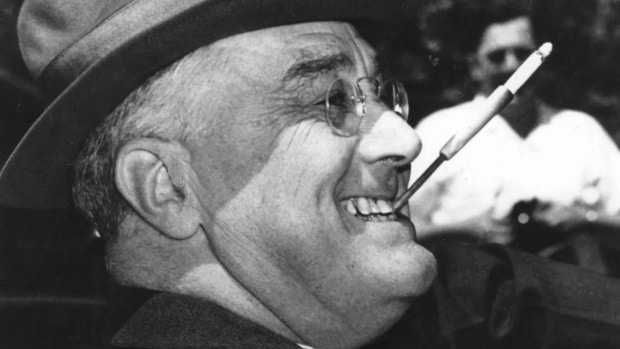
On June 6, 1944, as American forces began the liberation of France from Hitler’s clutches, President Franklin Roosevelt asked the nation to join with him in prayer…
5 Unsung Heroes Who Carried the Memory of D-Day
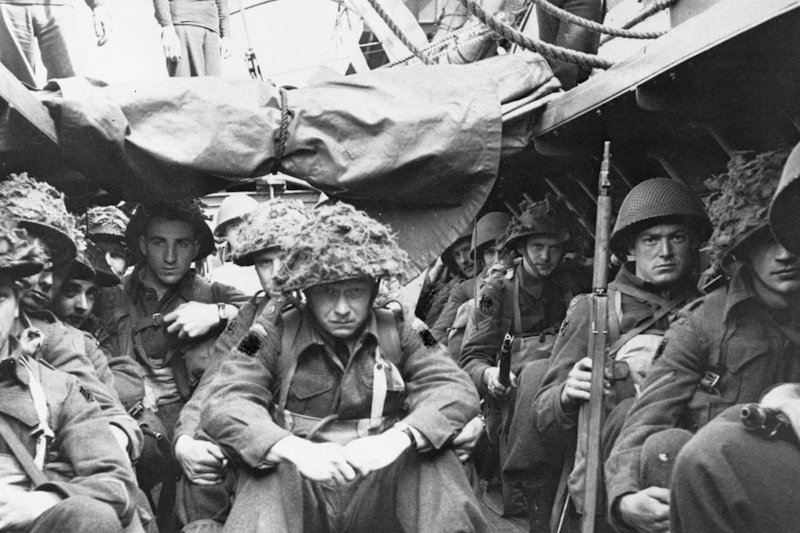
On the blood-soaked morning of June 6, 1944, the fate of World War II hinged not only on generals but also on thousands of ordinary people who fought their way onto the beaches and into the skies over Normandy, France, or otherwise joined in what became the largest seaborne invasion in history.
Over the years, the ranks of those who witnessed D-Day have thinned, and the event has receded from living memory into the realm of archives — and obituaries.
Sigh, it’s important to remember the unsung hero’s of WW II but why did the NYTimes have to drag gender into this?
Worthy stories nonetheless.
82 years ago … June 6 1944
A half century is a long time in a world that moves quickly from one fad to the next. Living in their greatly favoured land, Canadians often seem all too ready to forget the great events that let them develop and prosper in freedom. Many even fail to remember that young Canadian men and women played a major role in the greatest seaborne invasion of all time, the Allied assault on Normandy on June 6, 1944, and in the long, wearying struggle that followed in the Norman countryside.
My Dad landed on June 6th and here I am today a senior citizen in a very battered and bruised nation nearly vanquished by an invasion orchestrated from within.
Did you ever ask your dad about the day before Pearl Harbor

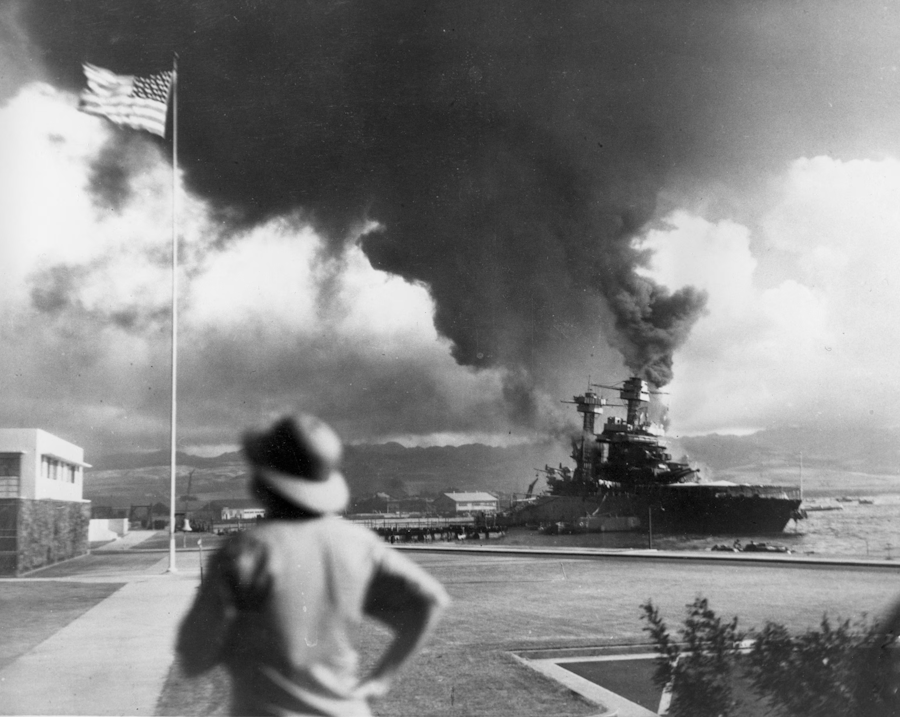
We will celebrate another anniversary of Pearl Harbor tomorrow. It turns out that my dad died on December 7, 2015, or an anniversary of that fateful day. Over the years, I asked him a lot of questions about that time period, or the buildup to the attack and the U.S. entrance in that war.
Who Was Helmuth Hübener?

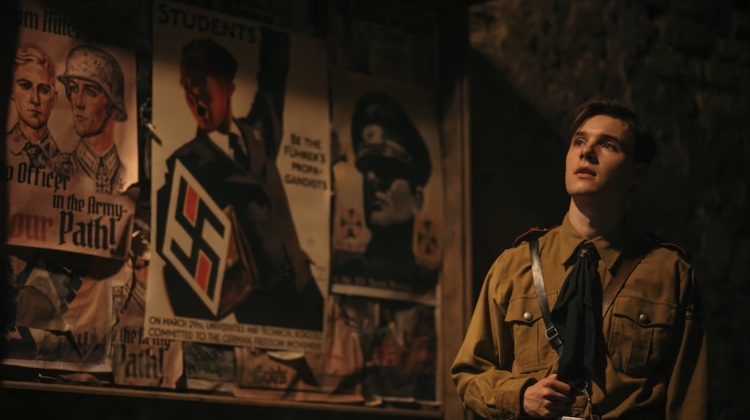
I knew what Truth & Treason was about before I watched it. I thought I’d seen enough movies about Nazi Germany to be able to get through it in one piece. But no: by the end of this thing I was in tears.
Truth & Treason is based on the true story of Helmuth Hübener, who, as the closing title cards tell us, was “the youngest resistance fighter in Nazi Germany to be sentenced to death for taking a stand against Hitler.” He was 16 at the time of his arrest, and 17 when he was executed.
Secret files reveal the Nazis chosen to run West Germany

For the best part of three years, Friedrich Karl Vialon was one of the archetypal “writing-desk murderers” who kept the bureaucratic machinery of the Holocaust ticking over.
Deployed to Nazi-occupied Riga in 1942, his job was to strip the Baltic states of every asset his staff could lay their hands on: jewellery, boots, winter coats, musical instruments, de facto slaves and gold fillings stripped from the mouths of executed Jews, one of which was reimplanted into the mouth of one of his secretaries.
Vialon performed this task with grim thoroughness, raising the number of Jewish forced labourers in the region from 6,000 to 13,800 and personally supervising the confiscation of belongings at house raids and the nearby SS concentration camp at Salaspils.
Was there another option to dropping atomic bombs on Japan 80 years ago?

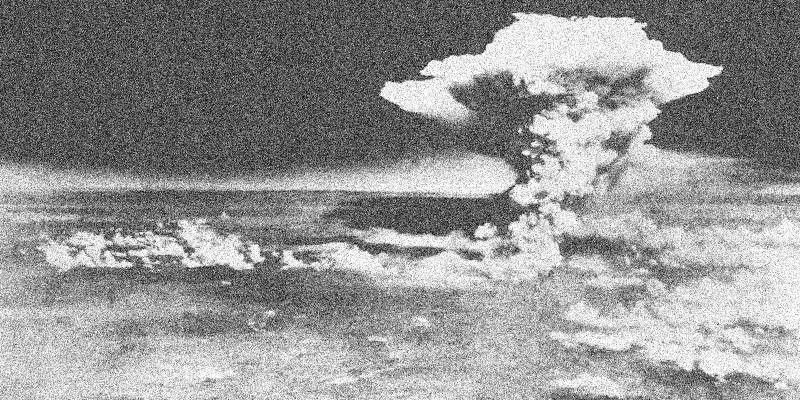
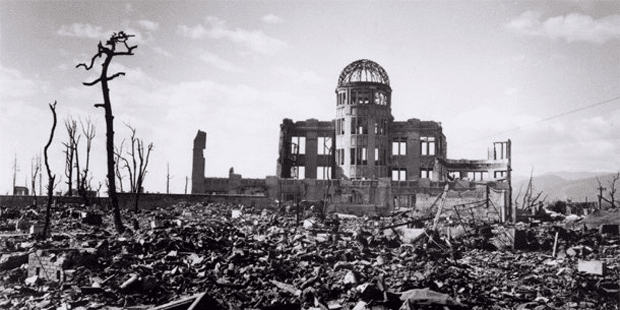
With the passing last week of the 80th anniversary of the U.S. dropping atomic bombs on the Japanese cities of Hiroshima (on August 6, 1945) and Nagasaki (three days later), familiar questions once again arise about our having done so. These include whether it was absolutely necessary in order to bring an end to the war, and whether or not there was any alternative to the two bomb attacks?
Addressing the second question first, an alternative option had been discussed. It involved providing the Japanese with a demonstration by dropping an atomic bomb on an uninhabited island. But such a demonstration involved risks.
America Must Never Apologize for Dropping the Bombs on Japan

There is no room for presentist moral narcissism.
This week marks the 80th anniversary of President Harry Truman’s fateful decision to drop atomic bombs on the Japanese cities of Hiroshima and Nagasaki (respectively, Aug. 6 and 9, 1945). To date, those two bombings represent the only instances in which nuclear weapons have been deployed in war. At least 150,000 Japanese perished — a majority of them civilians. But the bombings were successful in achieving their intended effect: Japan announced its formal surrender to the Allies six days after the second bombing, thus finally bringing the bloodiest conflict in human history to an end.
Disfigured, shamed and forgotten: Korean survivors of the Hiroshima bomb

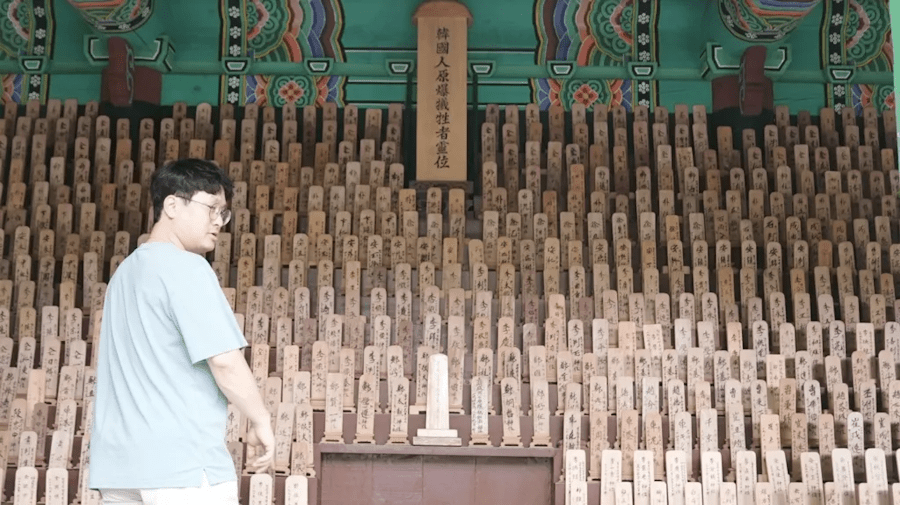
At 08:15 on August 6, 1945, as a nuclear bomb was falling like a stone through the skies over Hiroshima, Lee Jung-soon was on her way to elementary school.
The now-88-year-old waves her hands as if trying to push the memory away.
“My father was about to leave for work, but he suddenly came running back and told us to evacuate immediately,” she recalls. “They say the streets were filled with the dead – but I was so shocked all I remember is crying. I just cried and cried.”
Victims’ bodies “melted away so only their eyes were visible”, Ms Lee says, as a blast equivalent to 15,000 tons of TNT enveloped a city of 420,000 people. What remained in the aftermath were corpses too mangled to be identified.
Did the Nagasaki bomber ‘miss’ on purpose to save lives?

Few people have heard of Captain Kermit Beahan.
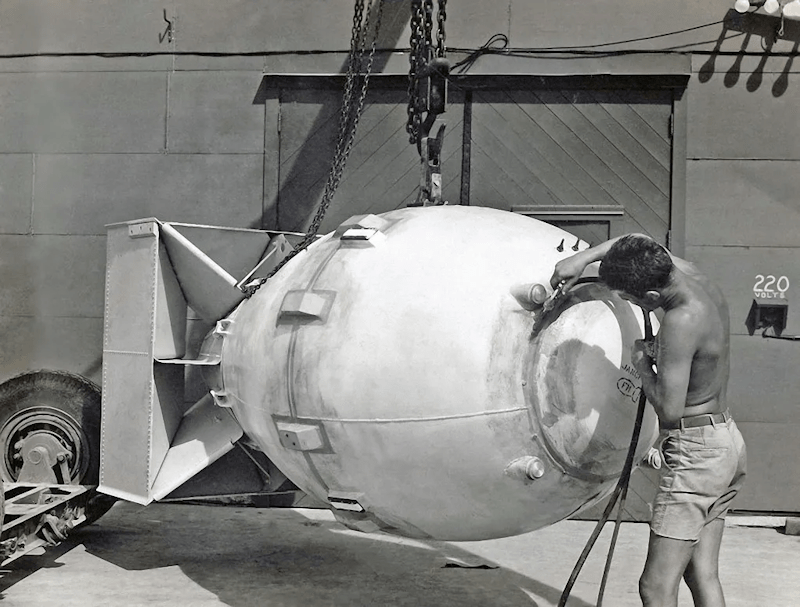
Beahan was the bomb-aimer on the B29 that dropped the plutonium bomb, known as Fat Man, on Nagasaki on August 9, 1945, an act that ended possibly the cruellest war in history.
Except that he didn’t drop Fat Man on Nagasaki: He dropped it to the north, 2.18 miles short of the city –— on tennis courts belonging to the managing director of Mitsubishi, next to what had been the largest Roman Catholic cathedral in Japan, in the hilly suburb of Urakami.
Diver finds warship bell after 80 years — but not everyone approves

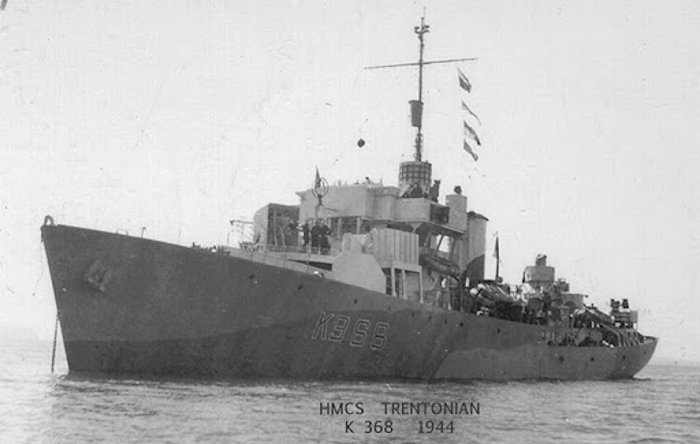
A piece of Canadian naval history has been recovered from the bottom of the English Channel and is now destined for a museum, but not everyone is celebrating.
British diver and YouTuber Dom Robinson, a 53-year-old military veteran and project manager, located the bell from HMCS Trentonian, 67 metres below the surface. The ship, a Royal Canadian Navy corvette, was sunk by a German U-boat in February 1945. Six sailors were killed in the attack, and the vessel went down in just 10 minutes.
Robinson, who has been exploring shipwrecks for more than 30 years, called the discovery “emotional” and “unbelievably exciting.
War grave desecration? Understandably yes.
In Asian waters the wrecks of Allied WW II vessels lost in battle have been plundered for scrap metal by the grateful natives our forces liberated from the yoke of Imperial Japan.