
BEIJING — In April 2025, Prime Minister Mark Carney was standing on the stage of the federal election leaders’ debate when he was asked to identify the greatest threat to Canada’s national security.
Without hesitation, Carney declared: “China.”
BEIJING — In April 2025, Prime Minister Mark Carney was standing on the stage of the federal election leaders’ debate when he was asked to identify the greatest threat to Canada’s national security.
Without hesitation, Carney declared: “China.”
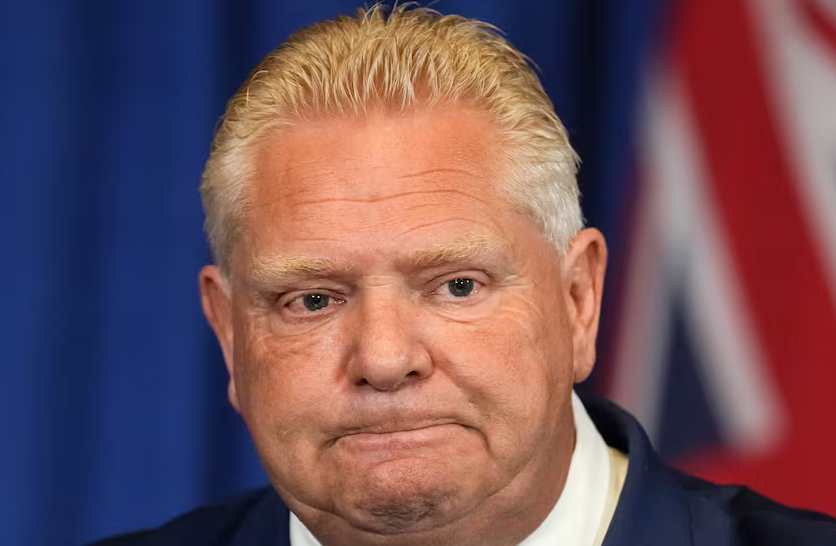
As Prime Minister Mark Carney moves to allay concerns about lifting tariffs on Chinese EVs, Premier Doug Ford says Ottawa needs to “step up” to protect Ontario’s auto industry.
Speaking to Rural Ontario Municipal Association conference delegates at the Sheraton Centre on Monday, Ford reiterated his alarm at Carney’s new agreement with China.
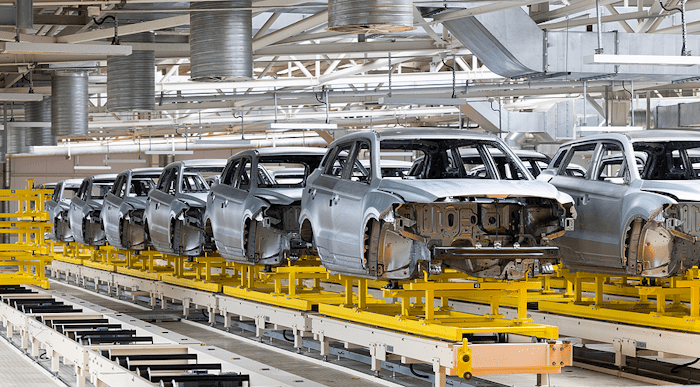
The U.S. House Select Committee on China is warning Canada that it should reconsider opening its auto industry to Beijing and risking thousands of jobs, ahead of the upcoming renewal negotiations for the United States-Mexico-Canada Agreement (USMCA).
By opening its market to Chinese electric vehicles (EVs), Canada risks distorting its auto industry by giving “Beijing a foothold in the North American auto market, threatening thousands of jobs and undermining a century of integrated automotive leadership,” the committee said in a Jan. 16 post on X.
“China’s state-subsidized overcapacity has already distorted Europe’s auto industry, and North America will be next if this precedent stands,” the committee said.
Canada’s decision to open its market to Chinese electric vehicles risks giving Beijing a foothold in the North American auto market, threatening thousands of jobs and undermining a century of integrated automotive leadership.
China’s state-subsidized overcapacity has already…
— Select Committee on China (@ChinaSelect) January 16, 2026
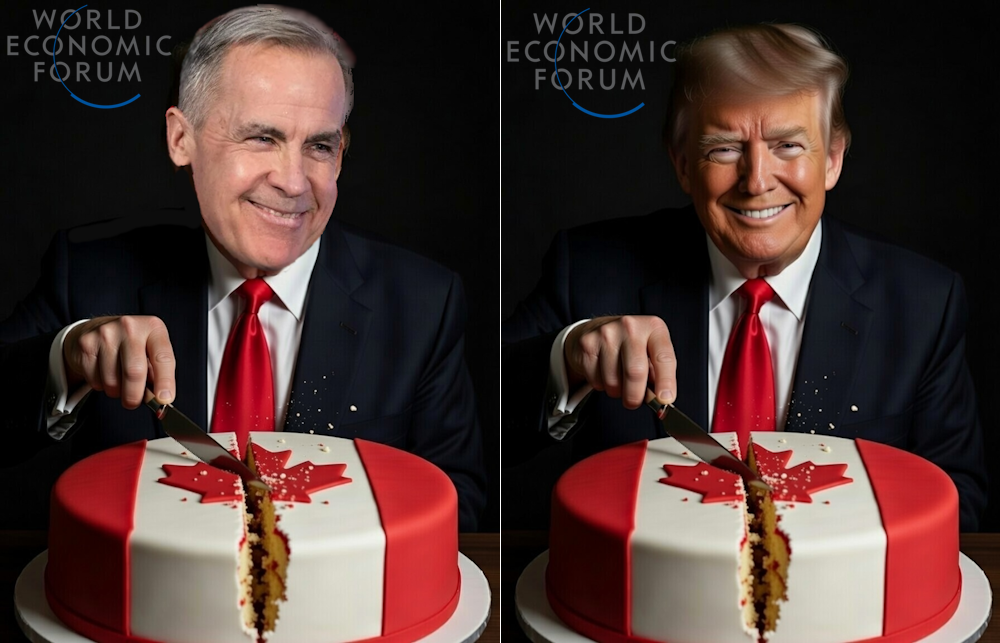
Apart from the snow and the temperature, Greenland does not have much in common with the Swiss alps. But the fight for the future of the island looms over the gathering of world leaders and businesses at the World Economic Forum (WEF) this week.
Indeed, the timing of Donald Trump’s extraordinary threat seems likely to have had this meeting in mind.
Trump loves Davos – which is beyond strange given the views of his base.
The World Economic Forum begins today when globalist gangsters fly to Davos on their private jets to eat wagyu steak together in five star hotels, while making plans for everyone else to ride bicycles, eat insects and live in pods. pic.twitter.com/dNN7SnLEsY
— David Kurten (@davidkurten) January 19, 2026
Previously …
In 2018, Trump went to the WEF Annual Meeting in Davos, and told them to suck it. No wonder globalist hate him. pic.twitter.com/bwza1wY6Yv
— A Man Of Memes (@RickyDoggin) January 16, 2023
h/t Mauser
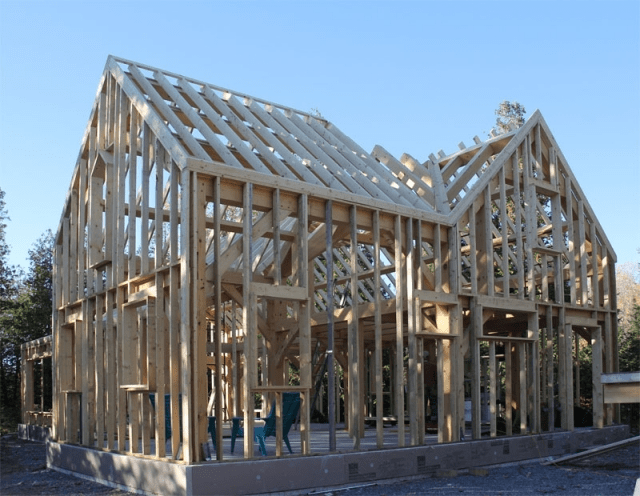
Canada’s housing shortage is no longer a future concern—it’s already here. Despite Ottawa’s decision last October to scale back immigration targets from recent highs, population growth continues to outpace the number of homes being built.
There’s a widening gap between the number of people who need housing and the number of units actually coming online, particularly in the country’s largest cities. The data suggest affordability pressures are unlikely to ease without either a sharp rise in construction or a closer alignment between immigration levels and housing capacity.
Immigration policy in Canada is designed to make the rich richer.
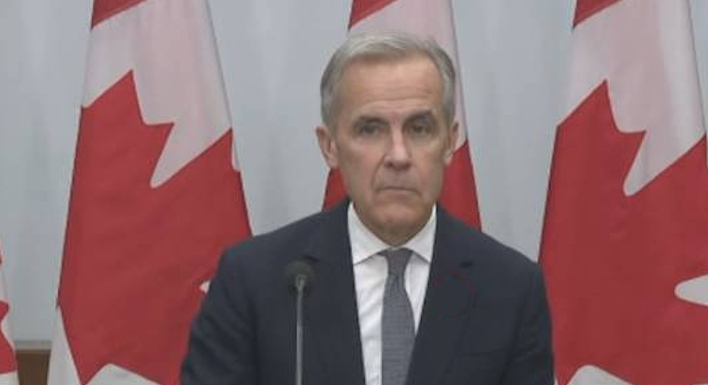
Surrender!
Without even a single shot being fired.
Without a murmur of protest.
That is what Mark Carney has done with his lame capitulation to the Dictatorship of China.
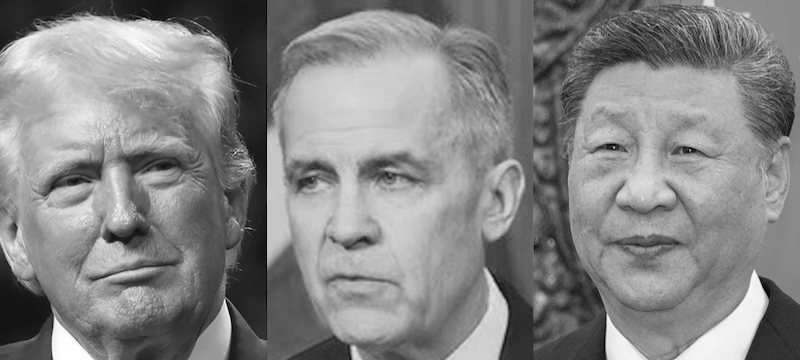
Canada and China have had a difficult relationship for years. Many Canadians have a real lack of faith and trust when it comes to China’s role as an honest broker and reliable trade partner — and understandably so.
Prime Minister Mark Carney clearly felt differently. The still-very-green prime minister somehow believes he’s identified the key to dealing with the Chinese Communists on a level playing field: give them everything they want, and more.
Canadians are increasingly pessimistic about housing, with most saying federal plans will not make homes more affordable or accessible, according to internal polling obtained by Housing Minister Gregor Robertson’s department.
Blacklock’s Reporter says the research found housing costs and shortages are now a dominant source of stress for households, with many believing home ownership is either unattainable or would require taking on crushing levels of debt.
Renters, the report said, are trapped in tight markets marked by low vacancy rates, rising prices and, in some cases, deteriorating living conditions.
Thank the Liberal Party.
CALGARY — While the Liberal government formally announced the start of its nationwide firearms gun grab program for individuals in Montreal on Saturday, it remains to be seen how enforcement will be initiated in the Prairie provinces.
DOHA — Prime Minister Mark Carney’s response to Doug Ford’s criticism of Ottawa’s deal to reduce tariffs on Chinese EVs: he’s out to build the auto industry of the future, not the past.
“Remember, this is a market that is the auto sector, which is evolving very rapidly,” Carney told reporters at a news conference. “We don’t want to be competitive in the market of 2000, 2010. We want to become competitive in the market in the future. That’s what’s going to get great jobs for Ontarians going forward,” said Carney.
The auto industry of the future? Sure Carney.
The only thing this carpetbagger is building is policy to funnel ill-gotten gains to his pals.
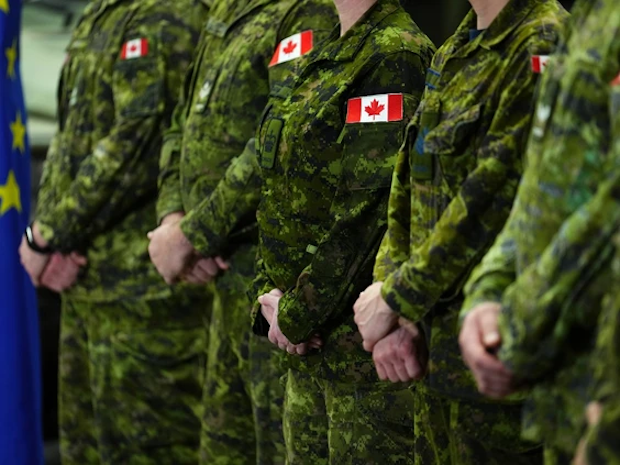
Canada has drawn up plans to send a small contingent of soldiers to Greenland for military exercises with other NATO allies in the face of threats from U.S. President Donald Trump to acquire the semi-autonomous island controlled by Denmark, two senior government officials say.
The officials told The Globe and Mail that the Canadian Armed Forces is awaiting final political approval from Prime Minister Mark Carney before the soldiers are flown to Greenland.
Former Canadian diplomat Michael Kovrig — who was detained by China for more than 1,000 days between 2018 and 2021 — says Prime Minister Mark Carney’s tone and messaging during his trip to China were “worrisome.”
In a bid to reset relations with China and counter trade threats from the United States, Carney became the first Canadian prime minister to travel to the Asian country in eight years this week.
Thread by @andrewmichta on Thread Reader App
The announcement by Canadian PM @MarkJCarney of a reset in Canada-China ties accompanied by a trade deal of dramatic proportions will likely go down in history as a major political blunder. But don’t listen to me: Premier Doug Ford of Ontario already denounced the deal. 1/9
Anger, however justified, should never be the principal driver of policy. This is true both about our Canadian brethren, and true about our European allies. We are living through a rocky transformation of the international system, but the geopolitical realities remain
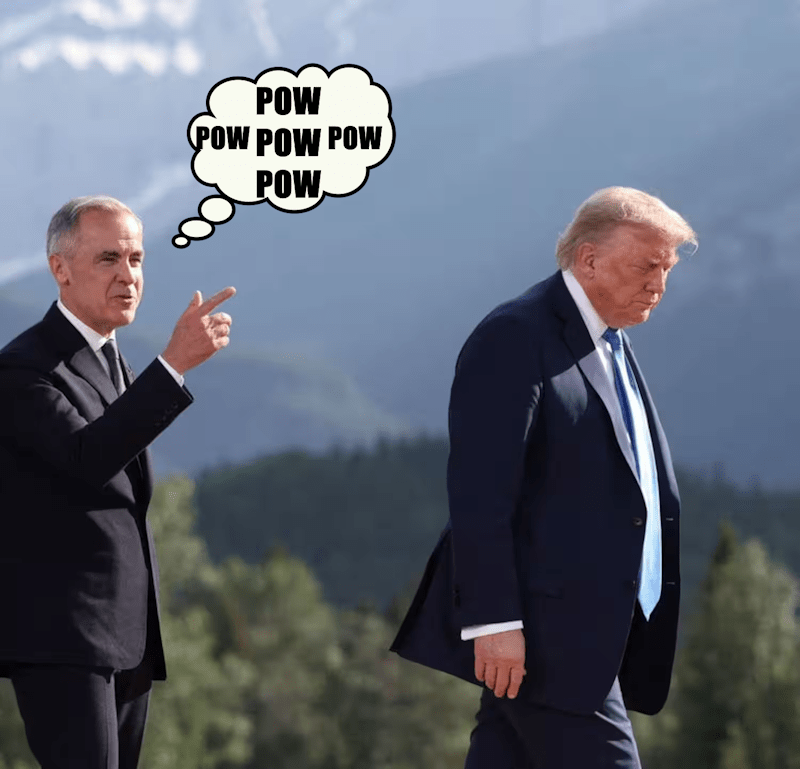
Canadians have not heard much about why negotiations with the United States seem to have gone nowhere. One has to ask: was Mark Carney really the best choice to negotiate with Donald Trump? All signs point to “absolutely not.”
Prime Minister Mark Carney was in Beijing this week, meeting with Chinese President Xi Jinping and other high-ranking Communist party officials. After landing in China on Wednesday, Carney posted a video of himself waving before descending the steps of his plane to enjoy the red-carpet treatment.
We’ve secured a new trade agreement with China — unlocking more than $7 billion in export markets for Canadian workers and businesses.
Watch my full remarks ⬇️ pic.twitter.com/0Nyrilm1DM
— Mark Carney (@MarkJCarney) January 17, 2026
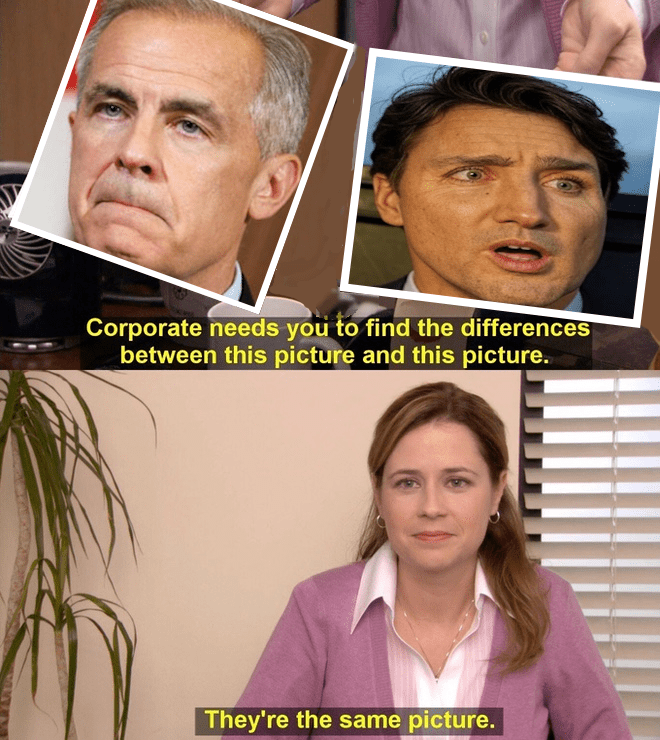
So, as it turns out, oil and natural gas aren’t dead fossil fuels and the previous Liberal government of Justin Trudeau, which kept insisting they were, was dead wrong.
That blunder is costing the Canadian economy up to $25.6 billion a year and who knows how much more if Canadian politicians don’t get their act together.
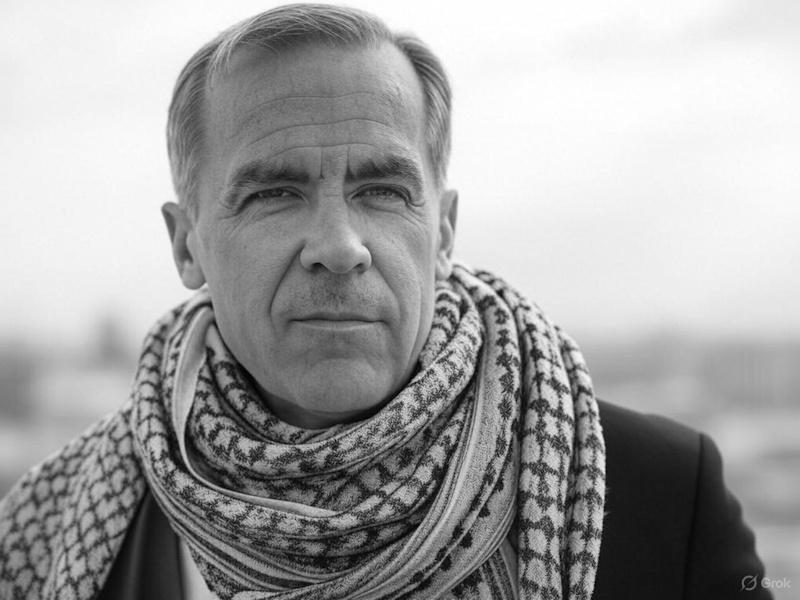
OTTAWA – Prime Minister Mark Carney is in Qatar to drum up investment deals with a country known for both its brutal dictatorship and its growing diplomatic and economic influence.
“Today, the epicentre of diplomatic, economic, financial and commercial power in the Middle East is in the Gulf,” said University of Ottawa professor Thomas Juneau, an expert on the Persian Gulf.
“For Canada to neglect the region, as it did for the past 10 years, is a way to erase ourselves from the equation in the Middle East.”
