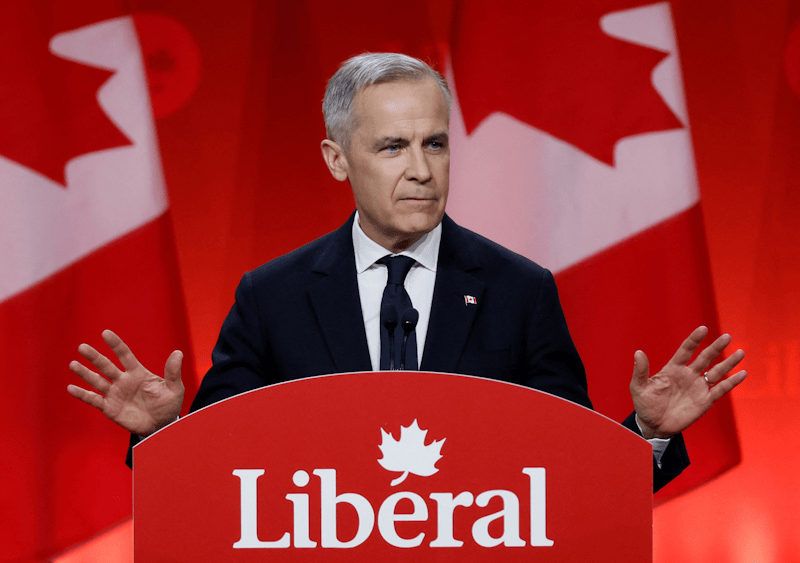
WARMINGTON: Mark Carney, Justin Trudeau and Katy Perry party in Switzerland as Canada burns

Let them eat chocolate!

Canada’s current and former prime ministers — and the latter’s celebrity gal pal — are “gallivanting” in Switzerland as Oshawa’s local economy evaporates. Ingersoll, Brampton and Sault Ste. Marie’s too.

Share

Former Senior Mountie: Carney’s RCMP–Chinese Police Cooperation Deal Is a Counterintelligence Danger That Risks Sovereignty

OTTAWA — After nearly five decades in policing, intelligence, and financial-crime investigations—including professional experience working in Asia—I have learned a simple rule: who you cooperate with matters as much as what you cooperate on.

Last week, the Prime Minister’s Office announced that Canada and the People’s Republic of China will enhance law enforcement cooperation on drug trafficking, transnational and cybercrime, and money laundering. On paper, this sounds reasonable. Fentanyl is devastating communities. Cybercrime drains billions. Organized crime adapts faster than borders.

Share

Canada’s Mark Carney calls on world to adapt to ‘rupture’ caused by ‘great powers’

Canadian Prime Minister Mark Carney says a global order based on rules has been rendered “fiction” and is urging smaller countries to forge new strategic alliances to keep from being subjugated by “great powers” acting in their own self-interest.

Carney’s speech Tuesday to the World Economic Forum in Davos, Switzerland, did not specifically name-check President Donald Trump or his administration, but it amounted to a rallying cry for smaller countries to work together to wrestle economic control of their future.

“This fiction was useful,” Carney said. “This bargain no longer works.”


He’s worried about his trust.

Share

‘We’re in real trouble’: Carney faces historic crisis amid trade war, U.S. annexation threat, and two potential separatist referendums, say politicos

With the ongoing trade war with the United States, frequent annexation rhetoric from U.S. President Donald Trump, and the potential for two separatist referendums at home, Prime Minister Mark Carney is facing some of the most serious challenges confronted by any prime minister. Still, his performance is receiving mixed reviews from some political players who say Carney’s handling of the situation is a “technocratic” one, driven by officials in the Prime Minister’s Office and the Privy Council Office, when he should be opening up to the country.

“We’re facing a truly existential crisis,” said John English, a historian, author, and former Liberal MP in an interview with The Hill Times. “We have to recognize that we’re in real trouble.”

Share

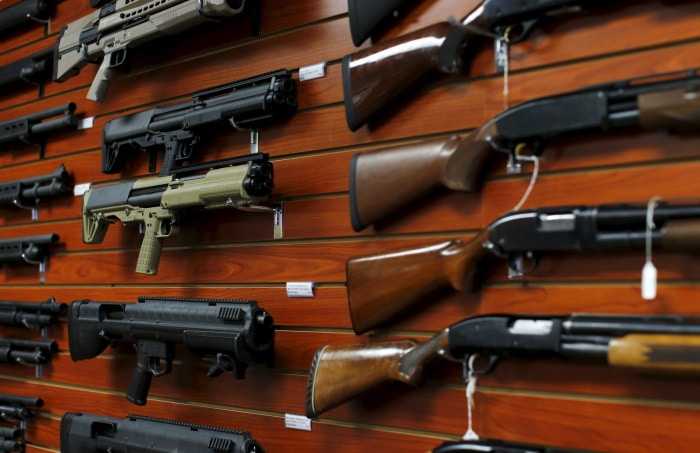
Cory Morgan: Time to Admit the Gun Ban Agenda Won’t Work

The Liberal Party of Canada has long been a political chameleon. It has been able to pragmatically adapt to contemporary issues and position itself toward the political centre of things. When the party drifts too far to one side of the spectrum, as happened under Justin Trudeau, it can reinvent itself and reset the electoral clock, as it did with Mark Carney. It’s an infuriating ability for partisan Conservatives to watch, and it has kept the Liberals as the predominant party in power for decades.

Share

China unlikely to invest in Canadian auto plants, experts say

If the federal government is expecting Chinese electric vehicle manufacturers will rush to build an assembly plant in Canada, economists, industry analysts and insiders say they’re sorely mistaken.

The biggest reasons, say experts? There’s no guarantee Chinese EV makers would be able to sell anything they produced here in the U.S., it would cost billions to build or buy a plant, and they’ve already got more than enough capacity at home.


The goal is for Carney and pals to personally profit from their ‘relationships” with the ChiComs.

They’ll casually lie to further those interests.

Share

‘The old order is not coming back,’ Carney says in provocative speech at Davos

Prime Minister Mark Carney delivered a frank assessment of how he views the world in a provocative speech in Davos, Switzerland, on Tuesday, where he said the longstanding U.S.-led, rules-based international order is over and middle powers like Canada must pivot to avoid falling prey to further “coercion” from powerful actors.

Without invoking U.S. President Donald Trump by name, Carney said “great powers” are using economic integration as “weapons.”

“Canadians know that our old, comfortable assumption that our geography and alliance memberships automatically conferred prosperity and security is no longer valid,” Carney said.

Or …”Doing business with the ChiComs is far more profitable without that pain in the ass accountability.”

Share

John Ivison: MAGA has its sights on Alberta

Steve Bannon is in the ratings business these days, so he can say outrageous things with impunity.

On his influential War Room podcast last week, he talked about Prime Minister Mark Carney’s “kowtowing” visit to China and said: “Let me be blunt, you are playing with fire. You will rue the day you did that. President (Donald) Trump is not just going to let the Chinese Communist Party become an active strategic partner up there. It’s not going to happen.”


Ivison is an Elbow person pass it on.

Canada was a good country.

Now it’s just an ATM for an elite that  seeks to criminalize citizens for simply being.

Share

Doug Ford bristles over his broken bromance with Mark Carney

Doug Ford is boiling over. Is the bromance over, too?

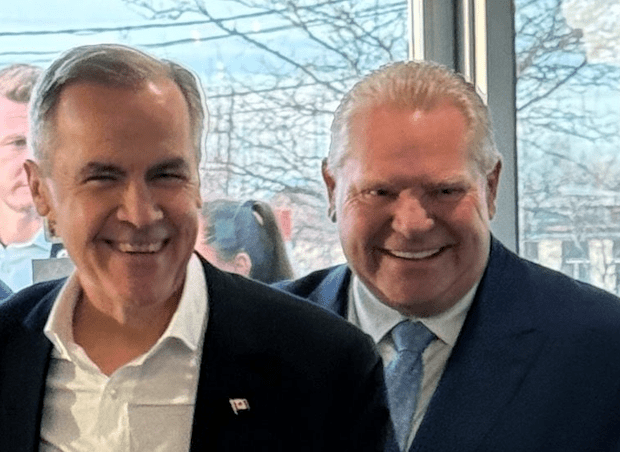
Our piqued premier says he now knows where he stands with Mark Carney, because the prime minister didn’t stand up for Ontario’s auto sector. The two politicians who regularly sat down together for private breakfasts and dinners to toast their bonhomie have suddenly stopped texting.


The LPC media has turned on Ford for his objection to Carney’s ChiCom EV deal.

Ford is described as fussed, as being bristled, piqued and bemoaning the Two-Faced Carney deal. Every word designed to trivialize genuine concern.

Share

Bill C-15 would allow corporations to be exempt from most Canadian laws

Buried on page 300 of the government’s omnibus budget implementation bill is an extremely troubling clause regarding corporate power in Canada—one that allows all cabinet ministers to exempt any individual or corporation from any federal Canadian law they are responsible for (with the exception of the Criminal Code). These exemptions just have to be justified as being “in the public interest” and “encourag[ing] innovation, competitiveness or economic growth,” concepts so vague that they could be invoked for virtually any law.

In theory, this new provision applies equally to all individuals and corporations, but history tells us that large corporations have disproportionate access to government officials and are able to get their way. The broad nature of this new provision means that corporations could be able to avoid everything from environmental regulations to conflict of interest laws, so long as they have a single minister on board.

h/t Mauser

Share

Adam Zivo: Carney doesn’t care how dangerous China really is

Prime Minister Mark Carney’s new plan to expand Chinese-Canadian ties will jeopardize, not protect, our national sovereignty. However volatile the United States may be these days, pursuing a “comprehensive strategic partnership” with Beijing as a counterbalance is myopic and reckless.

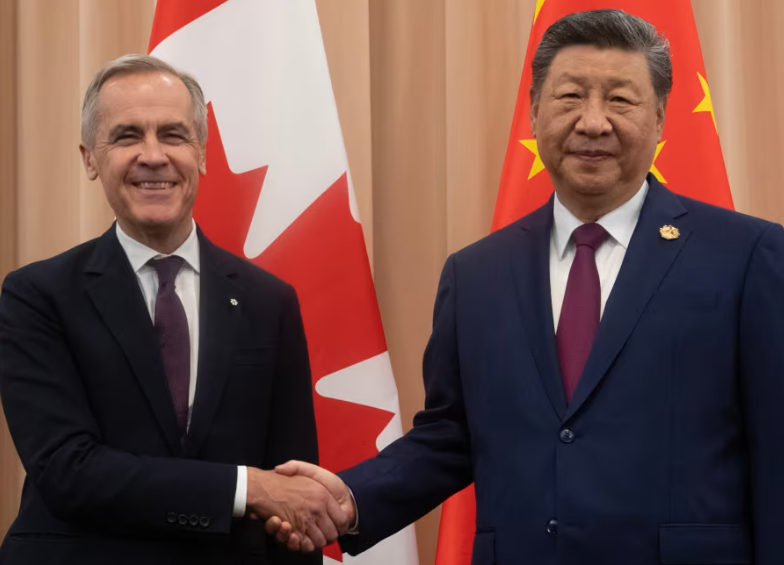
The plan was announced Friday at the end a four-day trip to China — the first prime ministerial visit to the country since 2017 — wherein Carney, joined by a high-ranking delegation, strove to thaw diplomatic relations after a decade of mutual distrust.

Share

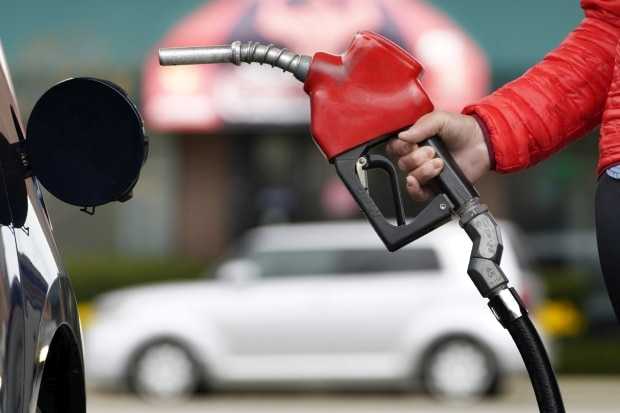
‘Hidden carbon tax’ will add to gas prices this year, taxpayers group says

As the cost of living continues to squeeze households, gas prices remain a major concern for many Canadians, even after Ottawa scrapped the federal consumer carbon tax last year.

The Canadian Taxpayers Federation says drivers are still paying more at the pump because of a separate federal climate policy introduced in 2023, known as the Clean Fuel Regulations.

At gas stations across Calgary, drivers said rising prices are adding to their financial strain.

Share

Analysis: CSIS Warned Beijing Weaponized Canola and Elections in the 2019 Meng Crisis — Is Carney’s EV Trade-Off a Replay?

OTTAWA — A high-level Canadian Security Intelligence Service assessment in June 2019 concluded that Beijing, jolted by Canada’s detention of Huawei executive Meng Wanzhou, launched a “calibrated and multi-faceted pressure campaign” that blended trade coercion — including curtailing canola imports — with the detention of Canadians and clandestine interference surrounding the 2019 federal election, aiming to exert “personalized political pressure on Canada’s leadership,” with the Ministry of State Security driving the response and CSIS collection further establishing that President Xi Jinping received reports “directly from the MSS.”

Share

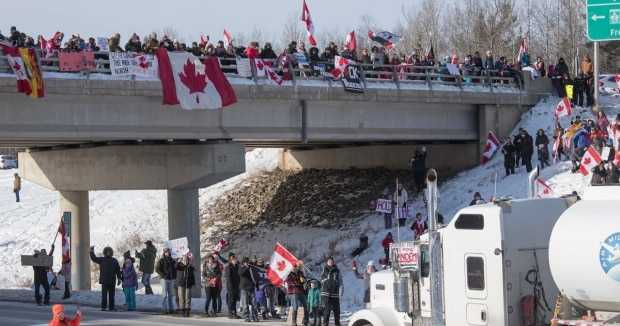
Christine Van Geyn: Feds spent millions defending Trudeau’s Freedom Convoy crackdown — and lost

A generational civil liberties victory has been upheld. On Jan. 16, the Federal Court of Appeal held that the Trudeau government illegally invoked the Emergencies Act in 2022 in response to the Freedom Convoy.

The unanimous judgment, which upheld the lower court’s decision in 2024, is meticulous, devastating, and leaves little room for doubt. Future governments facing political turmoil have been put on clear notice: they cannot casually reach for emergency powers to solve a domestic protest.

Share

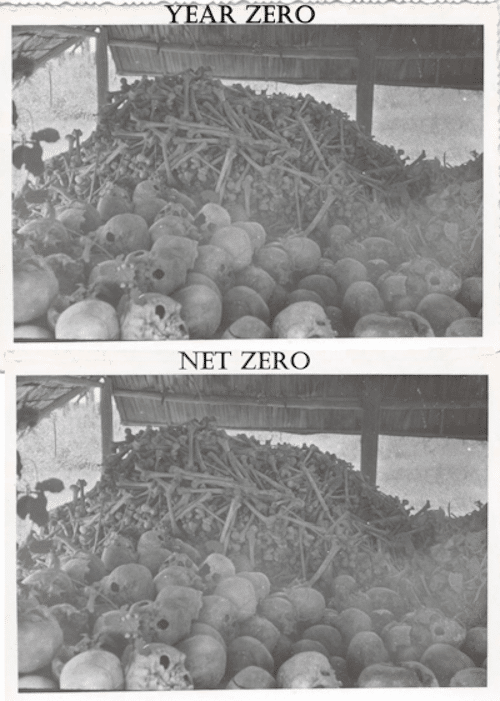
Carney government’s net zero emission policy could cost Canadians $2.1 trillion

Fanatics will always show their true colours

The Carney government’s renewed commitment to achieve net zero greenhouse gas emissions (NZE) by 2050, aided by the Alberta government, in the Canada-Alberta MOU could cost about $2.1 trillion in lost economic activity from business-as-usual (BAU) between 2025 and 2050 and lead to 351,000 lost jobs from BAU by 2050. These are among key insights based on my analysis of data drawn from a 2024 custom research project by Navius Research using its highly regarded gTech/IESD model.

Policy goals, such as Canada NZE 2050, need to be backed up with rigorous modeling and impact analysis. Unfortunately, the federal government does not appear to have provided sufficient updated information on Canada NZE 2050 to allow citizens to fully assess its economic and fiscal impact. I believe that the analysis presented here helps fill that critical void.

(Incognito)

Share