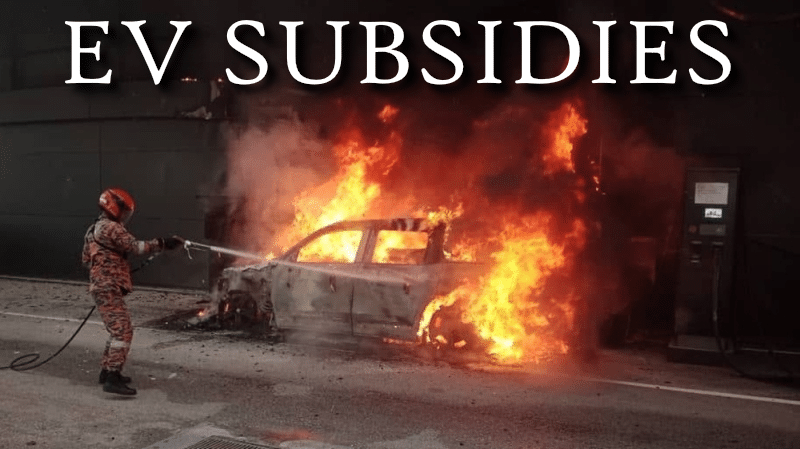
Canada bet billions on an EV boom. Was it too much, too soon?

Canada bet billions on an EV boom. Was it too much, too soon?

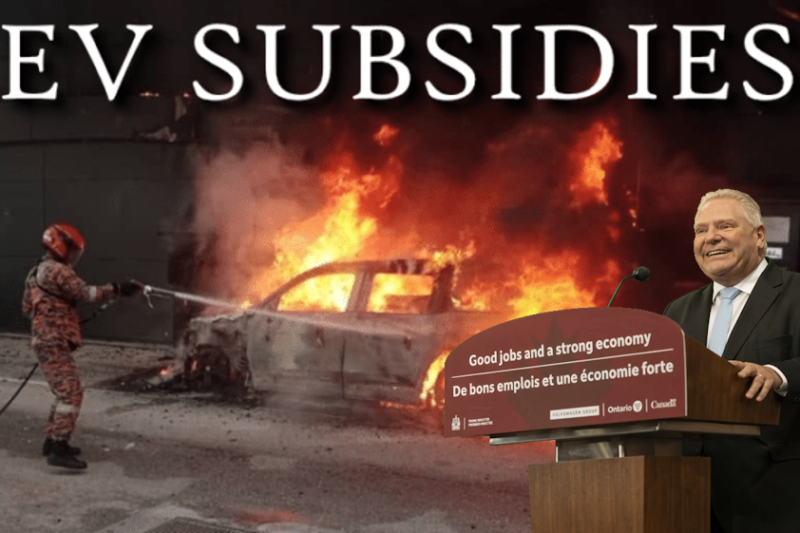
The federal and provincial governments bet billions on the rapid rise of the electric vehicle industry. But major EV and battery projects in Ontario, Quebec and British Columbia have since been delayed, cancelled, suspended, substantially changed — and in one case, gone bankrupt — as automakers and suppliers adjust to weaker-than-anticipated demand.

The latest is Volkswagen’s massive PowerCo battery plant in St. Thomas, Ont., where production has been pushed back two years to 2029, because of “evolving market demand.”


It was too much period.

Share

Scott Stinson: Doug Ford’s love affair with corporate subsidies shows no sign of waning

Scott Stinson: Doug Ford’s love affair with corporate subsidies shows no sign of waning

Ministers with the Ontario government lined up on Friday to declare that an announcement from a Volkswagen subsidiary that it was delaying the opening of an EV battery plant in St. Thomas by two years was, in fact, good news. Great news, even.

“To me, it’s a great news story,” said Vic Fedeli, the minister for Economic Development, citing the fact that PowerCo now has a contract to begin building the facility, supported by at least $10 billion in subsidies from all levels of government, that it hopes will be ready by 2029.

Share

Volkswagen delays production at Ontario electric vehicle battery plant until 2029

Volkswagen delays production at Ontario electric vehicle battery plant until 2029

The opening of a massive Volkswagen electric vehicle battery plant in southwestern Ontario has been pushed back two years until 2029.

PowerCo Canada, a subsidiary of the German automaker, says it is delaying production at the $7-billion factory in St. Thomas, Ont., in order to align the project’s timeline and product strategy with evolving market demand, technological advancements and the Volkswagen Group’s long-term strategy.

It says the later opening date will allow for next-generation battery technology while retaining the flexibility to scale over time as market conditions evolve.


Below is the current state of VW and the German auto industry. Why would they risk more in Canada?

The Perfect Storm – Chinese Decimating German Car Industry

VW is undergoing massive layoffs in Germany.

Share

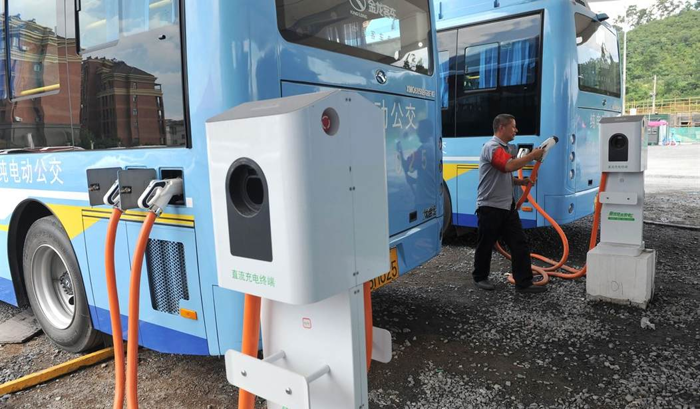
NYC’s Electric Bus Love Affair Is Out for Gas

NYC’s Electric Bus Love Affair Is Out for Gas

It’s sad when some dreams crumble. I mean, it tugs at your heartstrings, seeing little crumpled faces from crushed hopes.

I don’t have that problem when Green grifting fever dreams crash and burn, though I do get a little sick to my stomach thinking of all the wasted time, money, and heartburn they caused people when failure was inevitable.

Share

Germany sets out plan to phase out fossil fuels by 2045

Germany sets out plan to phase out fossil fuels by 2045

Germany has presented a roadmap to phase out fossil fuels by 2045.

Germany’s Environment Minister Carsten Schneider told the UN General Assembly on Wednesday that the plan “combines independence, affordability, and climate protection.”

Europe’s largest economy is now the third country to have provided a solid plan for the phaseout — to which nearly 200 countries committed at the 2023 COP28 climate conference in Dubai — following France and the Netherlands


Germany phased out nuclear power and is currently edging toward economic collapse due to energy shortages so it makes sense to formalize national suicide.

No wonder the AfD is gaining on all fronts.

Share

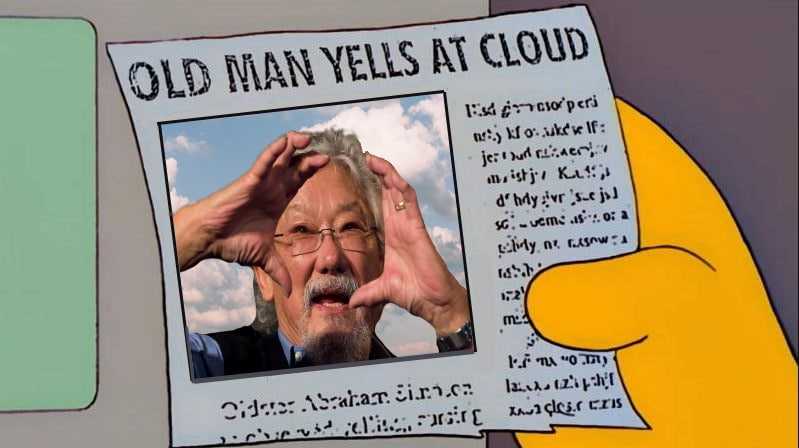
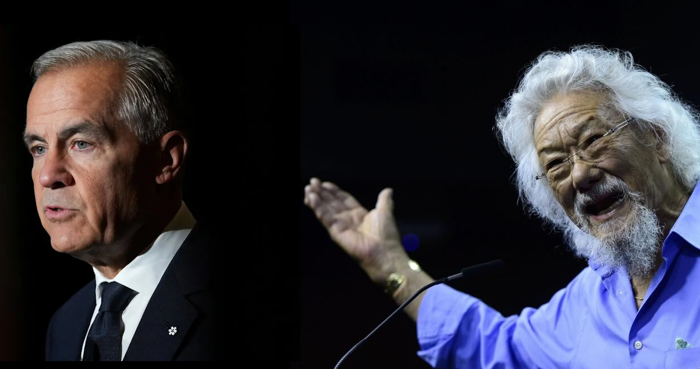
David Suzuki says Mark Carney is driving Canada ‘into a ditch’ with shift on climate

David Suzuki says Mark Carney is driving Canada ‘into a ditch’ with shift on climate

OTTAWA – David Suzuki said that when Prime Minister Mark Carney was first elected last year, he celebrated. Having met and interviewed the prime minister before, the national environmentalist icon said he knew Carney understood the challenges of climate change.

But in an interview with The Canadian Press, Suzuki said he now feels he was “wilfully blind” to Carney’s promises of action on climate, despite warnings from his longtime friend the late Stephen Lewis, who predicted the agenda of a banker — and now politician — would supersede Carney’s views on addressing climate change.

h/t Mauser

Share

WILSON: The green building grift that costs taxpayers millions

WILSON: The green building grift that costs taxpayers millions

Saanich, BC, desperately needs a new fire hall. In 2019, city council approved a $26 million replacement for its aging Fire Station Two, set to open in 2023. But because the city requires that all public buildings reach a “LEED” Gold or Platinum standard of environmental efficiency, the station was to be built using trendy mass timber construction. (LEED stands for “Leadership in Energy and Environmental Design.”) Five years later, ground had yet to be broken, and the project was plagued by rapidly rising costs.

Share

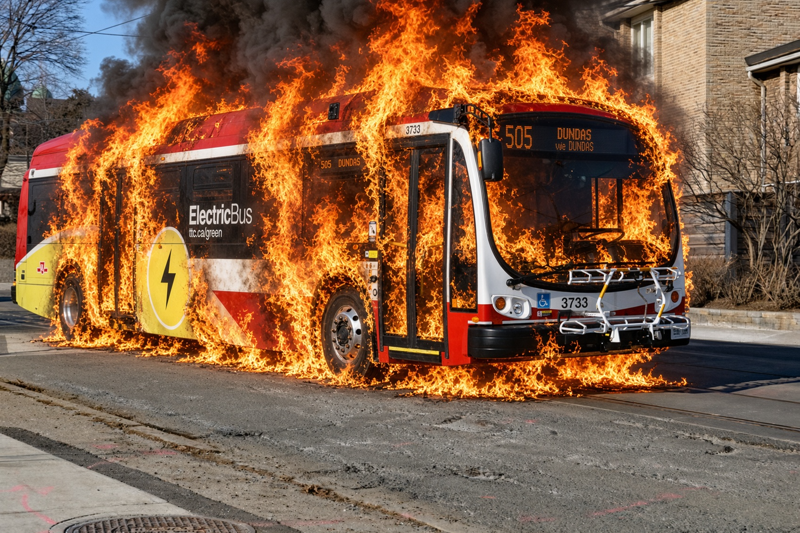
CRACKED: TTC’s disastrous electric bus experience exposed

CRACKED: TTC’s disastrous electric bus experience exposed

Weeks before the board of the Toronto Transit Commission hurried a report off the floor, in a transit yard in Philadelphia, the electric buses were on fire.

The Southeastern Pennsylvania Transportation Authority, or SEPTA, had fought a losing battle with its fleet of 25 Proterra Catalyst buses. Cracks kept showing up in the bodies of the buses, including to the chassis, and they seemed to defy any patching done by SEPTA’s engineers.

Share

Climate Crank Critiques Carney’s Climate Crankiness

Climate Crank Critiques Carney’s Climate Crankiness

David Suzuki: Mark Carney’s investment summit is bound to fail unless it faces this fundamental issue

Prime Minister Mark Carney has invited 300 global CEOs, entrepreneurs and institutional financiers to a Canada Investment Summit. They collectively manage $120 trillion in global assets and the goal of the conference is to catalyze private and sovereign capital into Canadian industries. I understand the urgent need to stand up against Trump, a bullying madman, by reducing our dependence on US markets and I applaud Carney’s efforts. He’s a smart, tough guy.

Share

Germany’s Family Businesses Survived Everything — Until Net Zero

Germany’s Family Businesses Survived Everything — Until Net Zero

German economic history can be traced through its traditional family businesses. Many of them survived wars, crises, and technological revolutions. But many of them now have little left with which to resist the destructive force of environmentalism and degrowth ideology.

Anyone searching through German economic history will eventually come across the name Coatinc Company.

The company from Siegen is, as far as the surviving documents show, the oldest German family business still in existence. Originating in 1502 from an iron-processing operation, it developed over more than five centuries into an internationally established specialist in surface finishing and hot-dip galvanizing.

Share

Stellantis signs preliminary agreement to sell idled Brampton assembly plant to armoured car maker

Stellantis signs preliminary agreement to sell idled Brampton assembly plant to armoured car maker

Automaker Stellantis NV STLA-N says it has signed a preliminary agreement to sell its idled Brampton, Ont., assembly plant to armoured carmaker Roshel.

The Brampton factory stopped production in 2023 to retool to make the Jeep Compass, but the work was paused shortly after the U.S. placed 25-per-cent tariffs on Canadian-made cars in 2025. Stellantis last year said the Compass would instead be made in the U.S., leaving the future of the plant and 2,200 laid-off workers up in the air.

Share

‘No way’ Canada can meet its 2030 climate target, researchers say

‘No way’ Canada can meet its 2030 climate target, researchers say

OTTAWA — Canada’s progress against greenhouse gas emissions is stalling, according to a new analysis that concludes the country’s climate target for 2030 is so far out of reach that it likely won’t even be met by 2050 — the year Prime Minister Mark Carney promises to hit “net zero” emissions.

Researchers at the Canadian Climate Institute were set to release their analysis Friday morning, concluding the country is “far off track for its near-term climate goals,” and that there is a “cavernous gap” between projected future emissions and the ambition to hit net-zero by 2050.

Share

GOLDSTEIN: Trudeau’s failed climate policies left us captives to the U.S. oil market

GOLDSTEIN: Trudeau’s failed climate policies left us captives to the U.S. oil market

The reason it’s unrealistic for Canada to curtail or tax the flow of Canadian oil to the U.S. in retaliation for U.S. tariffs, is our lack of practical alternatives to sell it to any country other than the U.S.

This is one of the legacies of the previous Liberal government of Justin Trudeau and its failed climate change policies, which not only cost federal taxpayers more than $200-billion, but failed to achieve any of its promised greenhouse gas emission reduction targets.

Share

Net Zero is leaving Britain defenceless

Net Zero is leaving Britain defenceless

Russian threats to attack British factories producing drones and missile components for Ukraine are a reminder that the industrial base is once again becoming part of the battlefield.

In a way, this has always been the case. In an attritional conflict, the ability to produce, replace and sustain military capability matters as much as the weapons a country starts with. Military power has always depended on productive force. It was Paul Kennedy who documented the relationship between economic power and military power across five centuries of great-power competition in his magnum opus, The Rise and Fall of the Great Powers. In December 2024, John Bew, former chief foreign-policy adviser to No10, gave this logic a new name – ‘machinepolitik’. He argued we are returning to an era of ‘raw power’ in which the ability to harness productive force, from armaments to energy to technology, will increasingly determine which countries shape events.

Share

Net Zero Is Dead and Gone

Net Zero Is Dead and Gone

It was only a few years ago when the climate change alarms and green energy fad were all the rage at the White House and corporate board rooms. Former President Joe Biden’s policies were all tilted to ending fossil fuels, and many of America’s biggest corporations embraced the concept of net-zero fossil fuels. This was the movement during the Biden years to eliminate virtually ALL oil, natural gas and coal production, and replace these energy sources with windmills, solar panels and electric vehicles.

Share