‘Last chance’ meeting with Stellantis looms Friday in hopes of saving Brampton plant for auto production

‘Last chance’ meeting with Stellantis looms Friday in hopes of saving Brampton plant for auto production

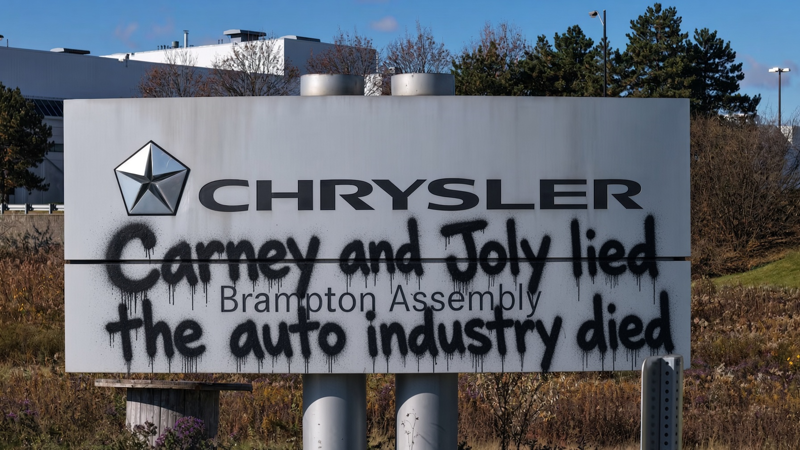
It’s do or die for thousands of auto jobs as Ottawa and Queen’s Park scramble to save the Stellantis assembly plant in Brampton, which churned out millions of cars before being idled in 2023.

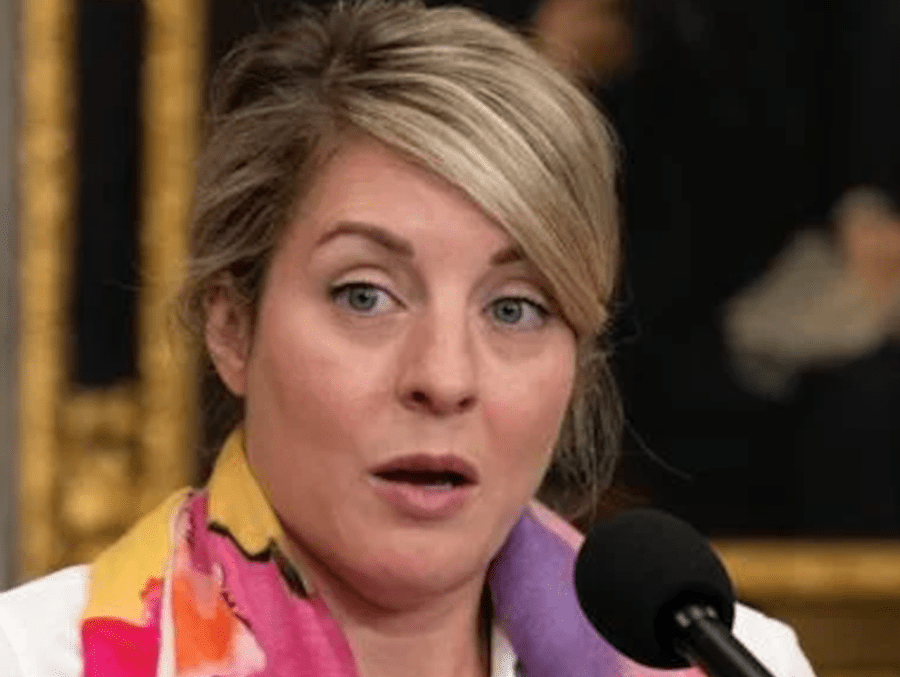
A meeting Friday between Premier Doug Ford, federal Industry Minister Melanie Joly, Unifor officials and the automaker’s global CEO Antonio Filosa could set the stage for more talks aimed at stopping the sale of the plant to Brampton-based armoured vehicle manufacturer Roshel.


Share

CHARLEBOIS: Brakes on Chinese EVs. Green light for milk.

CHARLEBOIS: Brakes on Chinese EVs. Green light for milk.

Canada has spent decades trying to secure the future of its auto industry. After years of shifting policies and subsidies, Prime Minister Mark Carney now appears to see China as part of the answer. Ottawa wants to let more Chinese electric vehicles into the country and is considering whether Chinese automakers should build them here. Recent polling suggests most Canadians are open to the idea.

Share

‘If the U.S. doesn’t want to do a deal, we’re busy,’ Carney says of ongoing trade talks

‘If the U.S. doesn’t want to do a deal, we’re busy,’ Carney says of ongoing trade talks

Prime Minister Mark Carney said Wednesday that Canada is willing to sign a mutually beneficial deal with the Americans, but if U.S. President Donald Trump can’t agree to those terms, then Ottawa will continue on its current trajectory: Aggressively diversifying away from the United States.

Speaking virtually to the Dealbook summit from China as he wound down his nine-day trade mission to Europe and Asia, Carney said Canada continues “to have a series of issues” when it comes to trade with the U.S.


Carney is sabotaging the trade talks. It’s not possible to think otherwise.

Share

Too big to fail? Canada’s auto industry isn’t even all that big any more

Too big to fail? Canada’s auto industry isn’t even all that big any more

In retrospect, the Auto Pact was a mistake. Before 1965, when the Canada-United States Automotive Products Agreement went into effect, trade in cars and parts between the two countries faced stiff tariffs, especially on the Canadian side: 17.5 per cent on cars, up to 25 per cent on parts.

Detroit’s Canadian branch plants produced almost exclusively for the Canadian market. Of all autos sold in Canada, only a little over 2 per cent were made in the U.S., while just 2 per cent of autos made in Canada were sold in the U.S.


Coyne is not wrong.

Share

Carney meets with Trump at APEC, says Canada’s trade with China isn’t U.S. president’s top concern

Carney meets with Trump at APEC, says Canada’s trade with China isn’t U.S. president’s top concern

Prime Minister Mark Carney met with U.S. President Donald Trump on the margins of the Asia-Pacific Economic Cooperation Economic summit (APEC) in Shenzhen, China, on Wednesday.

According to a readout from the Prime Minister’s Office, the 20-minute meeting held just before the leaders’ dinner focused on the talks currently “underway to reach a mutually beneficial trade agreement” between Canada and the U.S.

The readout defined “mutually beneficial” as an agreement that will “create good jobs, boost affordability and fully respect Canada’s languages, culture and sovereignty.”


Carney lies about everything.

Share

Can Canada remain an auto-building country?

Can Canada remain an auto-building country?

The future of Canada’s auto-building sector remains the crux of concern, as the fallout of Stellantis’ Brampton, Ont., plant sale to Canadian defence contractor, Roshel plays out on both economic and political fronts.

Host Caryn Ceolin speaks to Dr. Peter Frise, emeritus professor of mechanical and automotive engineering at the University of Windsor, to discuss the impact on thousands of workers, the future of companies that require subsidies to sustain itself, and whether Roshel’s productivity will fill the economic gap left behind.

Share

Carney and Trump Hold Unscheduled Trade Meeting at Asia Summit

Carney and Trump Hold Unscheduled Trade Meeting at Asia Summit

Prime Minister Mark Carney of Canada has advanced his goal of reducing Canada’s economic reliance on the United States during a weeklong swing through Asia, emerging with trade deals with China and the Philippines.

But he was also presented with an unexpected opportunity to improve relations with Washington. On Wednesday, Mr. Carney announced that he would meet with President Trump at the Asia-Pacific Economic Cooperation summit in Shenzhen, China, leaving open the prospect of Canada starting to mend the rift with its neighbor.

Share

‘Are u really threatening to play China off the U.S.?’ Trump trade adviser asks PM Carney

A senior adviser to U.S. President Donald Trump shared harsh words against Canada’s potential auto trade expansion with China.

“Are u really threatening to play China off the U.S.? This is offensive in the extreme. You should be far more worried China is going to eat Canada alive–as it is already doing. Vancouver is not BC, its PRC,” said Peter Navarro, trade adviser to Trump, in what he called a “memo” to Prime Minister Mark Carney. Pete Hoekstra, Washington’s ambassador to Canada, reshared the post.

Share

Matthew Lau: The madness of Mélanie Joly trying to stop Stellantis plant sale

Matthew Lau: The madness of Mélanie Joly trying to stop Stellantis plant sale

Selecting examples of government mismanagement is like dining at an immense buffet and eyeing the endless trays of food, much of it deep-fried and swimming in grease, and lines of desserts piled high and involving a great deal of whipped cream. There is no hope of getting at everything, you have to pick and choose. Whatever you choose, there is more than enough to fill you, with much left over, and after consuming too much of the stuff you will soon begin to feel unwell.

Share

Why the Liberals can’t win their Stellantis battle

Why the Liberals can’t win their Stellantis battle

Well, that didn’t work out well, now did it? One minute, the Prime Minister and the Minister of Innovation, Science, and Economic Development are unabashedly tarring Stellantis with the same brush as Stelco CEO Lourenco Goncalves — possibly the least PR-savvy corporate chief executive officer in Canadian history — and the next, they’re promising the automaker even more untold millions if it will just do as it’s told.

Share

Should Mark Carney push for a trade deal now — or wait Donald Trump out?

Should Mark Carney push for a trade deal now — or wait Donald Trump out?

Donald Trump is signalling a change of heart on some issues following the disastrous midterm drubbing of his party.

Specifically, he now seems less inclined to renew a military attack on Iran. And he admits his domestic immigration policy was “too tough.”

But, not a peep about one of the biggest voter issues — his trade war with Canada.


I think he should lay low.

Share

Trump’s tariffs will be tough to repeal despite Democrats’ landslide win

Trump’s tariffs will be tough to repeal despite Democrats’ landslide win

WASHINGTON — For months, Democrats on the campaign trail hammered U.S. President Donald Trump’s unpopular tariffs, arguing that the taxes on imports drive up prices for American families already frustrated by the high cost of living.

James Talarico, a Democrat running for a U.S. Senate seat in Texas, blamed Trump’s tariff on Mexican tomatoes for pushing up the price of a popular appetizer: “Chips and salsa,’’ he said, “are sacred in Texas.”

Targeting tariffs proved to be a winning message nationwide, contributing to the Democrats’ stunning gains in the Nov. 3 midterm elections. And in Texas? Talarico became the first Democrat elected to the Senate from the state since 1988.

Share

Most Canadians would reject a trade deal that includes tariffs, Nanos survey suggests

Most Canadians would reject a trade deal that includes tariffs, Nanos survey suggests

Canadians are increasingly opposed to any U.S. trade deal that would include tariffs on Canadian goods.

A new poll by Nanos Research and commissioned by CTV News finds just 33.3 per cent of Canadians would support such an agreement. That’s down from a similar survey in August of 2025 that found 41 per cent of Canadians willing to accept a deal that included import duties.

The results suggest growing resistance among Canadians to accepting a trade deal that leaves tariffs in place.

Share

Stellantis provides the latest, greatest opportunity to ditch corporate welfare for good

Stellantis provides the latest, greatest opportunity to ditch corporate welfare for good

Stellantis, the Amsterdam-based global auto colossus, was clearly intent on divesting from its Brampton, Ont. plant one way or the other. That’s despite signing on for roughly $1 billion in Canadian-taxpayer subsidies in recent years to retool the plant, and others, to build the automobiles of the future.

On Thursday, the federal government (which was ponying up roughly half the billion, Ontario funding the other half, although not all the money has yet been transferred) said it served Stellantis a notice of “default” under its agreement for not restarting production at the plant and instead agreeing to sell it to defence contractor Roshel.


The TFW program is Corporate Welfare at it’s most exploitive.

Carney the great negotiator is so desperate they’re offering billions to Stellantis.

Share

Carney says Canada will only sign a U.S. trade deal that includes an auto sector that he’s personally sabotaged

Carney says Canada will only sign a U.S. trade deal that includes an auto sector that he’s personally sabotaged

MANILA — Prime Minister Mark Carney says trade talks with the U.S. are making progress, but Ottawa won’t accept a deal that doesn’t allow for a viable auto sector.

“Lots of people think that we should just go and take whatever deal,” Carney said Saturday in Manila. “This government will not settle for a deal with the United States that is not consistent with a viable Canadian auto sector.”

Carney was speaking at a news conference, three months after Canada pulled out of trade talks with the U.S., saying there had been last-minute demands from Washington that included a hit to Canada’s auto sector.

Share