Biden Administration Blocks Rescue of Persecuted Christians from Afghanistan

The Biden administration is preventing the rescue of persecuted Christian minorities from the Islamic Emirate of Afghanistan, where they face certain and likely gruesome death.

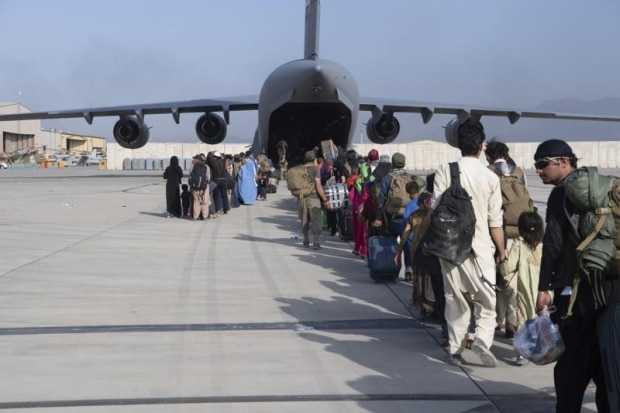
This information surfaced on August 26, during an interview between Glenn Beck and Tucker Carlson on Fox News. Through his charity, the Nazarene Fund, Beck had chartered planes to airlift 5,100 Christians out of Afghanistan and into neighboring nations. Before long, however, U.S. officials intervened and prevented the escape of a group of 500 Christians, mostly women and children, who were ordered outside of Kabul airport’s protected area: “I have pictures of them pleading to get back through the gate,” Beck continued

Share

Heroin will decide the Taliban’s fate

Afghan power always stems from the poppy fields

In his 2015 documentary Bitter Lake, the filmmaker Adam Curtis observes that Afghanistan’s opium poppies grow in a “wonderland of vegetation and power”. Amid the conspiratorial hyperbole that characterises much of his work, it is a striking phrase — but also a perceptive one. The poppy is integral to modern Afghanistan because of its relationship to both vegetation (and the communities it sustains) and the exercise of raw power: two of the main forces which drive Afghan politics.

Understand this imperishable fact and it becomes clear how the country fell so quickly to the Taliban over recent weeks.

Share

The Roots of America’s Defeat

Even before the suicide bombings outside the Kabul airport on Thursday evening, the US media was acting with rare unanimity. For the first time in memory, US media organs across the ideological and political spectrum have been united in the view that US President Joe Biden fomented a strategic disaster for the US and its allies with his incompetent leadership of the US withdrawal from Afghanistan. Some compare it to the 1961 Bay of Pigs; others to Saigon in 1975; others to the US embassy in Tehran in 1979. Whatever the analogy, the bottom line is the same: Biden’s surrender to the Taliban has already entered the pantheon of American post-war defeats.

Share

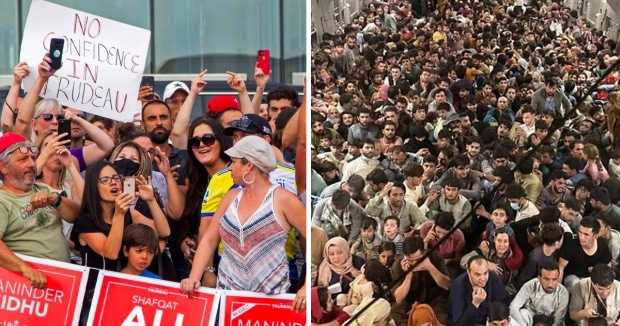
Media coverage of Trudeau protests far exceeded Afghanistan issue, research shows

In the memo, which sought to track how misinformation impacted the protestors crashing Trudeau’s campaign events, researchers noted that Canada’s media heavily featured the anti-Trudeau protests in their election reporting at the cost of other election issues.

Share

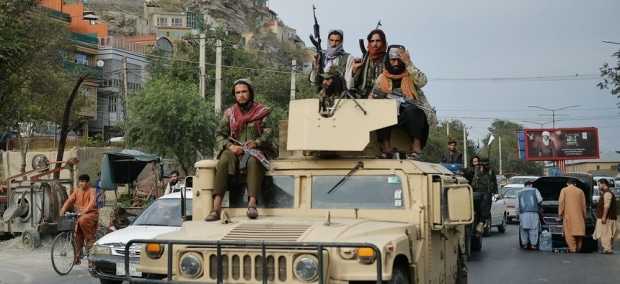
Taliban raise flag over presidential palace on 9/11 anniversary as brother of resistance leader slain

The Taliban raised their flag over the Afghan presidential palace on the 20th anniversary of the 9/11 attacks, as news emerged that the regime’s fighters had killed the brother of the country’s former vice-president at a checkpoint in Panjshir province.

Rohullah Azizi, the brother of former vice-president and anti-Taliban resistance leader Amrullah Saleh, was travelling in his car on Thursday when he and his driver were shot dead at a Taliban checkpoint, his nephew said on Saturday.

Shuresh Saleh said on Saturday that it was unclear where his uncle, an anti-Taliban fighter, was headed when the Taliban caught him. He said phones were not working in the area.

Share

Where did the $5tn spent on Afghanistan and Iraq go? Here’s where

Private military contractors outnumbered US troops on the ground during most of both conflicts. And defense industry stocks soared

While Washington bickers about what, if anything, has been achieved after 20 years and nearly $5tn spent on “forever wars”, there is one clear winner: the US defense industry.

In Iraq and Afghanistan, the American military relied to an unprecedented degree on private contractors for support in virtually all areas of war operations. Contractors supplied trucks, planes, fuel, helicopters, ships, drones, weapons and munitions as well as support services from catering and construction to IT and logistics. The number of contractors on the ground outnumbered US troops most years of the conflicts. By the summer of 2020, the US had 22,562 contractor personnel in Afghanistan – roughly twice the number of American troops.

Share

Cronyism, corruption and indifference: Insiders describe Afghanistan’s fall

Gul Ahmad Rasooli’s phone rang the day the Afghan government collapsed.

The now-former governor of the province of Zabul — a remote, mountainous southern Afghan province bordering Kandahar — had taken refuge in the capital, Kabul, as the security climate in Afghanistan unravelled over the summer.

The Taliban had overrun Qalat, the provincial capital, and Rasooli had escaped with his life.

The call was from his son, an Afghan special forces soldier assigned to the elite protection detail around Ashraf Ghani, the president of the western-backed regime.

It was not a nation, it can never be saved. Islam and tribalism are a toxic mix and we were fed a 20 year lie.

Share