
Germany’s one million Syrians at centre of fierce debate over their future

Across Germany Syrians have been celebrating in the streets the downfall of former president Bashar al-Assad. But now many will be feeling less euphoric, as some politicians question their future in Germany.

There are around a million people with a Syrian passport in Germany. Most of them came from 2015-16, after Angela Merkel’s government made a decision not to close Germany’s borders to refugees fleeing Syria’s civil war.

The mood at the time was that Germany would manage. The climate now is rather different.

Share

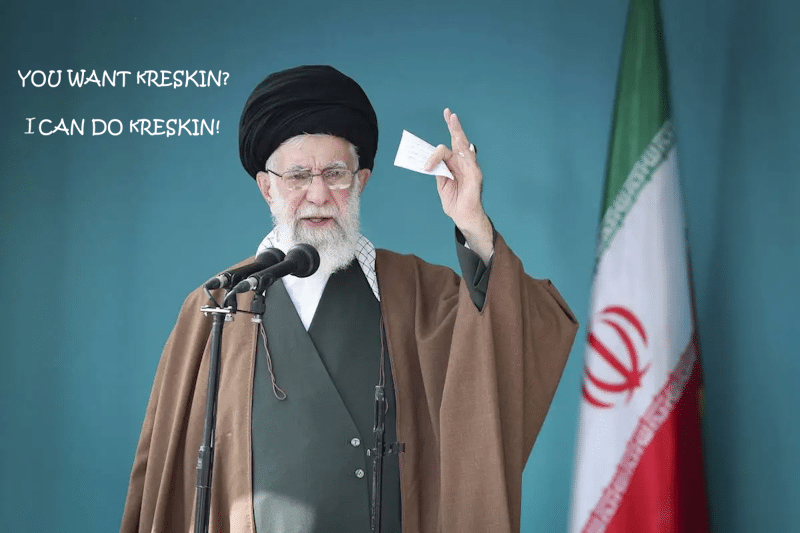
Khamenei: US, Israel responsible for Assad’s ouster, ‘resistance’ to span entire region

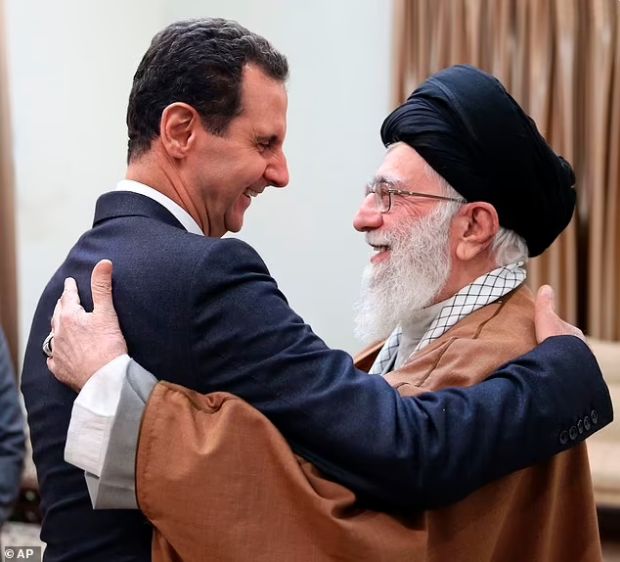
Tehran has evidence that the events that took place in Syria leading to the ousting of former Syrian president Bashar al-Assad were planned by the United States and Israel, Iranian Supreme Leader Ayatollah Ali Khamenei said, according to Iranian state news agency IRNA.

“There should be no doubt that what happened in Syria is the result of a joint American and Zionist plan.” Khamenei reportedly noted.

h/t MP

Share

HTS is no ‘liberation movement’

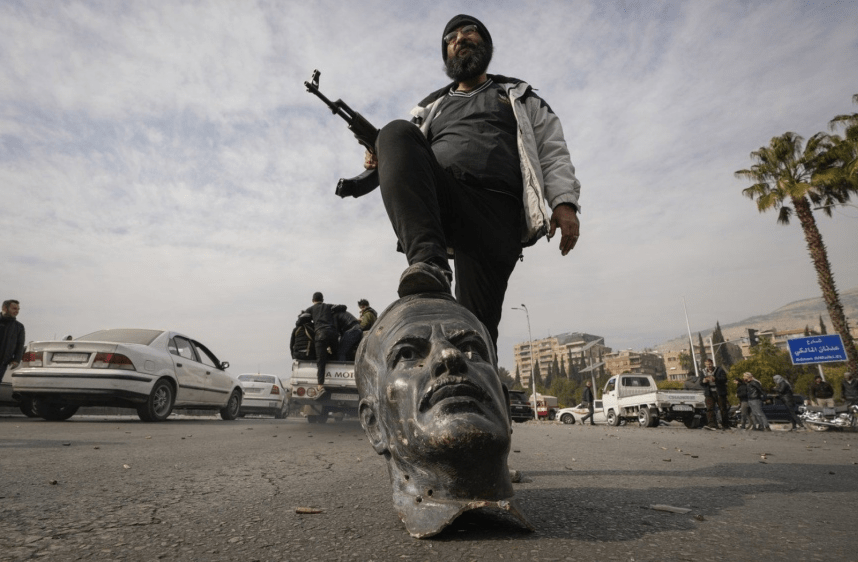
The overthrow of Bashar Al-Assad’s despotic regime in Syria this weekend has been cheered on by the UK government as well as much of the mainstream media.

Speaking on Sunday with Laura Kuenssberg on BBC One, deputy PM Angela Rayner said that she ‘welcomed’ the news of Assad’s fall. Yesterday, foreign secretary David Lammy celebrated the Syrian president’s toppling, telling MPs that Assad is a ‘monster’, a ‘drug dealer’ and a ‘rat’.

In a sense, the government’s response is understandable. No one should mourn the end of the Assad dynasty’s brutal decades-long rule. Furthermore, Assad’s fall deals another significant blow to his despotic backers, the Islamic Republic of Iran and Russia, depriving both of a key strategic ally. Lammy’s geopolitical analysis leaves a lot to be desired at times, but he is right to say that Assad’s defeat is a humiliation for both Moscow and Tehran.

Yet too often, this understandable happiness over the fall of the Syrian dictator has morphed into an endorsement of the Islamist forces that toppled him. Sir John Sawers, the former head of MI6, even went so far as to describe Hayat Tahrir al-Sham (HTS), the group that led the offensive against Assad, as ‘a liberation movement’.

Share

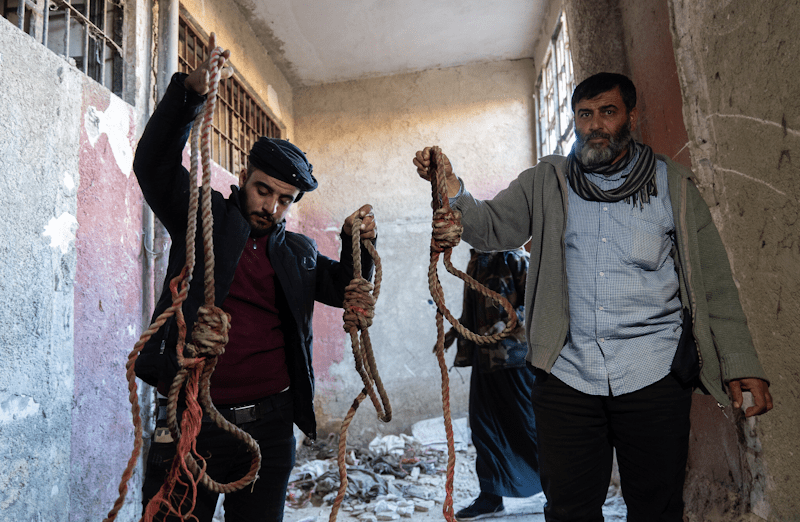
Inside Sednaya prison, Assad’s ‘human slaughterhouse’

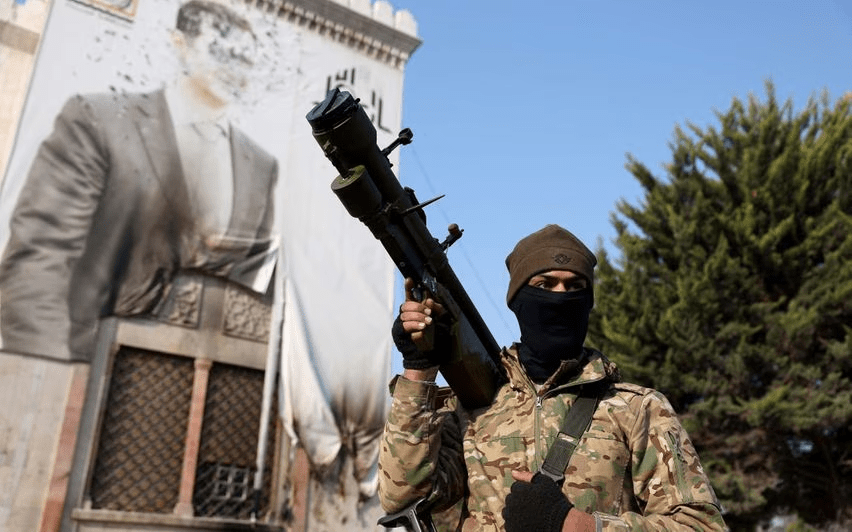
The rebel fighters descended the stairs into the gloom. The rhythmic beat of the sledgehammer was the only sound as it increased in speed. Eventually, a small hole appeared in the wall of Bashar al-Assad’s “human slaughterhouse”.

All morning thousands of civilians trudged up the hill to Sednaya, a prison on the outskirts of Damascus where, among the broken glass and discarded documents, they came to find clues to the whereabouts of thousands of Syrians jailed, tortured and killed by the regime.

Share

“It’s not our fight”: Poilievre says Canada shouldn’t interfere in Syrian revolution

When asked what Canada should do to ensure stability in the region, Poilievre said Canada shouldn’t intervene, an illuminating comment about what the foreign policy of a potential Conservative government would look like.

“First of all, Assad was a puppet for the tyrants of Tehran (Iran). He has carried out genocides against the Sunni people in his own country, and now he appears to have been toppled,” Poilievre said. “We don’t know who will replace him, but I don’t think we should get involved in that mess. It’s not our fight.”

Share

Syrian rebels install prime minister, new regime postures as centrist reformers

The Syrian rebel forces that successfully toppled the regime of former President Bashar Assad have installed a transitional prime minister.

Mohammed al Bashir, the leader of the terrorist group Hayat Tahrir al Sham’s political wing, will begin fielding a Cabinet to head the incoming government.

Bashir has served as the head of the oppositional Syrian Salvation Government in northern Syria since January, and his appointment indicates HTS is attempting to scale up its established, regional political bureau instead of building a new regime from scratch.

Share

After Assad

In Qardaha, in the Alawite lands of Latakia on the Mediterranean, stands the sumptuous and pristine marble mausoleum worthy of an Arab monarch. It is here the founder of the brutal Assad dynasty, Hafez al-Assad, is buried in magnificence.

Assad was not the original family name. Hafez’s grandfather was a powerful character known as Sulayman al-Wahhish—the al-Wahhish meaning the wild beast—for his strength; one of his sons was Ali, another formidable figure, a farmer and leader known for his toughness, he had eleven children; Hafez was his ninth son. His nickname was al-Assad—the Lion—and he adopted that as his family’s name.


Off to the usual start …

I hope all of Trudeau’s Syrians will return home so they can get their fill of torturing Christians and Kurds.

(more…)

Share

This is a disaster for Iran and the ayatollahs have never been more vulnerable. The smell of regime change is now in the Tehran air

The biggest losers, by far, from the collapse of the Syrian dictatorship yesterday — other than the brutal Assad family and its thuggish acolytes — are the ruling mullahs of Iran.

Their dreams of Middle East hegemony are now in ruins, their genocidal aim of wiping Israel off the map now mission impossible, their ability to supply their murderous proxies across the region with weapons and boots on the ground now crippled.

Share

The lower cells in Saydnaya Prison, known as “red wards” or “death wards,” remain sealed

Click to read the entire thread on X.

Share

BREAKING: US launches dozens of ‘precision airstrikes’ in Syria

The US Central Command (CENTCOM) announced on Sunday that it has conducted a series of airstrikes in central Syria, targeting ISIS camps and operatives as part of an ongoing effort to combat the terrorist organization.

According to a CENTCOM statement, the operation involved precision strikes on over 75 targets, utilizing multiple Air Force assets, including B-52 bombers, F-15 fighter jets, and A-10 aircraft.

“The strikes against the ISIS leaders, operatives, and camps were conducted as part of the ongoing mission to disrupt, degrade, and defeat ISIS, in order to prevent the terrorist group from conducting external operations and to ensure that ISIS does not seek to take advantage of the current situation to reconstitute in central Syria,” the statement read.

Share

Assad may have fled, but Syria’s rebels are far from saviours

The regime of Syrian president Bashar al-Assad has fallen. On November 27, a rebel coalition led by Hayat Tahrir al-Sham (HTS) launched a rapid-fire offensive against Assad’s forces. Barely a week later, Aleppo and Hama — Syria’s second and third largest cities respectively — were under rebel control. Emboldened by these successes, Syrian opposition forces carried out offensive operations targeting Homs and came knocking on the outskirts of Damascus, dreaming of regime change.

By the time he fled the country, ending a 24-year rule that veered from optimism to brutal repression and death, Assad was facing a revolt on three fronts. There was the HTS advance from the north, via Homs; an uprising in the east, where a US-backed alliance led by Syrian Kurdish fighters seized the city of Deir el-Zor; and in the south, where rebels said they seized control of the southern city of Daraa on Saturday.


Trudeau’s Syrians should now head home as well …

I wonder if our cities will see combo Hamas and Syria celebration riots?

Share

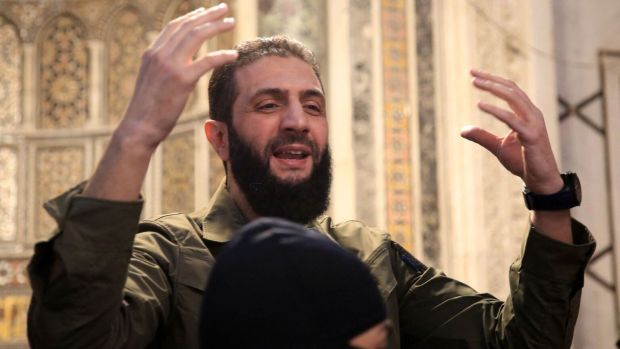
Who is Abu Mohammed al-Golani, leader of insurgency that toppled Syria’s Assad?

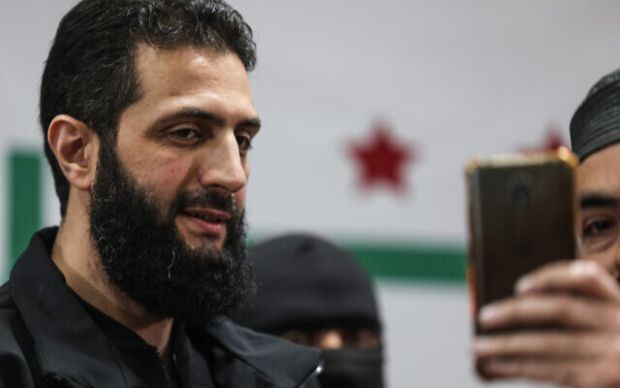
Abu Mohammed al-Golani, the rebel leader whose stunning insurgency toppled Syria’s President Bashar Assad, has spent years working to remake his public image, renouncing longtime ties to al-Qaeda and depicting himself as a champion of pluralism and tolerance. In recent days, the insurgency even dropped his nom de guerre and began referring to him by his real name, Ahmad al-Sharaa.

The extent of that transformation from jihadi extremist to would-be state builder is now put to the test.

Share

‘Historic day,’ says Netanyahu at Syrian border

Israel Prime Minister Netanyahu, visiting the Syrian border on Sunday, hailed the collapse of the Assad regime, “a central link in Iran’s axis of evil,” describing it as a “historic day in the history of the Middle East.”

Netanyahu said the fall of Syrian President Bashar Assad, who fled the country after a coalition of rebel groups stormed Damascus on Sunday, was the direct result of blows Israel inflicted on Iran and Hezbollah, “the main supporters of the Assad regime.”


Share