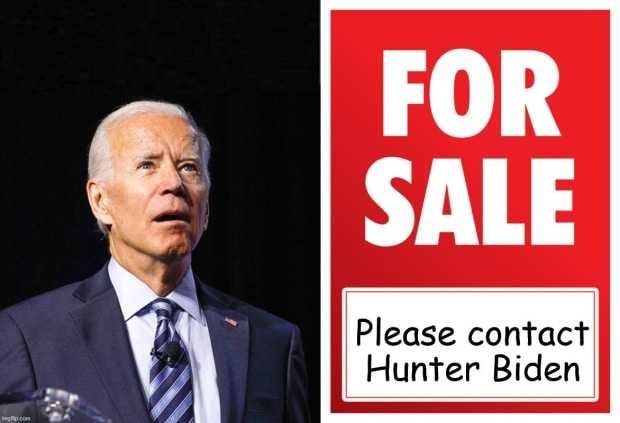
President Joe Biden received a sizable campaign contribution from a Russia lobbyist just months before declining to enforce sanctions on a Russian firm building the Nord Stream 2 pipeline, according to a report.

President Joe Biden received a sizable campaign contribution from a Russia lobbyist just months before declining to enforce sanctions on a Russian firm building the Nord Stream 2 pipeline, according to a report.

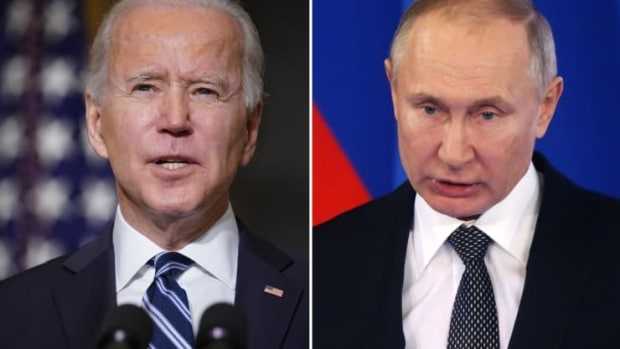
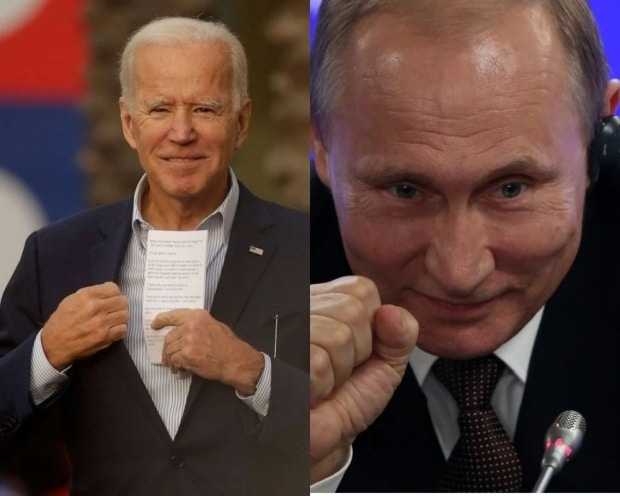
President Joe Biden and Russian President Vladimir Putin will meet face to face in Geneva, Switzerland in June. Although the two leaders have reportedly spoken twice since Biden took office, this will be their first in-person meeting since then, and it comes on the heels of Biden being criticized domestically for waiving sanctions on a Russian-German pipeline.

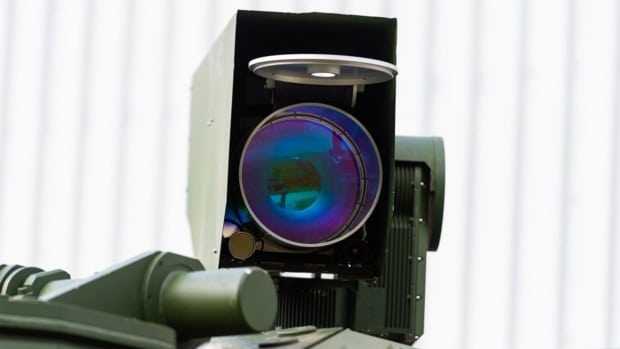
Scores of top U.S. officials have been attacked by what officials believe is a “directed energy microwave weapon” that can leave victims with permanent debilitating neurological symptoms.

The first half opens with footage of a Russian soldier – shaven headed, muscular – parachuting from a plane, before staring down the scope of his rifle in arctic conditions.
Then it cuts to the animated story of a ‘little girl, raised by two moms’ who describes how she defended freedom by attending LGBTQ marches and grew up to join the U.S. Army.
While the American military said its recruitment video was designed to highlight the diversity of the men and women in uniform, Sen. Ted Cruz saw it differently when he shared a TikTok clip that spliced it with the Russian footage.

The Russian pessimist says things are so bad they can’t possibly get worse; the Russian optimist says, “Don’t worry, they will!”
If Western leaders think that Russia and China are aggressive now, the Russian-Chinese alliance now emerging will be a nastier combination than most Western observers can imagine.
It doesn’t have to happen, but probably will, given the West’s toxic combination of aggressive posturing and inherent weakness. The former tempts China to use force, and the latter causes China to think that it can get away with using force.

The golden-colored bust was erected on April 29 in Dagestanskiye Ogni, a city of 30,000 in the multiethnic Dagestan region in Russia’s northern Caucasus. The small monument stood near a bus stop on a rural street that bears Stalin’s name.

One of the lessons of European history is that corridors are bloody dangerous. When we heard Vladimir Putin accusing the west of staging a military coup in Belarus to topple Lukashenko, we listened up because European land grabs are usually preceded by fake allegations and staged incidents. Hitler’s invasion of Poland was preceded by the so-called Gleiwitz incident, an attack on a German radio transmitter – allegedly perpetrated by Polish soldiers, but actually carried out by the Nazis themselves.

This announcement came at a meeting of the Interparliamentary Assembly of the Commonwealth by the deputy head of the department, Alexander Gorovoy. “These people will be punished by expulsion and closure of borders” if they don’t leave by the June 15 deadline, stated Deputy Interior Gorovoy.
h/t Marvin

Tension is building on the border as a new generation prepares to stand up to Russia
Winter shivers. Snow smothers the ground. A collection of tents, slowly collapsing, forms an army camp distinguished only by several sagging Ukrainian flags: splashes of blue and yellow amid a canvas of almost unrelenting white. It’s winter 2014, on the battlefields of eastern Ukraine, and I am in the forests outside the occupied cities with the Ukrainian army as it faces off against “separatists” backed by Russian forces.
Russian troops are massing on the Ukraine border, Chinese vessels are swarming Whitsun Reef of the Philippines in the South China Sea, and China’s air force is flying almost daily through Taiwan’s air-defense identification zone. Chinese troops for almost a year have been dug in deep in Indian-controlled Ladakh in the Himalayas. Two large aggressors are threatening to break apart neighbors and absorb them.
The Biden administration has issued warnings to both Moscow and Beijing, but neither looks impressed. American attempts to de-escalate flashpoints are seen in Russian and Chinese circles as failures of resolve.
At least at this moment, those adversaries are right to scoff at the new U.S. leader.

If the definition of a successful intelligence service is obscurity, the GRU is probably Russia’s most effective spy agency.
In communist times, the KGB became a byword in the West for Soviet spooks, whether they were infiltrating corridors of power abroad or suppressing dissidents at home, but few people ever heard of the GRU (an acronym pronounced like the English word “grew”).
Yet the military intelligence service – GRU stands for Main Intelligence Directorate – outlasted the KGB when the Soviet Union collapsed in 1991 and appears to be flourishing today.

Russia is amassing unprecedented military might in the Arctic and testing its newest weapons in a region freshly ice-free due to the climate emergency, in a bid to secure its northern coast and open up a key shipping route from Asia to Europe.

Russian President Vladimir Putin on Monday signed legislation that could theoretically mean he stays in power till 2036, according to a copy of the bill posted on the government’s legal information portal.
Under the previous constitution, Putin, 68, who has already been in power for more than two decades, would have been required to have stepped down after his second consecutive term ends in 2024.

The near-murder of Russian opposition politician Alexei Navalny by the nerve-agent novichok last August, his return to Moscow in January, and the resultant protests attended by tens of thousands of citizens in more than a hundred Russian cities, raise the question of how long the Russian people will continue to tolerate President Vladimir Putin’s repressive acts against political enemies and rivals.
The crowds were rallying in support of Navalny after his return to Moscow on January17, 2021 from medical treatment in Germany, some in temperatures of -60 degrees Fahrenheit. The police, attacking the protestors with batons, arrested more than 3,300 people.