Israel’s Cyberattack On Iranian Nuclear Facility So ‘Severe’ That Facility Might Be Down Till 2022

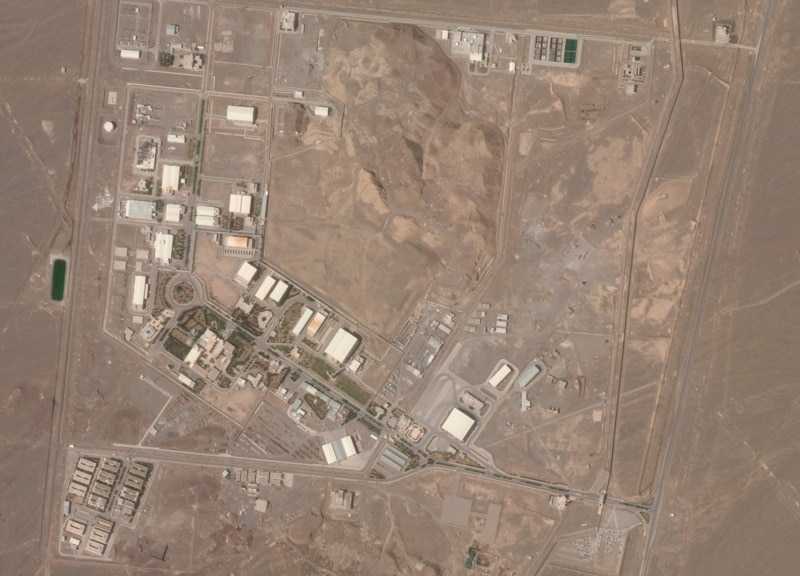
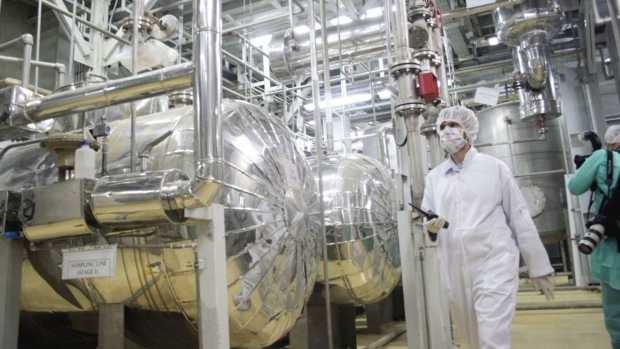
“Two intelligence officials briefed on the damage said it had been caused by a large explosion that completely destroyed the independent — and heavily protected — internal power system that supplies the underground centrifuges that enrich uranium,” The New York Times reported. “The officials, who spoke on the condition of anonymity to describe a classified Israeli operation, said that the explosion had dealt a severe blow to Iran’s ability to enrich uranium and that it could take at least nine months to restore Natanz’s production.”

Share

Iran vows revenge for ‘Israeli’ attack on Natanz nuclear site

The Iranian foreign minister has said his country will “take revenge” for an attack on an underground nuclear site, for which it has blamed Israel.

Iranian officials said the Natanz uranium enrichment plant was the target of “nuclear terrorism” on Sunday, after initially reporting a power failure.

New advanced centrifuges to enrich uranium had just been activated there.

Israel has not commented, but public radio cited intelligence sources as saying it was a Mossad cyber operation.

Share

Iran nuclear: ‘Terrorist act’ at underground Natanz facility

A nuclear facility in Iran was hit by a “terrorist act” a day after it unveiled new advanced uranium centrifuges, a top nuclear official says.

He did not say who was to blame but urged the international community to deal with nuclear terrorism.

Israeli media suggest the incident was a result of an Israeli cyber attack.

Last year, a fire broke out at the Natanz underground facility, which the authorities alleged was the result of cyber sabotage.

Share

Massive Iranian spy network in Europe revealed

A treasure trove of documents seized by German police and obtained by the JC reveals the extent to which Tehran’s spies have infiltrated Europe.

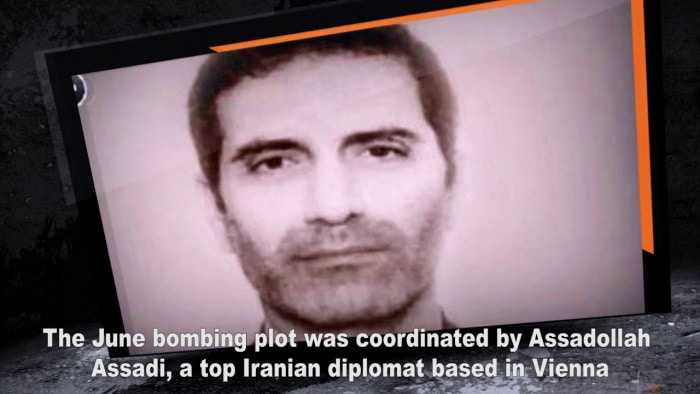
The documents were found in a hire car used as a mobile intelligence station by Assadollah Assadi, an Iranian spy chief who in February was sentenced to 20 years in prison for masterminding a failed bomb attack in Paris in 2018.

The material discloses a sophisticated network of regime agents that stretches across at least 22 cities all over the continent, along with plans for terror attacks using explosives, acid and toxic pathogenic substances.

Share

Iran nuclear deal: US joins Vienna talks aimed at reviving accord

The United States has joined talks in Vienna aimed at reviving the Iran nuclear deal, which the Trump administration abandoned in 2018.

President Joe Biden has said he wants to return to the landmark accord.

But the six remaining state parties need to find a way for him to lift the sanctions imposed by his predecessor and for Iran to return to the agreed limits on its nuclear programme.

Iran has said it will not meet the US face to face until that happens.

Share

Arabs’ Real Enemies: Iran and Turkey

After decades of portraying Israel as their mortal enemy, the Arabs have finally woken up to the fact that it is two Islamic countries, Turkey and Iran, that are actually threatening their security and stability.

The Arabs are now seeking to draw the world’s attention to these Turkish and Iranian threats.

The Arabs are warning the world that Turkey and Iran are funding and arming terrorists, that they a major threat to stability in the Middle East, and that they keep meddling in the affairs of Arab countries.

Share

The Biden Effect: China to deploy 5,000 troops in Iran, build military base there

“…In the agreement with Iran regarding the investment project, China has also included a clause for deployment of its troops there; and more than 5,000 Chinese troops will be deployed in Iran, and a [military] base will be built for them. Before this, China has also put its signature on investment projects with Saudi Arabia and Kuwait, which shows that China is implementing a plan to increase its influence in the Middle East…”

Share

China Plays the Iran Card and Calls Washington’s Bluff

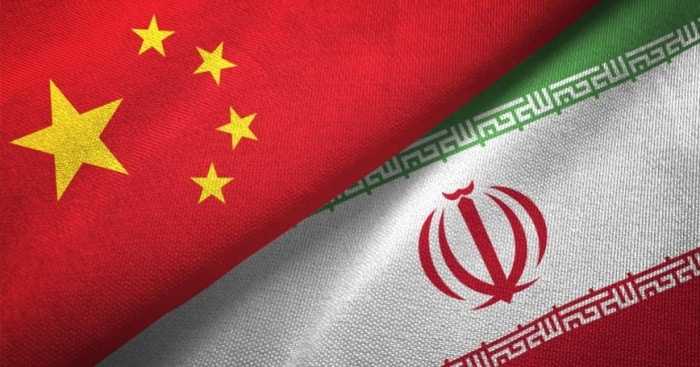
China last week signed a $400 billion, 30-year investment deal with Iran. American sanctions against Iran are effectively nullified. China’s state press declared, “As it stands, this deal will totally upend the prevailing geopolitical landscape in the West Asian region that has for so long been subject to US hegemony.” As former Indian diplomat MK Bhadrakumar reports in Asia Times, Chinese state media declare that China will trade with Iran and other Central Asian currencies in its own currency, bypassing the dollar-based world banking system. U.S. leverage against Iran is gone. It was obvious for the past year that China might play the Iran card.

Share

Biden Administration and Iran: Secret Deals and Appeasement Back on the Table?

Biden Administration and Iran: Secret Deals and Appeasement Back on the Table?

The Biden administration is ratcheting up its appeasement policies towards the Iranian regime in an apparent effort to revive the 2015 nuclear deal — which by the way, Iran never signed.

US President Joe Biden made his intention to return to the nuclear deal public before he took office; after, he appointed as Deputy Secretary of State Wendy Sherman — a key negotiator in the talks which led to the nuclear deal in 2015 during the Obama administration. Biden actually publicized Sherman’s professed accomplishment…

Share

Iran Still Hiding Key Parts of its Nuclear Programme, US Trying Bribery Again

With the Biden administration seemingly keen to recommence negotiations with Tehran over its nuclear programme, fresh evidence is emerging that Iran’s regime is up to its old tricks by attempting to conceal key elements of the programme from UN inspectors.

Iran has a long and undistinguished history of seeking to conceal the existence of key elements of its nuclear programme dating back to 2002, when a group of Iranian dissidents first revealed the existence of the Natanz nuclear enrichment site.

I suspect that the eventual disengagement from the Middle East as intended by the Obama administration is back in play.

Share

China Challenges the US on Iran

On March 27, China and Iran signed a comprehensive strategic 25-year partnership agreement on economic and security cooperation. The agreement was signed in Tehran, where China’s Foreign Minister Wang Yi was visiting as part of his tour of the Middle East.

Details of the agreement were not immediately published. The Iranian Foreign Ministry communicated that it was a “roadmap for cooperation” and that no “contracts” were included in it. “Prospects for cooperation, whether economic, political, cultural or strategic, have not been quantified, therefore it does not include numbers on investment or financial and monetary resources,” a statement of the Iranian Foreign Ministry reported.

Share

Lessons from the Middle East

Lessons from the Middle East

Far from the memory of the too numerous wars that have marked the Middle East, the temptation is strong to think that diplomacy should replace force, and that a good negotiation, even if it means coming out a loser, is better than a conflict. This is more or less the philosophy that seems to inspire the “not so new” American administration, such as that for former US President Barack Obama.

Former President Donald J. Trump, for his part, had no doubt learned some lessons from British Prime Minister Winston Churchill and more from the miserable double-cross offered by Hitler to British Prime Minister Neville Chamberlain and the French Prime Minister Édouard Daladier, which would lead, a year later, to the Second World War. Daladier and Chamberlain were so opposed to the use of force that they preferred to sacrifice Czechoslovakia to Nazi appetites rather than stand firm while there was still time. The rest, unfortunately, is well known.

Share

Iranian Regime, Houthis Celebrate Biden Administration’s Policy

The Biden Administration has completely reversed the former administration’s firm policy on the Houthis in the Yemeni civil war.

Former Secretary of State Mike Pompeo designated Yemen’s Iran-backed Houthi rebels, also known as Ansarallah, as a “foreign terrorist organization” in January 2021. The move was intended to hold the terror group accountable…

Share

Arabs: A Warning to Biden about Iran’s Mullahs

Arabs: A Warning to Biden about Iran’s Mullahs

The Biden administration has decided to extend for another year the “national emergency” (Executive Order 12957), issued in 1995 in response to the threat Iran posed to the national security, foreign policy and economy of the US.

The Executive Order imposed a series of sanctions against Iran in response to its support for international terrorism, its efforts to undermine the Middle East peace process between Israel and the Palestinians, and its acquisition of nuclear weapons.

…President Biden’s decision to pursue the sanctions against Iran, however, has failed to reduce the fears of many Arabs. They say that they remain skeptical about Washington’s policy toward the threats posed by the mullahs in Tehran.

Under Obama it became evident that the goal was disengagement from the Middle East. This administration is Obama 2.0.

Share

Attention President Biden: Yemen’s Houthi Rebels are Iranian-backed Terrorists

US President Joe Biden has good reason to regret his hasty decision to remove the terrorist designation applied to the Iranian-backed Houthi rebels in Yemen after they responded to his act of benevolence by unleashing a fresh wave of attacks in the Middle East.

The Houthis and their Iranian backers are primarily responsible for starting Yemen’s long and bitter civil war after they overthrew the democratically-elected government of Yemeni President Abd-Rabbu Mansour Hadi in 2014.

Share