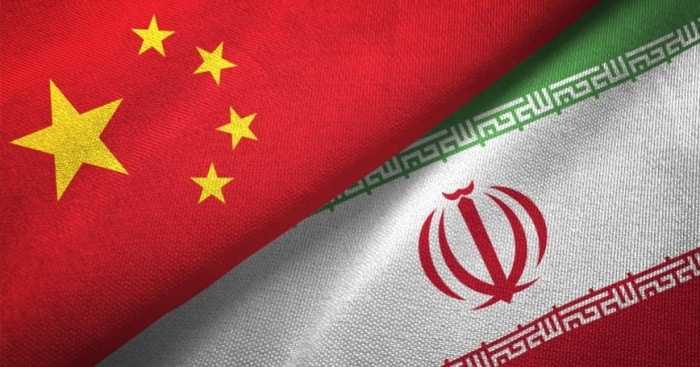
China Plays the Iran Card and Calls Washington’s Bluff

China last week signed a $400 billion, 30-year investment deal with Iran. American sanctions against Iran are effectively nullified. China’s state press declared, “As it stands, this deal will totally upend the prevailing geopolitical landscape in the West Asian region that has for so long been subject to US hegemony.” As former Indian diplomat MK Bhadrakumar reports in Asia Times, Chinese state media declare that China will trade with Iran and other Central Asian currencies in its own currency, bypassing the dollar-based world banking system. U.S. leverage against Iran is gone. It was obvious for the past year that China might play the Iran card.

Share

Biden Administration and Iran: Secret Deals and Appeasement Back on the Table?

Biden Administration and Iran: Secret Deals and Appeasement Back on the Table?

The Biden administration is ratcheting up its appeasement policies towards the Iranian regime in an apparent effort to revive the 2015 nuclear deal — which by the way, Iran never signed.

US President Joe Biden made his intention to return to the nuclear deal public before he took office; after, he appointed as Deputy Secretary of State Wendy Sherman — a key negotiator in the talks which led to the nuclear deal in 2015 during the Obama administration. Biden actually publicized Sherman’s professed accomplishment…

Share

Iran Still Hiding Key Parts of its Nuclear Programme, US Trying Bribery Again

With the Biden administration seemingly keen to recommence negotiations with Tehran over its nuclear programme, fresh evidence is emerging that Iran’s regime is up to its old tricks by attempting to conceal key elements of the programme from UN inspectors.

Iran has a long and undistinguished history of seeking to conceal the existence of key elements of its nuclear programme dating back to 2002, when a group of Iranian dissidents first revealed the existence of the Natanz nuclear enrichment site.

I suspect that the eventual disengagement from the Middle East as intended by the Obama administration is back in play.

Share

China Challenges the US on Iran

On March 27, China and Iran signed a comprehensive strategic 25-year partnership agreement on economic and security cooperation. The agreement was signed in Tehran, where China’s Foreign Minister Wang Yi was visiting as part of his tour of the Middle East.

Details of the agreement were not immediately published. The Iranian Foreign Ministry communicated that it was a “roadmap for cooperation” and that no “contracts” were included in it. “Prospects for cooperation, whether economic, political, cultural or strategic, have not been quantified, therefore it does not include numbers on investment or financial and monetary resources,” a statement of the Iranian Foreign Ministry reported.

Share

Lessons from the Middle East

Lessons from the Middle East

Far from the memory of the too numerous wars that have marked the Middle East, the temptation is strong to think that diplomacy should replace force, and that a good negotiation, even if it means coming out a loser, is better than a conflict. This is more or less the philosophy that seems to inspire the “not so new” American administration, such as that for former US President Barack Obama.

Former President Donald J. Trump, for his part, had no doubt learned some lessons from British Prime Minister Winston Churchill and more from the miserable double-cross offered by Hitler to British Prime Minister Neville Chamberlain and the French Prime Minister Édouard Daladier, which would lead, a year later, to the Second World War. Daladier and Chamberlain were so opposed to the use of force that they preferred to sacrifice Czechoslovakia to Nazi appetites rather than stand firm while there was still time. The rest, unfortunately, is well known.

Share

Iranian Regime, Houthis Celebrate Biden Administration’s Policy

The Biden Administration has completely reversed the former administration’s firm policy on the Houthis in the Yemeni civil war.

Former Secretary of State Mike Pompeo designated Yemen’s Iran-backed Houthi rebels, also known as Ansarallah, as a “foreign terrorist organization” in January 2021. The move was intended to hold the terror group accountable…

Share

Arabs: A Warning to Biden about Iran’s Mullahs

Arabs: A Warning to Biden about Iran’s Mullahs

The Biden administration has decided to extend for another year the “national emergency” (Executive Order 12957), issued in 1995 in response to the threat Iran posed to the national security, foreign policy and economy of the US.

The Executive Order imposed a series of sanctions against Iran in response to its support for international terrorism, its efforts to undermine the Middle East peace process between Israel and the Palestinians, and its acquisition of nuclear weapons.

…President Biden’s decision to pursue the sanctions against Iran, however, has failed to reduce the fears of many Arabs. They say that they remain skeptical about Washington’s policy toward the threats posed by the mullahs in Tehran.

Under Obama it became evident that the goal was disengagement from the Middle East. This administration is Obama 2.0.

Share

Attention President Biden: Yemen’s Houthi Rebels are Iranian-backed Terrorists

US President Joe Biden has good reason to regret his hasty decision to remove the terrorist designation applied to the Iranian-backed Houthi rebels in Yemen after they responded to his act of benevolence by unleashing a fresh wave of attacks in the Middle East.

The Houthis and their Iranian backers are primarily responsible for starting Yemen’s long and bitter civil war after they overthrew the democratically-elected government of Yemeni President Abd-Rabbu Mansour Hadi in 2014.

Share

The Game that Left Iran at an Historic Impasse

“Not worth a bucketful of spit!” This is how US President Harry Truman described the vice-presidency when he himself filled that slot under President Roosevelt.

Today, some commentators believe that he colorful description could be applied to the position of the president in Iran.

This is why many, even among the critics of the regime, insist that showing any interest in this year’s presidential election, slated for June, is not only a waste of time but active participation in a massive political deception.

Share

Palestinians: Why Terrorists Support Mass Murderers

While many Palestinians hold Iran’s slain military commander Qassem Soleimani responsible for committing massacres against Palestinians and Arabs, especially in war-torn Syria, the Palestinian Islamist groups Hamas and Islamic Jihad are continuing to heap praise on him for supporting their anti-Israel terrorist activities.

Soleimani, former commander of Iran’s Quds Force, was killed in a US drone attack in Iraq on January 3, 2020. Many Palestinians and Arabs have denounced Soleimani as the “murderer of hundreds of thousands of women and children” in Syria, Yemen and Iraq.

Share

Israeli defence minister says Israel is prepared to strike Iranian nuclear sites

Israeli Defense Minister Benny Gantz says that the country is prepared to attack Iran’s nuclear sites if the world does not act to stop it from developing a nuclear capability, which threatens to obliterate Israel off the face of the planet, if rhetoric from Iran’s leaders is to be taken seriously.

Share

The Danger of Appeasing the Mullahs

Turkey and the European Union are on the same page when it comes to pursuing appeasement policies with the Iranian regime. How do the ruling mullahs of Iran repay the favor? Through assassinations and terror plots.

This month, the Turkish authorities detained an Iranian diplomat, Mohammad Reza Naderzadeh, 43, for his role in killing an Iranian dissident, Massoud Molavi Vardanjani, in November 2019. Reportedly, the Iranian diplomat was a staff member in the Iranian Consulate in Istanbul and had forged travel documents for Ali Esfandiari, who orchestrated the assassination of Molavi Vardanjani.

Share

John Kerry never got out of bed with Iran

He kept up a bromance with Javad Zarif during the entire Trump administration

Failed former Secretary of State John Kerry spent so much time wooing Iran Foreign Minister Javad Zarif during the Obama administration that people started talking.

After years of public canoodling, romantic garden strolls and secret pallets of cold, hard American cash sent under the cover of night, Monsieur Kerry never could get Mr. Zarif and the Iranians to kick their habit of bankrolling terrorism around the globe.

Share