Endurance: Shackleton’s lost ship is found in Antarctic

Scientists have found and filmed one of the greatest ever undiscovered shipwrecks 107 years after it sank.

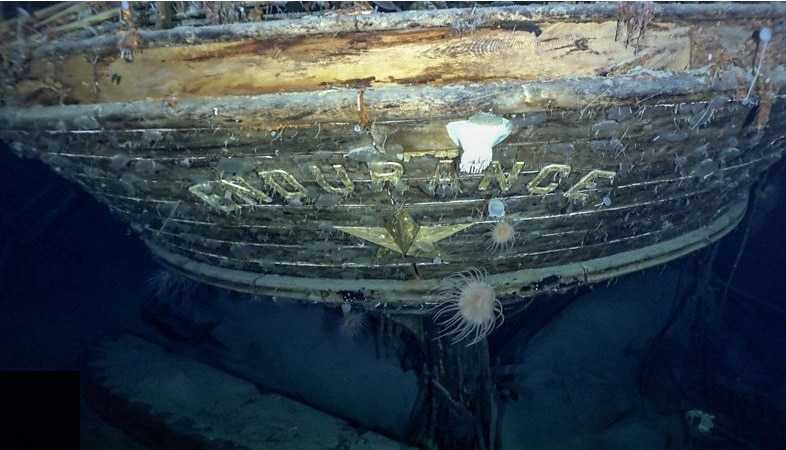
The Endurance, the lost vessel of Antarctic explorer Sir Ernest Shackleton, was found at the weekend at the bottom of the Weddell Sea.

The ship was crushed by sea-ice and sank in 1915, forcing Shackleton and his men to make an astonishing escape on foot and in small boats.

Video of the remains show Endurance to be in remarkable condition.

Share

Canada and the great war : Liberation

Private J. Arthur Maguire of the 2nd Battalion enlisted at age 21 in January 1915. He survived three years in the trenches of the Western Front, but he watched many friends die in combat. Maguire’s experience shook him to the core: near misses from bullets and shell splinters, the clash of battle, the haunting feeling of making it through the Armageddon of fire when so many chums did not. And yet he experienced a significant period of relief, even joy, near the end of the war.

In mid-October 1918, Maguire and his comrades were pushing the Germans back after inflicting a momentous defeat on the Kaiser’s forces by driving them out of Cambrai, France, on Oct. 8-9. The Canucks bled for that victory, but it broke the back of the enemy defences, delivering a fatal blow to their immobile logistical system of roads and rail lines that converged on Cambrai. As the weary Canadian survivors of the two-week battle to capture Cambrai marched east in pursuit of the fleeing Germans, they encountered French villages that had suffered under four years of occupation.

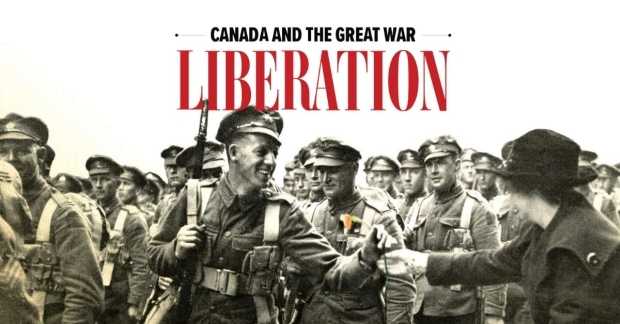
In one small settlement consisting of only a few stone farmhouses and shell-ruined barns, Maguire and his comrades advanced cautiously, with stray shells landing in and around the village from the enemy only a few kilometres away. But they were soon surprised to be greeted by dozens of cheering civilians who rushed from their cellars and hiding places. The worried Canucks waved at the French farmers to take cover, but they refused to pay heed, too enraptured with their moment of liberation. “They were so glad to see us,” Maguire later wrote, “they wept with joy.”

The French hailed the Canadians, breaking out beer, “vin blanc,” and even some hidden cognac that was dug up after years of lying in the ground waiting for this moment of freedom. The French did not have much, but they wanted to give it to the battle-scarred Canadians who had crossed the Atlantic and sacrificed so much to fight for liberty.
Share

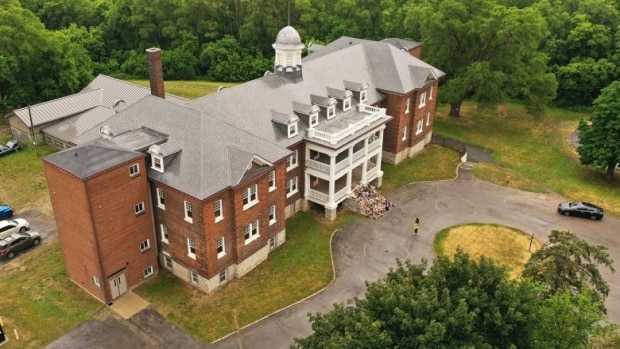
Survivors of Mohawk Institute Residential School in Ontario get $10.2M from Ottawa to look for unmarked graves

WARNING: This story contains distressing details

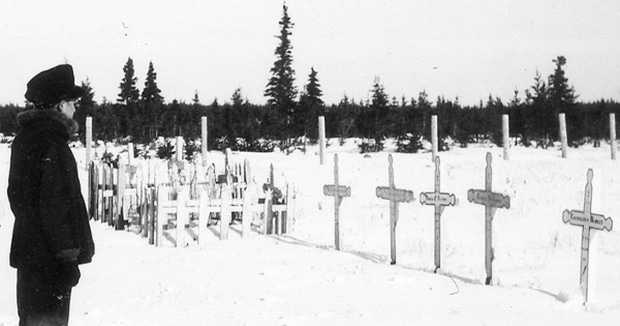
The group overseeing the search for unmarked graves at the former Mohawk Institute Residential School in Brantford, Ont., is getting over $10 million from Ottawa, but says it isn’t enough to help them do their work.

Share

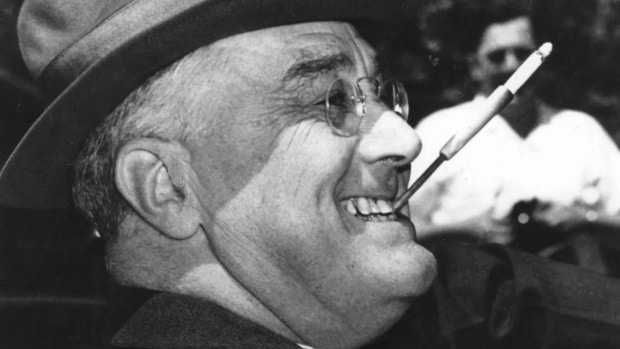
The Failed Presidency of Franklin Roosevelt: A Tale of Two Harrys

Duped by Soviets both inside and outside his administration.

In this third installment of a revisionist look back at the presidency of Franklin Roosevelt, the focus is on communist infiltration of FDR’s administration both before and during World War II and its impact on American foreign policy. In particular, this is the tale of the two Harrys: Harry Dexter White and Harry Hopkins. White was by most accounts a conscious agent of the Soviet Union (though never a Communist Party member) who as a key Treasury Department official influenced U.S. policy to favor Soviet objectives and provided classified information to his Soviet handlers. Hopkins was at best a dupe or “useful idiot,” and at worst a pro-Soviet agent of influence, who was President Roosevelt’s closest adviser during the war. The two Harrys, along with numerous other Soviet agents of influence in a plethora of New Deal and wartime agencies, in James Burnham’s words, “assembled in Washington under the careless scepter of Franklin Roosevelt.”

Share

The Failed Presidency of Franklin Roosevelt: William Bullitt’s Warning

The postwar Soviet threat could have been lessened.

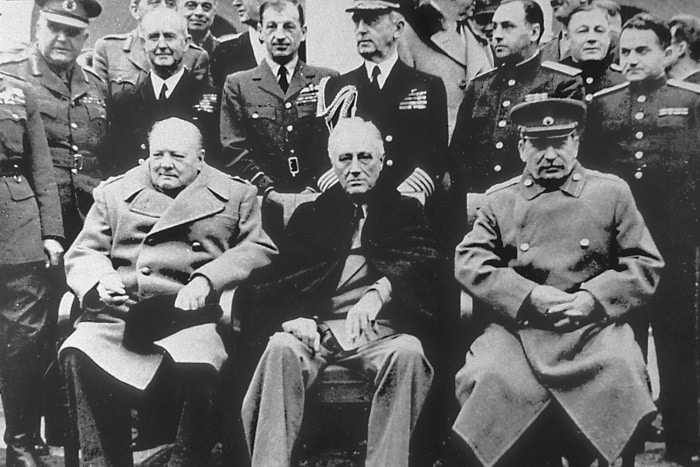
Recently in The American Spectator, I wrote a somewhat controversial article claiming that Franklin Roosevelt was a failure as president. One of the areas of failure, I argued, was FDR’s decision-making during the Second World War, which resulted in the replacement of the Nazi threat with an even greater Soviet threat. Some critics have retorted, What else could FDR have done? The postwar world was largely shaped by where the Anglo-American and Soviet armies ended up when the fighting stopped. But consider the case of William Bullitt’s warning to the president.

Share

The Ungracious – and Their Demonization of the Past

The last two years have seen an unprecedented escalation in a decades-long war on the American past. But there are lots of logical flaws in attacking prior generations in U.S. history.

Critics assume their own judgmental generation is morally superior to those of the past. So, they use their own standards to condemn the mute dead who supposedly do not measure up to them.

Yet 21st-century critics rarely acknowledge their own present affluence and leisure owe much to history’s prior generations whose toil helped create their current comfort.

Share

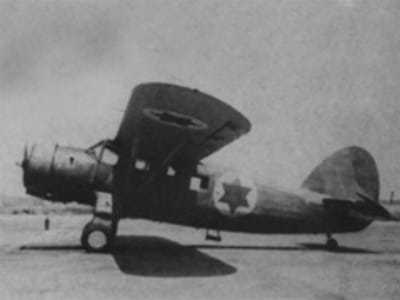
The Canadian ‘Falcon of Malta’ who died for Israel

Noorduyn Norseman

‘Top Guns’: The little-known story of the decorated Canadian WWII pilot who died mysteriously in 1948 after joining the Israeli Air Force.

One of the most successful and decorated Canadian World War II “Top Guns,” George Frederic’ Buzz’ Beurling, was born in Montreal one hundred years ago on December 6, 1921. After the war, he joined the nascent Israeli Air Force to fight in the War of Independence and was killed mysteriously in 1948: It was a lamentable end to a dazzling dream.

Share

Canada’s Great Depression

When there is talk of The Great Depression, the United States and its Dust Bowl often takes centre stage but there were many other places impacted by the depression, and few were affected as severely as Canada.

In this episode, I am going to look at how Canada was impacted by The Great Depression. This is a large topic, so I am going to be taking more of a broad view of how the country was impacted as a whole, with looks at the provinces as well.

Share

Canada’s Wealthy Elites Long Had A Soft Spot For Fascism

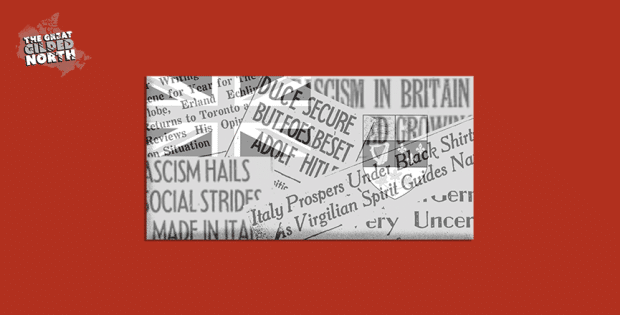
The Canadian military’s efforts in the Second World War are often mythologized so as to portray opposition to fascism as a cross-class trait, shared by workers, bosses and politicians alike. The disturbing reality, however, is that well into the late 1930s, a significant section of Canada’s elite admired fascism in Italy and even in Germany.

Share

UBC under pressure to cancel event with filmmaker who made “The Canadian Mass Graves Hoax” documentary

Lauren Southern’s movie claims that there’s no evidence of a Catholic Church cover-up.

(This story may be triggering for some readers. The Indian Residential School Survivors Society can be reached at 1-800-721-0066 and there’s a 24-hour crisis line at 1-866-925-4419.)

Share