The Hungry Country

One night while digging through some of my own family history, I came across a copy of my great-great-great grandfather’s diary. One the pages, aptly titled “I Shot a Man for Seventy-Five Cents,” instantly caught my eye. It’s not every day you find one of your family’s great patriarchs nearly killed a man over some pocket change.

Now this story is every bit as hair-raising as it sounds—and I’m half-tempted to share it—but for now let’s just say that it piqued my curiosity. For the better part of an evening, I pored over page after page of this diary, eager to know my grandfather and better understand what made him into the tenacious man he was.

Share

Jesuit diaries reveal the love Indigenous Canadian tribes had for the missionaries and Catholicism

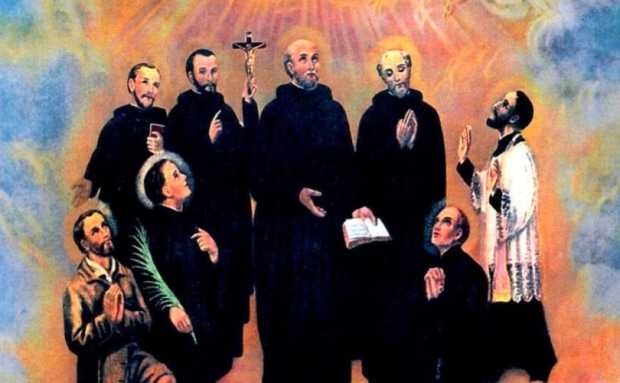
In contrast to the insistence of some Christians today that certain pagan superstitions ought to be accepted in the name of inculturation — such as the “smudging” ceremony of “purification” practiced by native tribes in North America, in which the Pope will take part — the first indigenous converts to Christianity in Canada not only embraced the Catholic Faith wholeheartedly, abandoning all superstitions, but they esteemed the Jesuit missionaries so much that they entreated them to remain with their tribes when the missionaries were considering a return to safety in the French settlements.

Share

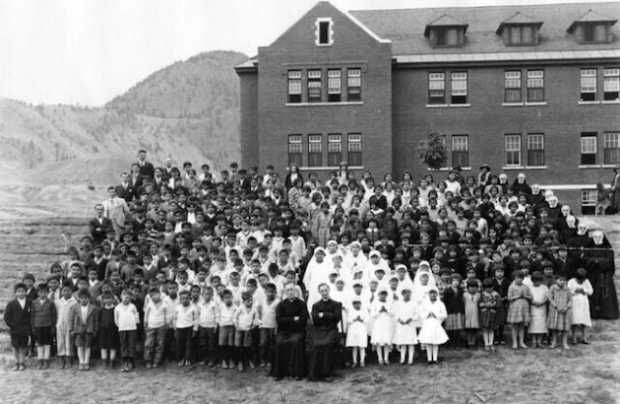
Unmarked Graves: Money or Justice?

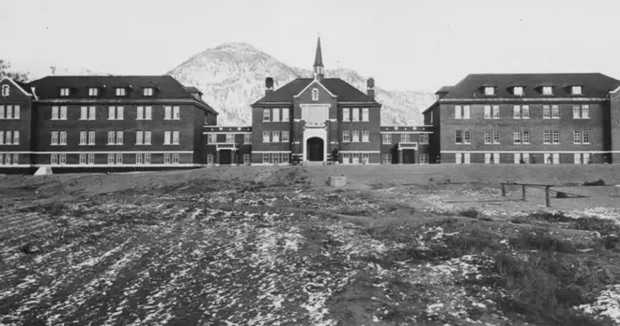
July 2021: The scene is a live CBC broadcast from the former Mohawk Institute Residential School in Brantford, Ontario, where, similar to earlier claims in Kamloops, British Columbia, clandestine graves of missing Indigenous children are said to be located. From the teddy-bear-lined steps, reporter Bobby Hristova somberly states, “In terms of the search, we heard Chief Mark Hill say, ‘No Money. No response.’”

In a letter addressed to the Ontario Premier’s office, Chief Hill explains that the $400,000 annual grant secured from the Ontario government, later increased to $700,000 over a three-year period, “falls short and is not commensurate with Ontario’s role in operating the school.” The search for secret catacombs of Indigenous children is a growing Canadian industry, which repeatedly broadcasts that current funding increases are not enough for the “children to be brought home.”

Share

Canada is failing to teach its military history

The teaching of Canadian history in the nation’s universities is in trouble. Course enrolments have been and are continuing to fall dramatically and the numbers of history majors have collapsed. This, it is said, is true in all areas of historical study, not least in the history of Canada.

Why? First, there are few jobs for history graduates. A sensible student will opt for business or IT or law where they might even be able to make a living from their studies.

But there are likely many additional reasons and one surely is that historians have been working for decades to turn their discipline away from narrative and towards theory. Narrative tells a factual story while theory posits an abstruse rationale for what did or did not occur. The theorists prevail. Another reason is that the woke Canadian historians, now apparently the majority in the profession, have turned away from national history. The York University history calendar ungrammatically says it all: “Our courses focus on the thematic areas of indigeneity, culture, gender, social, political, environmental and sexuality.”

Share

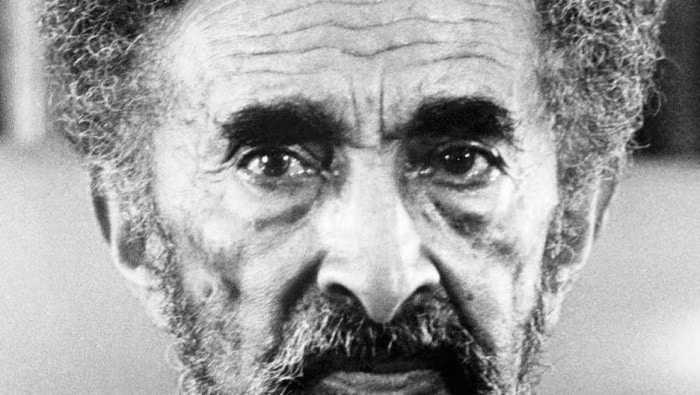
A 1936 Speech Offers Dire Warnings for Today

Haile Selassie had few weapons but warned Europe of the doom that followed.

At first, the speaker solemnly recounted, the invading aircraft dropped tear gas bombs but the “soldiers learned to scatter, waiting until the wind had rapidly dispersed the poisonous gas.”

Adjusting their tactics, the aircraft then dropped barrels of mustard gas. The barrels would rupture upon impact, but the poisonous effect was limited. So, for more efficient delivery, “Special sprayers were installed on board aircraft so that they could vaporize, over vast areas of territory, a fine, death-dealing rain.”

Share

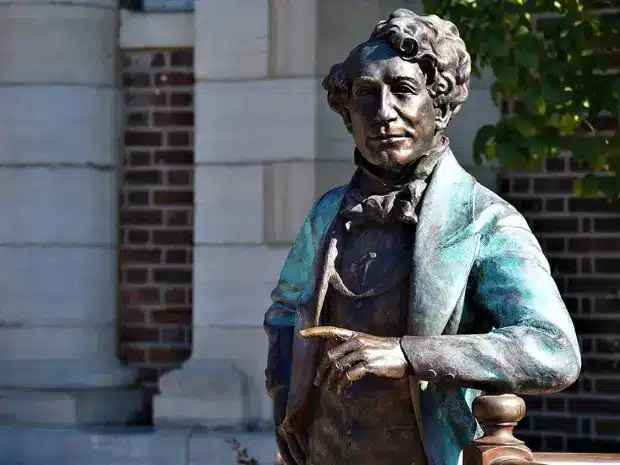
Patrice Dutil: Canadians refuse to let Sir John A. Macdonald be cancelled

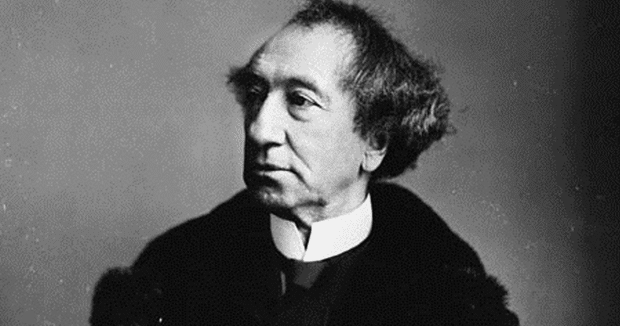
The vandalism carried out in the summer of 2021 against statues of Sir John A. Macdonald, Queen Victoria and Egerton Ryerson was supported by only a small fringe of Canadians. And a new Leger-Postmedia poll makes the case that Macdonald’s reputation has only improved with every attack — every time his name has been removed from a building and every time a monument to him has been taken down.

Share

Endurance: Shackleton’s lost ship is found in Antarctic

Scientists have found and filmed one of the greatest ever undiscovered shipwrecks 107 years after it sank.

The Endurance, the lost vessel of Antarctic explorer Sir Ernest Shackleton, was found at the weekend at the bottom of the Weddell Sea.

The ship was crushed by sea-ice and sank in 1915, forcing Shackleton and his men to make an astonishing escape on foot and in small boats.

Video of the remains show Endurance to be in remarkable condition.

Share

Canada and the great war : Liberation

Private J. Arthur Maguire of the 2nd Battalion enlisted at age 21 in January 1915. He survived three years in the trenches of the Western Front, but he watched many friends die in combat. Maguire’s experience shook him to the core: near misses from bullets and shell splinters, the clash of battle, the haunting feeling of making it through the Armageddon of fire when so many chums did not. And yet he experienced a significant period of relief, even joy, near the end of the war.

In mid-October 1918, Maguire and his comrades were pushing the Germans back after inflicting a momentous defeat on the Kaiser’s forces by driving them out of Cambrai, France, on Oct. 8-9. The Canucks bled for that victory, but it broke the back of the enemy defences, delivering a fatal blow to their immobile logistical system of roads and rail lines that converged on Cambrai. As the weary Canadian survivors of the two-week battle to capture Cambrai marched east in pursuit of the fleeing Germans, they encountered French villages that had suffered under four years of occupation.

In one small settlement consisting of only a few stone farmhouses and shell-ruined barns, Maguire and his comrades advanced cautiously, with stray shells landing in and around the village from the enemy only a few kilometres away. But they were soon surprised to be greeted by dozens of cheering civilians who rushed from their cellars and hiding places. The worried Canucks waved at the French farmers to take cover, but they refused to pay heed, too enraptured with their moment of liberation. “They were so glad to see us,” Maguire later wrote, “they wept with joy.”

The French hailed the Canadians, breaking out beer, “vin blanc,” and even some hidden cognac that was dug up after years of lying in the ground waiting for this moment of freedom. The French did not have much, but they wanted to give it to the battle-scarred Canadians who had crossed the Atlantic and sacrificed so much to fight for liberty.

Share