Time Columnist Denounces Free Speech as a White Man’s “Obsession”

It has become depressingly common to read unrelenting attacks on free speech in the Washington Post and other newspapers. The anti-free speech movement has been embraced by Democratic leaders, including President Joe Biden, as well as academics who now claim “China was right” on censorship. However, a Time magazine column by national correspondent Charlotte Alter was still shocking in how mainstream anti-free speech views have become. Alter denounces free speech as basically a white man’s “obsession.”

Share

Khan: Elon Musk’s Twitter takeover shows why Canada must regulate social media now

Voices from racialized communities, anti-racism activists and the political left are saying that restrictions must be maintained on those voices that use the platform to propagate hate, xenophobia and disinformation. Many on the political right, free-speech extremists and far-right voices are rejoicing at the prospect that Twitter under Musk’s ownership will become a space for unrestricted speech, where anything one can say is acceptable.

That is a lie: Musk has stated very clearly that he intended to allow all legal speech.

Share

Time Magazine correspondent obsesses over “tech bro obsession with free speech”

Has anyone else noticed a growing obsession on the left these days wherein the government, the tech oligarchs, and a growing swath of mainstream media outlets have taken to openly mocking the idea of free speech? This was already a serious problem on Twitter and Facebook long before Elon Musk came along and appeared to light a fuse under the discussion, but it’s really kicked into high gear since then.

Share

Why Does the Left Have Such a Difficult Time With the Concept of ‘Free Speech’?

For if Men are to be precluded from offering their Sentiments on a matter, which may involve the most serious and alarming consequences, that can invite the consideration of Mankind, reason is of no use to us; the freedom of Speech may be taken away, and, dumb and silent we may be led, like sheep, to the Slaughter.

—George Washington

Share

The great American free-speech panic

Elon GIFs | Tenor

Elon Musk’s takeover of Twitter has revealed how terrified the elites are of freedom of speech.

Freedom of speech is the ‘dread of tyrants’. That’s how Frederick Douglass, the American abolitionist, statesman and former slave, put it in his seminal 1860 speech, ‘A Plea for Freedom of Speech in Boston’ – taking aim at a racist mob who had shut down an abolitionist meeting and the authorities that had refused to protect it.

The battle lines in America’s free-speech wars are very different today, as of course are the stakes. ‘Slavery cannot tolerate free speech’, thundered Douglass. He saw open discussion as the means to liberation. Today, those who might consider themselves his heirs think you can censor your way to utopia. But one thing at least remains stubbornly the same: more than 160 years later, free speech still fills the American elites with dread.

Share

More Freedom of Speech in the West

“Free speech is essential to a functioning democracy. Do you believe Twitter rigorously adheres to this principle?” The entrepreneur Elon Musk asked in a Twitter poll on March 25, 2022. The answer was 70% no, 30% yes.

On April 25, 2022, Musk struck a deal to buy Twitter for $44 billion, reportedly to build “arena for free speech”. He has described himself as a free speech absolutist and has thankfully sparked a wider public discussion about free speech in a democracy. There are instances — such as child-pornography, falsely “shouting fire in a crowded theater,” or, to safeguard national security during a war (see Brandenburg v. Ohio for some of the legal reasoning) — where there are and need to be constraints on free speech. Regarding false information, such as propaganda, Australian writer Caitlin Johnstone cautions against turning a free society into some kind of totalitarianism to fight an adversary

Share

CNN Terrified of Free Speech on Twitter: Would You Go to Elon’s Dirty Party?

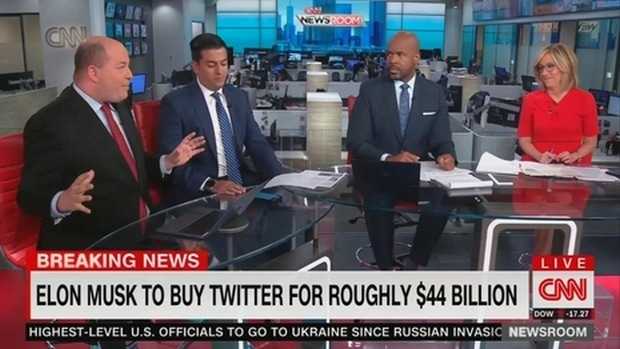
With Elon Musk’s deal to acquire Twitter finalized on Monday, CNN Newsroom was left shaken by the idea that free speech would be allowed on the platform that they’ve used to gaslight the public and boost their egos. This fear ranged from concerns about former President Trump’s return to analogies suggesting Twitter would become a debauched and dirty party that will chase away users.

Share

A victory for free speech as Christian preacher is cleared

I HAVE some encouraging news for this special weekend, as we focus on the death and resurrection of the Lord Jesus Christ. The trial of open-air preacher Pastor John Sherwood took place at Uxbridge magistrates’ court last week, and he was acquitted of the public order charges brought against him. This represents some welcome relief in the assault upon Christian liberties in contemporary Britain.


Ohio Professor Wins Settlement in Preferred Pronoun Case

A measure of sanity returns to the world of pronouns.

Share

The New Campaign for a Sex-Free Internet

Sex, money, and the future of online free speech

For more than a decade, both amateurs and professionals shared their sometimes sweet, sometimes weird, and often graphic sexual activity on Pornhub. Launched in 2007 not long after YouTube and with a similar free-for-all spirit, the site represented a new wave of “adult entertainment” in which anyone with an internet connection could partake and anyone with a digital camera could become a star.

Dubbed “tube sites,” Pornhub and its various peers began to dominate web traffic generally and porn consumption specifically. These sites trod on porn’s established business model, but for savvy sex workers the tube site network could provide a way to break into the business or reach audiences directly, without the porn industry’s usual middlemen. To monetize one’s presence in the early days took some creativity, but tube sites would eventually offer content partnerships that allowed people to get paid directly for their videos. Their competitors, such as cam sites and clip stores, made the process of charging money and getting paid even smoother.
Share

Ottawa’s Proposed Bills to Curtail Online Harms ‘Oblivious’ to Reality: Former CRTC Chairs

Any attempts to regulate the internet should steer clear of trying to manage what people have to say, for at best it leads to a quagmire of legal wrangling, while at worst it leads to suppression of free speech by the government, say former chairs of the Canadian Radio-television and Telecommunications Commission (CRTC).

“Early efforts in Canada to create federal regulatory frameworks for the Internet, such as Bill C-10 and the ‘online harms’ proposals, were oblivious to this reality and widely panned as a result,” said Konrad von Finckenstein and Peter Menzies, former CRTC chair and vice-chair respectively, in a recent paper on how to address online harms while still protecting free speech.

Share

CRTC can regulate the internet and protect free speech, its chairman says

CRTC Chairman Ian Scott says the CRTC can handle the task of implementing the Liberal government’s controversial online streaming legislation, including safeguarding freedom of expression.

Speaking at Ryerson University in Toronto, Scott shrugged off critics’ concerns about giving the broadcast and telecom regulator the responsibility of figuring out how to put Bill C-11 into practice.
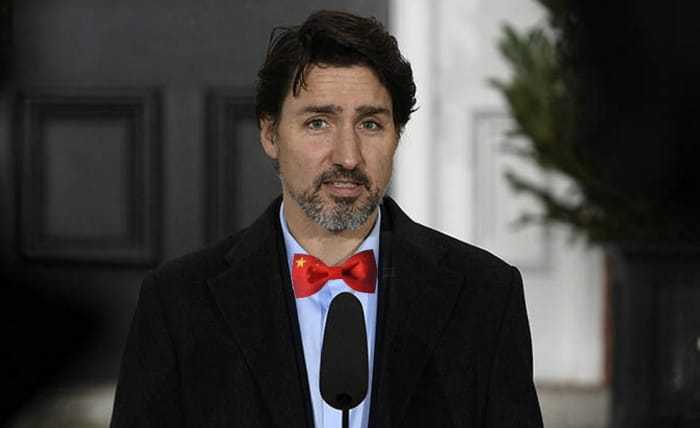
“Users of online and social media services expect freedom of expression, and they will continue to enjoy this under the new Broadcasting Act,” Scott said in the speech Friday, according to a transcript made available by the CRTC Monday.

Share

FUREY: The Trudeau Liberals remain obsessed with censoring Internet

One year ago there was a lot of noise about the federal Liberal government looking for ways to regulate Internet content and effectively give themselves the power to censor people’s social media posts.

What was then known as Bill C-10 was seen as a backdoor way to bring in creeping censorship by giving the Canadian Radio-television and Telecommunications Commission (CRTC) the powers to regular what they termed user-generated content posted online, in the same way the regulatory body currently has domain over the radio and TV realm.

Share