

Canadian Heritage Minister Pablo Rodriguez shared the news on Wednesday as he announced a newly formed panel of experts who will advise his office as it drafts the new bill.
Canadian Heritage Minister Pablo Rodriguez shared the news on Wednesday as he announced a newly formed panel of experts who will advise his office as it drafts the new bill.
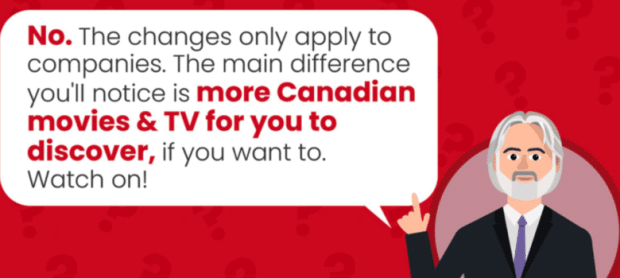
Bill C-11, the Online Streaming Act that serves as the government’s follow-up to Bill C-10, was the subject of debate in the House of Commons yesterday as the legislation slowly makes it way through the legislative process. There are still committee hearings to come, but it is readily apparent that many of the concerns that hamstrung Bill C-10 have returned: virtually limitless jurisdictional, overbroad scope, and harmful discoverability provisions. Further, this bill has attracted mounting criticism from Canadian digital-first creators, who note that one of Canada’s biggest cultural exports could be hurt by the bill leading to millions in lost revenues.
Especially troubling:
“The policy direction has two primary goals. First, it will focus on the importance of consultation and special consideration of the needs of equity-seeking groups. Second, the direction will make clear areas where regulation is needed, as well as areas where flexibility should be exercised.”

The unthinkable has happened.
The New York Times, which proudly boasts of having one of the most “woke” (and intolerant) newsrooms of any news organization in America, has finally come around to admitting not only that cancel culture does exist, but that’s it’s also dangerous for our society.
Canadians are becoming increasingly concerned about the issues of free speech and freedom, a new poll finds.
Conducted by Nanos Research, the poll found that of all national issues of concern, free speech and freedom came in second as the “most important” to Canadians at 8.3 percent, just behind the coronavirus at 13.1 percent, and of higher priority than the environment at 7.5 percent.
With the latest numbers released on March 15, the ongoing survey has tracked Canadians’ top concerns every week since its launch in Jan. 2020.
“Bill C-36 states that “a person may, with the Attorney General’s consent, lay an information before a provincial court judge if the person fears on reasonable grounds that another person will commit (a) an offence under section 318 [advocating genocide] or subsection 319” [inciting or promoting hate, promoting hatred].”
This is the work of an insane tyrant.

“Truth Social is America’s ‘Big Tent’ social media platform that encourages an open, free, and honest global conversation without discriminating against political ideology,” the site’s home page said.
People running for office have always bent opinion, lied and obfuscated about their positions, politics and facts. Often they believe their truths, which may be very different from someone else’s truth or the “real” truth. This is part and parcel of a democracy. One might even say, it is the “American Way.” It is not the government’s job, to determine what we believe, what we wish to vote for or to ensure accuracy of campaign speech.
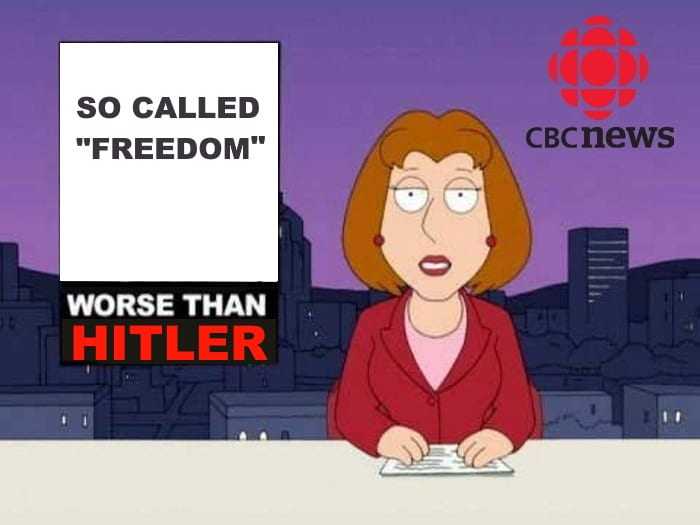
The Canadian-government-funded CBC published a “freedom is fascism” attack on liberty this weekend, quoting “experts” who claim that the word “freedom” has become “flexible” and “common among far-right groups.”
Let’s see who’s really doing the flexing, shall we?
The CBC quotes Barbara Perry, director of the Centre on Hate, Bias and Extremism at the Oshawa-based Ontario Tech University, who claims that the problem with “freedom” is that “You can define it and understand it and sort of manipulate it in a way that makes sense to you and is useful to you, depending on your perspective.”
CBC smears Freedom as Nazi just in time for junior to invoke the “Emergencies Act”. How convenient is that?

Freedom of speech is doing extremely poorly in the UK, according to a recent YouGov poll. When Britons were asked what should be the priority, 43% said protecting people from offensive or hateful speech should be the priority, while only 38% said the focus should be on protecting free speech. Generally, men and conservative voters were more concerned about protecting free speech, while women, younger people and Labour voters were more concerned about blocking offensive or hateful speech.
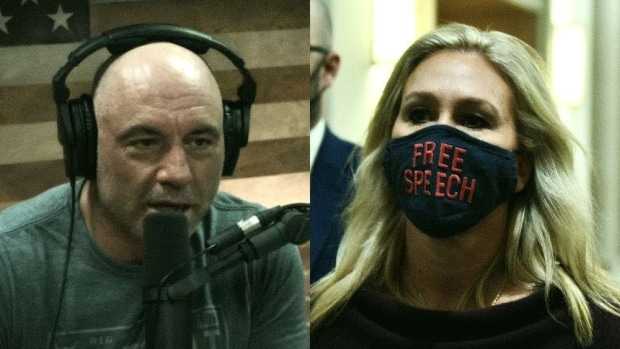
Why is censorship the go-to tactic for leftists? Well, if you ask them they won’t deny their love affair with the memory hole. In fact, most leftists will vehemently defend censorship as absolutely moral and for the “greater good.” Their position is basically this: We live in a “society”, and some ideas, thoughts and words are “dangerous” and destructive to that society. Therefore, those ideas and words must be eliminated from open discussion so they can protect society from itself.
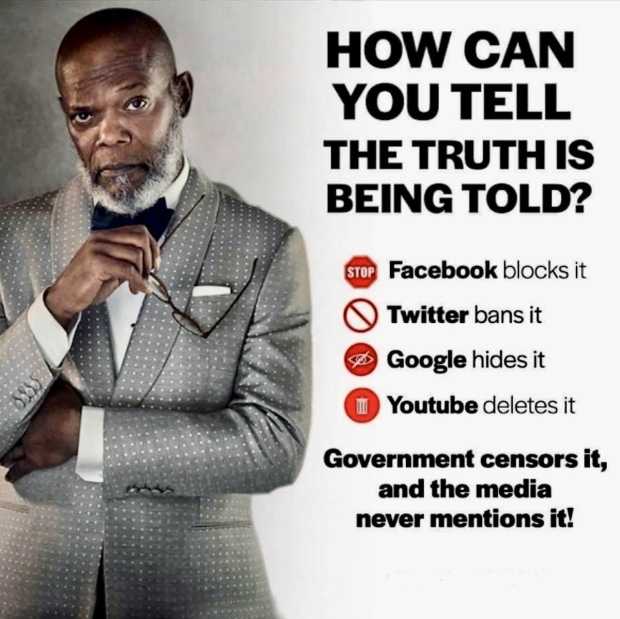
The Canadian government is promising Bill C-11, which is aimed at regulating online streaming platforms, won’t hurt Canadians’ free speech.

Dr. Julie Ponesse was a professor of ethics who has taught at Ontario’s Huron University College for 20 years. She was placed on leave and banned from accessing her campus due to the vaccine mandate. This is her speech during the weekend when the Canadian truckers arrived in Ottawa to protest pandemic restrictions and mandates that have been so harmful to so many. Dr. Ponesse has now taken on a role with The Democracy Fund, a registered Canadian charity aimed at advancing civil liberties, where she serves as the pandemic ethics scholar.

The White House indicated Tuesday that Spotify’s attempts to address what they described as coronavirus “misinformation” on podcaster Joe Rogan’s interviews was not a strong enough response to the freedom of speech controversy.
Youmaker is a user-friendly video platform. It gives creators ease to show off their work, whether it is something small or a great masterpiece. The richness of the platform matches the needs of various audiences who seek informative, impactful or entertaining videos.
Youmaker is a global destination where creators’ freedom of expression is honored. It does not censor for political reasons. Based in the US, Youmaker empowers all voices to be heard easily. It reveals a more balanced audiences worldwide.
Looks interesting, thought you might like to check it out.
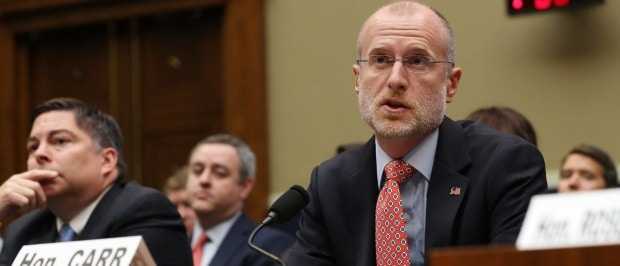
Federal Communications Commissioner (FCC) Brendan Carr expressed doubts about a return to previous net neutrality rules, arguing that the central danger to free expression on the internet came from major online tech companies rather than internet service providers.
