I’ll start this off with a question, and it may take you some time to connect it to the bulk of this column’s subject matter. But I promise we’ll get there.
The question is this: who’s the most famous actor of the 19th century?

I’ll start this off with a question, and it may take you some time to connect it to the bulk of this column’s subject matter. But I promise we’ll get there.
The question is this: who’s the most famous actor of the 19th century?

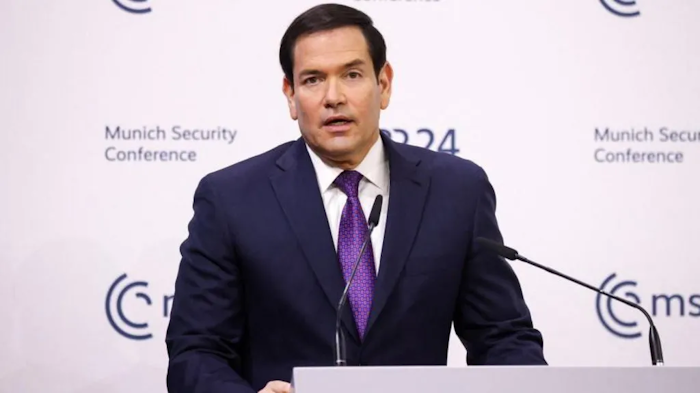
The “delusion” of globalism and the decision to allow mass migration into the West threaten the future of Europe and its peoples, U.S. Secretary of State Marco Rubio told attendees at the Munich Security Conference in Germany on Saturday.
Mass migration is not some fringe concern of little consequence.
It was and continues to be a crisis that destabilizes societies across the West. pic.twitter.com/cPELgF0UrW
— Secretary Marco Rubio (@SecRubio) February 14, 2026

Donald Trump had only just regained the White House when his acolytes dealt Europe two verbal sucker punches in the solar plexus.
Pete Hegseth, the US defence secretary, declared that “stark strategic realities” meant that America would no longer be “primarily focused on the security of Europe”. Then JD Vance, the vice-president, marked St Valentine’s Day 2025 by telling the Munich Security Conference that Europe’s greatest peril came not from Russia, but “from within”, and that there was “nothing more urgent” than curbing mass immigration.
In the 12 months since those speeches, European governments have been forced to confront the stark reality that they must shoulder prime responsibility for defending the Continent, with all the extra costs and risks that implies, because America can no longer be relied upon to give reflexive support to Nato.

When non-Americans think about the United States and immigration, they are inevitably reminded of the title of John F. Kennedy’s 1958 book A Nation of Immigrants. Indeed, the history of America is closely intertwined with migration, which has fundamentally and repeatedly reshaped the demographic and political make-up of the country. Equally intertwined is the debate over migration, which continues to dominate public discussion in the United States—as evidenced by President Trump’s re-election on the cornerstone issue of illegal immigration.

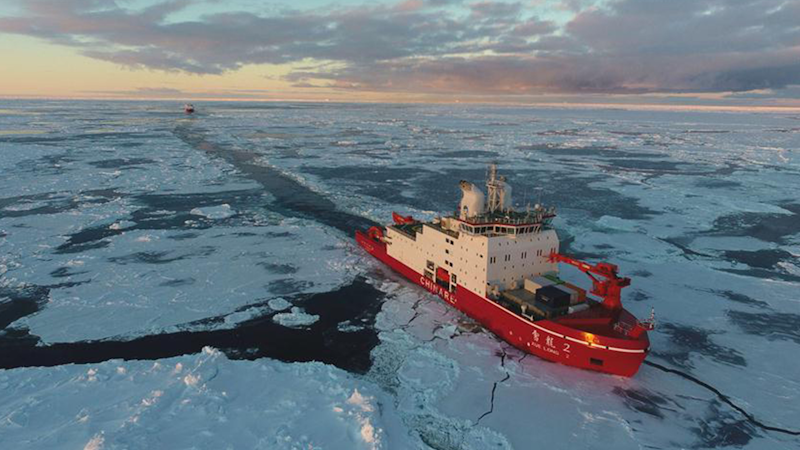
Recent attention has focused on Greenland as a focal point of Arctic strategy, a reminder that geography once treated as peripheral now sits squarely within the logic of continental defense. A similar shift is unfolding elsewhere in the Arctic, though with far less public notice. The Northwest Passage—the network of sea routes threading Canada’s Arctic Archipelago between the Atlantic and Pacific Oceans—has moved from a seasonal curiosity to a corridor of growing strategic consequence. As activity increases, questions long treated as theoretical, including the legal status of those waters, are being pushed toward practical resolution.

US Secretary of State Marco Rubio has spoken of a defining moment and a “new era” as he travels to Europe for a major speech to the Munich Security Conference.
Rubio will lead the US delegation at the first major global event since President Donald Trump threatened Danish sovereignty with a pledge to annex Greenland.
French President Emmanuel Macron has insisted Europe must prepare for independence from the US, while Nato Secretary General Mark Rutte has stressed that transatlantic bonds are as close and important as ever.
Related…
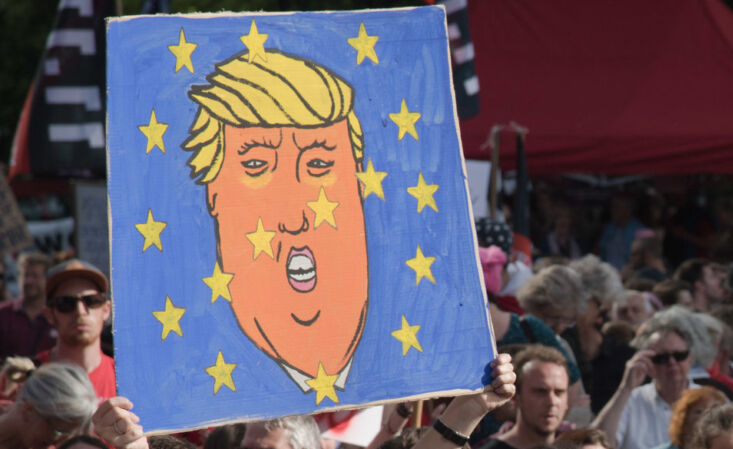
WHO DID THIS???🤣🤣🤣 pic.twitter.com/SI44yznexI
— il Donaldo Trumpo (@PapiTrumpo) February 13, 2026

Governing elites in Europe, in what increasingly appears to be the EUSSR (European Union of Soviet Socialist Republics) race to the bottom, have been growing ever more unpopular. Disapproval ratings are skyrocketing. In France, 77% of the public disapprove of President Emmanuel Macron. In Britain, 68% disapprove of Prime Minister Keir Starmer. In Germany, 64% disapprove of Chancellor Friedrich Merz, and in Spain, 61% have had it up to here with Prime Minister Pedro Sanchez.

It is one year since US Vice-President JD Vance delivered a bombshell speech at the Munich Security Conference, castigating Europe for its policies on migration and free speech, and claiming the greatest threat the continent faces comes from within.
The audience were visibly stunned. Since then, the Trump White House has tipped the world order upside down.
Allies and foes alike have been slapped with punitive tariffs, there was the extraordinarily brazen raid on Venezuela, Washington’s uneven pursuit of peace in Ukraine on terms favourable to Moscow and a bizarre demand that Canada should become the “51st state” of the US.
![]()
Europe has come to the painful realisation that it needs to be more assertive and more militarily independent from an authoritarian US administration that no longer shares a commitment to liberal democratic norms and values, a report prepared by the Munich Security Conference asserts.
The report sets the scene for an all-out ideological confrontation with the Trump White House at the high-level annual meeting of security policy specialists, which starts on Friday.
In a now infamous speech to last year’s MSC, the US vice-president, JD Vance, claimed European elites were suppressing free speech and “opening the floodgates” to mass migration. The address marked the moment Europe realised the Trump administration would no longer be a reliable trading and security partner.
Whatever is in the water at the Guardian calls for quarantine.

For years, officials in Brussels and across Europe operated on a shared assumption: that Russia would not be in a position to directly challenge NATO before 2029. That date became a strategic comfort zone—time to rearm, coordinate, and reassure domestic publics. That certainty is now eroding rapidly.
According to The Wall Street Journal, a growing number of European political and military leaders now believe Moscow could test NATO—and the European Union—much sooner than previously expected. Such a move would not necessarily take the form of a full-scale invasion, but a limited, rapid, and carefully calibrated incursion designed to exploit Europe’s hesitation and internal divisions.

Granting citizenship to hordes of illegal immigrants coming from Africa and the Middle East is a threat to the whole of Europe, but it makes the left happy.
We live in strange and interesting times, in which leaders of the left hope that migrants (who, of course, will not be Cuban, Ukrainian, or Venezuelan) replace, literally, white people.
The Spanish MEP and leader of Podemos, Irene Montero, celebrated the dramatic regularization of illegal immigrants wanted by Pedro Sánchez’s government as a “victory”. The measure will benefit at least half a million illegal immigrants. An enormous figure for a very old population of 49 million Spaniards, who in fact do not approve of the demographic invasion.

MARIJAMPOLE, Lithuania—European governments are preparing for war with Russia. A newly released wargame suggests they aren’t ready.
A Russian incursion, or outright invasion, into countries of the North Atlantic Treaty Organization and the European Union has become more likely because of Europe’s tensions with President Trump over Greenland, Ukraine, trade and other matters, many European security and political leaders say.
They point out that Russia has switched to a war economy, focusing national resources on a rearmament program and military recruitment that goes well beyond the needs of the campaign in Ukraine.

As mass migration, demographic and cultural anxiety, and cultural fragmentation intensify across Europe, the idea of remigration—once a fringe idea—has moved into the mainstream of the European Right and is beginning to enter the wider political conversation. Besides the problems of integration, crime, and social cohesion, remigration forces Europe to confront a deeper and long-avoided question. Namely, what is a nation, and who can truly belong to that nation? This is an important question for Europe, as most European states—setting aside long-standing indigenous and borderland minorities—could until recently treat this question as largely theoretical. Europe has never had to confront this question at today’s demographic scale or civilisational pluralism.

The Nato secretary general, Mark Rutte, was typically blunt when he met members of the European parliament this week. From the dais of the blond-wood committee room in Brussels, he was clear: “If anyone thinks that the European Union, or Europe as a whole, can defend itself without the US, keep on dreaming. You can’t. We can’t.”
And if Europe wanted to supplant the US nuclear deterrent, existing spending commitments would have to double, he added – “so hey, good luck!”
His comments left some MEPs fuming. The former Dutch prime minister – who provoked mockery when he called Donald Trump “Daddy” – had already irritated some deputies with his robust defence of the US president’s interest in the Arctic.

BRUSSELS — Europe is incapable of defending itself without America, NATO chief Mark Rutte said on Monday, speaking just days after Donald Trump’s repeated threats to seize Greenland pushed the alliance to the brink of collapse.
“If anyone thinks here … that the European Union or Europe as a whole can defend itself without the U.S., keep on dreaming,” he told lawmakers on the European Parliament’s defense and foreign affairs committees. “You can’t.”
A “European pillar [of NATO] is a bit of an empty word,” Rutte said, arguing a European army would create “a lot of duplication” with the alliance. Moreover, Russian President Vladimir “Putin will love it,” he added.