PM Carney unveils $11 billion in funding to make 6 icebreakers in Quebec

PM Carney unveils $11 billion in funding to make 6 icebreakers in Quebec

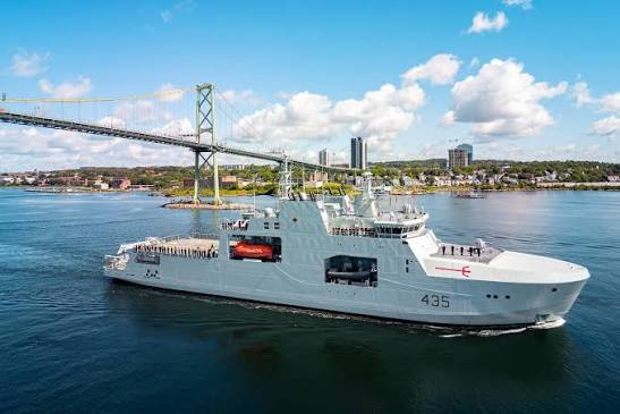
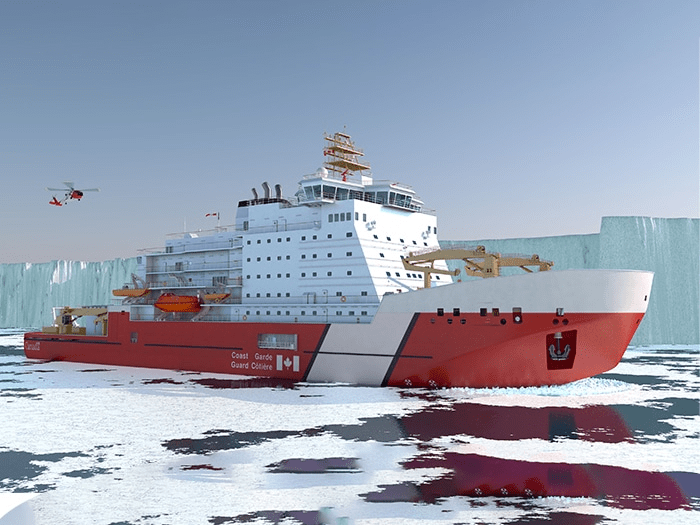
LÉVIS – Prime Minister Mark Carney said the federal government will pour $11.3 billion into Quebec’s shipbuilding industry to build six new icebreakers for the Canadian Coast Guard.

Carney called it the “largest” shipbuilding contract in the province’s history.

The new ships will replace the coast guard’s aging heavy and medium icebreakers, fulfilling a promise made in 2019.

Share

Michel Maisonneuve: Canada must defend the North to keep it

Michel Maisonneuve: Canada must defend the North to keep it

“Mon pays, ce n’est pas un pays, c’est l’hiver,” Gilles Vigneault sings — my country is winter. Canada is shaped by cold, distance and northern regions inhabited by resilient people. Whether we embrace it or not, we are a polar nation.

Sovereignty over nearly 10 million square kilometres must be demonstrated: we must prove we can protect the vast North, develop its resources and create opportunities for its people. We must stop thinking small.

Share

The Arctic: China Taking Over the Top of the World

The Arctic: China Taking Over the Top of the World

This month, China’s Sea Legend Shipping launched the first regular container service through the Arctic, along what it calls the “Ice Silk Road.” The route, dubbed “China-Europe Arctic Express,” connects Ningbo, on China’s east coast, with England’s Felixstowe. The Chinese-run shipper plans eight voyages this summer season from this month to early October.

Sea Legend, which will use Russia’s Northern Sea Route, promises to cut in half the current 40-day sailing time.

Share

BRULOTTE: Canada is losing the race for the Arctic

BRULOTTE: Canada is losing the race for the Arctic

For generations, Canadians have viewed the Arctic as a distant wilderness defined by ice, isolation, and breathtaking landscapes. It has been a source of national pride, but rarely a source of urgency. Protected by geography and separated from the world’s major centres of power, we assumed the North would remain secure simply because of its remoteness.

Share

Canada, U.S. shadow Chinese research ships in the Arctic as concern grows over Snow Dragons’ presence

Canada, U.S. shadow Chinese research ships in the Arctic as concern grows over Snow Dragons’ presence

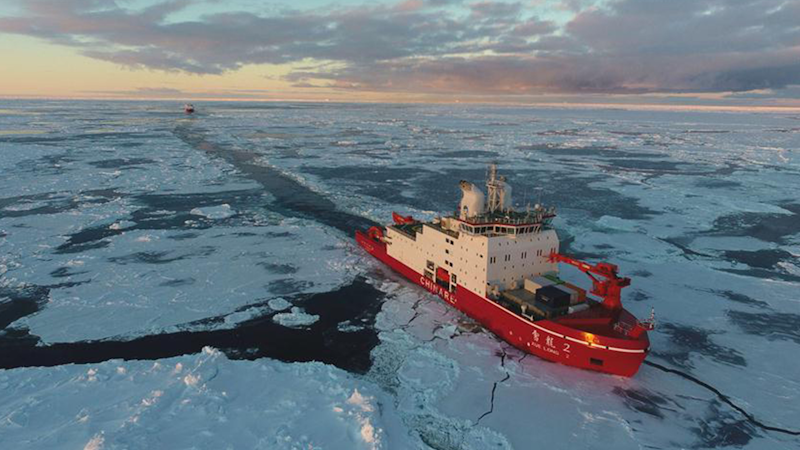
Both Canada and the U.S. have been quietly shadowing two Chinese icebreaking research ships in Arctic waters off Alaska over the last couple of weeks.

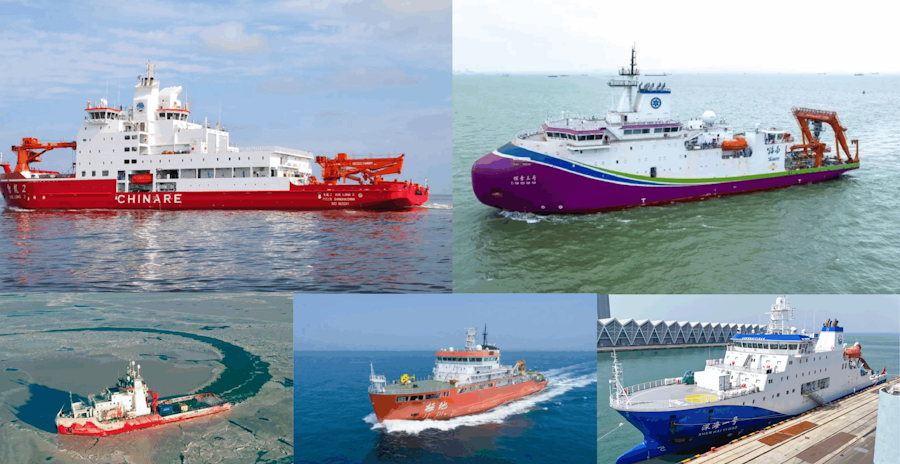
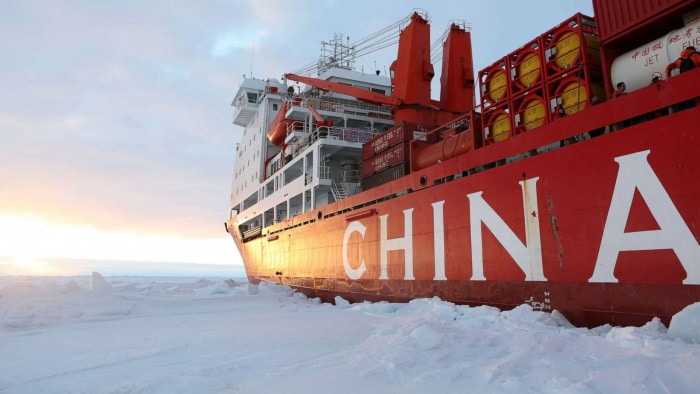
The Xue Long (Snow Dragon) and Xue Long (Snow Dragon) 2 sailed north through the U.S. exclusive economic zone in the Bering Sea in July, according to the U.S. Coast Guard.

The appearance of Chinese research ships every summer in the Arctic Ocean over the last few years has been a subject of growing concern among security and defence officials.

Share

Mark Carney pitches Canada as a northern NATO power: ‘The Arctic is a front’

Mark Carney pitches Canada as a northern NATO power: ‘The Arctic is a front’

Canada will help lead a NATO defence force along the Arctic “front” as part of the military alliance’s efforts to expand security and protect against Russia in the High North.

But the announcement, by Prime Minister Mark Carney, comes as the fate of another ice-covered territory — Greenland — is once again cast into doubt by U.S. President Donald Trump.


We have a lot of announcements, that should get us to Moscow I bet.

Share

Inuit call on Ottawa to be better partners or they will look abroad

Inuit call on Ottawa to be better partners or they will look abroad

Canada’s national Inuit organization is calling on the federal government to be better partners, saying Canada must respect Inuit rights to governance and self-determination.

Inuit Tapiriit Kanatami wrapped up a two-day Arctic sovereignty conference in Ottawa on Friday.

In a statement following the summit, ITK says it firmly rejects what it calls “outdated, colonial approaches to Arctic policy that repeat Canada’s past mistakes of marginalizing” Inuit.

How about we cut off all funding.

Share

Baltic, Nordic officials urge Canadians to learn from the Russian threats they face

Baltic, Nordic officials urge Canadians to learn from the Russian threats they face

OTTAWA — European officials are warning that Russia’s meddling in the Baltic Sea is likely a preview of tactics Moscow could someday deploy in Canada’s High North.

A recent panel discussion in Ottawa hosted by the Polish embassy touched on how Estonia, Poland and Nordic countries like Sweden, Norway, Finland and Denmark are responding to Russian threats that emerge from the sky, sea and online.

Polish Ambassador Witold Dzielski gave the example of an explosion last November on a rail line used to transport military goods to Ukraine, which his government suspects was orchestrated by Russia.

Share

Ottawa to pull plug on Arctic naval facility

Ottawa to pull plug on Arctic naval facility

Prime Minister Mark Carney’s government is shuttering a trouble-plagued Arctic naval facility, two government sources say – a project from the Stephen Harper era that was originally conceived as a major demonstration of Canadian sovereignty in the North.

The Nanisivik Naval Facility on northern Baffin Island was first promised in 2007 by the Harper government, but cost-cutting later resulted in the project being downgraded to a summer filling station for naval ships.

It ultimately never began operations, hobbled by delays, cost increases and serious corrosion on the deepwater port’s jetty where ships are meant to tie up.

Share

UK to create alliance of ‘northern navies’ to counter Russian threat

UK to create alliance of ‘northern navies’ to counter Russian threat

Britain and its allies will forge a new partnership of “northern navies” comprising ships and drones ready to take on Russia, the first sea lord has announced.

In a speech at the Royal United Services Institute, General Sir Gwyn Jenkins said the UK was “at an inflection point” and “there is no time to lose” as he set out plans to bolster defences in northwest Europe and the High North.

Jenkins, the first Royal Marine to be appointed head of the navy, said: “The need to rearm and improve this country’s readiness for war has become an absolute necessity. Just maintaining the ‘capable status quo’ is simply not good enough. We are at an inflection point.”


No mention of Canada.

Share

On patrol with Canadian forces securing the Arctic as global threats grow

On patrol with Canadian forces securing the Arctic as global threats grow

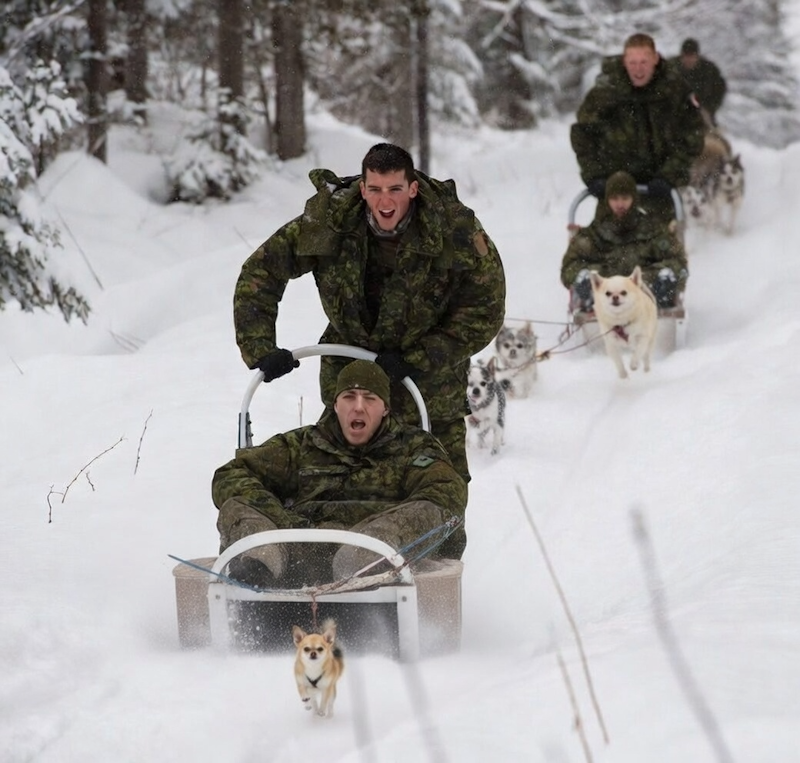
A simple row of spruce trees marked the finish line for Canadian army reservists and combat members after a marathon two months pushing through one of the harshest environments on Earth: Canada’s vast Arctic.

The patrol, which ended on Friday in Churchill, Manitoba, was the largest northern mission in the history of the Canadian Rangers – a branch of the Canadian Armed Forces responsible for monitoring the country’s remote regions. For 5,200km (3,200 miles), they moved across the Arctic, following a route that had not been attempted in 80 years.

They drove snowmobiles across ice-covered terrain, navigating blizzards and high winds as they travelled for hours between remote northern communities. Some nights, they camped on the ice in tents as temperatures plunged to -60C (-76F).

Share

NATO ready to defend every inch of Arctic from Putin

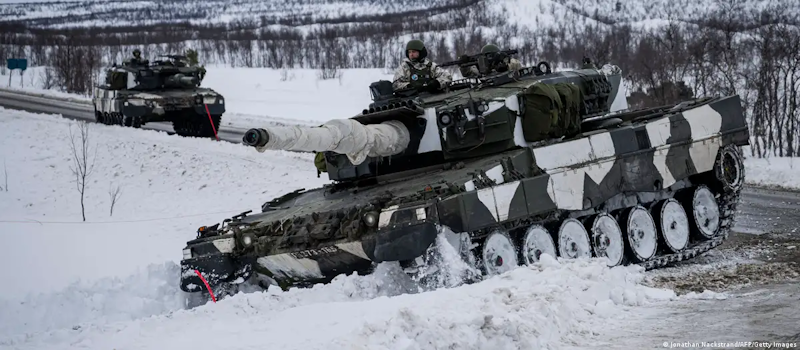
Nato will defend Norway’s Arctic territory against a Russian invasion “from the first centimetre” after learning from Ukraine, the commander of the Norwegian army has said.

For decades, Nato’s plan for defending the High North from Russia was a fighting withdrawal from the northern Finnmark region by British Royal Marines and Norwegian troops, buying time until US reinforcements arrived to help retake lost territory.

Yet President Putin’s war has demonstrated how difficult it is for a large force to move forward under drone-saturated skies, and President Trump’s increasingly bellicose rhetoric against Nato has thrown American support into doubt.

Share

In Canada’s Frozen North, With Canada’s Frozen Soldiers

Canadian soldiers transported M777 howitzers to the High Arctic to show their ability to fight in an increasingly contested part of the world. It did not go as planned.

Canada’s military ambitions in the Arctic hinged on a frozen door that wouldn’t open.

Hundreds of troops landing on an island in the High Arctic last month were confronted with wind chill temperatures of minus 80 degrees Fahrenheit, frigid even by the area’s standards. The cold kept the locals in the Victoria Island hamlet of Cambridge Bay indoors, suffused the air with tiny ice crystals called diamond dust, and sealed a 30-foot-tall door at an airport hangar.

“It’s frozen,” said an air force detachment commander, “frozen shut.”

Share