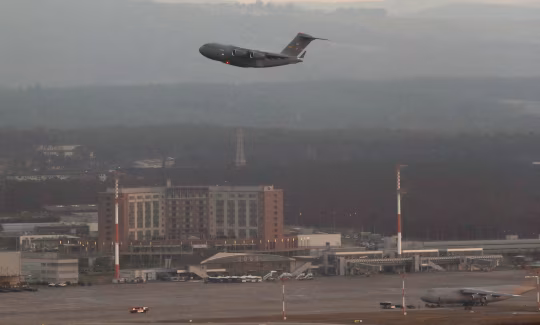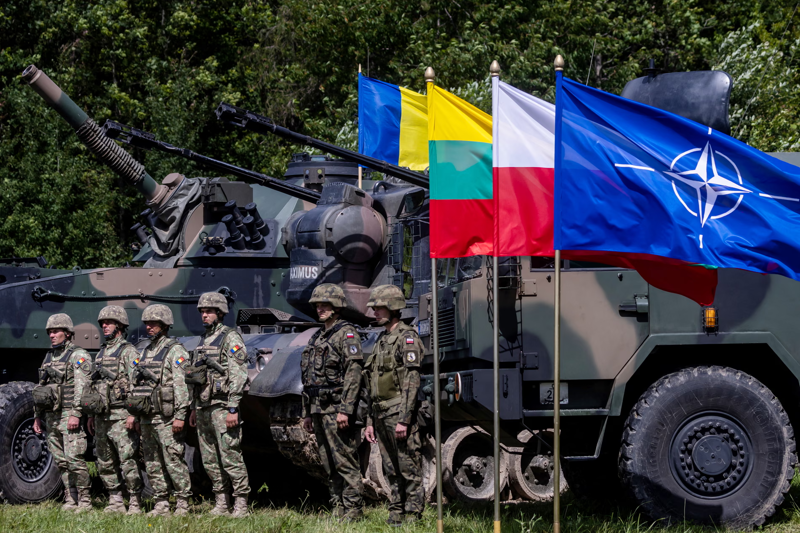
Pictured: Nato ‘change agent’ accused of spying for Russia

Pictured: Nato ‘change agent’ accused of spying for Russia

The US army officer arrested by British counter-terror police for spying for Russia is a crypto enthusiast who describes himself as a “change agent”, The Telegraph can reveal.

Lt Col Brandon Tyner, who was detained on suspicion of offences under the National Security Act 2023, joined the army in 2008 and served in Iraq, Afghanistan and Qatar, a US army official told The Telegraph.

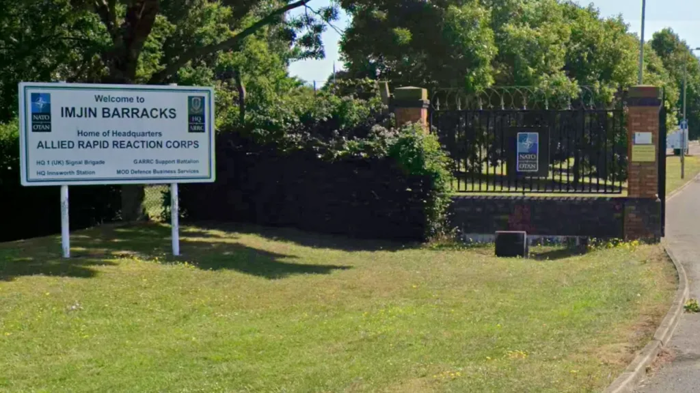
The 41-year-old, who had been assigned to Nato’s Allied Rapid Reaction Corps, was arrested on Tuesday near Gloucester.

Share

Nato fears US army ‘spy’ had access to military plans

Nato fears US army ‘spy’ had access to military plans

Nato officials fear a senior US soldier accused of spying for Russia may have had access to the alliance’s secret military plans.

The US serviceman was arrested by British counter-terror police in Gloucestershire on Monday night over allegations of espionage.

The 41-year-old soldier is believed to have held the rank of officer and was based at Imjin Barracks, the headquarters of the Nato Allied Rapid Reaction Corps.

Share

Trump’s Pressure on NATO Is Finally Making Europe Stronger

Trump’s Pressure on NATO Is Finally Making Europe Stronger

When Ursula von der Leyen flew to Trump’s Turnberry golf resort in Scotland in July 2025 to end a trade fight, she came home with a 15 percent tariff on most European goods and a promise that Europe would not retaliate. The European Parliament’s trade chief called the deal lopsided. Germany’s chancellor welcomed it anyway. That is how a continent behaves when it believes the other side holds the stronger hand.

Share

We’re looking on – and mourning – the end of the American-led world order

We’re looking on – and mourning – the end of the American-led world order

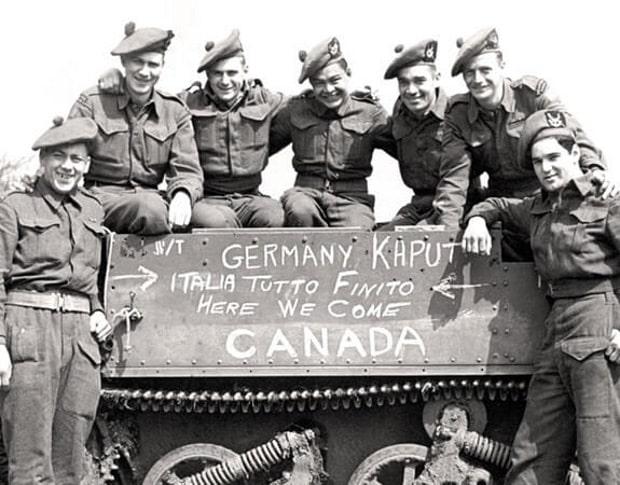
Every year on the 11th of November, Canadians remember those who fought and died in war so that we might live in peace. But in our times, remembrance is tinged with a sense of loss.

Friends are becoming adversaries, truths are upended, peace is at risk, freedom fades.

The Western alliance, forged and preserved for eight decades by the United States, is weakened, perhaps fatally.


An increase in military spending by deadbeat NATO members like Canada means less money Carney and his WEF pals can pocket.

Share

NATO’s race against time: Senior commander warns alliance must adapt faster to deter Russia

NATO’s race against time: Senior commander warns alliance must adapt faster to deter Russia

There’s a nightmare that keeps one of NATO’s most senior military commanders up at night and it’s not what you might think.

It isn’t the idea of Russian tanks rolling into the Baltic states or Poland. Nor is it a sudden military confrontation in the Arctic.

The scenario that keeps NATO Supreme Allied Commander Transformation Pierre Vandier up at night is the notion of the Western military alliance being caught unprepared and unable to keep up with the pace of technological innovation that’s happening on the modern battlefield.


Another side of that same fear …

Share

Terry Glavin: The NATO penny has begun to drop. Trump’s on the other side

Terry Glavin: The NATO penny has begun to drop. Trump’s on the other side

As a high-level strategic military paradigm, the NATO high command’s “theory of victory” certainly gives the impression of being a serious bit of warcraft, just by its title. It purports to be a theory that anticipates the measures required to achieve victory in the event of an attack on any of the North Atlantic Treaty Organization’s 32 member states.

Share

NATO’s Top Commander Lays Out Plan to Thwart a Russian Attack on the Alliance

NATO’s Top Commander Lays Out Plan to Thwart a Russian Attack on the Alliance

NATO’s top military commander sought to steady an anxious Europe on Monday, outlining the alliance’s new military plan to thwart a potential Russian assault along its eastern flank with a mix of firepower, autonomous systems and sensors that borrows from the lessons of Ukraine.

The speech by Gen. Alexus Grynkewich on the North Atlantic Treaty Organization’s “theory of victory” outlined a series of steps to block an initial attack and, if aggression continues, break the adversary’s ability to control and support its forces.

The goal would be to stop the invasion in its tracks while minimizing the risk of conventional or nuclear escalation by stopping short of the complete destruction of the enemy.

Share

Victor Davis Hanson: The Trump Doctrine – No More Free Defense for Ungrateful Allies

Victor Davis Hanson: The Trump Doctrine – No More Free Defense for Ungrateful Allies

“… But if you think about it very quickly, Canada keeps doubling down. [Mark] Carney just won’t stop. And now he’s announced that he’s going to … The 5% trade partner is the EU, and he’s gonna have a special relationship with it, a special relationship with China that’s about, I guess, 15% or 20% of its trade, which is … We know how China treats inferior powers militarily and economically.”

Share

European allies push back against US-led NATO VIP club

European allies push back against US-led NATO VIP club

BRUSSELS — Some NATO allies are resisting a U.S. effort to set up a close-knit group of alliance countries ostensibly based on their defense spending, arguing the initiative risks undermining unity just when Russia steps up its hybrid campaign in Europe.

The frustration comes after POLITICO reported that Washington had met a select group of favored allies twice since the spring in what has been dubbed the “Bergen Group,” after the collective’s first meeting in the eponymous Norwegian city earlier this year.

So far, the group’s members have included Norway, Sweden, Finland, Poland, Germany and the Netherlands. After meeting in Bergen, the U.S. organized a similar meeting on the sidelines of the NATO leaders’ summit in Ankara in July, which Denmark and Turkey also attended. Members of the group are expected to meet again in Poland next month.


Yet another party Canada wasn’t invited to.

Share

In the Baltics, NATO forces are trying to learn the new way of war

In the Baltics, NATO forces are trying to learn the new way of war

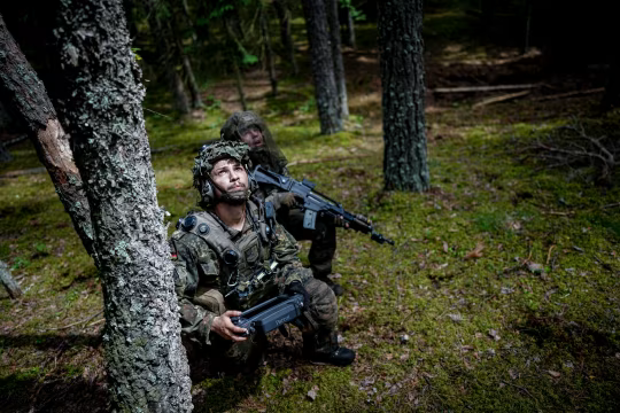
DAUDZEVA, Latvia—Wearing strips of red tape on their helmets, Danish soldiers stealthily moved through the pine forest and then, unleashing a firestorm, overran a position held by Spanish troops.

“Todos muertos”—“everyone is dead”—quipped one of the Spanish soldiers, relaxing under an armored vehicle that raised its cannon to signify it had been destroyed.

The Danish mechanized infantry company role-played the enemy in this month’s exercise by the North Atlantic Treaty Organization’s brigade that has been deployed to protect Latvia from nearby Russia.

Share

This is the worst time for the US to pull 25,000 troops out of Europe

This is the worst time for the US to pull 25,000 troops out of Europe

As Putin’s sham elections play out and he predictably claims near-total endorsement from the Russian population, the picture inside Russia is becoming harder to conceal. Hundreds of drones reaching Moscow, the most heavily protected city in Russia, this weekend. These strikes are a visible reminder that Russia is far more vulnerable than the Kremlin would have its people believe.

On the battlefield, Ukraine is also demonstrating renewed momentum, including around Lyman and through the re-employment of tanks and armoured manoeuvre. Yet, at precisely the moment when Ukraine needs sustained political and military backing, its two principal Western supporters appear determined to make its position more difficult through geopolitical naivety, hesitation and prevarication.

Share

European spy chiefs warn Moscow is planning more decisive action against Nato

European spy chiefs warn Moscow is planning more decisive action against Nato

European intelligence officials have raised the possibility of an imminent Russian test of Nato, with one saying a potential attack could come in a matter of “months, not years”.

The warnings come after Poland’s prime minister, Donald Tusk, told parliament that intelligence assessments suggested Russia might launch an attack with drones or missiles on Nato territory in the coming months, as part of efforts to prove that “article 5 is more theoretical than practical”.

Share

Canada’s top general loses election to become head of key NATO Military Committee

Canada’s top general loses election to become head of key NATO Military Committee

Despite a push from the federal government, Canada’s chief of the defence staff has lost a vote to be the next chair of the NATO Military Committee, the alliance’s top military authority and a key advisory body for its political leaders.

Gen. Jennie Carignan and her German counterpart, Gen. Carsten Breuer, were vying for the position. Top military commanders from NATO’s 32 members ultimately decided on Saturday to go with Breuer in a secret ballot election.

Share

Will Canada’s top general win vote for key NATO job?

Will Canada’s top general win vote for key NATO job?

Canada’s top soldier will find out on the weekend whether she has been selected to lead NATO’s military committee at a time when the defence alliance faces some of the most difficult challenges in its history.

NATO’s chiefs of defence will meet Sept. 18 in Denmark as the military committee discusses ways to further strengthen the alliance, deal with new defence technologies and boost support for Ukraine.

But it will be a secret vote among the military leaders on Sept. 19 which will determine if Canada’s Chief of the Defence Staff Gen. Jennie Carignan will be named as chair of the military committee (CMC) — NATO’s top military role.

Share