Europeans Dream of Throwing Themselves into the Jaws of the Russian Bear

Europeans Dream of Throwing Themselves into the Jaws of the Russian Bear

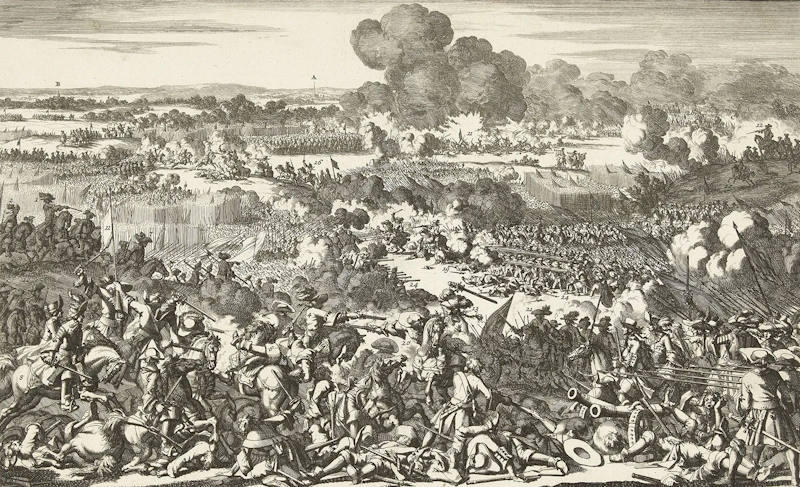
Some ideas refuse to die. One of these is the notion of a European “reversal of alliances” into the arms of Russia. The phrase refers to the unexpected decoupling from former allies, accompanied by an unexpected alliance with former enemies. In 1756, Austria, which had always been an ally of Great Britain, instead allied with its longtime foe, France. Meanwhile, Great Britain and its old enemy, Prussia, became allies — resulting in the Seven Years’ War.

You hear it in Europe from the “new right” and the far left — at conferences where people swoon over “multipolarity” and in the corridors of Germany’s Bundestag, where desperate industrialists plead for Russia’s Gazprom to reopen its taps.

If this reversal of alliances was possible in 1756, why not in 2026?


I’m sure Carney has bought in.

Share

How Europe is wargaming an invasion

How Europe is wargaming an invasion

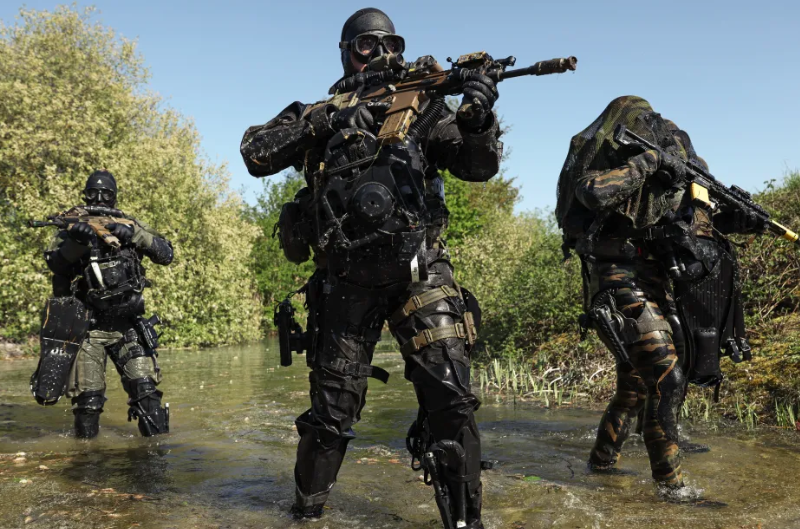
The four frogmen in black wetsuits emerged almost noiselessly from the murky depths. No tell-tale stream of bubbles betrayed their approach.

Assault rifles at the ready, they surfaced in enemy-held territory, using “rebreather” scuba gear developed for special forces that recycles each exhaled breath.

Minutes earlier, they had checked the lake for mines; now they began probing the surrounding woodland for snipers. Their water-resistant weapons were ready to fire.

Share

Joel Kotkin: Canadians must stop romanticizing a failing Europe

Joel Kotkin: Canadians must stop romanticizing a failing Europe

Canadians have long looked away from their often gruesome southern neighbor, tempted instead to embrace a chicer European identity. They could point to a more civil public culture, greater bilingualism and a more generous welfare state, compared to the dog-eat-dog reality of the United States. Prime Minister Mark Carney has called Canada “the most European of non-European countries,” and some policy wonks now advocate joining the EU.

Share

Demographic Decline and Europe’s Political Deadlock

Demographic Decline and Europe’s Political Deadlock

It is well known that socialism is an ideology that ignores the individual and focuses all its attention on the collective. Marx, the preeminent socialist economic theoretician, divided individuals into classes based on the function they have in producing economic value; Lenin, Mao, and others have iterated their own versions of Marxist class theory.

Wherever socialists have carried their ideology to its completion, the result has been the same in terms of the people: in Mao’s China and Stalin’s Soviet, tens of millions of people were starved to death or otherwise killed by the regime; in Pol Pot’s Cambodia, one-quarter of the country’s 8 million people were annihilated in the name of the state’s ideology.

Share

EU Countries Already Looking to Car Factories To Rearm Europe

EU Countries Already Looking to Car Factories To Rearm Europe

The meeting between Ursula von der Leyen and Mark Rutte this Thursday in Brussels was not just another appointment about Ukraine. It was, in fact, a discussion about how to transform the European economy for a new stage of rearmament.

The President of the European Commission and the Secretary General of NATO met at Rutte’s private residence to prepare for the Atlantic summit in Ankara in July. But the focus of the conversation was how to increase industrial defence production in Europe and how to do it quickly. Very quickly.

Share

Why Does the European Commission Support the Muslim Brotherhood?

Why Does the European Commission Support the Muslim Brotherhood?

The European Commission, the unelected executive arm of the European Union, assured Europeans in 2019 that it was not spending their hard-earned taxpayer money on supporting the Muslim Brotherhood (MB). In response to a question by Charlie Weimers, a Swedish Member of European Parliament, about the Commission’s funding of the MB, European Commission Vice President Margaritis Schinas said:

“[T]he European Commission does not finance extremists. On the contrary, we have very strong oversight and audit of our financing… and if you have evidence to the contrary, I would be very interested to have it.”

Share

I’m an American living in Europe. It’s leaving the U.S. — fast.

I’m an American living in Europe. It’s leaving the U.S. — fast.

As an American living in Europe, I am frequently asked if my compatriots understand the extent of the damage being done to all facets of transatlantic relations by the Trump administration’s bullying policies. My answer is, sadly, no.

More and more Europeans no longer view the United States as a reliable ally. The reasons are not hard to find. The president has threatened to leave NATO, sidelined allies in negotiations over Ukraine’s future, imposed steep tariffs on the European Union and threatened to seize Greenland by force — prompting Europeans to prepare for the real prospect of military conflict with their oldest ally. One recent survey found that one-quarter or more of respondents in some countries — including France, Germany and Spain — see the United States as a rival or adversary. Another found that an absolute majority view Trump as an “enemy” of Europe and U.S. foreign policy as “recolonization.” Polls also reflect a growing belief that China is a more dependable partner.

Share

Trump has triggered a wave of European soul-searching

Trump has triggered a wave of European soul-searching

As world leaders grapple with Donald Trump’s second term, his war with Iran has accelerated European multipolarism, with leaders on the continent searching for alternative solutions to American isolationism. How far should Europe pool security and defence? Should there be a European version of the Anglo ‘Five Eyes’ alliance, as the Netherlands’s coalition government, led by their new prime minister Rob Jetten, has suggested? Is the proposal from Renew Europe – the European Parliament’s centrist grouping – for a Nato-like trade alliance between European countries and their democratic allies – like Canada, Japan and South Korea – realistic?

Share

Europe Needs to Hear This Harsh Truth

Shipping and military expert John Konrad spent all day in D.C. on Tuesday talking to his military sources and concluded that “the Navy appears to be in no rush to reopen the strait,” even while Iran dictates whose oil tankers are allowed to pass.

“What is this administration trying to leverage?” Konrad wondered, and that nobody he talked to was willing to discuss the fate of Hormuz “until European politicians and media stop calling Americans war criminals and monsters.”

Share

Europe’s pre-revolutionary conditions are taking shape

A few days ago, I had the opportunity to address members of the European Parliament. Many of the things I said will sound familiar to regular readers of my column, but I believe I was able to deepen some of my thoughts, and would like to share them with you here.

Revolutions make for fascinating case studies in hindsight. We like to imagine them as eruptions of grand philosophical discontent, the oppressed masses rising against an unjust order in the name of some great principle. And there is always a philosophical dimension lurking in the background. But the spark that actually ignites a revolution is often far more mundane than historians care to admit.


Closer to home …

Share

It is not Europe’s war even when Iran hangs Europeans

Until we understand that weakness is not a virtue but a slow suicide, we Europeans will continue to take blows while responding with useless diplomatic notes that no one reads or takes seriously.

The German Defense Minister, Boris Pistorius, was explicit: “This is not our war, we did not start it. What does Donald Trump expect a handful or two of European frigates in the Strait of Hormuz to be able to do that the powerful U.S. Navy cannot?”.

Europe is facing Islamic takeover and the elites are content with that.

Share

The Iran war has divided Europe and shattered the Atlantic alliance

The war against Iran unleashed by the United States and Israel two weeks ago brings to the boil the clash of civilisations that has been simmering since the Islamic Revolution in 1979.

Despite the efforts of the mullahs to incite the entire Muslim world against the West, that conflict has so far been largely contained. Iran’s sporadic drone and missile strikes on the Gulf states, Saudi Arabia and Jordan have failed to provoke these states to distance themselves from the US, while the “Arab street” has remained quiescent.

Share