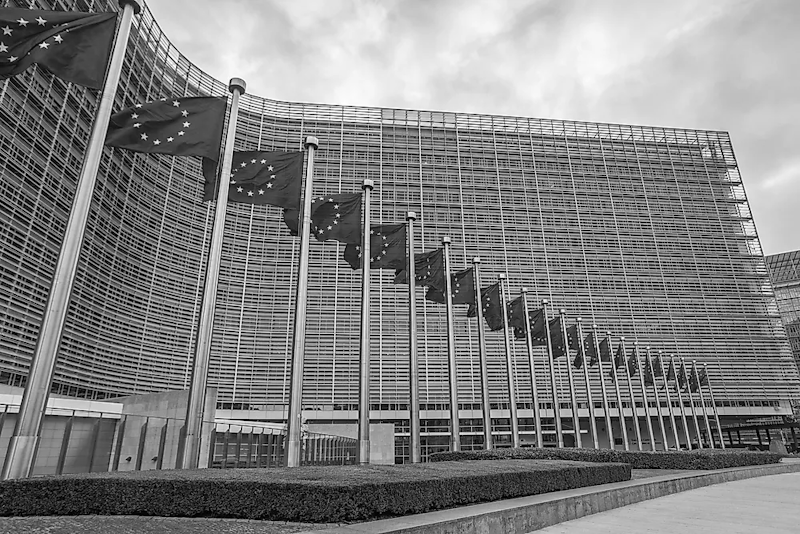
On Thursday the Trump Administration released its new National Security Strategy. It has no named author, but Michael Anton’s style is all over it. Here in Europe, the usual suspects are freaking out about its section on the troubled continent.

On Thursday the Trump Administration released its new National Security Strategy. It has no named author, but Michael Anton’s style is all over it. Here in Europe, the usual suspects are freaking out about its section on the troubled continent.

Relations between the United States and the European Union appear somewhat fraught after two Friday announcements triggered outrage on both sides of the Atlantic.
First, Brussels imposed a €120 million fine on the social-media platform X—and its owner Elon Musk personally—for breaching transparency rules of the EU’s Digital Services Act (DSA). Marco Rubio, the U.S. Secretary of State, called the fine “an attack on all American tech platforms and the American people by foreign governments.”

Europe has had a good run. It has been at the top of world affairs for half a millennium, since the great age of exploration connected all continents and first gave man a global perspective. The great European empires – initially Portuguese, then Spanish, British, French – dominated much of the planet for some 350 years. The places that lay beyond European control were either inward-facing civilisations like China and Japan, or regional powers without truly global ambitions like the Ottomans, Russia and the United States in its first century of independence.
But over the past 150 years, Europe’s collective weight in the global balance of power has been on a declining path. Two world wars, the loss of empire, the rise of new players with global reach – first America, then the Soviets and now China – have seen Old Europe give up its primacy in international affairs but nonetheless retain a seat at the top geopolitical table.

The billionaire lashed out at the officials after social media platform X incurred a €120m (£105m) fine for transparency breaches
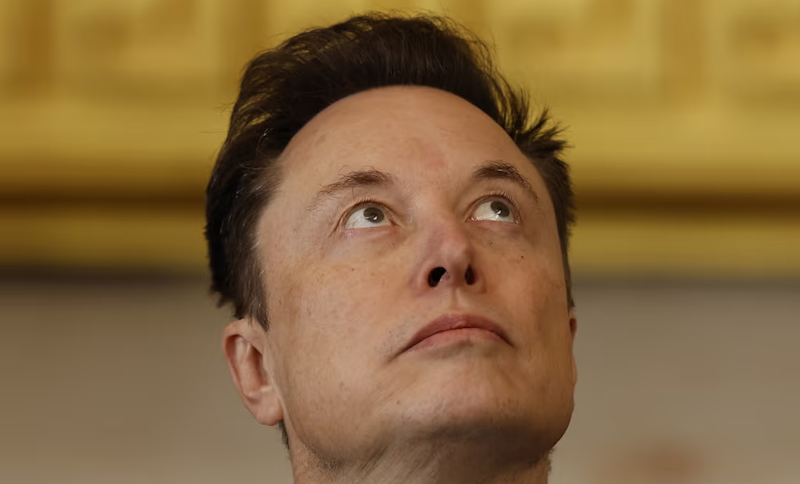
Elon Musk has called for the EU to be “abolished” after the bloc fined his social media platform X €120m (£105m).
The billionaire lashed out at the officials who handed out the punishment for transparency breaches and threatened to pursue each country individually in a series of posts on the site, which he rebranded from Twitter in 2022.
“The EU should be abolished and sovereignty returned to individual countries, so that governments can better represent their people,” Mr Musk wrote.

Europe faces “civilisational erasure” if it does not cut migration, according to a National Security Strategy released by the White House that signals an unprecedented level of intervention.
The continent will be “unrecognisable in 20 years or less” if present trends continue, the 29-page document warns, adding that several nations could be “majority non-European”.
The strategy document, which laid out the Trump administration’s priorities across the globe, warns that Europe’s migration policies are “creating strife, censorship of free speech and suppression of political opposition”.
Major problem https://t.co/oQGNPXUQj1
— Elon Musk (@elonmusk) December 5, 2025

Canada has reached a final agreement to join the EU’s €150 billion Security Action for Europe program, two EU diplomats told POLITICO, marking the first time a third country will formally participate in the bloc’s flagship joint procurement initiative.
The breakthrough follows months of technically complex negotiations and was communicated directly to ministers taking part in Monday’s Foreign Affairs Council; Defense Commissioner Andrius Kubilius informed delegations that negotiations with Ottawa had concluded.
Who would come to our aid if invaded even if the motive was pure self interest? The EU? The USA?

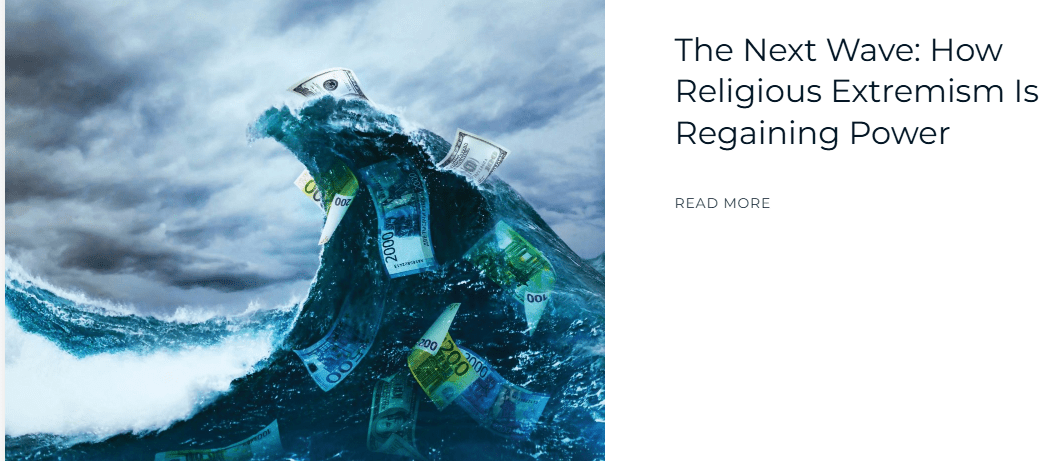
A recent document by a European think tank decries the “accelerating financial expansion of movements working to dismantle decades of hard-won sexual and reproductive rights across Europe.” The report, published by the Brussels-based European Parliamentary Forum for Sexual & Reproductive Rights (EPF), highlights the “anti-rights and religious extremist actors in Europe,” but focuses mostly on just one religion: Christianity. Through this inherent bias, the organization admits the one institution that its members and their allies fear—the Catholic Church—as the organizing force behind the “religious ideologues [who] are executing meticulous, long-term strategies for power.”
EPF’s executive committee consists of one member of the European Parliament, along with members of parliament from several constituent states of the EU, with two additional politicians from outside the Union. All of the committee members come from socially left-wing political parties—from a party of the French “center,” Renaissance (founded by French President Emmanuel Macron) to the Spanish Socialist Workers’ Party.

Brussels officials are never lost for words on Gaza or the war in Ukraine. But critics say it is another matter entirely when it comes to the persecution of foreign Christians, especially by Islamists.
Dutch conservative MEP Bert-Jan Ruissen said on Monday that the European Union—as well as other international communities—is “far too silent about jihadist violence against Christians.”

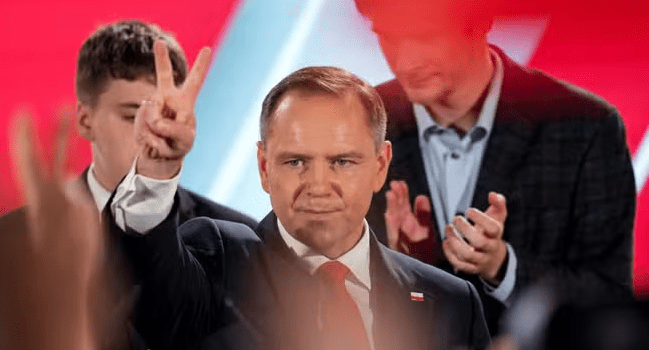
Poland’s recent presidential election is now at risk of being overturned after the conservative candidate, Karol Nawrocki, won a surprise victory against the liberal favorite. Backed by the opposition Law and Justice (PiS) party, Nawrocki defeated the liberal Mayor of Warsaw, Rafał Trzaskowski, a close ally of Prime Minister Donald Tusk and his Brussels-aligned coalition.
But instead of acceptance, Nawrocki’s win has triggered a wave of resistance. Unlike in other EU countries—where electoral irregularities are tolerated if the “correct” candidates win—Poland now faces the prospect of having the vote annulled altogether. The Supreme Court has announced that it will issue a verdict on the election’s validity on July 1 after receiving more than 50,000 complaints.

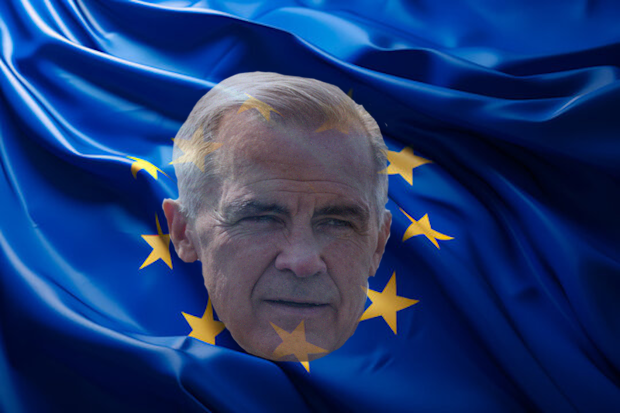
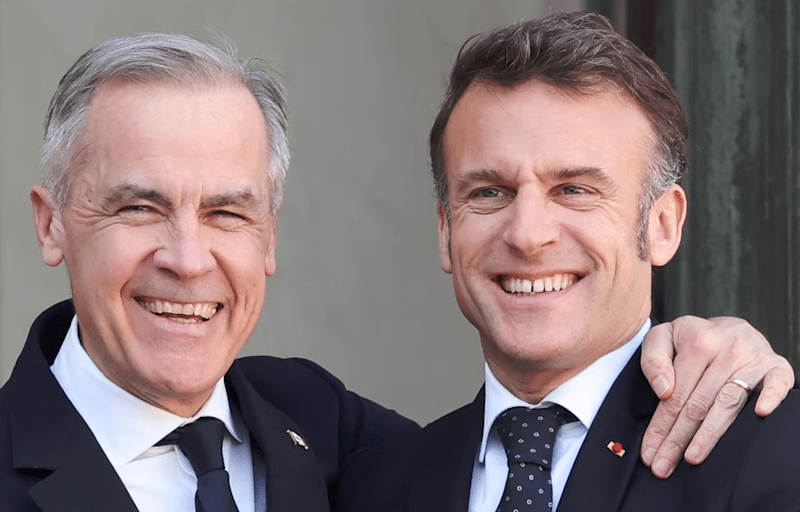
Prime Minister Mark Carney says Canada is “looking for a closer partnership” with the European Union — but not to become a member.
While speaking from the NATO summit in the Netherlands — where he announced Canada’s promise to spend five per cent of gross domestic product on defence by 2035 — Carney was asked whether he has given any thought to trying to join the bloc of European nations.
“The short answer is no,” he said. “That’s not the intent. That’s not the pathway we’re on.”
Bullshit.

The European Union has experienced quite a few shocks over the past two decades. The most significant one was not Covid, or Brexit, or the Ukraine war. It was the sovereign debt crisis. The fairytale story is that Mario Draghi single-handedly ended the crisis when he told the world that he would do “whatever it takes” to save the euro. He was the president of the European Central Bank when he announced a backstop. It is a convenient explanation because it assumes that the crisis is over.
I am going to put my head on the block to predict that this crisis could come back sooner than we think. Last time, it was the southern Europeans who triggered it. This time, it is the northern Europeans with their relentless push for an increase in defence spending to 5% of GDP.

By the time the environmental permits are signed off for a new TNT plant in Sweden at the end of this year, Russia will already be producing explosives at a new facility.
Swedish Ballistics (SweBal) is aiming to tap into Europe’s rush to rearm itself by opening what will be the EU’s second factory producing military-grade TNT, used in the production of artillery shells, landmines and grenades.
The firm hopes to produce 4,500 metric tonnes annually by the end of 2027, which will be enough for Europe to produce roughly 450,000 rounds of 155mm artillery ammunition.
Now I understand why Carney wants to hitch Canada’s wagon to the EU. They think like he does.

Prime Minister Carney has deep ties to Europe and friends in high places.
Europe has serious problems that it acknowledges but fails to address.
Ergo, Mark Carney risks going down in history as Canada’s most disastrous prime minister.

February 14, 2025. U.S. Vice President J.D. Vance delivers remarks in Germany, at the Munich Security Conference. The audience expects him to talk about foreign policy, geopolitics, and threats facing the world.
Instead, he says that the most worrying threat today is “the threat from within, the retreat of Europe from some of its most fundamental values.” He adds that European countries and institutions are undermining democracy and freedom of speech — and gives examples.
“A former European commissioner,” Vance states, “went on television recently and sounded delighted that the Romanian government had just annulled an entire election.”
BRUSSELS — The EU has offered the United States a “zero-for-zero” tariff scheme, European Commission President Ursula von der Leyen said Monday, seeking to avoid a tit-for-tat trade war.
“We have offered zero-for-zero tariffs for industrial goods as we have successfully done with many other trading partners. Because Europe is always ready for a good deal. So we keep it on the table,” she told a press conference alongside Norwegian Prime Minister Jonas Gahr Støre.
BREAKING: The European Union says they're ready to negotiate with the United States, says they've offered zero for zero tariffs.
The announcement was made by European Commission president Ursula von der Leyen.
"Europe is always ready for a good deal. So we keep it on the… pic.twitter.com/yTRTS8B4us
— Collin Rugg (@CollinRugg) April 7, 2025