FUREY: Trudeau’s economic statement is all about the Great Reset

My guess is the news coverage about Monday’s economic statement will inform Canadians about the record deficit planned and the extra funding initiatives now on offer courtesy of the feds.

But there’s something else Canadians need to know about the plan that charts the government’s fiscal path for the coming months and even years. And that’s the troubling ideology running through the whole thing.

Share

GOLDSTEIN: Trudeau turns Canada into deficit-ridden, nanny state

When the history of the COVID-19 pandemic is written, it should include a chapter about how Prime Minister Justin Trudeau engineered “The Great Reset” of the role government plays in our lives, without even bringing in a budget.

How it wasn’t done in secret, but out in the open.

Share

Liberals to spend $100B to jolt post-pandemic economy after posting record $381B deficit

Liberals to spend $100B to jolt post-pandemic economy after posting record $381B deficit

The Liberal government is preparing to spend up to $100 billion to kick start the post-pandemic economy as it stares down a record-high deficit projection of more than $381 billion for this fiscal year.

In a long-awaited economic statement, tabled today, Finance Minister Chrystia Freeland said the government’s immediate priority is to do “whatever it takes” to help Canadians and businesses stay safe and solvent.

The short-term stimulus package is valued at $70 billion to $100 billion over roughly three years. The government says the stimulus spending — intended to build a greener, more inclusive, more innovative and competitive economy — will launch after a vaccine is distributed and life begins to return to normal.


More from CTV… Federal deficit on track to exceed $381B, as spending increases in wake of second COVID-19 wave

OTTAWA — The federal government is unveiling a new round of financial supports to respond to the second wave of the COVID-19 pandemic in Canada, as the latest projections show the national deficit is projected to hit a new high: at least $381.6 billion this fiscal year.

The deficit is growing for several reasons: ongoing pandemic supports, $25.1 billion in newly-announced programs aimed at getting badly-hit businesses through the next few months, as well as the early allocations being made to help rebuild the economy once the urgent health crisis passes. The Liberals are also making moves towards boosting transfer payments to the provinces.

Many Liberals will benefit.


But… Opposition parties signal they will not support the Liberals’ spending plans. Is an election next?

OTTAWA—The federal Opposition parties greeted the long-awaited economic update with a big collective thumbs down.

The initial reactions of Opposition leaders signal new spending measures, totaling $25 billion, may not find support across the aisle, which could trigger another crisis of confidence in the minority Trudeau government.

This is BS, it’s the opening gambit for taxpayer extortion by the Bloc and NDP, Trudeau will buy them off and survive.

Share

Freeland to deliver Liberal plan to revive Canada’s post-pandemic economy today

Freeland to deliver Liberal plan to revive Canada’s post-pandemic economy today

The federal government will release its long-awaited fiscal update today — a spending plan to help Canadians cope with COVID-19 while recharging the national economy and key sectors battered by the global crisis.

Deputy Prime Minister and Finance Minister Chrystia Freeland will rise in the House of Commons at 4 p.m. ET today to outline details of her plan to both boost job creation and cut greenhouse gas emissions.

Government sources have told CBC News the plan will include new but time-limited spending measures to support hard-hit industries and vulnerable Canadians, while laying the groundwork for the policy priorities presented in September’s speech from the throne.

Share

Patty’s do as I say, not as Hajdu attitude costs taxpayers more than $100,000

Patty’s do as I say, not as Hajdu attitude costs taxpayers more than $100,000

Newly released government documents show flying Canada’s health minister home during the pandemic lockdown when Canadians were told to stay home set taxpayers back more than $100,000.

The flight details show Hajdu and her health ministry were billed for 22.5 hours of flight time. Based on those figures, and cost estimates that are almost a decade old, Hajdu’s flight time would have cost taxpayers $45,000 but likely much more given inflation.

Share

The Broadcasting Act Blunder, Day Seven: Beware Bill C-10’s Unintended Consequences

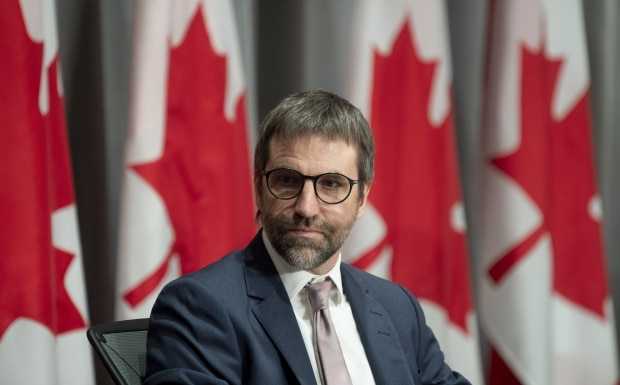
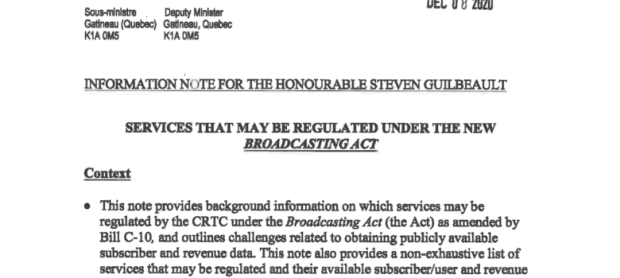
With the introduction of the government’s plan to regulate Internet streaming services, Canadian Heritage Minister Steven Guilbeault has touted new rules that will require companies such as Netflix and Spotify to make mandatory payments in support of Canadian content. The government’s bill also paves the way for the companies to both tinker with what they show to subscribers, so as to increase the “discoverability” of Canadian content, and open their books to Canada’s telecom and broadcast regulator by granting access to confidential corporate information.

Share

Canada to Reveal Huge COVID-19 Deficit, Make ‘Down Payment’ on National Childcare

Canada to Reveal Huge COVID-19 Deficit, Make ‘Down Payment’ on National Childcare

OTTAWA—Canada next week will reveal the breadth of the emergency spending it has made during the pandemic and lay the groundwork for future stimulus and social measures, like a national childcare program, government sources told Reuters.

Canada did not release a budget for this fiscal year, which began in April, because of the economic uncertainty created by COVID-19, but in July projected a $343.2 billion deficit, the largest since World War II.

Share

FUREY: Patty Hajdu thinks my COVID writing is ‘fake and dangerous’

FUREY: Patty Hajdu thinks my COVID writing is ‘fake and dangerous’

Looks like my writing in the pages of the Sun is being targeted by the federal Liberal government. The Prime Minister and Health Minister are speaking out to let you, dear reader, know that I’m fake and I’m dangerous. Better watch out.

The other week I began reporting on COVID-19 statistics released by the Alberta government. Health experts around the world had been warning people that those with underlying conditions were particularly vulnerable to the virus.

Share

The stringency of COVID-19 measures varies wildly across the country. But is that a compelling reason to centralize the pandemic response?

Despite having markedly lower COVID-19 death rates than most G7 nations, Canada is on track to record 20,000 COVID-19 cases a day across all age groups by the end of December. A growing chorus of pundits are calling for the federal government to compel the provinces to adopt a more stringent pandemic response. The idea is that invoking greater federal control – particularly as we enter the winter months – could help stem the rising second wave.

Share

FERNANDO: The More They Fail, The More They Want

There is a narrative setting in, pushed by much of the media and opportunistic politicians, and it goes a little something like this:

‘The COVID-19 crisis shows the importance of government authority, since government action is what will get us through it. Government was there every step of the way, providing financial support to families and businesses, providing resources in the healthcare system, imposing restrictions for your own good, and keeping our society functional during this time.’

This narrative will be very compelling for many, and will feel truthful to many Canadians.

It is also completely wrong, and quite dangerous.

Share

Internet Content Control Plans Concern Free Speech Advocates

Internet Content Control Plans Concern Free Speech Advocates

A slew of measures introduced by the federal government to control online content creates a framework that could be used for censorship, critics warn.

Recommendations in a June 2019 report by the Liberal-dominated justice and human rights standing committee titled “Taking Action to End Online Hate” included “a national database to retain and analyze hate crime and hate incident data.” The report also recommended a “civil remedy,” such as putting hate speech back in the domain of human rights tribunals.

And Heritage Minister Steven Guilbeault has stated that stronger regulation is coming.

Share

As dictated by Katie Telford: ‘Playing with fire’: How politicians can perpetuate baseless conspiracy theories

Conservative MP Pierre Poilievre took to social media this week with repeated messages to “#StopTheGreatReset.”

He says he’s simply criticizing comments Prime Minister Justin Trudeau made in a speech at the United Nations and an associated World Economic Forum document, but the terminology of a “Great Reset” has been co-opted by fringe groups who falsely claim a group of global elites are using the pandemic to benefit themselves and their friends.

Share

GOLDSTEIN: Freeland’s ambivalent view of Israel is Trudeau’s policy

Her problem is she either meant what she said about Israel, or she didn’t listen to the question she was asked before responding.

This started in question period last Thursday.

Freeland was asked by Conservative MP Michael Chong to explain why Canada has, for the second year in a row, voted for an anti-Israel resolution regularly passed by the United Nations General Assembly.

Share