CHARLEBOIS: A beef with greed

… When it comes to price fixing, the United States doesn’t fool around. When Congress and the White House have concerns, they act on them. In Canada, not so much.

The bread price-fixing scandal, which came to light in 2017 when Loblaw admitted having participated in an alleged industry-wide operation, opened the door to some public criticism. In 2017, Loblaw’s Ghalen Weston strategically threw everyone in the industry under the bus when admitting Loblaw’s involvement in a 14-year-long bread price-fixing scheme. By admitting guilt and supporting the investigation, Loblaw received immunity from the Competition Bureau.

If you’re going to be a criminal in Canada be a white collar criminal. The Government may even buy you new freezers.

Share

The Liberal plan to smother the energy industry

The Liberals are either governing in a fantasy universe or they are being deliberately reckless. How else do you explain that, in the same week our European allies were preparing to ration energy, being held hostage as they are by a murderous tyrant wreaking havoc in Ukraine, our government announced a dramatic acceleration of its plan to hobble the oil and gas industry?

Share

Trudeau cabinet “penetrated” by World Economic Forum: Aussie senator

Australian Liberal Senator Alex Antic has blasted the World Economic Forum (WEF) for influencing world governments, including Prime Minister Justin Trudeau and his cabinet.

Antic, who is a member of the conservative faction of the Liberal Party, accused the WEF and founder Klaus Schwab of being “steeped in authoritarianism and Marxist ideology.”

Share

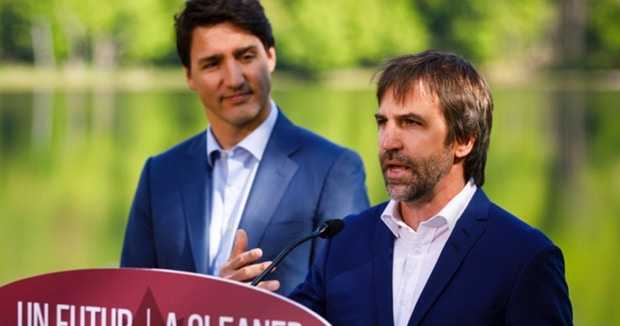
Canada’s Heritage Minister says online censorship bill will help free speech

To advise the Heritage Minister on regulating Canada’s internet, a panel of experts, most of them academics, has been appointed. One of the government’s internet regulation plans, alongside the online censorship bill, is to create a federal internet censorship agency.

Share

Mélanie Joly should not take cues from dictators in fight against propaganda

It seems rather problematic to try to counter the threats posed by Russian and China by emulating their behaviour

In 1990, in the early days of the internet, a top-level domain (think .com, .ca, etc.) was created for the Soviet Union. At the time, it was almost inconceivable that the country’s Communist government would ever allow its citizens to gain access to the internet, which was seen as a promising tool to facilitate the free flow of information around the world. Fifteen months later, the U.S.S.R. collapsed, but the question of how authoritarian regimes would continue hiding information from their populations in the digital era continued to vex regimes that relied on censorship, surveillance and misinformation to keep their hold on power.

HMA

Share

Canada doesn’t need two left-wing parties that support Trudeau

When I was in Israel a few years ago — during one of their many elections — I saw a bus ad featuring a big portrait of then-Prime Minister Benjamin Netanyahu.

“SUPPORTING BIBI,” it proclaimed, or words to that effect.

It wasn’t an ad for Netanyahu’s party, Likud, but rather Shas, one of the religious parties on the right.

Go incognito

Share

Could Canada’s Arctic defence line detect a rocket from Russia? Not anymore, critics say

With Canada under increased scrutiny about its defence spending in the wake of the Russian invasion of Ukraine, Ottawa’s plans to replace outdated radar systems in the north have taken on a new sense of urgency.

Defence Minister Anita Anand has said she will present a “robust package” of reforms to modernize the North American Aerospace Defense Command (NORAD) in a joint effort with the United States.

A major component is expected to be the replacement of the North Warning System — a line of dozens of radar stations scattered throughout Canada’s North that was completed in the 1980s and is long overdue for updating.

HMA

Share

Canada’s defence spending fell behind NATO’s forecast last year, alliance says

Canada is not quite as far ahead on defence spending as NATO predicted last year, according to the latest annual report compiled by NATO’s secretary general.

The report, released Thursday in Brussels by NATO Sec.-Gen. Jens Stoltenberg, shows Canada spent 1.36 per cent of its gross domestic product on the military and new defence hardware in 2021.

That’s a slight dip from the 1.39 per cent of GDP projected for Canada’s defence budget in the western military alliance’s last assessment of member nations, which was published last June.

Share

Trudeau doubles down on his failed climate schemes

This week, the Trudeau government unveiled a new set of unrealistic emissions reduction targets, which includes a plan to cut emissions by 40% by the year 2030 and measures targeting Canada’s oil and gas sector. Despite the fact that their climate schemes have failed time and time again, the government is doubling down and making life more expensive for all Canadians.

Share

Efforts Needed to Avoid Using Emergencies Act Again in Similar Circumstances, Says Act’s Creator

The creator of the Emergencies Act would not say if its Feb. 14 invocation by the Liberal government was justified to deal with the Freedom Convoy protests and blockades, but he said it is such a “blunt” tool that efforts should be made to avoid using it in similar circumstances in the future.

Perrin Beatty, who created the Act that was adopted in 1988 while serving as defence minister under Brian Mulroney, testified before the Special Joint Committee on the Declaration of Emergency on March 29.

Share

Rex Murphy: Ignore what’s happening in the world. The Trudeau government does

Amazing as it is, as inflation insidiously crawls across the land, skyrocketing gasoline prices freeze the blood (with a federal carbon tax increase set to hit on April Fool’s Day), as the economy is stifled by debt, supply chains rattle or crumble, and the country crawls out of the devastation of the COVID clampdowns, the Trudeau-Singh coalition government has announced its most determined climate agenda for Canada ever.

Share

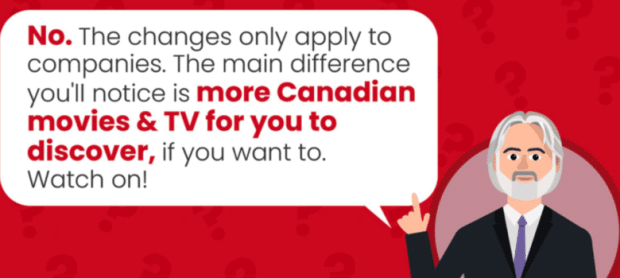
Why Has the Government’s Defence of Bill C-11 Been So Cartoonishly Misleading?

Bill C-11, the Online Streaming Act that serves as the government’s follow-up to Bill C-10, was the subject of debate in the House of Commons yesterday as the legislation slowly makes it way through the legislative process. There are still committee hearings to come, but it is readily apparent that many of the concerns that hamstrung Bill C-10 have returned: virtually limitless jurisdictional, overbroad scope, and harmful discoverability provisions. Further, this bill has attracted mounting criticism from Canadian digital-first creators, who note that one of Canada’s biggest cultural exports could be hurt by the bill leading to millions in lost revenues.

Especially troubling:

“The policy direction has two primary goals. First, it will focus on the importance of consultation and special consideration of the needs of equity-seeking groups. Second, the direction will make clear areas where regulation is needed, as well as areas where flexibility should be exercised.”

Share

Canada will ban sales of combustion engine passenger cars by 2035

Canada is joining the ranks of countries and states planning to ban sales of combustion engine cars. Canada has outlined an Emissions Reduction Plan that will require all new passenger car sales to be zero-emissions models by 2035. The government will gradually ramp up pressure on automakers, requiring “at least” 20 percent zero-emissions sales by 2026 and 60 percent by 2030.

Share