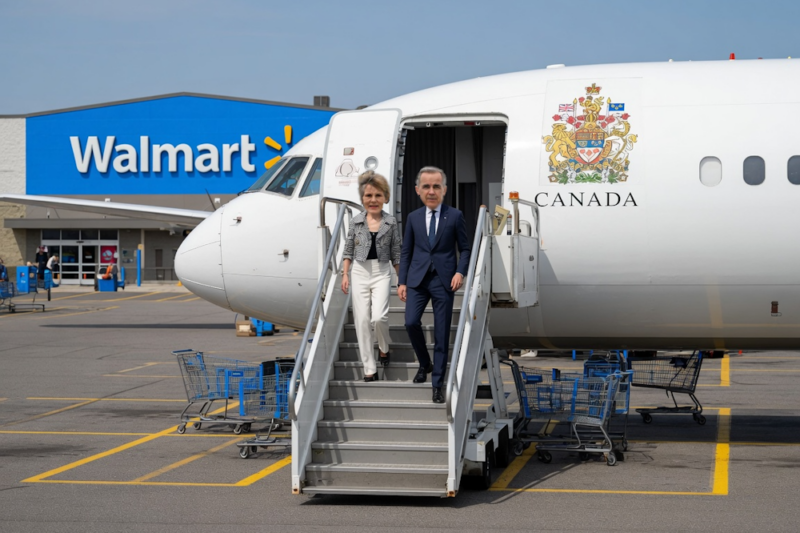
Last Thursday, Prime Minister Mark Carney stood alongside B.C. Premier David Eby in Vancouver, and made a major announcement: the federal and B.C. provincial governments would step in to absorb thousands of vacant condominium units and repurpose them as affordable housing for Canadians. It was, his government declared in the press release, “one of the fastest and most efficient ways to increase housing supply.”
Canada’s Corrupt Liberal Government
Thunderclouds are on the horizon in Carney’s long, hot political summer
OTTAWA — Prime Minister Mark Carney is going to be doing much more this summer than flipping burgers and pancakes.
With the looming deadline of Alberta’s pipeline application, a referendum on the horizon, trade discussions to decide the future of the Canada-U.S.-Mexico Agreement (CUSMA) and several MP resignations in the coming weeks which will lead to byelections, he is bound to have a lot on his plate.
Terror Comes North
In March, the Israeli ambassador to Canada, Iddo Moed, characterized Canada as “one of the centres of antisemitism globally.” Also, Toronto Rabbi Daniel Korobkin of Beth Avraham Yoseph synagogue (which had its front doors shattered from gunfire) stated: “What our message needs to be to our leaders is that if nothing is done, then you’re sending a message: ‘They can go ahead and go to the next level.’”
WAGNER: Pierre Trudeau was Canada’s first socialist prime minister
In 1965, Pierre Trudeau joined the Liberal Party of Canada, became a candidate, and won a Montreal seat in the federal election that year. Canada would never be the same.
His run as a Liberal came as a surprise for many people because until that time, Trudeau had openly identified as a socialist and supporter of the Cooperative Commonwealth Federation (CCF) and its successor, the New Democratic Party (NDP). Trudeau’s political evolution and eventual membership in the Liberal Party are described by University of Winnipeg political scientist Allen Mills in his important 2016 book, Citizen Trudeau, 1944-1965: An Intellectual Biography.
Terror Shouldn’t Pay in Canada
Most terrorist financing stays hidden — moving through shell companies, informal transfer networks, and charities existing only on paper. There is, however, a category of terrorist financing that operates in the open, written into legislation and funded through public budgets. These are the structured payment programs known colloquially as “pay-for-slay” programs.
Ottawa student flagged as security threat over research helpful to Iran’s weapons program
Mohammadreza Pakatchian said he chose to study aerospace engineering at Carleton University because it was a “great opportunity” to further his skills and knowledge.
In its acceptance letter to the Iranian, Carleton University offered him a scholarship, while an MP’s office spoke with immigration officials about his student visa.
But Canada’s national security agencies aren’t so keen on the 41-year-old doctoral student.
Starmer’s resignation is a cautionary tale for Carney and Poilievre
To be a successful leader in politics, you need a few things: a vision for the country, a plan to realize it and an ability to articulate why you are the right person to lead the journey.
British prime minister Keir Starmer possesses none of these things. That’s why he’s been forced to resign his post. It’s expected he’ll be replaced by soon-to-be-former mayor of Manchester Andy Burnham, who possesses only one of them.
I think the greater risk is to Carney.
He will implode as the public becomes aware of his grifting ways, ugly personality and economy wrecking schemes.
Mark Carney sidelined from at least 17 government deliberations because of corporate conflicts
OTTAWA — Prime Minister Mark Carney‘s corporate past has prevented him from participating in at least 17 “situations” involving his own government, including discussions of a payout of up to $3.1 billion to support housing loans, the possible export of electricity to the United States, and the creation of this week’s new nuclear energy plan.
The revelation is contained in letters that the Privy Council Office (PCO) — the branch of the bureaucracy that supports the Prime Minister’s Office (PMO) — sent to a parliamentary committee that probed the “screens” that Carney set up last year to protect himself from conflicts of interest.
Majority of Canadians see China as ‘significant threat,’ poll shows
New in-house federal research shows that Canadians see China as a bigger threat than Iran, according to Blacklock’s Reporter.
The poll by the Canadian Security Intelligence Service said that 70% saw Russia and 66% saw China as “significant threats” compared to only 34% who felt that way about Iran.
Canada’s deal for Chinese EVs threatens trade with U.S., automakers warn
OTTAWA — Canadian auto industry leaders panned Industry Minister Melanie Joly’s claim Monday that Chinese carmakers are interested in forming joint ventures to make electric vehicles with Canadian labour, parts and standards, and said Ottawa’s China push threatens Canada’s chances at getting a deal at the trade table with the United States.
As the July 1 deadline for renewal of the deal looms, and Ottawa is in the midst of a delicate dance with the Trump administration over how closely it is aligning with China, a trip in the past week by Joly to China accompanied by several mining, investment and business executives, but no Canadian carmakers, was seen as cause for concern.
Carney has to know what Joly is up to.
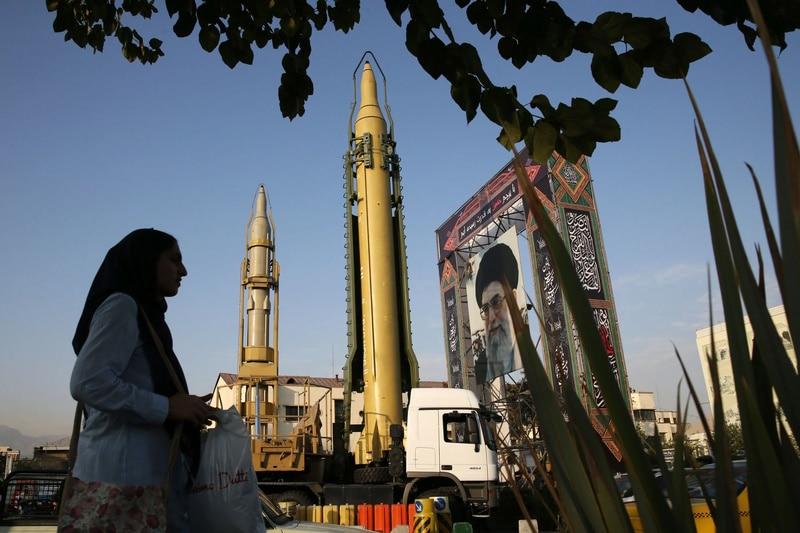
CSIS increases operation to combat Iranian state-directed activity, warns of continued threats
Canada’s spy agency, CSIS, says it has stepped up operations to combat possible Iranian state-directed activity here, warning that threats from Tehran’s theocratic regime are expected to continue this year.
The Canadian Security Intelligence Service declined to provide details of its operations Monday. It said it was increasing activities focused on violent extremism in Canada.
Mark Carney’s flattery of Donald Trump is a game that needs changing
Donald Trump must enjoy what has now become diplomatic protocol for dealing with him on the world stage — namely, flattery and deference.
Mark Carney caught on to it early, calling Trump a “transformational president” during his first White House sit-down with him more than a year ago.
Others practise it too, from King Charles hosting a state visit for Trump to France’s Emmanuel Macron treating him to a state dinner at the Palace of Versailles after the G7 meetings wrapped up in that country last week.
Canada’s historic submarine procurement incites fierce industrial benefits competition
Canada’s purchase of 12 new submarines will be one of the biggest defence procurements in the country’s history, inciting a fierce competition between bidders. In a brazen attempt to woo the federal government, the two finalists have each promised tens of billions of dollars in economic benefits.
It’s a decision with extensive implications for Canadian industry, government, the Royal Canadian Navy and the country’s strategic alliances. Each of the two bidders, Germany’s ThyssenKrupp Marine Systems and South Korea’s Hanwha Ocean, have a comparable diesel-electric submarine on offer, and their unique capabilities will play a large role in Ottawa’s decision.
MADSEN: Canada’s National Electricity Strategy is a taxpayer trap
Ottawa’s National Electricity Strategy asks Canadians to believe that electricity demand is about to soar and that government-owned utilities can successfully build the infrastructure to meet it. Both assumptions deserve far more scrutiny than they have received.
John Ivison: Cannabis producers give up trying to get Ottawa to stop smothering their business
The Cannabis Council of Canada has announced it is suspending its advocacy operation, apparently because its member companies have given up hope that the federal government is prepared to listen to them.
In a letter to Finance Minister François Philippe Champagne that foreshadowed this week’s announcement, outgoing council president Paul McCarthy said the country’s licensed cannabis producers have lost confidence that the government is committed to getting its tax and regulatory policies right.