
Success of Canada-Europe defence pact uncertain, former government officials warn

A security and defence pact that Prime Minister Mark Carney signed with the European Union last month faces major obstacles that will likely slow or limit progress in delivering benefits to Canada, former government officials warn.

The Security and Defence Partnership, inked by Mr. Carney ahead of a NATO summit in June, was pitched as an effort to reduce Canada’s reliance on U.S military contractors and generate new business for Canada’s defence industry. It ushers the way for Canada to join in a European Union push to re-arm itself in the face of an expansionist Russia under President Vladimir Putin.

So long as Brookfield profits it’s all good.

Share

Carney risks boosting Western alienation by leaning on his ‘wise men from the East’

Many years ago, a Liberal prime minster, Lester B. Pearson, failed to secure a majority government after several tries, and prepared to retire. But before doing so, he wanted to inject new blood into the upper echelons of his government, and particularly to bolster its base in Quebec, where support for secession was increasing. So Mr. Pearson recruited three impressive Quebeckers into federal politics.

Becoming known as the “three wise men from the East,” they were Jean Marchand, a strong champion of labour rights in Quebec; Gérard Pelletier, a prominent Quebec journalist and intellectual; and Pierre Trudeau, another Quebec intellectual, constitutional scholar, and champion of individual rights and Canadian federalism.

Alienation is Carney’s objective.

Share

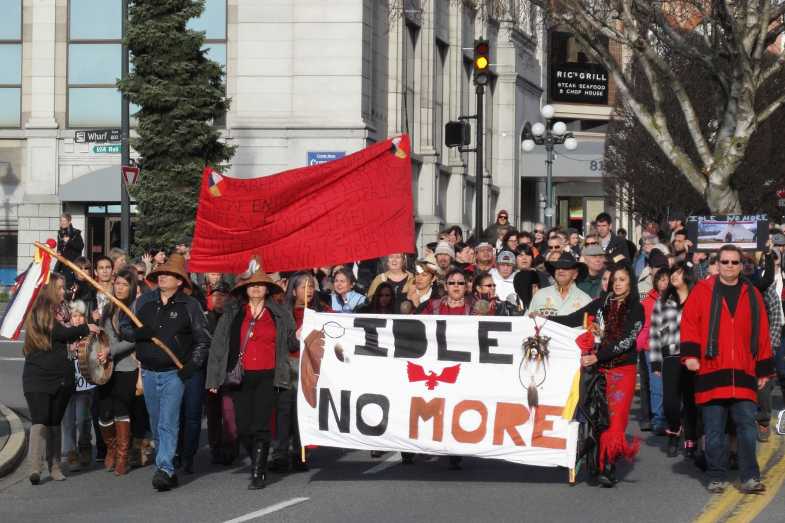
Liberals could find out soon whether their rushed projects bill will spark another Idle No More

If Liberal MPs experience the “long hot summer” of protest that some Aboriginal activist groups have promised in response to the federal government’s new major-projects legislation, they won’t be feeling that heat anywhere close to Parliament Hill.

Politicians were already starting to flee Ottawa, off to their home ridings or vacations for the summer break, before Bill C-5 received its rubber stamp from the Senate and royal assent on June 26. They left behind what could be a ticking time bomb: the Building Canada Act, allowing the federal cabinet to fast-track major infrastructure projects by identifying them as being in the “national interest” and bypassing the normal conditions and approval rules.

Hell they’ll organize and fund it

Share

Envoy says Canada is coming closer to recognizing Palestinian statehood

OTTAWA — The Palestinian ambassador to Canada says she feels Ottawa is on the brink of officially recognizing statehood for her people, as she also takes note of tougher language from Canada on Israel’s actions in Gaza.

“Accountability means everything to the Palestinian people. That’s all we are looking for,” said Mona Abuamara, who is at the end of her four-year term as the chief representative of the Palestinian General Delegation to Canada.

Share

Braid: Carney promises development but keeps the Trudeau laws that hinder it

A friendly breeze blows out of Ottawa these days, but there’s a chance it’s nothing more than wind.

Prime Minister Mark Carney is all about development, energy, pipelines — one big Canadian economy.

He speaks of Alberta’s energy industry with none of the contempt so common in the Justin Trudeau years.

Share

Public skeptical over Canada’s high immigration quotas: Government report

OTTAWA — Focus groups struck to gauge public sentiment on the federal government’s immigration policy reacted negatively to high immigration quotas.

The public opinion panels, commissioned by the Privy Council Office and facilitated by Toronto pollster The Strategic Council showed most respondents reacted negatively to Canada’s mass immigration policies, according to reports published in Blacklock’s Reporter.

Canada’s demographic is being so drastically altered that soon all polls will support open borders and 3rd world immigration.

Share

John Robson: We Have Far Less Time Than We Think to Balance the Budget

Kaboom. It’s loud, scary, and urgent. But it’s not the sound of new Canadian munitions going off as we ramp up to $150 billion a year in defence spending because they said so. It’s the federal budget detonating. And if anyone’s minded to call the bomb squad instead of waiting to be blown to insolvency come, now would be a good time. A really good time.

In C2C Journal, Gwyn Morgan snidely recalled a former prime minister’s assurance that there’d be modest initial deficits of under $10 billion for three years then a balanced budget by 2020, which led to nine consecutive often-massive deficits that essentially doubled the national debt. And alas, that part was the good news.
Share

Immigration grew six times faster over past decade: Study

OTTAWA — Canada’s immigration levels grew six times faster over the past decade than it did from the turn of the century, says a new Fraser Institute study.

The numbers, which include temporary foreign workers and international students, are contained in a new report entitled Canada’s Changing Immigration Patterns, 2000–2024.

Share

Tasha Kheiriddin: A Carney pipeline means an angry Liberal base

For months, Prime Minister Mark Carney has spoken about making Canada an energy superpower. He said it on the campaign trail, mentioned it again in an interview with CTV news in May, and dropped it again last weekend at the Calgary Stampede. While he usually inserts the qualifier of “both clean and conventional energy,” in an interview Saturday he stated that it’s “highly, highly likely” that at least one oil pipeline will make the government’s list of national strategic infrastructure projects.

Share

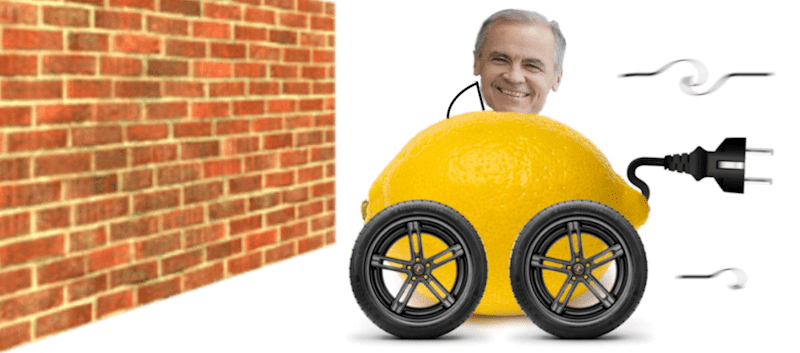
The madness of Canada’s electric-car mandates

EVs are almost comically unsuited to a vast, cold country like Canada.


Justin Trudeau’s legacy is alive and well in Mark Carney’s iteration of Canada’s Liberal Party. While the former PM’s deeply unpopular carbon tax may have been scrapped, his spirit of phony solutions to the ‘climate-change crisis’ prevails.

Across the border, US president Donald Trump has nixed any attempts at electric-vehicle (EV) mandates, saying, ‘electric cars are fine, but not everyone should be forced to own one’. By contrast, the Canadian Liberal Party has maintained its plan to ensure 20 per cent of new passenger vehicles sold in 2026 are either battery-powered or plug-in hybrid models. It intends to increase that number to 60 per cent by 2030, and to 100 per cent by 2035.

Share

Alberta, Ontario premiers want ‘several’ oil pipelines built under Carney government

OTTAWA — The premiers of Alberta and Ontario both said at a meeting Monday that they are cautiously optimistic that Prime Minister Mark Carney will successfully get a new oil pipeline built in Canada. But Alberta Premier Danielle Smith said the planning should not be limited to just one.

Meeting with her Ontario counterpart in Calgary, Smith said Alberta crude oil should have access to a “growing share” of pipelines. “I’m of the view there’s probably room for more than one pipeline, probably several.”

Share

Canadians will see wages pick up as immigration slows, Conference Board argues

OTTAWA – The Conference Board of Canada expects wage hikes will pick up speed in the coming years as the pace of population growth slows down.

The think tank said in a new economic forecast Monday that Canada’s labour market has been “resilient” this year despite tariff pressures from the United States.

The national unemployment rate ticked up to seven per cent in May, though the Conference Board noted overall employment is still 0.3 per cent higher than it was at the end of last year.

Except immigration numbers have not really decreased.

Share