
China’s plan to dominate global food supply chains

China’s plan to dominate global food supply chains

China is about to do to the global supply chains for grains, livestock and food products what it has already done to the world’s energy and transport systems.

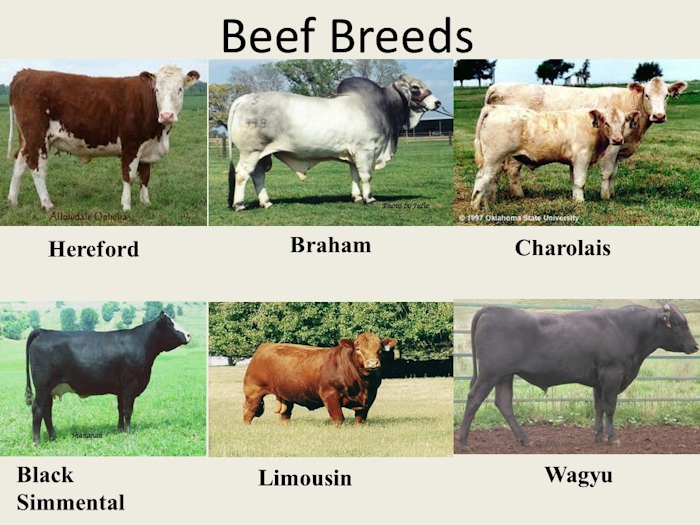
The country is pursuing what amounts to world dominance in the mass manufacture of protein, launching a breakneck plan to end its strategic dependence on food imports and insure its people against the long-term famine risks of climate change.

Share

CHARLEBOIS: Canada is still losing restaurants — not as fast as we predicted

CHARLEBOIS: Canada is still losing restaurants — not as fast as we predicted

Earlier this year, the Agri-Food Analytics Lab forecast that Canada could lose approximately 4,000 restaurants on a net basis in 2026. The prediction attracted considerable attention because it captured the financial anxiety spreading across the industry.

At mid-year, however, the evidence suggests that the forecast was likely too pessimistic.

Share

A Wisconsin city spent millions on a grocery store. It didn’t go well.

A Wisconsin city spent millions on a grocery store. It didn’t go well.

After eight years of development and more than $8 million spent by the city of Madison, Wisconsin, Maurer’s Urban Market will open in the Bay Creek neighborhood later this month. Local officials have pitched the store as a measure to prevent a “food desert” in that part of town.

The truth: Maurer’s is right across the street from another grocery store. And within a mile of three others. How this glut came to be is a good illustration of why the government is not cut out for the grocery business.

Share

CHARLEBOIS: Chicken prices are soaring. Why isn’t Ottawa acting?

CHARLEBOIS: Chicken prices are soaring. Why isn’t Ottawa acting?

Canada’s chicken market is sending a signal that Ottawa can no longer afford to ignore: supply is not keeping pace with demand.

Chicken Farmers of Canada reported this week that production during the first four months of 2026 was 5.6 per cent higher than during the same period last year. That sounds reassuring. But the same organization also acknowledged that underproduction remained a challenge, while wholesale prices for whole birds and legs reached record levels.

Share

Britain faces ‘worst food security crisis in decades’

Britain faces ‘worst food security crisis in decades’

Britain is facing its worst food security crisis in decades as repeated heatwaves risk ruining farmers’ harvests, analysts have warned.

The warning was issued as nearly three quarters of England was declared to be in drought, increasing the threat posed to food production across the country.

Soaring temperatures are damaging wheat yields, vegetable crops and milk production, Shore Capital warned, leaving the UK increasingly reliant on food grown abroad.

Share

Toronto to proceed with banning surveillance pricing in grocery stores

Toronto to proceed with banning surveillance pricing in grocery stores

Following a unanimous vote at city council this week, the City of Toronto is looking into ways to regulate and ban surveillance pricing in the city’s grocery stores.

Surveillance pricing refers to the practice of using an individual consumer’s data, such as their gender, location, purchase history, and socioeconomic status, to set prices. This can result in a business charging different prices for the same item, depending on who’s buying it.


Carney & Chairman Chow’ may end up creating Food Deserts.

The Major Grocers have promised the poor will get it if surveillance pricing is challenged.

Share

Canada’s got a grocery competition problem. Are local food hubs the answer?

Canada’s got a grocery competition problem. Are local food hubs the answer?

About 20 years ago, P.E.I. farmer Rose Viaene watched her husband David take their tractor out into their farm fields and destroy their garlic crop — an act of defiance born out of frustration with Canada’s large grocery chains.

Viaene said before then, their garlic was sold across Atlantic Canada, including at Sobeys and Real Canadian Superstore. But that relationship changed when grocery retailers began importing cheaper garlic from China.

The large retailers were still open to buying garlic from the farmers, but Viaene said the offer was too low — just 50 cents per pound when it cost the farm $7 per pound to produce.


Corporate concentration.

Share

CHARLEBOIS: Food safety needs an AI upgrade

CHARLEBOIS: Food safety needs an AI upgrade

Every summer, Canadians are reminded that fresh produce, while essential to a healthy diet, can also pose food safety risks. This year’s Cyclospora outbreak in the United States has already sickened more than 1,600 people, making it one of the largest in recent memory. Yet despite its scale, investigators have not identified the specific fruit, vegetable, farm or supplier responsible. Canada’s food regulators have appropriately resisted calls to suspend produce imports because there is simply no scientific evidence pointing to a particular commodity or country of origin. From a regulatory standpoint, that is the right decision. From a communications standpoint, however, we have an opportunity to do much better.

Share

The pain at the grocery store is real. Can Ottawa’s $3-billion food strategy actually help Canadians deal with food inflation

The pain at the grocery store is real. Can Ottawa’s $3-billion food strategy actually help Canadians deal with food inflation

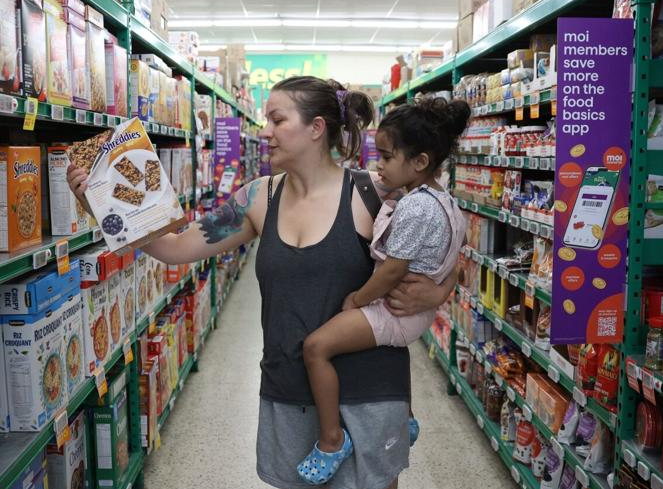
Lea Reambeault can walk to three discount supermarkets in minutes from her Toronto apartment above a Food Basics store. Still, grocery shopping is a chore she often leaves to her partner out of anxiety.

The 36-year-old mother of three has been out of work since the birth of her youngest daughter a year ago. Her family of five — squeezed into a two-bedroom unit — relies on her partner’s roughly $80,000 annual income and spends about $600 a week on groceries and household essentials. Sometimes the couple has to put off rent to keep food on the table.

Average tattoo cost by size. My guess 500 to 1500 bucks. h/t Hermes

Share

Canadian food insecurity climbs to 24% as cost-of-living pressures persist

Canadian food insecurity climbs to 24% as cost-of-living pressures persist

A new 2026 poverty report card has been released by Food Banks Canada (FBC) showing a 24% food insecurity rate — the highest the country has seen in decades, says one expert.

The expert, none other than the Food Professor, or Sylvain Charlebois, who runs an agri-food lab at Dalhousie University, expressed the severity of this statistic on X — “Nearly one in four Canadians is struggling to put food on the table.”

Share

LILLEY: Mark Carney’s grocery payment an admission Canada’s economy is failing

LILLEY: Mark Carney’s grocery payment an admission Canada’s economy is failing

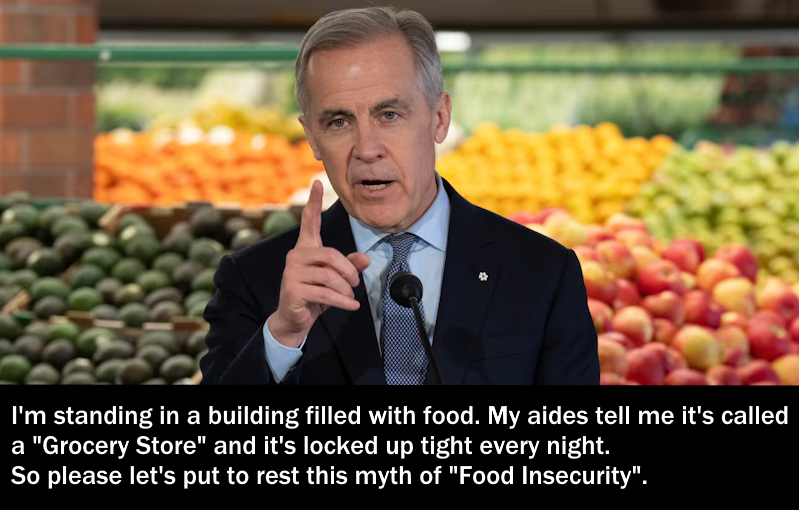
Mark Carney visited a Brampton grocery store Friday to celebrate his government’s total failure on affordability.

The Prime Minister was there to promote the first payment of the new Groceries and Essentials Benefit program, essentially, the rejigged GST rebate.

Now, Carney’s supporters may say this is a victory, it is the government helping low income Canadians.

Share

Sylvain Charlebois: Food Tax Reform Keeps Colliding With Governments’ Need for Revenue

Sylvain Charlebois: Food Tax Reform Keeps Colliding With Governments’ Need for Revenue

Quebec is poised to become the second province in Canada in recent weeks to roll back provincial sales taxes on food-related items, reinforcing a broader truth governments increasingly struggle to defend: taxing food has always been a flawed way to shape consumer behaviour.

Unlike Manitoba, however, Quebec is taking a broader and arguably more pragmatic approach by extending relief to healthier ready-to-eat products and convenience foods.

Share

CHARLEBOIS: Dispelling Canada’s grocery tax illusion

CHARLEBOIS: Dispelling Canada’s grocery tax illusion

Quebec is poised to become the second province in Canada in recent weeks to eliminate provincial sales taxes on food-related items. Unlike Manitoba, however, Quebec is taking a broader and arguably more pragmatic approach by extending relief to healthier, ready-to-eat products and convenience foods. That distinction matters. Too often, public policy assumes that only “junk food” is taxed, when in reality many prepared and nutritious options remain subject to provincial sales taxes simply because they are convenient. Quebec’s new measure, expected to cost more than $100 million annually, acknowledges an important reality of modern food consumption: Convenience is no longer a luxury. For many Canadians, it is a necessity.

Share