What will kill the electric car this time: Trump or Canada’s haplessness? … Suicide is more likely

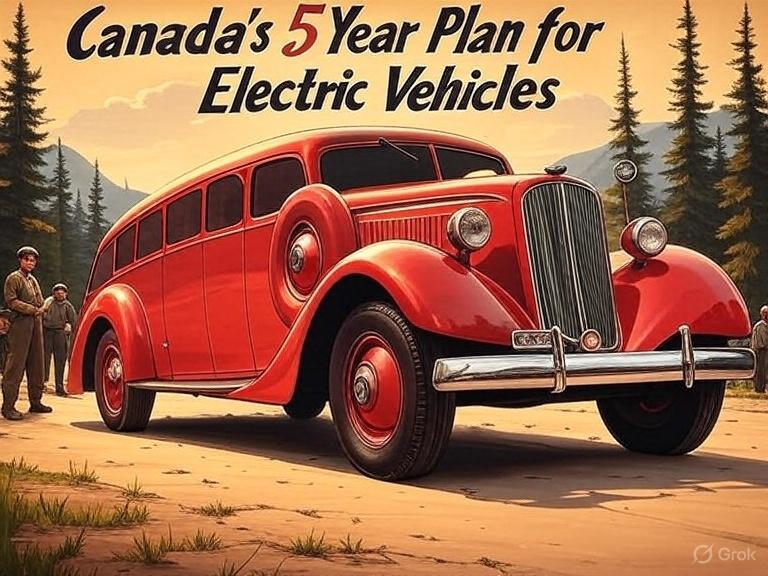
It appears we have elected a federal government that is not only eager to support a new oil pipeline in British Columbia, but may end up throwing our electric vehicle ambitions into reverse—if not into the ditch.

This could be hasty and unduly negative, but Prime Minister Mark Carney has so far shown far less interest in the clean technologies of the future than in roads, railways, ports and pipelines for his “major infrastructure” projects.

The most optimistic speculation is that his government will extend deadlines for EV adoption by a few years in response to pressure from the Canadian auto sector. Automakers argue, reasonably, that the Justin Trudeau-era decree—that 20 per cent of new cars sold in Canada must be zero-emissions by 2026—is undoable for a variety of reasons, with one of them being the Trump administration’s sharp turn away from electrification and back to gas-powered behemoths.

Another EV evangelist shorted out of reality.

Share

Mark Carney needs to explain to Canadians how we’re going to pay for our national defence

It wasn’t so long ago that Canada perennially cashed in on its so-called “peace dividend.” The logic went like this: while our tanks might rust, the salaries of our Armed Forces members stagnate, and our ammunition stockpiles dwindle, the government could reallocate military spending toward areas of more immediate concern — entitlement programs, infrastructure and other “flavours of the day.”

Point to whichever geopolitical disaster from recent history you like, one thing is painfully clear: the dividend has been spent. But the problem isn’t just that our leaders have been slow to acknowledge this new reality — it’s that they’ve been even slower to act on its implications. Because the inverse logic now applies: in a more volatile world, there is a crisis fee to pay. A big one.

Share

Conrad Black: Liberals must retreat from their climate obsessions

We are now close to the litmus test of the new Carney government as it approaches the bifurcation between the road to sensible fiscal and environmental policy and the road over the cliff into total war against the oil and gas industry and the piling on of taxes and higher gasoline and fuel costs in pursuit of a tokenistic reduction in Canada’s minimal contribution to world carbon use. So far, we have generally had inconclusive indications of attempts to straddle these irreconcilable options. There have been references to a ”carbon-neutral pipeline,” (a nonsensical idea), and fuzzy comments about how to pay for the prime minister’s vertiginously expensive doomsday climate wish list, including a referendum on tax increases.

Share

Details of Carney’s Conflict-of-Interest Screen Released by Ethics Commissioner; 103 Entities Listed

Prime Minister Mark Carney and Canada’s ethics commissioner have agreed to a conflict of interest screen to ensure that no decisions are knowingly made by the prime minister that may benefit his former employer Brookfield Asset Management or Stripe, whose board he previously sat on, as well as more than 100 other companies.

The details of the conflict of interest screen were made public on July 11 by the ethics commissioner and mean Carney must recuse himself from 103 corporate entities.

So his lackey’s will note the shielded firms involvement in a given scenario and rubber stamp as needed to profit Carney & Co.
Share

Canada’s Carney talked tough on Trump – now some say he’s backing down

It’s another curveball in the Canada-US trade war – a new missive by US Donald Trump threatening an unexpected 35% tariff on Canadian goods starting next month.

It came as the two countries engage in intense trade talks meant to produce a new deal in the coming days, and what the latest tariff threat means for these negotiations is unclear.

But Canada’s new prime minister, Mark Carney, is beginning to face questions over whether he is able to stand up to Trump and secure the fair deal for Canada he promised.

Share

Brace for layoffs, budget watchdog says, as Carney government aims to slash spending by $25B

OTTAWA — The Liberal government wants to find roughly $25 billion in annual savings from the federal budget within the next three years, the Star has confirmed, a higher than expected target that the independent Parliamentary Budget Officer says will likely require civil service layoffs and cuts to funding for outside organizations.

The clarity about the goal of the government’s incoming expenditure review — two days after it first became public — sheds new light on how Prime Minister Mark Carney’s government is aiming for almost twice the level of internal “savings” than the Liberals promised during the spring federal election campaign.

This does not appear to be the massacre the media is hyping it to be.

Share

GREEN: Carney government should swiftly axe foolish EV mandate

Two recent events exemplify the fundamental irrationality that is Canada’s electric vehicle (EV) policy.

First, the Carney government re-committed to Justin Trudeau’s EV transition mandate that by 2035 all (that’s 100%) of new car sales in Canada consist of “zero-emission vehicles” including battery EVs, plug-in hybrid EVs and fuel-cell powered vehicles (which are virtually non-existent in today’s market). This policy has been a foolish idea since inception. The mass of car-buyers in Canada showed little desire to buy them in 2022, when the government announced the plan, and they still don’t want them.

Share

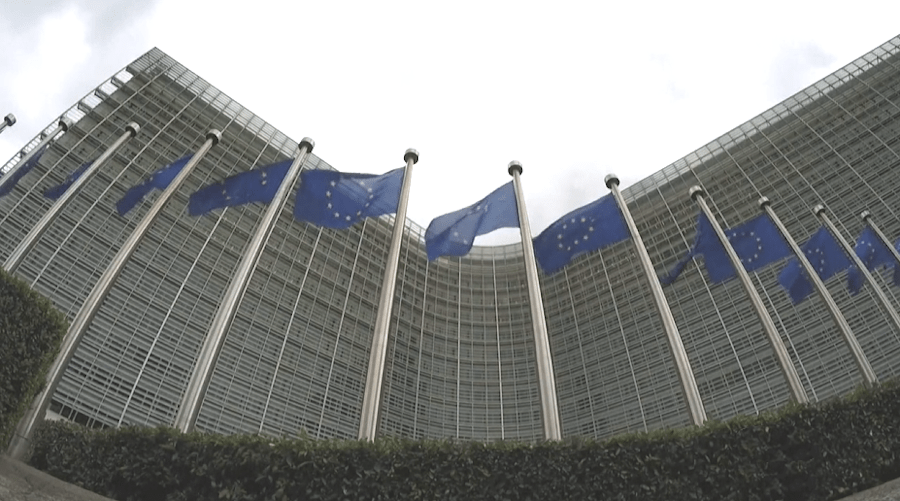
How Canada’s shift to the EU may provoke fallout with Trump

Canada’s ambitious strategy to turn to the European Union to wean itself off American dependency for military equipment could be difficult to deliver and result in political fallout, warns former defence and security officials in a new report.

After assessing the political and fiscal risks of the Canada-EU Security and Defence Partnership, signed by Prime Minister Mark Carney in Brussels in June, the authors found that “achieving the partnership’s full potential is highly uncertain” because of obstacles on both sides of the Atlantic Ocean.

Those obstacles include trade tensions with the United States, division among the European nations and weak links between the federal and provincial governments.


Trump may not care at all seeing it as one more stumble in Canada’s Elbows Up death march.

But if it means participation in un-scrutinized hastily thrown together “deals” that line the pockets of third parties named Brookfield then it’s all good!

Share

GOLDSTEIN: Trump forcing us to admit our own economic failures

Canadians should be asking themselves why it took an American president launching a trade war against us for our federal and provincial governments to finally start addressing our economic problems they should have fixed decades ago.


Canada is a Banana Republic which is why I was never upset at Trump’s annexation jibes.

Elbows Up? More like “Heads in Ass”.

We have been taken for a ride by our “elites” who have conspired to turn Canada into a 3RD World Dumpster for their personal profit.

They should be jailed.

Share

Carney’s record on foreign interference is uninspiring, so far

Many of us who have been involved in the fight against foreign interference and in establishing a foreign transparency registry are frustrated by the new government’s apparent lack of concern on this issue. Foreign interference by hostile regimes was not mentioned in the Speech from the Throne read by King Charles, nor in Prime Minister Mark Carney’s mandate letter to cabinet.

Share

Canadian pro-freedom group sounds alarm over Liberal plans to revive internet censorship bill

One of Canada’s top pro-democracy groups has sounded the alarm by warning that the Canadian federal government is planning to revive a controversial Trudeau-era internet censorship bill that lapsed.

The Democracy Fund (TDF), in a recent press release, warned about plans by the Liberal government under Prime Minister Mark Carney to bring back a form of Bill C-63. The bill, which lapsed when the election was called earlier this year, aimed to regulate online speech, which could mean “mass censorship” of the internet.

Share