York Region paramedic shouldn’t have been fired over Israel comments: union, law experts

The Centre for Free Expression is calling for the reinstatement of a York Region paramedic whose union says she was fired over a social media post criticizing Israel’s military operations in the Middle East.

An open letter from James L. Turk, the director of the centre at Toronto Metropolitan University, and a group of lawyers and professors, expresses “deep concern” that the dismissal of Katherine Grzejszczak violates her Charter right to freedom of expression.


Was it wise to advocate for dismissal given her reinstatement will be viewed as license?

Share

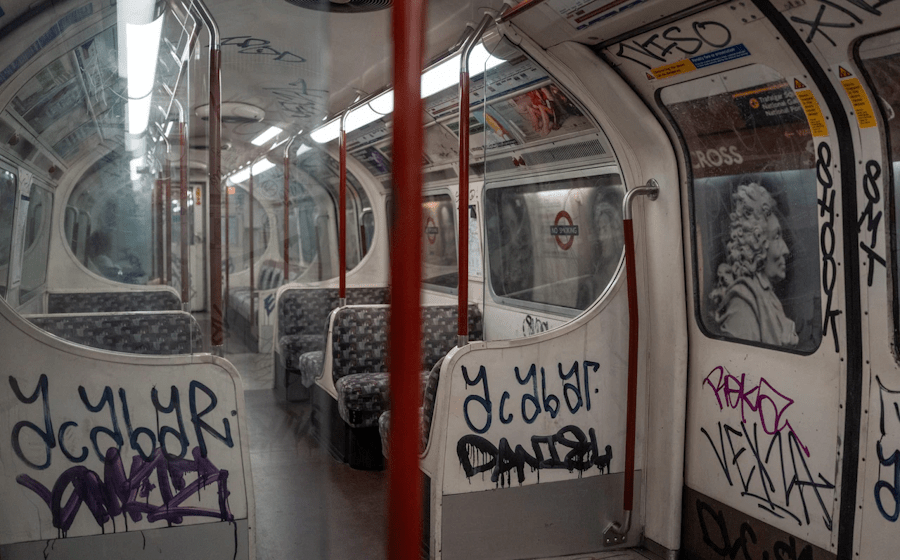
How London’s crime-ridden Underground became emblematic of Broken Britain

It was 4pm on a busy Victoria line train heading north. Sally Wynter was standing by the door on her way to meet a friend. Her thoughts were on the evening ahead, her eyes trained on the emails on her phone. As the doors opened at Green Park and she stepped to the side to let people off, she felt a sharp pain in her right arm and was propelled with a thud into the clear partition at the end of the adjacent row of seats.

A man had, completely out of the blue, punched her, making her lose her balance and fall smack into the perspex. She looked around, dazed and unsure who had assaulted her or if another blow was about to land. A man stepped onto the platform. To the back of his head she shouted: “You’ve just hit me! Did anyone see?” The crowd waiting to board barely looked up.

Share

Matthew Lau: CBC’s very balanced reporting of just one point of view

If you are looking for solid analysis and balanced reporting on climate change and climate policy, you are unlikely to get it from CBC News. See, for example, a story last week on Ontario’s climate targets. Internal documents from the public service project Ontario’s greenhouse gas emissions will be around 145 megatonnes in 2030, depending on industry actions and other factors. If the projection holds, the province would miss its target to reduce emissions to 142 megatonnes by 2030. The environment minister, appearing to contradict these projections, said on June 5th that the Progressive Conservative government’s plan “is working” and that the province was in fact on track to hit its targets.

Share

‘No means no’ is Eurocentric, South African lawyers say in sex harassment case

Lawyers for a South African high court judge accused of sexual harassment have dismissed a gender expert’s testimony that “no means no” as “Eurocentric”.

They also accused the expert of an “imposition of whiteness” in her assessment of the case brought against Selby Mbenenge, judge president of the Eastern Cape, by a secretary in his court, Andiswa Mengo.

Share

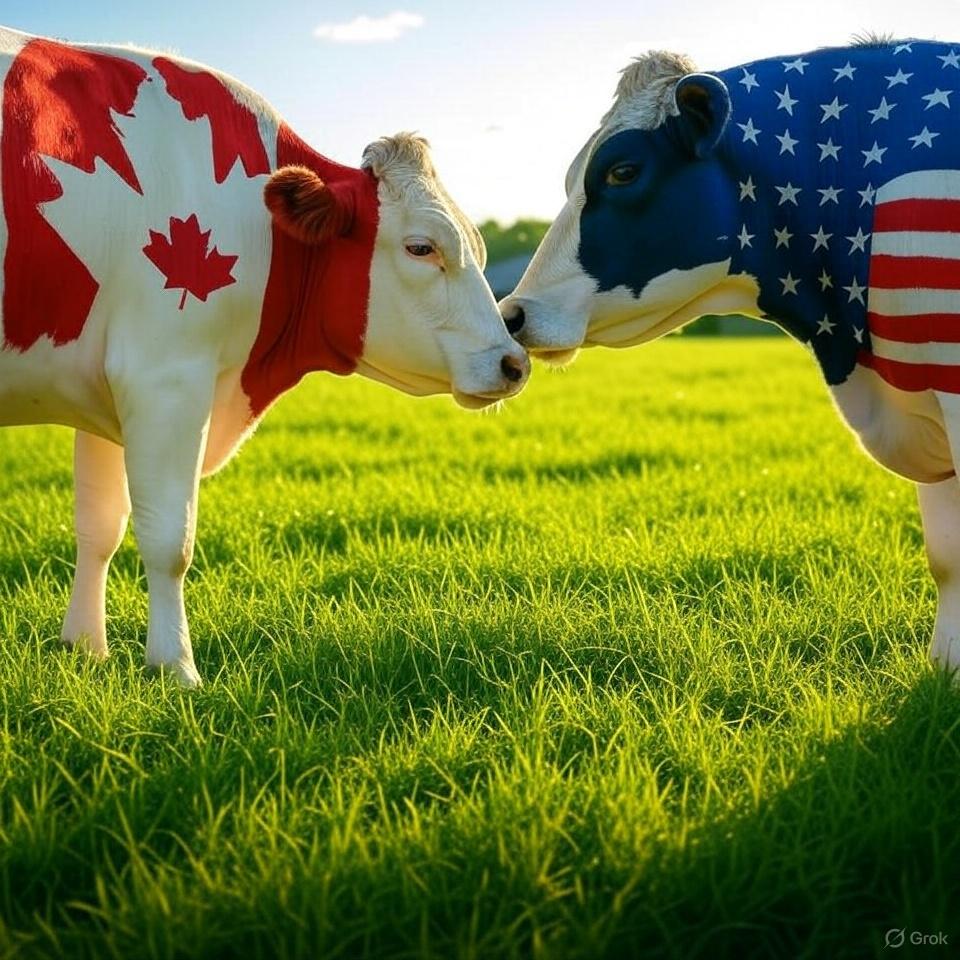
New supply management law ties the hands of our trade negotiators

After climbing down on the digital services tax, Canada is back at the table with the U.S. to negotiate the two countries’ trade relationship. Unfortunately, Canadian negotiators have a fresh problem to deal with: the recent passage of a bill through Parliament that protects supply management.

Share

Boulder terror suspect Mohamed Soliman’s wife, 5 kids can be deported, judge rules — reversing decision that paused proceedings

The family of the Colorado terror suspect who injured 8 Israeli hostage supporters with homemade firebombs last month can be deported, a federal judge ruled on Wednesday.

US District Court Judge Orlando Garcia dismissed Mohamed Sabry Soliman family’s legal challenge to their deportation — stating that the Trump administration has conducted normal and legal removal proceedings.

Share

John Robson: Government Must Make Major Cuts to Fund $150B Defence Plan

So now we have a number. After sliding along for years pretending we meant to hit NATO’s 2 percent of GDP defence target, or quietly admitting we didn’t, we suddenly promised to. Then the target was raised to 5 percent and the prime minister didn’t blink even though it will cost $150 billion a year, a lot of money even in Ottawa. Which mercifully and horribly brings us to the practical question: Where are we going to get it?

Of course, there are people who don’t want us to try. Some socialists would rather spend the money on social programs or not at all, and some libertarians would rather not spend it at all, meaning the latter do need to find it anyway but the former don’t. As for those who think saying we’ll spend it amounts to having spent it, it buys us precious little time today.

Share

CEOs Start Saying the Quiet Part Out Loud: AI Will Wipe Out Jobs

CEOs are no longer dodging the question of whether AI takes jobs. Now they are giving predictions of how deep those cuts could go.

“Artificial intelligence is going to replace literally half of all white-collar workers in the U.S.,” Ford Motor Chief Executive Jim Farley said in an interview last week with author Walter Isaacson at the Aspen Ideas Festival. “AI will leave a lot of white-collar people behind.”

Share

Just anonymous pranksters? Ground operations resume following bomb threats at 6 Canadian airports

Canada’s air traffic control service says some airports across the country could see delays after receiving bomb threats early Thursday morning.

“Early this morning, NAV CANADA was made aware of bomb threats affecting facilities in Ottawa, Montreal, Edmonton, Winnipeg, Calgary and Vancouver,” a spokesperson said in a statement.


Whether attributed to a specific threat or not we’ll never know as it’s best not to offend!

Share

Turkey arrests journalists over alleged cartoon of Prophet Muhammad

Four employees of a satirical magazine in Turkey have been arrested for publishing a cartoon that appears to show the Prophet Muhammad – a sacred religious figure whose depiction is a deeply contentious issue in Islam.

Turkey’s interior minister Ali Yerlikaya condemned LeMan magazine’s drawing as “shameless”, announcing that its editor-in-chief, graphic designer, institutional director and cartoonist had been detained.

Share

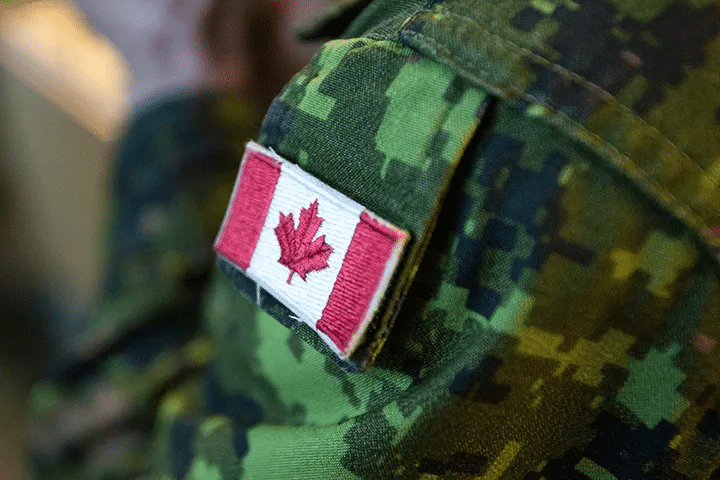
Why new Canadian ranger rifles are bleeding red dye

Canadian Rangers who use their new rifles in the rain are finding their hands covered in red dye because the stocks on the weapons can’t handle moisture, according to newly released military records.

The problem was discovered in May 2018 as the new C-19 rifles were initially being distributed to Canadian Ranger units as part of a $32.8-million contract with Colt Canada. The .308 C-19, which is equipped with a red stock, replaced the Lee Enfield .303 rifle that had been used by Canadian Rangers since 1947.

Share

US to breed billions of flies and dump them out of aircraft in bid to fight flesh-eating maggot

The US government is preparing to breed billions of flies and dump them out of airplanes over Mexico and southern Texas to fight a flesh-eating maggot.

That sounds like the plot of a horror movie, but it is part of the government’s plans for protecting the US from a bug that could devastate its beef industry, decimate wildlife and even kill household pets. This weird science has worked well before.

“It’s an exceptionally good technology,” said Edwin Burgess, an assistant professor at the University of Florida who studies parasites in animals, particularly livestock. “It’s an all-time great in terms of translating science to solve some kind of large problem.”

Share

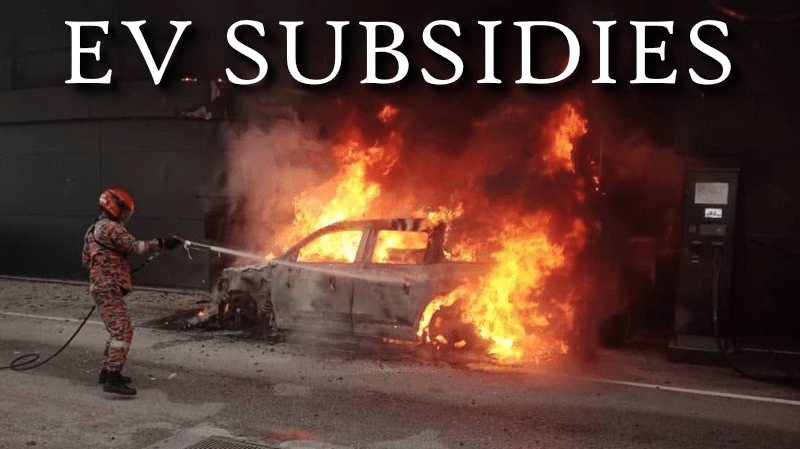
Automakers ask Carney to repeal zero-emission vehicle mandate

Auto sector chief executives urged Prime Minister Mark Carney Wednesday during a meeting on the Canada-U.S. trade war to repeal federal regulations that require one in five vehicles sold starting in 2026 to be zero-emission models.

The CEOs of Ford Motor Company of Canada, General Motors of Canada Co. and Stellantis Canada met with Mr. Carney in Ottawa as the Canadian and U.S. governments try to reach a trade deal by July 21 that might end Washington’s tariffs on Canadian-made automobiles, among other levies.

Share

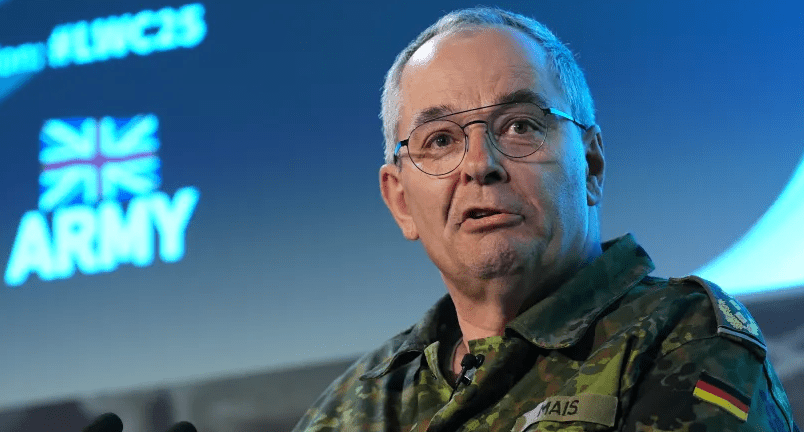
German army chief fired after blunt criticism of military

The head of the German army has been fired after he made a series of forthright public complaints about the armed forces.

Lieutenant General Alfons Mais, 63, is a bluff and popular figure who has made little effort to disguise his concerns about the state of the military.

On February 24, 2022, the morning when Russia began its full-scale invasion of Ukraine, Mais wrote in a blog post that the German armed forces, known as the Bundeswehr, had been caught “naked”.

Share

Slavery in Canada: The facts rarely told

Executive summary

This study summarizes the key facts on slavery in Canada, from the colonial period to slavery’s eradication in British Columbia over four centuries later.

In early Canada, indigenous slave-trading networks were robust:

Before the transatlantic slave trade, in pre-Columbian North America alone there were at least 39 distinct slave societies.
By the late 17th century, up to two-thirds of the population of some Iroquois communities consisted of “adoptees”—that is, captives.
A system of native alliances traded slaves to the colonists of New France from as far away as the Missouri River basin, Upper Mississippi, the Great Lakes, and Chesapeake Bay.
Well into the 19th century, indigenous networks traded slaves along the Pacific Coast and Columbia River, with only minimal involvement of Europeans.
Thus, it makes sense that about 64 percent of all the slaves held by Europeans in New France from the mid-17th century to 1834 (when slavery was fully abolished in the British Empire) were indigenous; 34.5 percent were African. Using the upper estimates of historians, the grand total of all slaves held in Canada across that period numbered 7,000 to 7,500. For comparison, more than thirteen hundred times that many souls—nearly 10,000,000—were enslaved from 1619-1865 in the United States.

Despite opposition from slave-owning legislators, Upper Canada passed the first legislation in the British Empire to end slavery—15 years before Britain outlawed the slave trade, 41 years before Britain abolished slavery in the West Indies, and 72 years before the States settled the issue on the battlefield. Thus, if by “Canada” we mean the country confederated in 1867, the fact is that slavery has never been legal here; all legal Canadian slavery was pre-Confederation.

Moreover, Canada welcomed over 30,000 African-Americans who escaped slavery and found freedom at the northern terminus of the Underground Railroad.

Yet, indigenous slavery was not fully stamped out in British Columbia until near the turn of the 20th century. And human trafficking remains a grave evil facing Canadian society today.

On balance, Canada’s history and record on slavery deserve to be cherished and celebrated.

Slavery in Canada

Share