
Smannell and Enham Church of England Primary School looks more like a chapel than a place of learning. On this fine morning, the Victorian-era building is quiet as I stare at its pebble-dashed walls and unobtrusive green fencing. Last year, Hampshire County Council decided that the place should be closed for want of pupils (24 at the last count). Parents were left angry, confused and anxious, says Andy Fitchett, a local Methodist minister, just as he was when his son’s school in Hatherden, a village just 10 minutes’ drive away, closed in 2022.
Demography
White British Students to Become a Minority in UK Schools Within 10 Years
An analysis of public data conducted by a Member of Parliament has found that White British students are set to become a minority in UK classrooms within a decade.
Neil O’Brien, the Conservative MP for Harborough, Oadby and Wigston and Shadow Minister for Policy Renewal and Development, has noted that the impacts of decades of mass migration into Britain are set to have significant impacts on the demographic makeup of the country, and are likely to accelerate.
Geert Wilders: Worry About Demographic Change, Not Climate Change
The holiday season is not over yet, but it is time for some reflection. Those who have been travelling in Western Europe will undoubtedly have noticed how our continent is rapidly changing.
From Bergen, Norway, to Cork, Ireland, from Salzburg, Austria, to Florence, Italy, from Hamburg, Germany, to Perpignan, France, everywhere the number of djellabas, headscarves, even niqabs, has dramatically risen.
What Research Shows About Canada’s Falling Fertility Rate
Canada’s families have been shrinking for decades, and we did not arrive at a historic low fertility rate overnight. When birth rates decline year after year, as has been the case in Canada, they reveal something deeper about our society.
As new Cardus research has shown, the decline in fertility is not simply about people wanting fewer children, but Canadians struggling to have the children they say they would like to have. This reflects a complex interplay between economic and social realities. As Canadians consider future family life, they worry about affordability, stable housing, finances, and the tensions between having children and achieving other life goals. These challenges not only affect fertility rates but also the well-being of parents and would-be parents.
Madrid is introducing benefits for unborn children
Madrid’s regional parliament has passed what is being called the ‘conceived unborn child’ law. As soon as a pregnancy is medically accredited it will count in determining a family’s eligibility for certain benefits. After the fourteenth week of the pregnancy, if this is their third child, families will be able to access additional benefits such as discounts on public transport, grants and other subsidies. If the pregnancy is lost, families will not have to repay the benefits already received.
MROZEK: Canada’s fertile ground for population collapse
Cardus recently surveyed women — and for the first time, men — about their fertility ideals and intentions. For context, Canada’s total fertility rate in 2024 was 1.25 children per woman. This means we have joined the company of nations like South Korea with “lowest of the low” fertility.
The survey results showed that both men and women wish to have more children than they actually have by their mid-forties. Men desire slightly more children than women, and 59% of men aged 40-44 have fewer children than they wish. Only 53% of women say the same. Fewer than 50% of men and women are at their ideal family size by the time they reach their forties.
White Children Now a Minority in American Public Schools
Less than thirty years ago, white students comprised 63% of public school students.
Now, that figure stands at 49.7%, rendering white public school kids a minority for the first time in American history, with that demographic’s share of the student body projected to continue to diminish over time.
Did the iPhone cause a baby bust?
The Baby Bust in the United States began in 2008, the year of the financial crisis and the year the Great Recession began. Births and the birthrate have fallen nearly every year since the 2007 peak.
It’s easy, then, to blame the recession, and most commentators do, believing that the Baby Bust is mostly an economic phenomenon. But it’s not mostly economic. It is mostly cultural. And so if we zoom in a bit, we can pinpoint a more precise date when we stopped having babies.
White British Children Set To Become Minority in Schools
The latest figures released by England’s Department for Education offer a glimpse into the country’s future, revealing how the British are slowly becoming a minority in their own country.
According to the data for the 2025–2026 school year, the proportion of pupils identified as white British has fallen below 60% for the first time, while the share of pupils from minority ethnic backgrounds has reached a record high of nearly 39%.
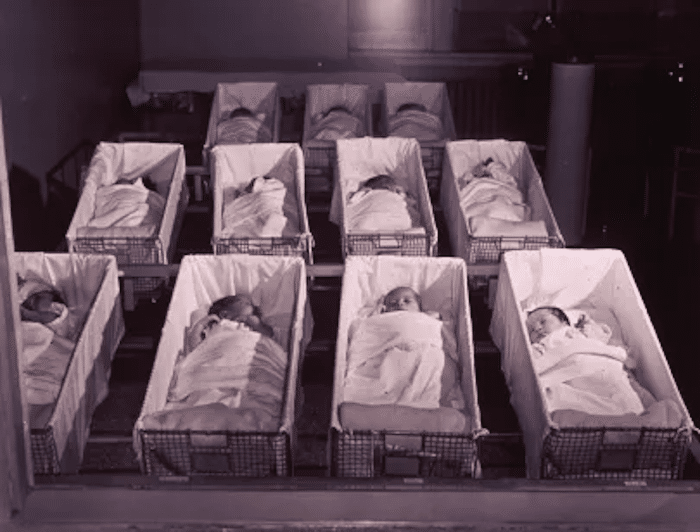
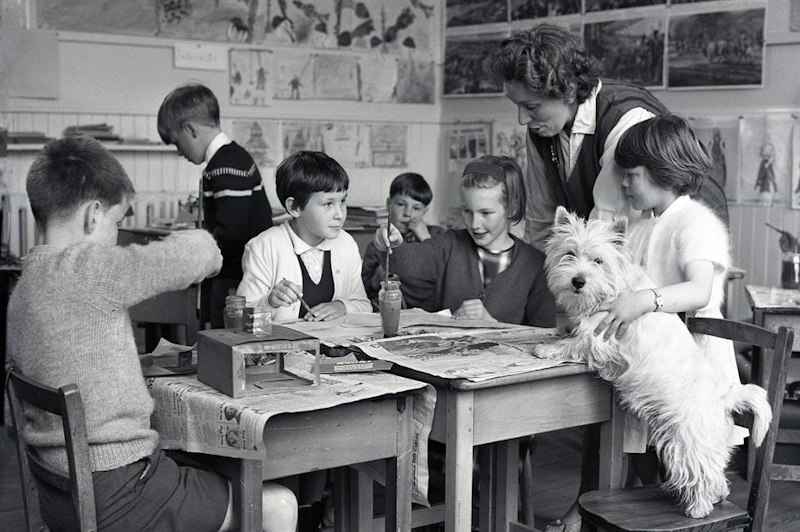
Who decided that the class room pictured above was an evil that needs to be eradicated?
Why families with small children are leaving Toronto and Montreal for Calgary, Edmonton and Ottawa
Toronto and Montreal are embarking on a period of mass school closings, driven not by falling birth rates or changing political priorities but by a failure to build child-friendly homes.
They risk joining the ranks of Vancouver, where fewer than one in 25 residents is under the age of five. Communities begin losing schools when the number of students leaving a system exceeds the number entering, and the number of young children in a city is a key early warning indicator.
Colorado’s Empty Classrooms Are a Warning for America
Colorado colleges are bracing for what education experts call an “enrollment cliff.” Fewer high school graduates mean fewer college applicants, shrinking tuition revenue, budget cuts, mergers, and even campus closures.
The same phenomenon is unfolding nationwide. After years of warnings, the demographic reckoning has arrived.
Old people and no children: Pope warns against Europe becoming ‘the old continent’
On May 25, Pope Leo XIV addressed members of the European Parliament’s Intergroup on Demography at the Vatican with a warning that they risk becoming “the old continent”—not because of its ancient history, but because of its advancing age. Declining birthrates and population aging, according to the Holy Father, are “an urgent challenge with practical implications for millions of people and their families.”
UK: Share of babies born to migrant parents hits record 40%
The share of babies born to migrant parents reached 40pc for the first time last year, new figures show.
Latest Office for National Statistics figures showed the number of newborns with at least one parent born abroad had risen from 39.5pc in 2024 to a record high of 40.2pc last year. It was 30.1pc in 2008.
That equates to more than 235,000 of the 585,396 births last year.
Montreal’s population is on the decline: Here’s why
Montreal’s population is on the decline due to lower immigration and the ever-aging population, according to a recent report by the Observatoire Grand Montréal.
Its projections indicate the trend could prevent the city from “experiencing population growth in the coming years.”
This contradicts patterns in other large cities, like Toronto and Vancouver, which are expected to see their populations increase by 2050.
Lucky Montreal!
Are Canadians choosing not to have children or resigning themselves to it?
Canada’s birth rate is now among the lowest in the world, reflecting not only economic strain but a deeper shift in how young people think about family, work and the future. More Canadians are choosing not to have children or to have fewer than they once expected.
This conversation asks whether the decision to have fewer children is a necessary adaptation to an uncertain world or a choice with long-term consequences.