Inside the world of Martin Sellner, millennial influencer of Europe’s far right

The Post spent time with Sellner to understand his secretive movement and how his rhetoric found its way into the Trump campaign and Austria’s election on Sunday.

SCHNELLRODA, Germany — In a food hall adorned with pastoral scenes of rural German life, Martin Sellner, self-proclaimed champion of mass migrant deportations, fielded question from a rapt audience. An ash-blond young mother raised her hand. She remarked on the importance of improving Germanic gene pools, then asked whether a people of such “progress and innovation” should honestly see themselves as run-of-the-mill humans.

“Good question,” Sellner said, responding with an answer that touched on biology, population trends and extraterrestrial invasions.

When asked directly, Sellner, 35, a far-right Austrian provocateur, will say he is no racist — but argues that each race would be happier in its own geographic corner. His Generation Identity movement, he says, adheres to nonviolent activism to protect ethno-European culture, citing Mohandas K. Gandhi and the Arab Spring as inspiration.


Trump’s deportation “rhetoric” is due more to Eisenhower than Sellner but that sort of thing just doesn’t sell smear jobs.

The Washington Post’s liars are propagating a disinformation campaign created by Germany’s government to smear the AfD with their “plan” to deport millions of non-native Germans.

“Following revelations in January that Sellner discussed remigration during a secret meeting with members of Germany’s AfD, tens of thousands of protesters took to the streets of German cities for days, suggesting both the extent of his enduring toxicity and the measure of his power.”

Thankfully Euroconservative exposed this lie – Correctiv Director Met With Chancellor Scholz Days Before Publishing AfD Disinfo Piece

The managing director of the disinformation-peddling media outlet Correctiv met with German Chancellor Olaf Scholz days before the ‘secret’ Potsdam meeting, and the publication’s subsequent, grossly deceptive reporting on the gathering. 

The outlet’s  ‘investigative reporting’ from the meeting—in which it spread brazen lies about a non-existent Alternative für Deutschland (AfD) plan to deport millions of German citizens with migration backgrounds—propelled a wave of anti-AfD demonstrations across Germany and prompted calls for the traffic light coalition to ban the increasingly popular insurgent party.


Share

Behind the Movement to Turn Back the Clock on Gender Roles

Husbands who head the household and go to work to provide for their family. Wives whose primary roles are homemaker and mother.

A conservative vision of America has gained momentum among those who fear American culture has swung too far from their long-held ideal of what a family should look like, and, in some quarters, reject deviations from that view.

Resurfaced comments from Republican vice presidential nominee JD Vance about the political influence of “childless cat ladies,” and his more recent worries about Americans’ reluctance to have children, reflect a deeper movement coursing through politics, social media, churches and households.

Share

The far right has moved online, where its voice is more dangerous than ever

The resurgence of far-right violence in the UK is in part due to Elon Musk’s decision to allow figures such as Tommy Robinson back on to the social media platform X, researchers say.

Robinson, whose real name is Stephen Yaxley-Lennon, and those of his ilk are not leaders in the traditional sense and the far right has no central organisation capable of directing the disorder and violence that has been seen, experts say.

Jacob Davey, director of policy and research at the Institute for Strategic Dialogue (ISD), said: “People have been naming the EDL [English Defence League] as key figures when the EDL actually has ceased to function as a movement.”

Brace yourselves it’s the Guardian/Observer

Share

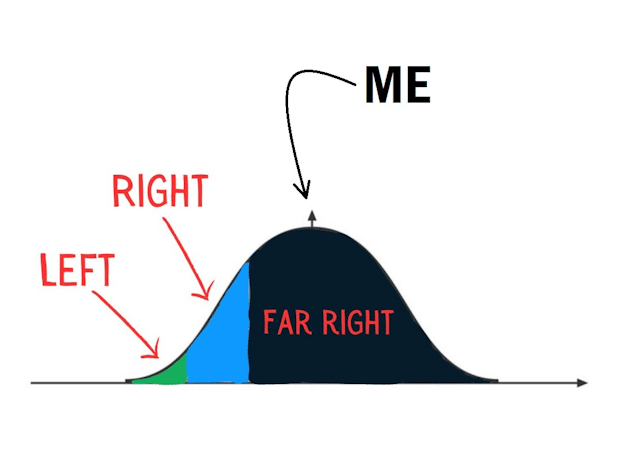
Do you care about your country? You now are “far right”

What is the agenda that Western voters have rejected? Put the climate before industrial production and stem the demographic collapse with non-European immigration.

There is a simpler explanation for the downfall of Western governments: they all agreed on an agenda that the majority ended up rejecting. In the words of the eminent Pierre Manent, great scholar of Machiavelli and Tocqueville, “we have been forbidden to love our history and we have been ordered to accept everything that accuses us, because the new political religion decrees to dissolve us in humanity”.

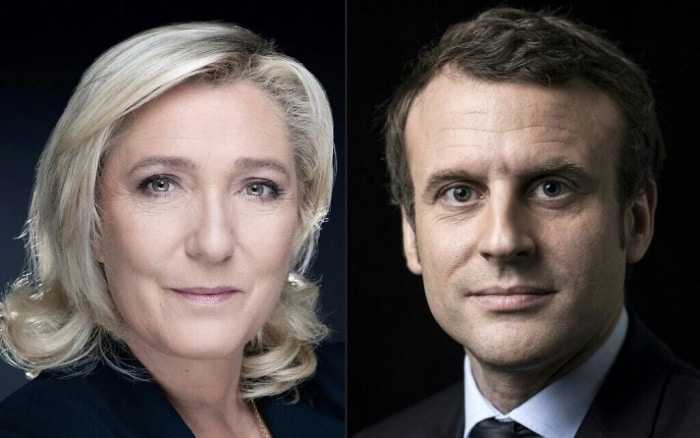
Emmanuel Macron’s centrist bubble party obtained only a fifth of the national vote following the disastrous European elections on 9 June. Marine Le Pen stood alone at 34 percent, the left-wing coalition at 28.

Share

It’s Not Far-Right, It’s Counter-Culture

As mainstream progressive culture goes ever further left, more and more people in the centre or right are being labelled ‘far-right.’ This progressive culture has been taught for decades, in that if boundaries aren’t constantly being torn down, progress isn’t being made. Most attitudes in the centre/right haven’t changed, but the left demands they do, since they control the majority of the media that considers itself ‘respectable.’

Share

What do journalists mean when they use the term ‘far-right?’

This month, a reader e-mailed to question the use of the term “far-right” in news articles. Who defined this term, and does it not convey an editorial opinion rather than fact?

The reader was referring to coverage of the European Union elections, which took place June 6 through 9. Indeed, “far-right” has appeared in headlines, reported news, analysis, explainers and opinion pieces in The Globe, as in other news media. But how is it different from “hard-right,” “extreme-right,” “alt-right” or just plain “right-wing?”

There’s no nuance about it. It’s shorthand for Nazi.

Share

The Myth of the European “Far-Right Surge”

There has been much talk of a “far-right surge” in the European Parliament. For example, BBC ran a headline, “Far right eyes Europe vote surge…,” shortly before the elections. On June 5th, Politico reported, “As the far right surges, this week’s European Parliament election will reorder the Continent’s political landscape.” One of CNN’s post-election headlines ran, “Far right surges in European Parliament elections but center still holds.” These sorts of headlines may make for exciting reading, but they reveal a profound lack of understanding of what is really going on politically in Europe.

h/t NE

Share

Alarmist Headlines About Europe’s ‘Far Right’ Ignore Failures of the Continent’s Liberal Elite To Heed Voter Concerns

“The far right made big gains in European elections,” reads the Associated Press headline on last week’s European Parliament elections. Lest you wonder why you should dread gains by the “far right,” the lead sentence of the article notes that the European Union has “roots in the defeat of Nazi Germany and fascist Italy.”

For many readers, that juxtaposition is a reminder of the sharp rise in Nazi party percentages in Weimar Republic elections to 43 percent in 1933, 33 and 37 percent in 1932, and 18 percent in 1930, from 3 percent in 1928.

Share

Farage’s Reform UK Party Overtakes Sunak’s Conservatives: Poll

Europe’s marked shift towards populism appears to be accelerating, as Nigel Farage’s Reform UK Party has surpassed Prime Minister Rishi Sunak’s Conservatives in an opinion poll for the first time, signaling a potential shift in the British political landscape as the nation approaches the July 4 general election.


Are you ‘far-Right’? Take our quiz!

It’s the favourite buzzword of Left-wing news outlets and pundits. But what exactly do they mean by it?

h/t DS

Share

The trouble with calling everyone ‘far right’

There is a favourite Fleet Street story about the legendary Sun editor Kelvin MacKenzie. While editing the paper, he discovered that his horoscope writer was recycling copy. He decided to dispense with her services in a letter that opened: ‘As you will no doubt have foreseen…’

You do not have to hold claims to being a mystic to predict certain things. The results of last week’s EU elections were easily predictable, as was the response from much of the British media. As I uncannily prophesied in last week’s column, the BBC’s Europe editor, Katya Adler, went with: ‘The far right is on the march.’ Elsewhere, she offered the claim that people across the continent often say: ‘This feels like the Europe of the 1930s.’

Share

Time to retire the ‘far right’ slur

Millions of Europeans have not suddenly turned into fascists. We need a new political language.

As the EU establishment struggles to make sense of last week’s revolt in the European elections, one thing is clear: our outdated vocabulary is not up to the task of describing today’s political landscape.

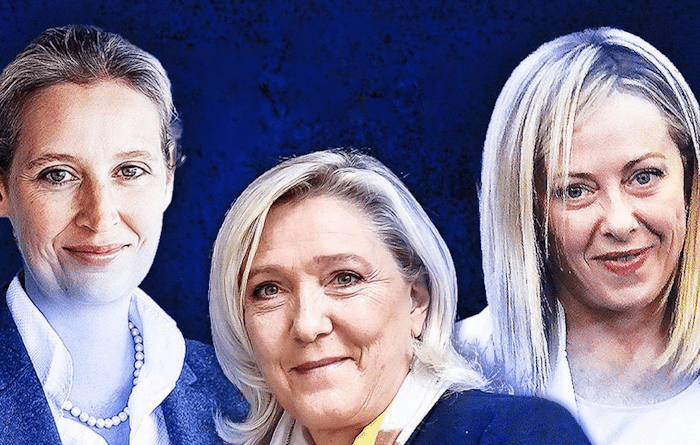
Gains for France’s National Rally, Giorgia Meloni’s Brothers of Italy and the Alternative for Germany (AfD) have been described as a ‘far-right surge’ in newspapers and TV reports, not just across Europe but around the world. Even before the election results came in, labels like far right and extreme right were bouncing off commentators’ keyboards. All agree that the far right is on the rise and ordinary people need to worry. This is Europe’s ‘Trump moment’, explained Politico. Some go further. Marine Le Pen’s National Rally is described as ‘neo-fascist’, while academics calmly ask if the AfD is the new Nazi Party. ‘Fascism has arrived’, declared French author Emilia Roig when the election results became clear. Yet with almost a quarter of Europe’s voters having backed a party branded ‘far right’, it is worth asking how accurate this label is and what purpose it now serves.

Share

How Europe’s young voters flocked to the hard-Right

Unbuttoning his carefully ironed white shirt, Jordan Bardella took a sip of water at a sweltering political rally during his European election campaign and apologised for the pause by saying: “I’m already getting hot.”

“You’re the one making us hot,” screamed a girl from the young crowd.

The French call it “Bardella-mania”.

Share

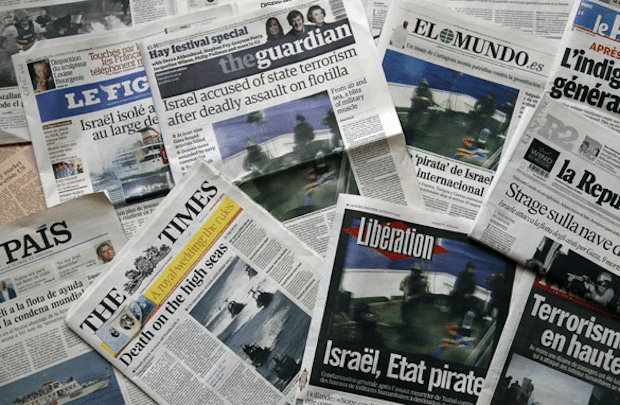
Europe’s Establishment Press Rattled by Successes of the Right

Mainstream newspapers are doing all they can today, on June 10th, to echo Ursula von der Leyen’s triumphant message that “the centre is holding.” But reporters and pundits are unable to hide their concerns surrounding the shift to the Right which, however much they try to downplay it, they accept will raise serious difficulties for the establishment parties.

Coverage of Viktor Orbán’s performance in the European Parliament (EP) elections is indicative of this, with his 44% share of the Hungarian vote—a proportion that most other European political leaders can only dream of—dismissed as a “stumble” or a loss because it is lower than that achieved in previous polls. Reuters in particular framed Orbán’s smaller-than-expected lead as an example of “strong performances by centrist parties” in eastern Europe.

Share

Warped: Fascists who insist you believe men are women warn against normalizing Europe’s “far right”

Typical transvestite who insists you believe up is down

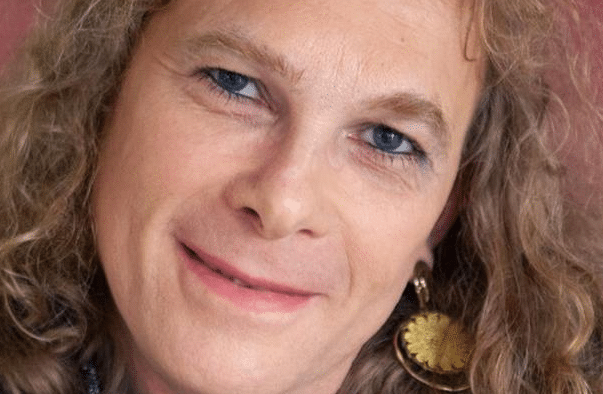
Monika Magashazi is a fighter. The 52-year old trans woman lives in Hungary — a country that has been ruled by Viktor Orban’s nationalist Fidesz party since 2010.

For transgender communities, the situation “has been becoming worse and worse and, unfortunately, we are desperate today in Hungary,” she told DW. She said the government was trying to portray trans people as pedophiles and criminals, using seemingly every opportunity to discriminate against them.

Share

It’s not just boomers, young people are voting far right too

Far-right parties are surging across Europe — and young voters are buying in.

Many parties with anti-immigrant agendas are even seeing support from first-time young voters in the upcoming June 6-9 European Parliament election.

In Belgium, France, Portugal, Germany and Finland, younger voters are backing anti-immigration and anti-establishment parties in numbers equal to and even exceeding older voters, analyses of recent elections and research of young people’s political preferences suggest.

Share