STIRLING: Carbon tax shell game — how climate activists masquerading as ‘experts’ are bankrupting Canada

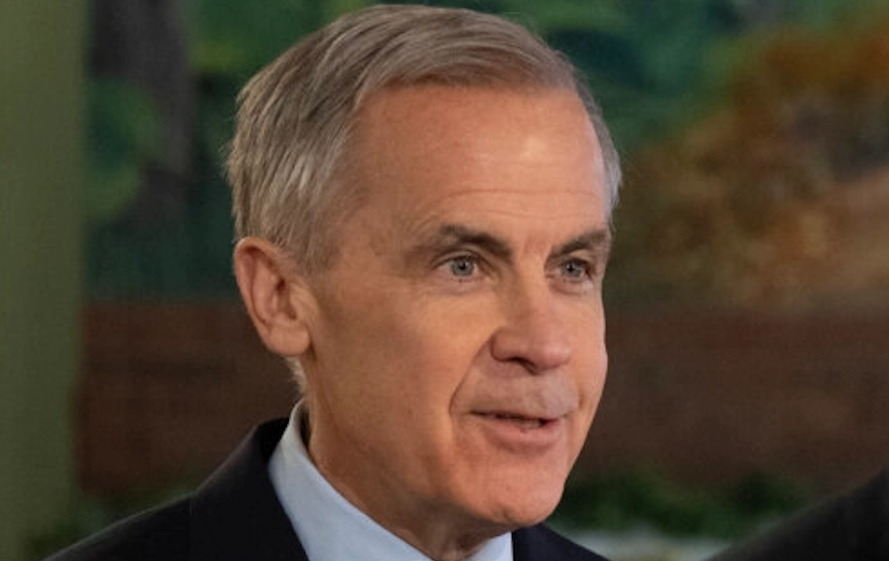
On February 3, Opposition Leader Pierre Poilievre said in the House of Commons that “Canadians deserve to have a full stomach, a full fridge, and a full bank account, all at once.” He went on to offer his theory that Canada has the highest food inflation in the G7 due to the industrial carbon tax and fuel taxes. He asked Prime Minister Mark Carney for his theory. The Prime Minister responded that the Canadian Climate Institute “estimated the impact of the industrial carbon tax on food prices as approximately zero.”

Share

The Globalization of Canadian Rage

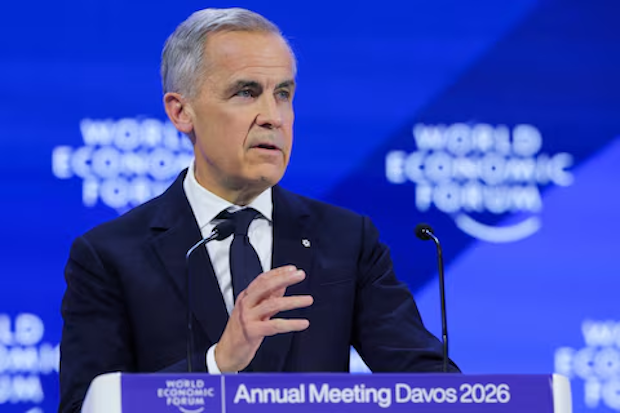
The defiance against America that has consumed Canadian life for over a year now has finally spread to the rest of the West. The message of Prime Minister Mark Carney’s speech at Davos last month — that of a “rupture in the world order” — was not new for Canadians. Just after his election in April, Mr. Carney declared that “our old relationship with the United States, a relationship based on steadily increasing integration, is over.” At Davos, the moment caught up with him, and with Canada.

Throughout last year, the consensus among many European policymakers in the face of Donald Trump’s bombast was to wait out the nonsense and appease when possible. Mr. Carney’s speech arrived at the exact point at which that position proved untenable: Mr. Trump’s intensifying threats to forcibly annex Greenland, not to mention his insults to NATO troops who fought and died alongside U.S. soldiers in Afghanistan. “They stayed a little back, little off the front lines” is a statement that will be remembered in Europe alongside “Ich bin ein Berliner” and “Mr. Gorbachev, tear down this wall” as a presidential remark that embodies the American spirit of its moment. Suddenly, Mr. Trump’s mindless drive toward territorial expansion and his desire to humiliate and degrade were impossible to ignore.


Media manipulated TDS he means.

Share

Ottawa says it won’t allow Chinese EVs to be used for spying on Canadians

The federal government will take steps to ensure that imported Chinese electrical vehicles cannot be used to spy on Canadians, a parliamentary committee heard Thursday.

Testifying before the procedures and House affairs committee, Public Safety Minister Gary Anandasangaree said Ottawa will put safeguards in place to make sure that Chinese EVs do not have “the capability to transmit information” back home.

He was responding to questions from Bloc Québécois MP Christine Normandin, who raised concerns that Chinese EVs could become “little spies on the road that could record our calls and take pictures of where we are going.”

Share

Canada is uniquely unprepared for the dire national-security crisis we are now in

It is doubtful any country has ever been in quite the national security dilemma Canada now finds itself in: with so much land and so few people to defend it; wedged between two expansionist superpowers, one of which was until very recently our best defence against the other, but which has since become more or less aligned with it.

The dilemma is particularly acute in light of our charmed history. A country that had always considered itself invulnerable to attack – because of the oceans that surround us, because of the forbidding climate in our North, because of the Americans – wakes up to discover that it has suddenly become peculiarly vulnerable.

Coyne alert!

Share

PAPPANO: From Davos to Beijing — Carney’s elite echo chamber betrays Canada’s interests

There’s an old, satirical saying that goes, ‘The king can do no wrong. He can only be led astray by his counsellors.’ Well, I wouldn’t go so far as to say that Prime Minister Mark Carney can do no wrong on his own, but I think his counsellors are giving him particularly bad advice right now.

I say that because Carney’s much-heralded speech in Davos, as well as his recent headline-making trips to China and Qatar, bear the fingerprints of our echo-chambered elite.

Share

Carney’s choice: Ice out illegal migrants, or treat them like the assets they are

It’s not just on the streets of Minneapolis: If you live in a Canadian city, you are surrounded by undocumented migrants trying to avoid the authorities. They are hidden in plain sight: at work on virtually any construction site or renovation job in Toronto, Vancouver or Montreal; in hospitals and elder-care facilities; in restaurant kitchens; and quite possibly in your house, cleaning and taking care of your kids.

The Globe and Mail whoring for the LPC and its Corporate pals.

Mass immigration aka Human Trafficking is good for them. They don’t give a damn about the damage its caused you and your family.

If we ever get a Trump the first thing to do is end media subsidies. 

Share

MACKINNON: ‘Dog laws’ come to Canada under the Combating Hate Act

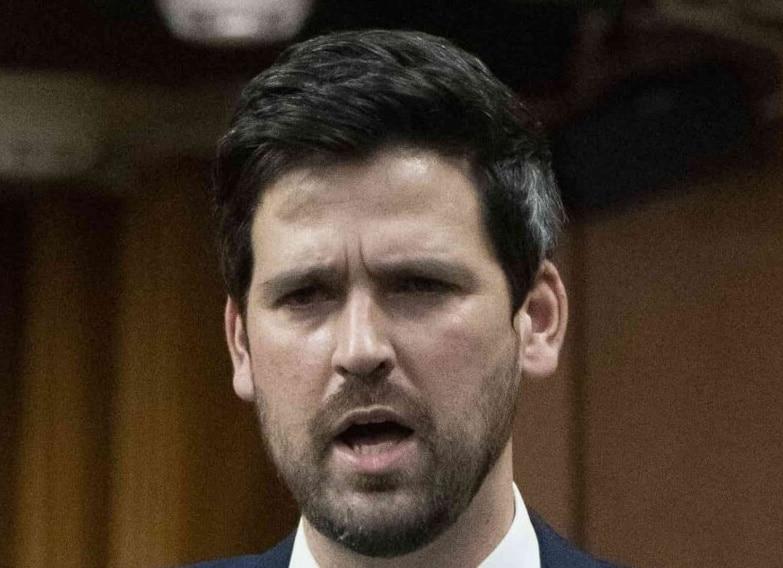
Sean Fraser – almost certainly lying.

Last week in the United Kingdom, Home Secretary and former Justice Minister Shabana Mahmood announced the abolition of “non-crime hate incidents” and told police to “focus on their day jobs.” The decision followed public outrage after Essex police paid a Sunday visit to a journalist’s home to “check the accuracy” of a social media post critical of the Metropolitan Police. It was a moment of belated clarity: a legal regime that authorizes police intervention in the absence of any crime is incompatible with a free society.

Share

Latest alleged Iranian regime official found in Canada wants his identity hidden

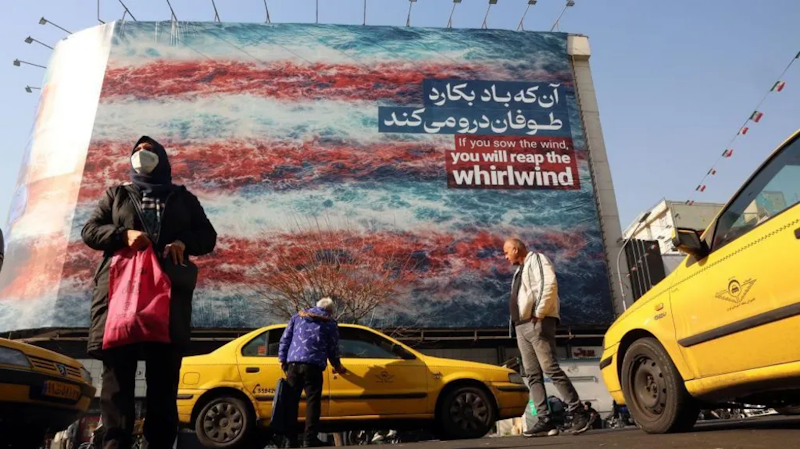
A suspected high-ranking Iranian official caught living in Canada appeared at his deportation hearing on Thursday as the regime he is accused of serving faced growing condemnation for killing protesters.

Before arriving in Canada, the Iranian citizen was a senior member of his government, according to the Canada Border Services Agency, which has asked the Immigration and Refugee Board to order his expulsion.

Who is approving entry for regime criminals? The LPC? We are a Banana Republic.

Share

Why are foreign investors so reluctant to invest in Canada?

With no small degree of bravado, Mark Carney says his government will bring about investment in Canada amounting to $1 trillion in coming years.

Some of that money will come from Canadian governments, but Carney hopes most of it will be forthcoming from private sector investors at home and abroad.

It’s not readily apparent that those hopes are realistic.

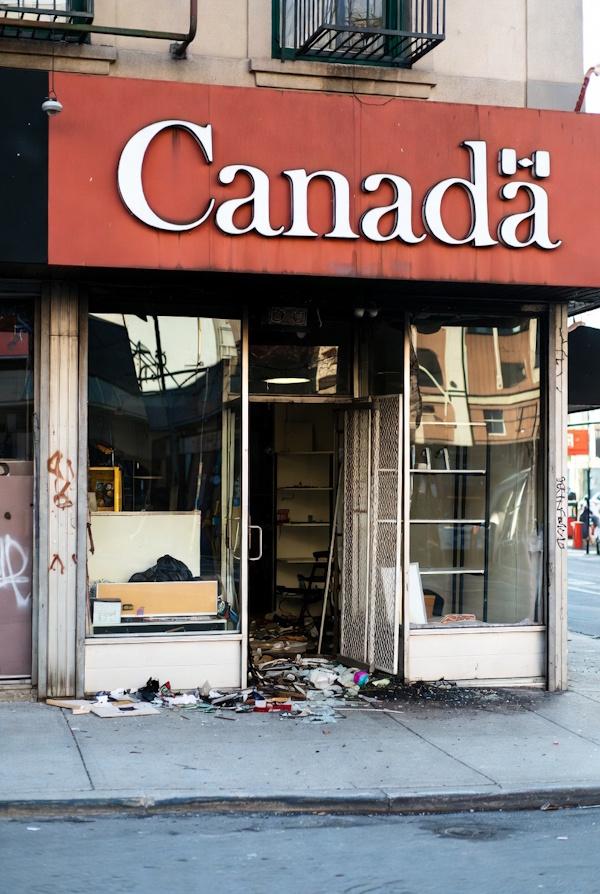
In the past decade, Canada has developed a reputation with many potential offshore investors of being “uninvestable.”

Share

LG Energy Solution to buy Stellantis’s stake in Ontario EV battery joint venture for just $100

South Korea’s LG Energy Solution on Friday said it plans to buy the 49-per-cent stake held by Stellantis in their battery joint venture in Ontario for the nominal amount of US$100.

Stellantis also said on Friday it would book charges of around €22.2-billion ($35.81-billion) in the second half of last year as the Franco-Italian automaker scales down electric-vehicle development plans and launches a “strategic shift.”


But wait there’s more!

Stellantis shares plunge as carmaker takes $22.2-billion writedown on EVs

Chevy Ends Building Tremec Corvette Transmissions in Canada, Production Shifts Back to America

Poor Joly! h/t Mauser

Share

Fiscal watchdog warns defence targets will mean soaring deficits

OTTAWA — Canada’s fiscal watchdog projects that the Carney government’s commitment to increase defence spending to at least 5 per cent of the economy will increase the federal deficit by $63 billion a year over the next decade, almost twice what the deficit is currently expected to average over the next few years.

In a new report published Thursday, Jason Jacques, the interim Parliamentary Budget Officer (PBO), said the fiscal effect of meeting Ottawa’s commitment to hit the new NATO target of 5 per cent of gross domestic product (GDP) will ramp up gradually over the next decade and will eventually hike the federal debt-to-GDP ratio by 6.3 percentage points in 2035.

Share

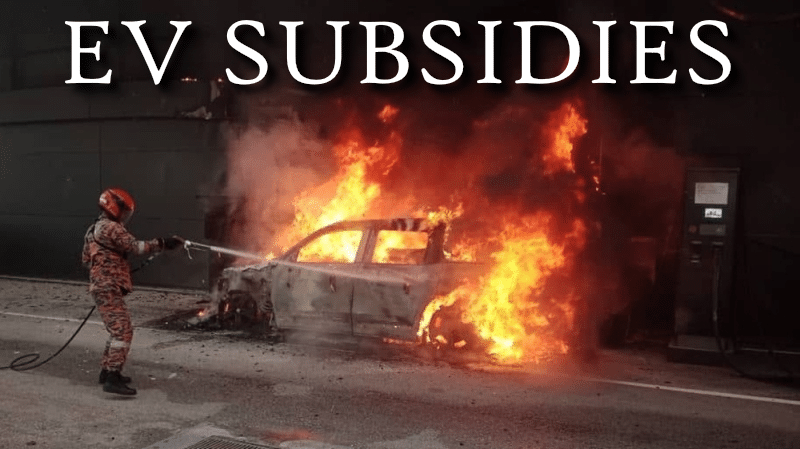
Ottawa Scraps EV Mandate, Aims to Reach 90 Percent EV Adoption Through Emissions Regulations

Prime Minister Mark Carney says he will abolish the electric vehicle mandate while replacing it with emissions regulations that he says will achieve a similar objective of reaching widespread EV adoption by consumers.

Carney announced on Feb. 5 that Ottawa will repeal the electric vehicle mandate that would have required automakers to produce and sell only electric vehicles by 2035. Instead, Carney said the government will put in place tougher greenhouse gas (GHG) emissions standards for model years 2027 to 2032. The revised aim is to reach an EV adoption rate of 75 percent by 2035 and 90 percent by 2040.

Share

Carson Jerema: The EV mandate isn’t being scrapped, it’s being renamed

The electric vehicle mandate that would have forced 100 per cent of all new cars sold in Canada to be zero-emission vehicles by 2035 was a typical Trudeau-era policy. It had more to do with preening self-righteousness than anything else. It sacrificed economic growth for green fantasies and was extremely paternalistic. As with most climate-change policies, the objective seemed to be more about control than actually accomplishing anything.

Share

A New Era in Canada–China Relations, or an Arctic Bargain?

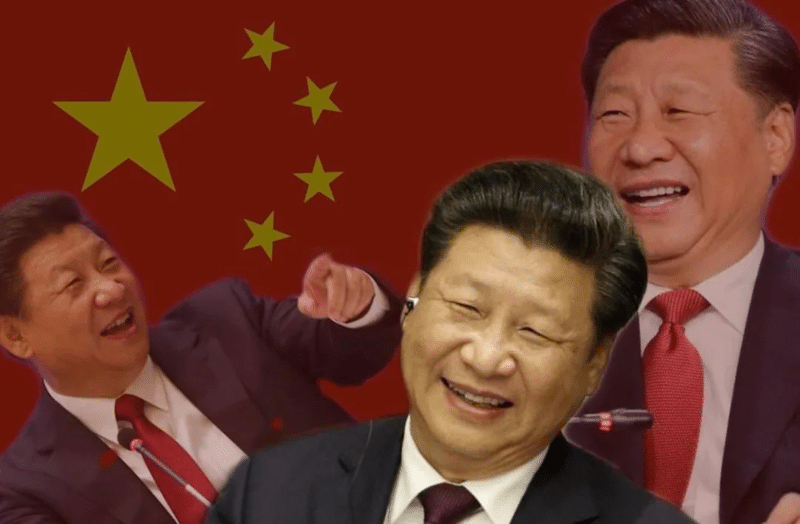
OTTAWA — Canada has only one thing that Chinese President Xi desperately needs that he hasn’t been able to get elsewhere: a path to Arctic nation status. China has only one thing Canadian Prime Minister Mark Carney desperately needs that he can’t get elsewhere: a trade pact large enough to make credible his vow to pivot away from Canada’s dependence on the United States.

Share

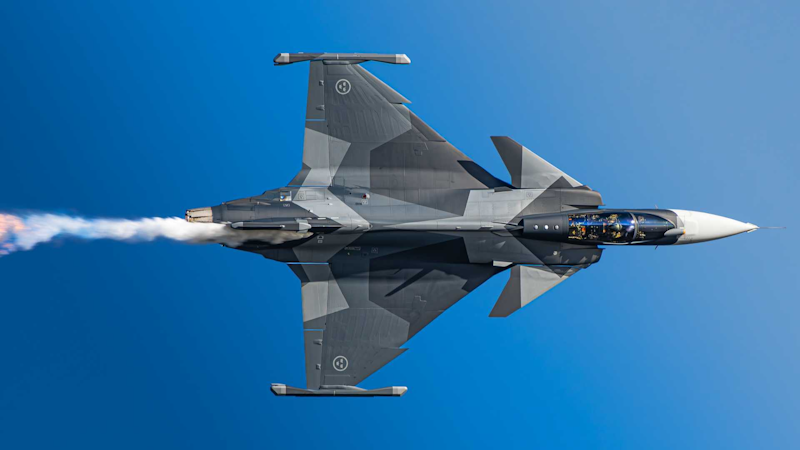
Richard Shimooka: A mixed F-35/Gripen fleet will fail us in every way

There are few policy areas in Canadian politics as tortured as the CF-18 replacement program, now entering its 16th year and undergoing its fifth evaluation — which is likely to once again recommend continuing with the purchase of F-35s.

Despite this, it was reported last week that “all the signs point to” the government pursuing a mixed fighter jet fleet, with half F-35s and half Saab Gripens. Yet the mixed fleet option comes with serious consequences that should give decision makers reason to pause.

Share