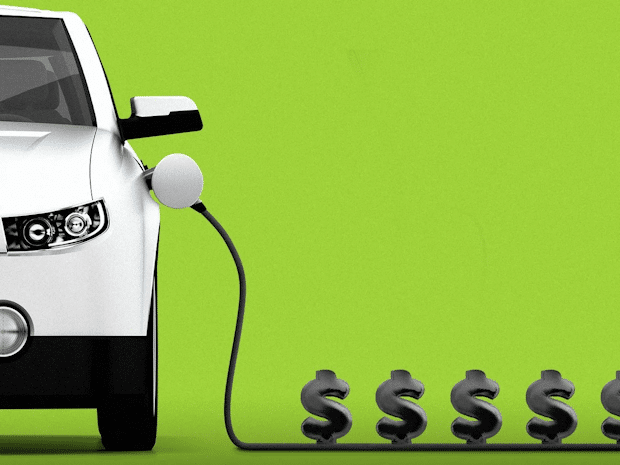
Think tank says federal EV quota changes unrealistic and costly

The federal government’s plan to replace electric vehicle sales quotas with a reduced emissions standard is unrealistic and could saddle Canadians with massive costs, according to the Montreal Economic Institute (MEI).

Prime Minister Mark Carney announced that instead of gradually banning conventional vehicles by 2035, 75% of new vehicles sold in that year would need to meet an electric-equivalent emissions standard.

(Incognito)

Share

We’re still waiting for Mark Carney to deliver on one of his earliest promises

A rogue ambassador to the United States, a new office in Washington for the “Commonwealth of Alberta,” another Mark Carney world tour: we’re just over a month into 2026, and already Canadian diplomacy is headed madly off in all directions.

Let’s start with Conservative MP Jamil Jivani, who last week heeded a call that apparently he alone could hear and headed south to liaise with his college chum U.S. Vice-President JD Vance. Acting as consulting diplomat, Jivani seemed certain that if only someone from Ottawa listened to the Trump administration, we could figure out this trade-war business. He later said he’d gleaned invaluable “insights” he couldn’t wait to sharem. He even passed on a message from the president: “Tell the Canadians I love them.”

Someone at the Star is cranky.

Share

Divisive identity politics risk fragmenting Canada further

Canada finds itself listing in stormy waters, split between several solitudes. We are no longer just divided between French and English. Now we are torn along national identity, media ecosystems, class, and basic beliefs about Canadian values and culture. It is doubtful that Canada will be able to remain a unified country if we continue under an incompetent skipper, Mr. Carney, at the helm.

The heartbreak is that Canada, our beloved Canada, has enormous potential. Tragically, however, we have been governed for years by people who, whether for personal gain or due to ineptitude, failed to do the hard work of nation‑building. Instead, they fueled the destruction of our national identity and values, and the degradation of our economy.


Related …

Share

BURTON: Canada and the perils of denialism — are Canadians prepared for the fallout?

Canada is not in crisis because it is under siege from hostile foreign powers. Nor is it a victim of some unavoidable global conspiracy or historical inevitability. Canada’s predicament is far more unsettling as it is largely self‑inflicted. The country is struggling because too many of its leaders — and too many citizens — are trapped in an acute and dangerous form of denialism about the nation’s vulnerabilities, its declining institutional capacity, and the cumulative consequences of decades of misguided political, economic, and social decisions.

(Incognito)

Share

Canadians still want to own a home but they no longer believe it is possible

Here’s the truth about the housing crisis in Canada: it is no longer just a policy problem. It is becoming a political identity problem.

A new national survey conducted by Abacus Data in partnership with the Canadian Home Builders’ Association (CHBA) finds that Canadians have not given up on the dream of homeownership. In fact, it remains deeply rooted. Seven in ten non-homeowners (70%) still say they want to own a home someday, including nearly nine in ten young adults aged 18 to 29 (89%) and 80% of those aged 30 to 44.

Share

The Canada F-35 Fighter Deal Might Be Close to Collapse

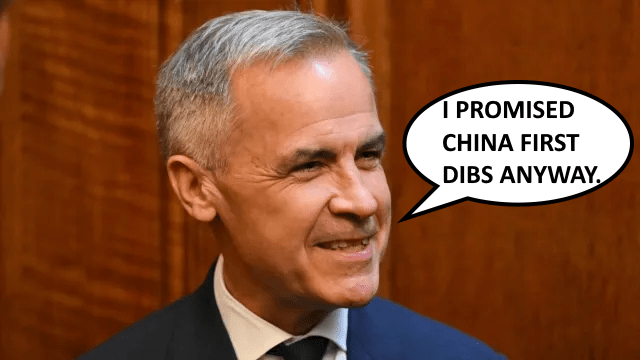
Canadian Prime Minister Mark Carney is inching closer to a possible decision to end Canada’s F-35 procurement plans and accept an offer from Sweden’s Saab, instead, with news this week revealing that the Swedish manufacturer is now providing Ottawa with detailed, technical information on what a JAS 39 Gripen fighter deal would actually look like in practice.
Among the topics currently being discussed in Ottawa are timelines for technology transfers, the speed at which a Canadian production line could be established, and how Canada could participate in future export sales of the aircraft. 

Share

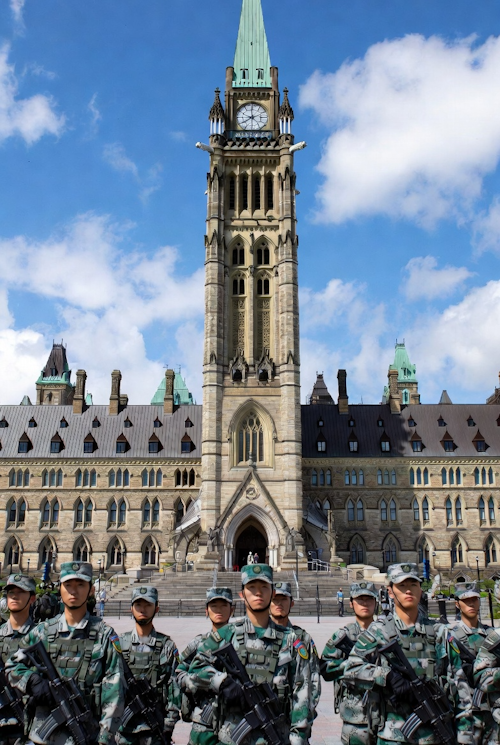
Terry Glavin: Carney-China deal full of Trojan Horses on police and propaganda

“Trojan horses.”

That’s shaping up to be the most useful way of describing several mostly overlooked elements of the “strategic partnership” Prime Minister Mark Carney entered into with Chinese Supreme Leader Xi Jinping in Beijing last month. It wasn’t all about canola and cars.

China and Carney will be the death of Canada.

Share

Human Trafficking Alert: Carney turns low-wage LMIA processing back on in 8 regions for his corporate welfare pals

Service Canada will again accept and process low‑wage LMIA applications in Vancouver, Winnipeg, Kingston, Halifax, Moncton, Saint John, Fredericton and Montréal for the first quarter of 2026, reported the US-based VisaHQ.

Share

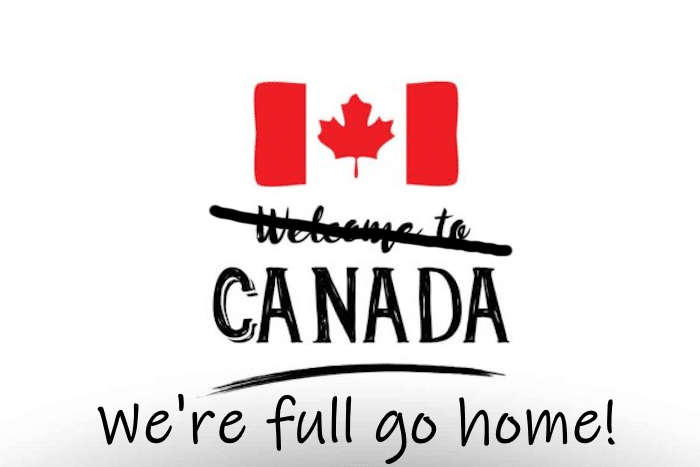
OLDCORN: Immigration is out of control and Canadians know it

Canadians are not “turning on newcomers.” Canadians are turning on a system that has stopped making sense.

A national survey released on January 29 by Research Co. found only 34% of Canadians now say immigration is having a mostly positive effect on the country.

Nearly half, 48%, say the impact is mostly negative. That’s not a minor tremor. It’s a hard swing in public mood, and it has been moving fast.

Share

Tory MP Questions New Police Cooperation Agreement With China Despite Beijing’s Hostile Actions

Conservative MP and democratic reform critic Michael Cooper is raising concerns about Ottawa’s new agreement with Beijing on cooperation between law enforcement agencies, saying China poses a security threat to Canada.

Cooper asked Public Safety Minister Gary Anandasangaree, as he was testifying before the House of Commons Procedure and House Affairs committee on Feb. 5, whether China is a rule of law state and whether it has an independent judiciary.

“I’m not here as a foreign policy expert, nor an expert on China,” Anandasangaree responded.

Share

Lorne Gunter: Expect polls to determine when Liberals force early election

If you want to know whether Canada is headed for a spring election (or a fall election, or any other time election) there is just one number to look at: seat projections.

The Liberal Party of Canada has not become the most successful political organization in the Western world for the last century because it cares about policy, economics, the environment, national defence or federal debt.

Share

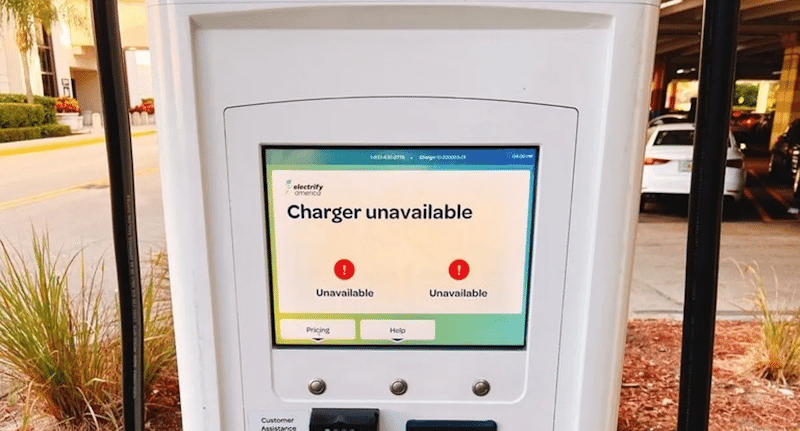
GOLDSTEIN: Just admit it, Canada, the EV market has crashed

EV’s repurposed as canola field burners

For heaven’s sake, can we just admit the painfully obvious point that Canada’s federal and provincial governments committed a massive strategic blunder when they went whole hog into subsidizing the production and sale of EV vehicles and batteries?

Share

Niall Ferguson: Trump Was Inevitable (and Necessary), Mark Carney Was an Accident

Carney Fades Away

Niall Ferguson is a British Historian affiliated with Harvard University and the Hoover Institution at Stanford. He’s the author of a whole bunch of books about western civilization but also writes a column for the Free Press. He’s a fan of Ronald Reagan and Margaret Thatcher and has been a recent supporter of the UK conservative party.

Today I came across this video of a discussion he had last December in Vancouver. This was part of a series called the Macdonald-Laurier Institute’s Voices That Inspire. The snippet I saw starts came only about 7-8 minutes into the discussion. It was literally the second question and Ferguson complained that the interviewer was setting him up for failure by asking him to say something positive about Donald Trump in front of a Canadian audience.


Full video

Share

Will Canada’s new auto strategy put as many EVs on the road as Carney says?

Despite widespread approval from provinces and auto manufacturers, Prime Minister Mark Carney’s auto plan might not accelerate the transition to electric vehicles as fast as he says.

On Thursday, Carney ended Canada’s electric vehicle mandate, resumed purchase incentives and said higher standards for fuel efficiency were coming. Ontario and Alberta’s premiers said they were both “pleased” and car manufacturers said the move provided “welcome policy stability.”

Share