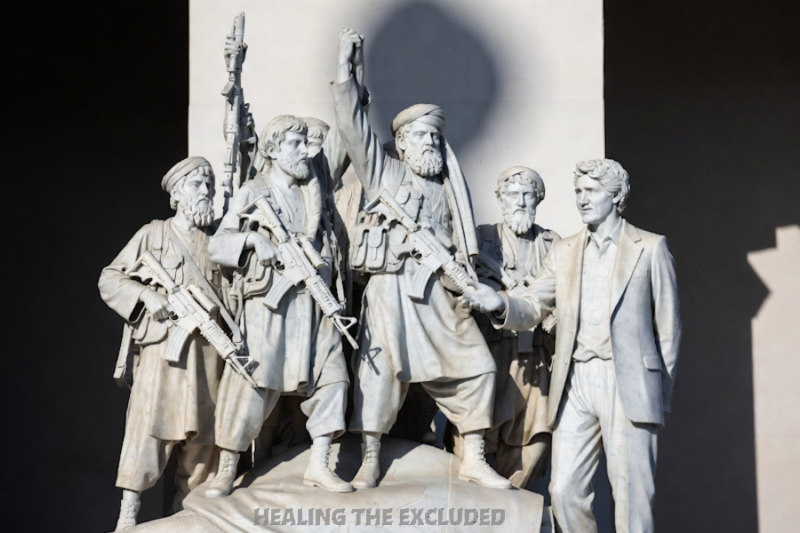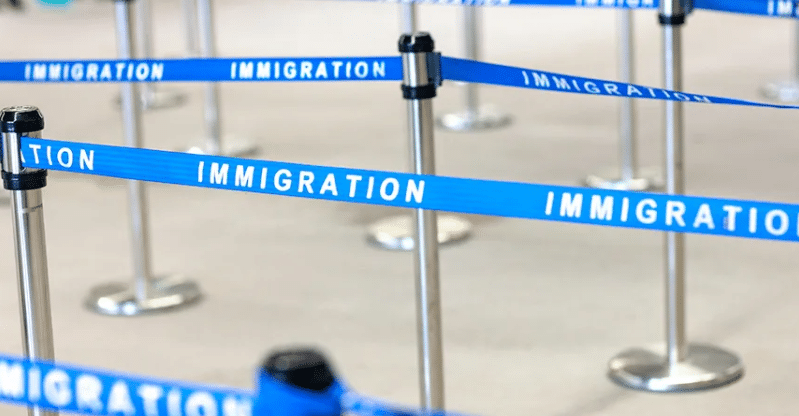
Toronto’s Dundas square is too ghetto 🤦♂️😂 pic.twitter.com/iSP2olW2aH
— RTN (@RTNToronto) April 12, 2026
Toronto’s Dundas square is too ghetto 🤦♂️😂 pic.twitter.com/iSP2olW2aH
— RTN (@RTNToronto) April 12, 2026
AAAAHAHAHAHAHAHAHAHAHAHAHA! 😆 @fancypants_s https://t.co/xZtkL4rrlg
— Auntie Polly (@auntie_polly) April 12, 2026
With the future of free trade between Canada and the United States unclear at best, a look to the past could provide hints at where critical exports of energy fit into a deal in the future.
Previous versions of the free trade agreements between the two countries used to include a section called “energy proportionality,” which restricted Canada from reducing the percentage of its total oil, gas or similar exports to the United States — even in the event of an emergency.
The Trans Superiority Narrative—TSN–is collapsing. We can shortly expect another Democrat favored victim group to surpass trans on the oppression hierarchy.
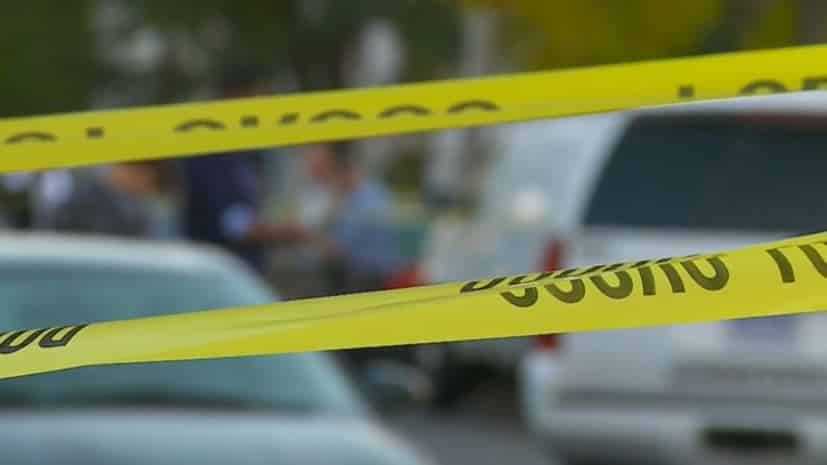
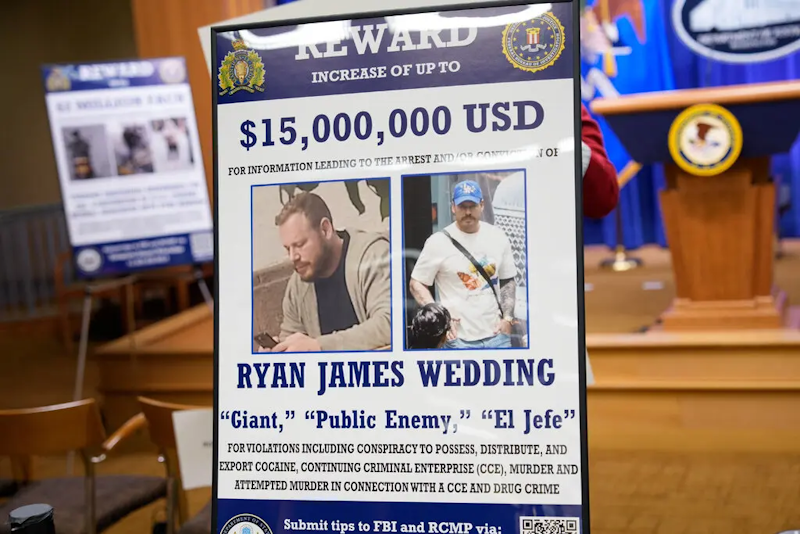
At 1 a.m. on March 25, a gunman approached the gate surrounding the Woodbridge, Ont., mansion of Paul Borrelli – an executive at Green Infrastructure Partners Inc. (GIP), the sister construction company to Canadian waste giant GFL Environmental Inc. – and sprayed the front of the property with bullets.
A few days earlier, a similar scene played out in midtown Toronto, when around 2 a.m. a gunman opened fire on the home of Mr. Borrelli’s GIP colleague Sean Goldberg, the son of investment banker Barry Goldberg, who helped finance GFL in its early days.
At a military parade in Beijing in September, President Xi Jinping and his special guests, President Vladimir V. Putin of Russia and the North Korean leader, Kim Jong-un, watched as Chinese forces showed off several models of drones that could autonomously fly alongside fighter jets into battle.
The demonstration of technological might immediately set off alarm bells in the United States. Pentagon officials concluded that America’s program for unmanned combat drones was lagging China’s, according to three U.S. defense and intelligence officials. Russia, too, was thought to be ahead in building facilities that could produce advanced drones, said the officials, who were not authorized to speak publicly on military capabilities.
On Thursday, federal Conservative leader Pierre Poilievre called on the Liberal government to take action to protect private property rights in B.C. and across Canada. He was absolutely right to do so.
Poilievre explained that Canadians need the federal government, to “make it clear that the federal government’s position is that fee-simple property takes priority over all of the other claims.”
On Saturday morning I visited Dublin, as fuel protests across Ireland entered their fifth day. In response to alarming price rises caused by the conflict in the Middle East, farmers and haulers have blockaded the oil refinery at Whitegate in east Cork, as well as fuel depots in Limerick and Galway. Traffic is near standstill on many of the country’s motorways, and 600 petrol stations are dry. Taoiseach Micheál Martin has told RTÉ that “because of these blockades, we are now on the precipice of turning oil away from the country.”
It's not just about fuel prices in Ireland.
You wouldn't see it get this bad if people there were not tired of the free subsidies given to immigrants while everyone else has to pay for it and watch their kids be stabbed.
It's all coming to a head.pic.twitter.com/pkGsuzeAF0
— Grummz (@Grummz) April 11, 2026
🚨BREAKING🚨 – Galway
“You’re meant to protect the people, not beat them”
Riot gardai (police) are now beating peaceful fuel protesters off the protest at Galway Harbour. This is treason!
Follow us and share, more videos to come. pic.twitter.com/U1X9XExDXp
— TheLiberal.ie (@TheLiberal_ie) April 12, 2026
Canada recently said goodbye to Burdett Sisler, a man from Fort Erie, Ont., who was said to be Canada’s oldest living person. Two weeks shy of his 111th birthday when he died on April 2, he was also our oldest surviving veteran of the Second World War.
Sisler never went abroad to fight, but served in Canada as an army telecommunications mechanic, deploying radar technology to shoot down German bombers. Radar, a new technology back then, was crucial to the war effort and top secret at the time.
Museum accused of ‘rewriting history’ after telling visitors Victorian boys in dresses were ‘gender fluid’
A museum has been accused of ‘rewriting history’ after it told visitors that boys in the Victorian era who wore dresses could be gender fluid.
The Bowes Museum in Barnard Castle, County Durham, claimed ‘gender fluidity is not a recent development’ because some boys aged between four and seven wore dresses in the 19th century.
Despite admitting the outfits were worn for ‘practical reasons’, the museum compared the fashion trend, known as breeching, to a modern version of gender nonconformity.
Masood Masjoody’s warnings over the years seemed unsettling, even sometimes outlandish: He was not safe in Vancouver. His university was protecting agents of Iran’s regime. His fellow Iranian activists wanted him dead.
After he was fired from a job teaching math at a university in British Columbia, Mr. Masjoody, 45, became preoccupied with Iranian pro-monarchy activists. He alleged they were plotting his demise because he had begun to oppose the group’s advocacy around restoring a shah, or “king” in Farsi, in their homeland.
A former migrant from Burkina Faso, now a German citizen, has inadvertently laid bare the mechanisms of power and contempt for free speech operating in Germany today.
Until last week, only very few in Germany—outside of Munich—would have heard of Hamado Dipama. This changed after it emerged that he had filed a complaint against the popular online news portal Apollo News for defamation and libel. Apollo has since reported that one of its journalists is facing criminal investigation as a result.
Canada’s economy is on the rocks.
The ongoing tariff war has wracked the manufacturing sector, while Canada’s soft embargo on expanding the ability to export oil and gas products prevents the energy sector from filling the economic void. Subsidies for everything from battery plants to edible cricket farms have produced nothing more than a list of business failures, while the national debt explodes.
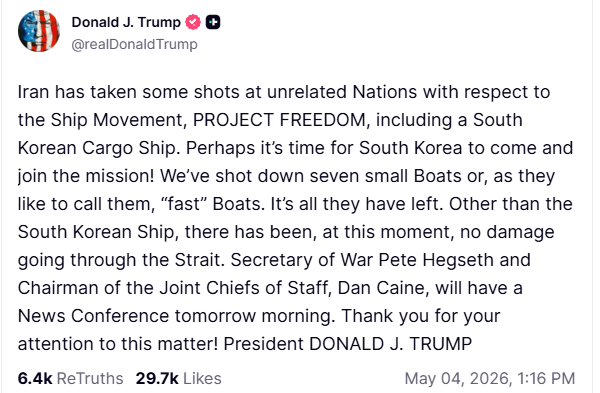
What now after the collapse in peace talks between America and Iran in Pakistan? The gap between the two sides on the two critical issues – Iran’s nuclear programme and the Strait of Hormuz – proved too big in the end. Is it back to war? What does the failure to reach a deal mean for the fragile, two-week ceasefire the two sides agreed? Whose fault is it that the discussions, which lasted for a marathon 21 hours, broke down? So far, there is little in the way of concrete facts about what exactly happened in Islamabad but the blame game is already under way.
At a moment of celebration and on the eve of potentially even greater triumph, Prime Minister Mark Carney offered a brief note of caution.
“Just over a year ago, in the midst of a blizzard … we started down the road to make the best country in the world even better,” he recalled, speaking perhaps both literally and metaphorically.
But, he warned Liberals gathered in Montreal for the party’s biennial convention, they “should be under no illusions” because “the path we’ve chosen is hard.”