In recent weeks, I’ve found myself wrestling with an all-too-familiar irritation: taxes. Not the paying of them — which is a civic duty — but the monstrous, ever-expanding burden of them. We Canadians have long accepted that our governments dip deeply into our pockets because, we told ourselves, the returns were worth it. Roads. Healthcare. Security. Civilization itself.
Prime Minister Mark Carney showed no signs of retaliating against U.S. President Donald Trump’s increased tariffs — and even suggested he’s open to removing existing tariffs if it would help Canadian industries.
Carney faced questions Tuesday about Canada’s next steps after the two countries failed to reach a trade deal by the Aug. 1 deadline, resulting in a 35 per cent import tax on some Canadian goods. The rate applies to goods not covered by the Canada-U.S.-Mexico Agreement, which governs trade between the three countries.
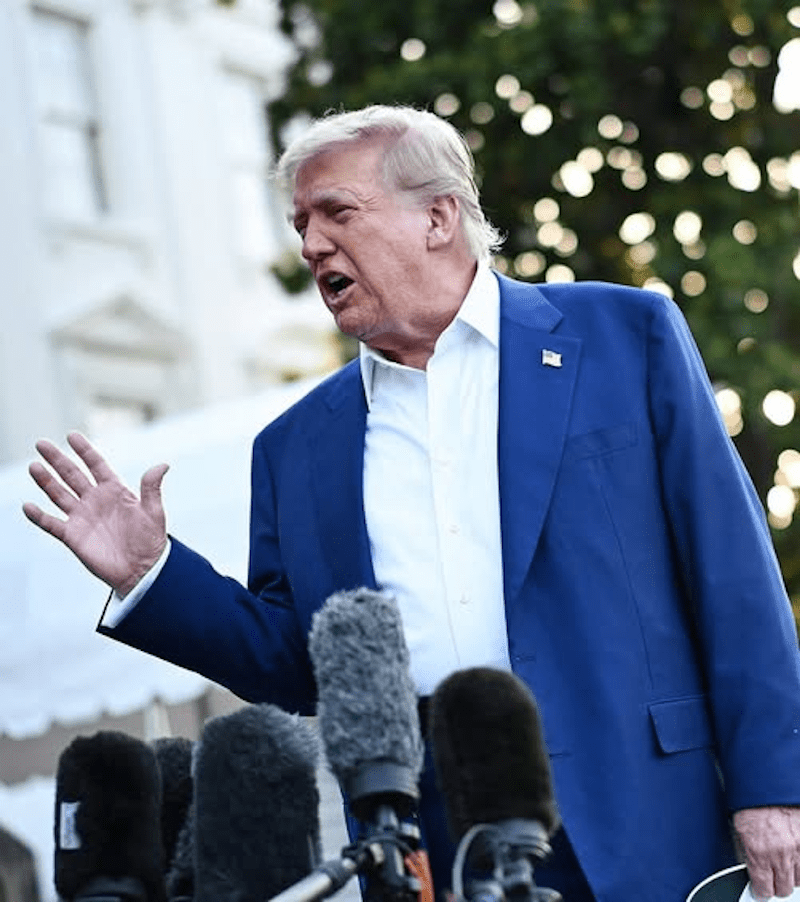
President Donald Trump is set to issue an executive order that would pressure banks not to discriminate against conservatives and crypto companies.
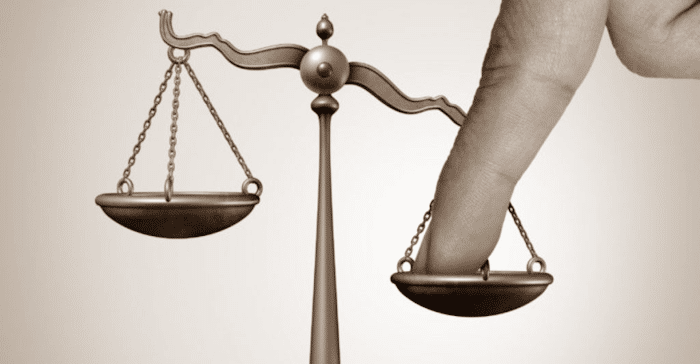
The Wall Street Journalreported the Trump administration is preparing an executive order that would direct bank regulators to investigate if financial institutions have violated the Equal Credit Opportunity Act, antitrust laws, or consumer financial protection laws. Institutions that may have violated those laws could be subject to monetary penalties or consent decrees.
Trump talks about how JPMorganChase and Bank of America discriminated against him:
“I believe they [Biden admin] told the banking regulators, 'Do everything you can to destroy Trump, ' and that's what they did. And guess what? I'm President. How did that happen?”
Recently, the village of Russell held its semi-annual “Meet me on Main Street” event (it alternates years with nearby Embrun). This gathering has become popular of late in small communities in eastern Ontario, where local vendors and groups set up tables and engage with their neighbours.
This year’s edition was a huge success, with hundreds of residents milling along the main drag, Concession Street. The hot, muggy weather was no deterrent, although I must confess the presence of two craft breweries helped.
JUST IN: The National Park Service announced it will restore and reinstall the bronze statue of Albert Pike, which was TORN DOWN and vandalized during the 2020 BLM riots
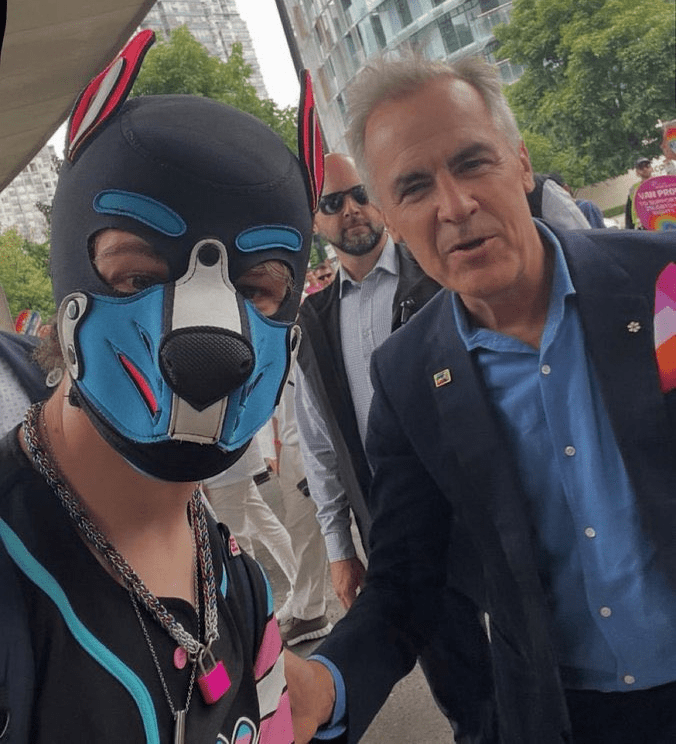
Mark Carney and his side piece. His “legal” wife should be worried.
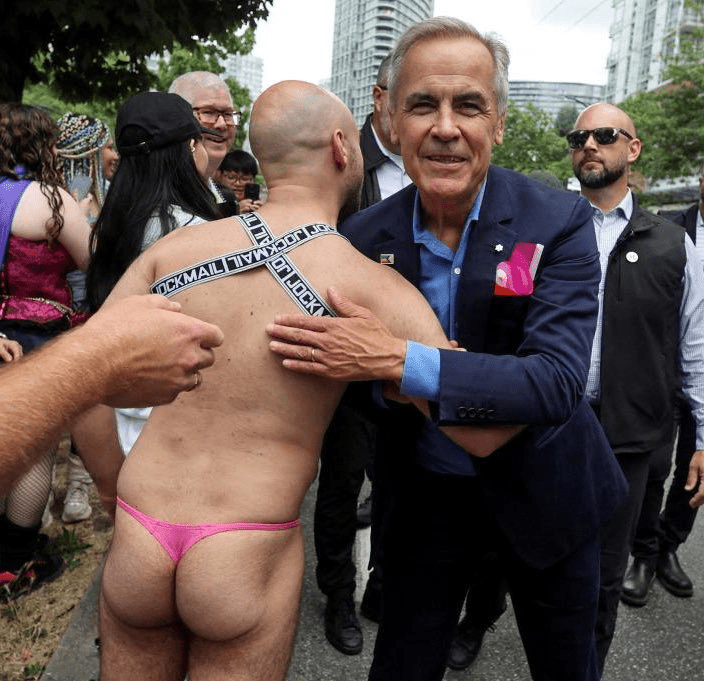
Prime Minister Mark Carney surprised revellers at Vancouver’s Pride Parade over the weekend.
While his attendance wasn’t announced, Carney was in the city to meet with Vancouver Fraser Port Authority president and CEO Peter Xotta and DP World Canada chief operating officer Joel Werner in the morning for a photo op after visiting the port facility.
Canada needs public displays of perversion legitimized by Prime Minister Carney
I remember going into the bathroom and giving my friend lipgloss. Now girls go into the bathroom and apply testosterone to each other. pic.twitter.com/QwUvVtfYcK
I’ve had a busy couple of weeks, tracking the recent anti-asylum hotel protests across the country, from Epping to Canary Wharf, from Norwich all the way down to the south coast in Waterlooville, I’ve been right in the thick of the story that is gripping the country.
Last year, I was in the middle of another news story too, when I covered the outbreak of the violence at Southport that then spread out into what, quite frankly, ended up being race riots. I remember being only a few yards away from police vans loudly beeping out their last breath as they burnt down to the ground, while young lads on the opposite side of me threw bricks and other missiles directly at a mosque, and proceeded to smash up a local corner shop. Later on I was subject to violence from the crowd myself.
NEW: Women and children marched today to the Britannia Hotel to oppose it
Kelly Woods can’t stand Superman’s canine sidekick, Krypto. The 58-year-old retired truck driver grew up watching the Superman cartoons in the 1970s.
“When Krypto first came into the cartoons, it ruined it for me,” said Woods. He felt the creators were trying too hard to add unnecessary characters.
His 26-year-old daughter, Jackie, brought Woods along to see the new “Superman” movie a few weeks ago. She figured the unruly dog would make only a couple of appearances, maybe toward the end.
But within the first few minutes, Krypto was zooming through a snowy plain.
The use of CGI is awkwardly reminiscent of the backlash “Talkies” faced when their arrival ended the Silent era.
In the winter of 1975, I went to work on a kibbutz.
I was 17 years old. The work in the fish ponds was not glamorous: I stood for hours in a large, stinky pool of muddy water hauling spiny St. Peter’s fish out into a tank for export. But the trip was an ideological inspiration. Here was Jewish community. Here were whole neighbourhoods celebrating my holidays. The communal kibbutz lifestyle united in the building of something new, something hopeful.
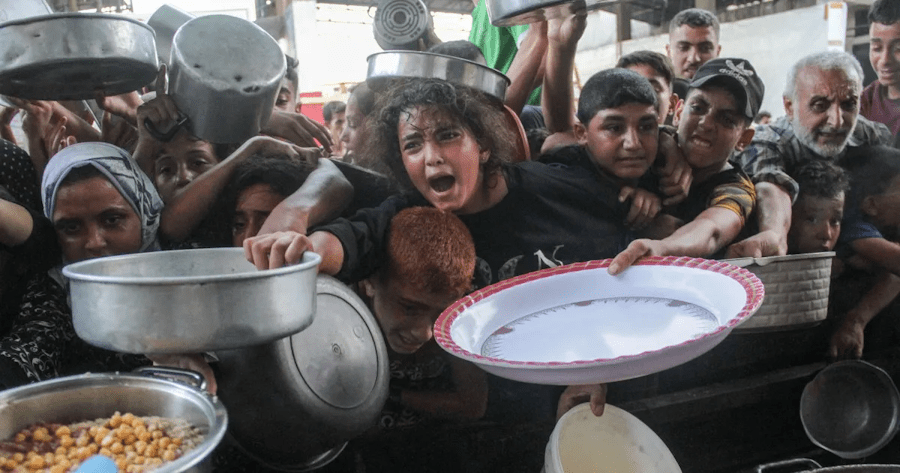
The author writes of counting the vertebrae of starving Gazan children.
No doubt children suffer but I have grave doubts about the alleged food shortages that come from a people who celebrate rape, murder and the ‘martyrdom’ of their own children.
Too many young people today celebrate the idea of making a difference—at any cost.
As I know from experience as a witness, few murder trials these days proceed without video clips of the accused shortly before or after the crime—a sign, perhaps, of how much of modern life now unfolds within the view of one camera or another. Still, it remains comparatively rare for a murder itself to be caught on film, as was the case with Brian Thompson, the late chief executive of UnitedHealth—gunned down on the streets of Manhattan on the morning of December 4, 2024.
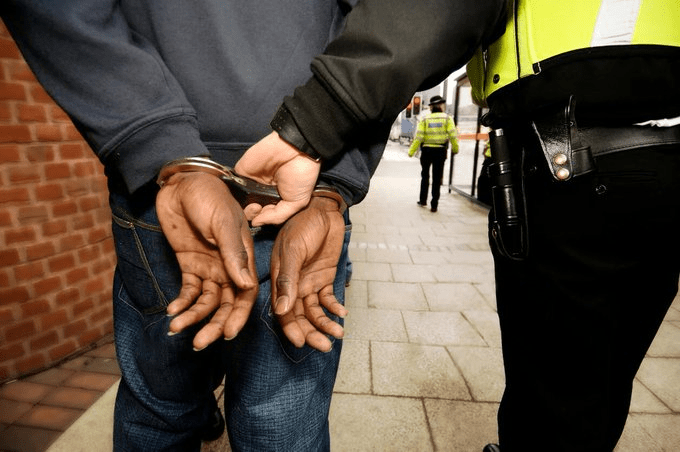
In Canada in 2025, there seems to be more important things at play than police finding a loaded gun, drugs and a suspect known to them allegedly asleep at the wheel outside a building known for human and narcotics trafficking.
Despite red flags in this matter, police have been reminded of this reality once again.
Memorial to Korean slave labourers killed in Hiroshima
At 08:15 on August 6, 1945, as a nuclear bomb was falling like a stone through the skies over Hiroshima, Lee Jung-soon was on her way to elementary school.
The now-88-year-old waves her hands as if trying to push the memory away.
“My father was about to leave for work, but he suddenly came running back and told us to evacuate immediately,” she recalls. “They say the streets were filled with the dead – but I was so shocked all I remember is crying. I just cried and cried.”
Victims’ bodies “melted away so only their eyes were visible”, Ms Lee says, as a blast equivalent to 15,000 tons of TNT enveloped a city of 420,000 people. What remained in the aftermath were corpses too mangled to be identified.
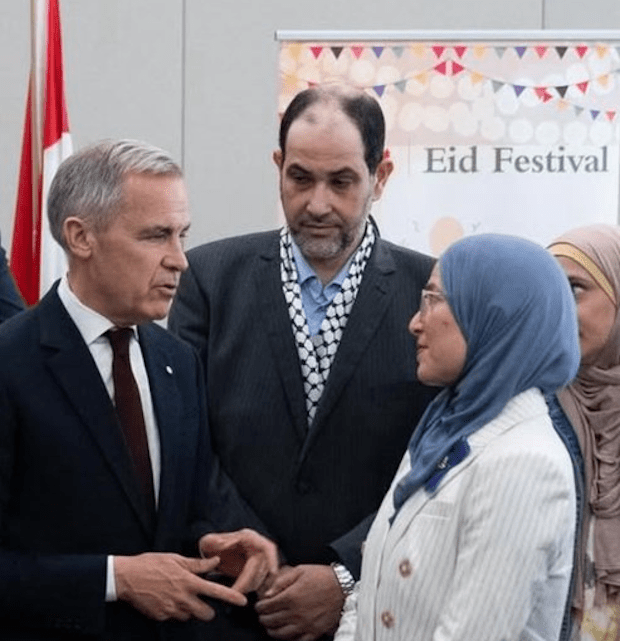
Carney and Islamophobia Tsar – gets assurance daughter won’t be tossed off roof.
Why did Mark Carney choose this moment to recognize Palestine as a state?
The announcement by Prime Minister Mark Carney Wednesday to recognize Palestine as a state took many Canadians by surprise. Up until recently, Canada and other western states seemed committed to the view that the recognition of Palestine would come at the end of a lengthy peace negotiation between Israel and the Palestinian Authority. Two states for two peoples has been a central pillar of Canadian and other western countries’ Middle East policies for decades. Indeed, that is precisely what was envisioned at the time the United Nations voted Israel into existence in 1947. Unfortunately, Israel’s Arab neighbours rejected partition, attacked Israel and the rest is some very complicated, bloody history.
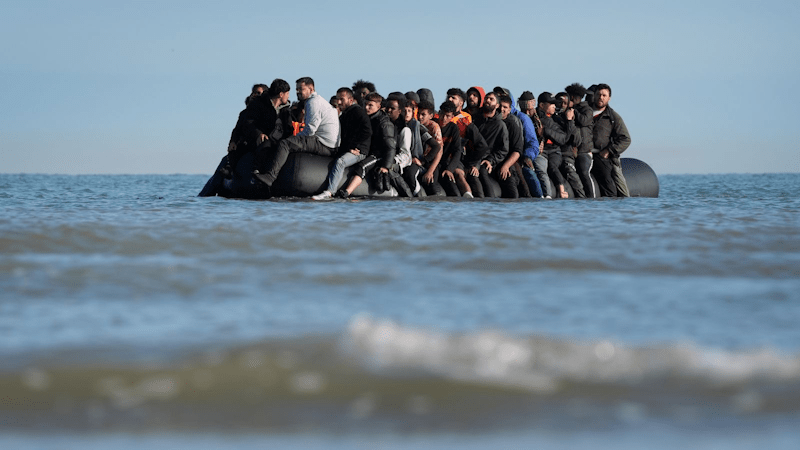
A BBC investigation has exposed the French and UK operations of a powerful and violent smuggling gang taking people across the English Channel in small boats.
A reporter, posing as a migrant wanting to cross, helped us gain unprecedented access to the smugglers’ notorious forest hideout in northern France – an area plagued by armed battles between rival gangs.
Secret filming at a major UK railway station also captured associates of the gang collecting cash payments to secure migrant places on illegal Channel crossings.