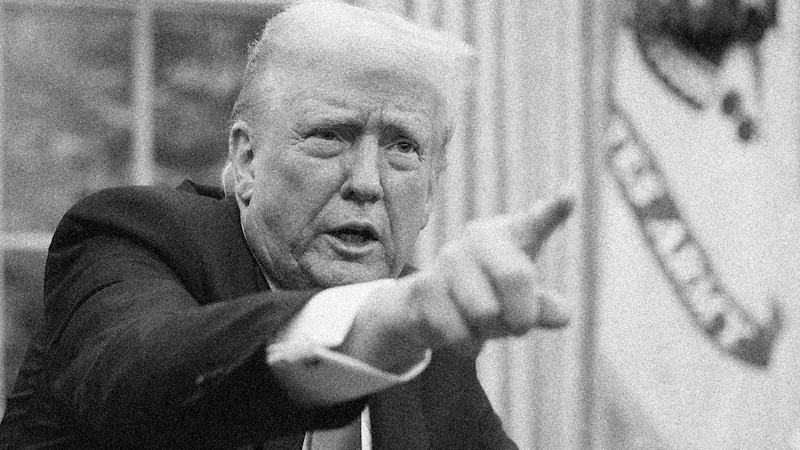

Katie Hopkins gives Mark Carney a proper introduction at the EU Parliament. pic.twitter.com/3nJUb6dWl0
— RPN Entertainment (@rpnenter) September 21, 2026
h/t Mauser
Katie Hopkins gives Mark Carney a proper introduction at the EU Parliament. pic.twitter.com/3nJUb6dWl0
— RPN Entertainment (@rpnenter) September 21, 2026
h/t Mauser
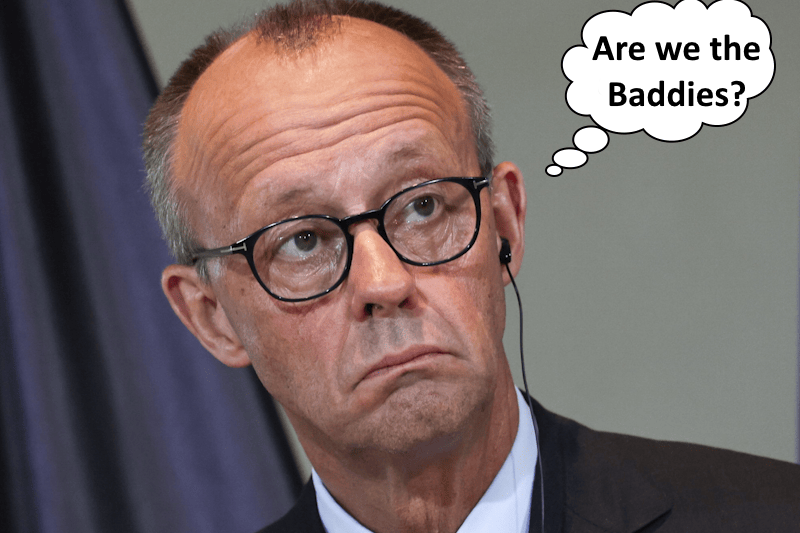
Spooked by Russia’s invasion of Ukraine, the German military drafted a 1,000-page blueprint in 2024 to set out how to respond to another Russian attack in Eastern Europe. Senior leaders in Germany’s 16 states are among the few government officials allowed access to the classified document, known informally as an “Oplan.”
Now, Germany’s federal government, under Chancellor Friedrich Merz, is preparing to restrict that access, in order to prevent a far-right, Moscow-friendly party — which won a recent election in the small eastern state of Saxony-Anhalt — from reviewing the plan.
Prime Minister Mark Carney says his government will move ahead this fall with legislation imposing new rules on social media platforms, including restrictions aimed at children and requirements dealing with content deemed harmful.
Blacklock’s Reporter says Carney confirmed the government’s plans for Bill C-34 as Liberal MPs gathered ahead of Parliament’s return following a 13-week summer recess.

As Putin’s sham elections play out and he predictably claims near-total endorsement from the Russian population, the picture inside Russia is becoming harder to conceal. Hundreds of drones reaching Moscow, the most heavily protected city in Russia, this weekend. These strikes are a visible reminder that Russia is far more vulnerable than the Kremlin would have its people believe.
On the battlefield, Ukraine is also demonstrating renewed momentum, including around Lyman and through the re-employment of tanks and armoured manoeuvre. Yet, at precisely the moment when Ukraine needs sustained political and military backing, its two principal Western supporters appear determined to make its position more difficult through geopolitical naivety, hesitation and prevarication.
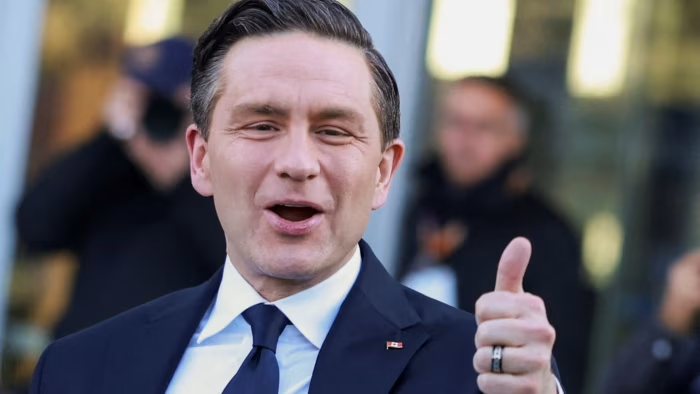
Phil McColeman stopped as he walked out of Pierre Poilievre’s rally on Sunday and said, “No, no, no.” The former Conservative MP was expressing his displeasure at Poilievre appointing a candidate to run in the next election.
They don’t appear to be in any danger of winning an election so let em roll the dice.
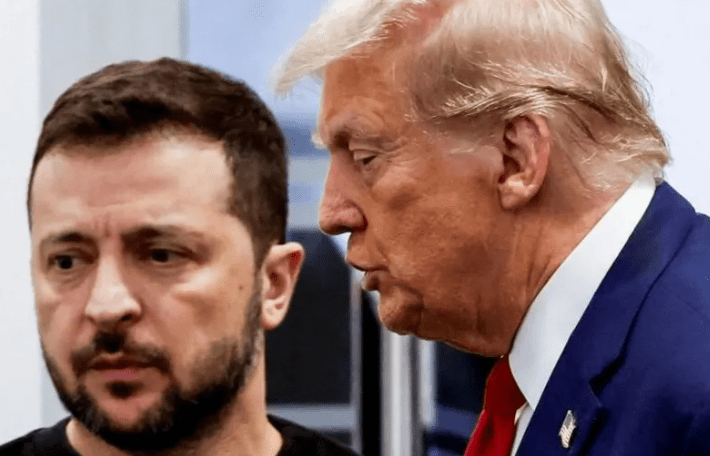
Donald Trump is expected to confront Volodymyr Zelensky over strikes on Russian oil refineries in New York on Tuesday.
The US president reportedly warned the Ukrainian leader on Sunday that the attacks were exacerbating a global diesel shortage and causing prices to surge.
Diesel prices, which on Monday hit $6.51 (£4.80) a gallon, up 76 per cent from a year ago, have spiked dramatically since the US and Israel began bombing Iran on Feb 28
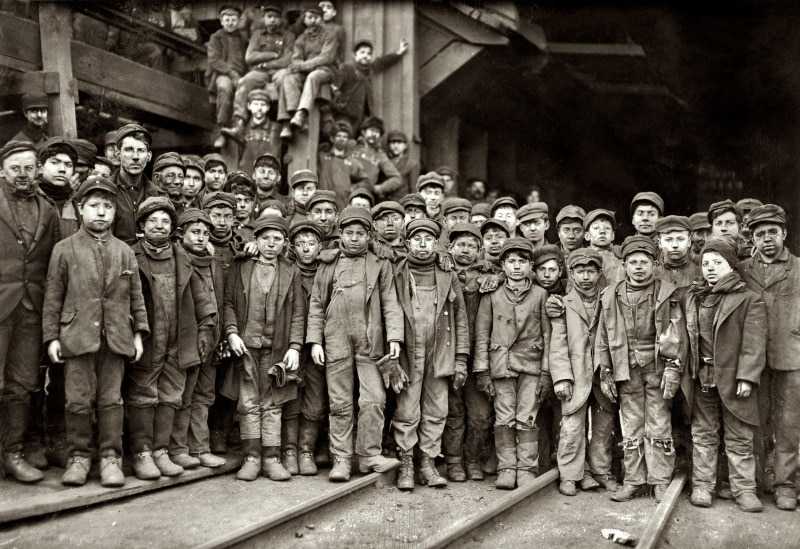
The federal government introduced sweeping legislative changes on Monday aimed at reducing labour disruptions in federally regulated sectors and speeding up project approvals.
The changes to federal review rules represent a partial dismantling of policies introduced under former Liberal prime minister Justin Trudeau that have been sharply criticized by the energy sector and the Alberta and Saskatchewan governments.
Bill C-39, the Building Canada Strong Act, was introduced in the House of Commons Monday afternoon by Government House Leader Steven MacKinnon.
Big Projects = Big TFW influx.

Anti-migrant campaigner ‘Danny Tommo’ has accused Left-wing activists of sabotaging a boat he bought to help police the English Channel after it sank.
Daniel Thomas is founder of the Patriot Platform, a group of protesters he describes as ‘working-class men who are bricklayers, roofers and carpenters who build the house you live in, the roads you drive on’.
They were involved this month in recent anti-migrant disturbances in Dover in Kent and his home town of Portsmouth, where the city’s RNLI station was forced to close as a result.

The current director of the Canadian Museum for Human Rights (CMHR), Isha Khan, told its board that it is not her “boss.” The Globe and Mail reported this in August, in its article on the controversy over the museum’s “Nakba” exhibit, drawing on interviews with five board members.
The law is clear. And it is contrary to what Ms. Khan told the board about who is in charge.
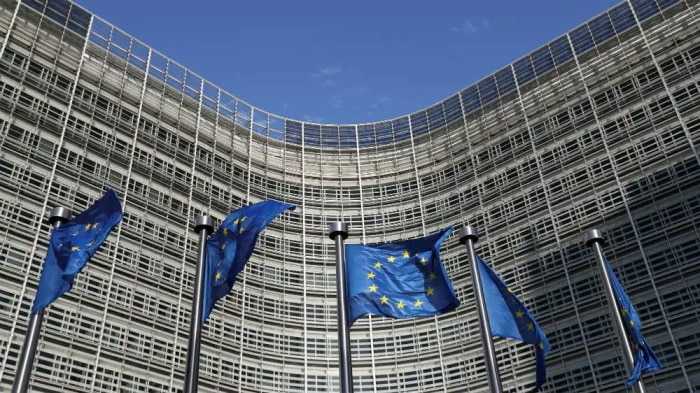
What does it tell us about what Prime Minister Mark Carney really wants, that a yet-to-be-defined associate relationship with Europe is something to which we should aspire, but any suggestion of a comparable relationship with the US would be anathema if not faintly treasonous?
The short answer is that for Mr. Carney the political meaning of the two options is not the same. In the absence of full details, being an “Associate” to the European Union sounds like statesmanship. (Once details are provided, it may not.)
Crew members film the moment the Panama-flagged bulk carrier First Margaux collides with the Chinese fishing vessel Luqing Yuanyu 108 near Singapore today. pic.twitter.com/RnKfZdSOCq
— Massimo (@Rainmaker1973) September 20, 2026
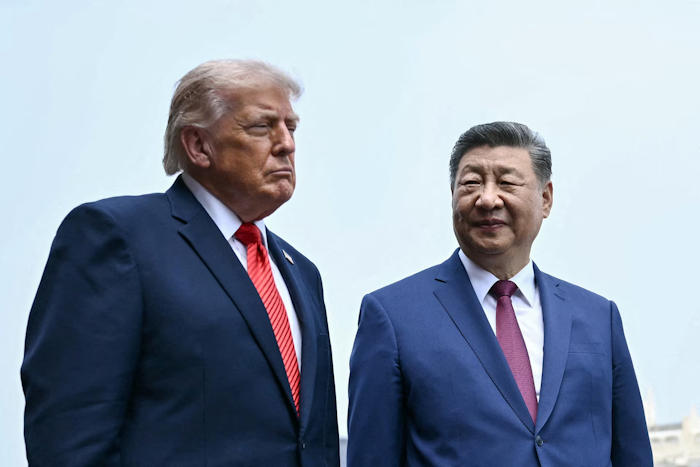
Amid growing concerns about artificial intelligence, some in the United States are urging the Trump administration to cooperate with China on AI safety for humanity’s benefit.
In a recent interview, OpenAI CEO Sam Altman stated that Trump and Xi would deserve the Nobel Peace Prize if they agreed that “no one should be taking a certain level of risk with the development process of this [AI].”

Consider these recent news headlines: (1) “NYC Turns Back to Gas Buses After Finding Out the Hard Way That the Electric Versions Have Big Problems,” (2) “As a Former Head of MI6 it’s Clear That Britain’s Climate Policy is Leaving Us Dangerously Exposed to Our Enemies,” and (3) “Spain: 74% of sex-crime suspects are foreigners in Basque Country.”
They come from three different Western nations and involve three dissimilar subjects — public transportation, national security, and violent crime — yet each news story exposes the real-world consequences of government failure …