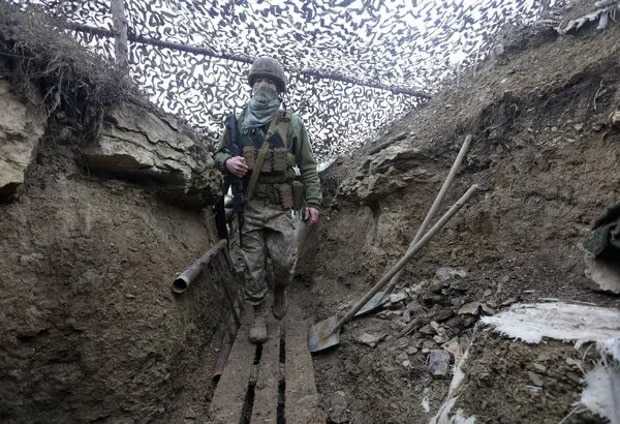
Canada’s perennial status as a NATO freeloader is getting awkward

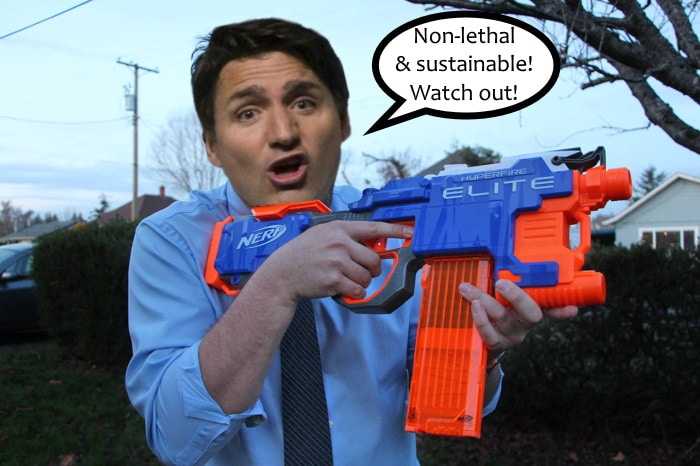
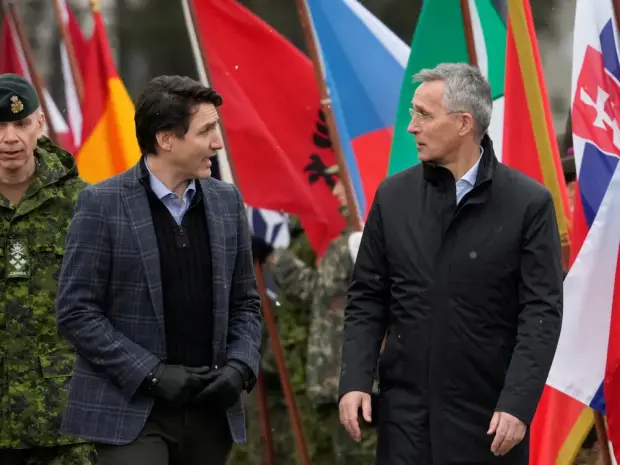
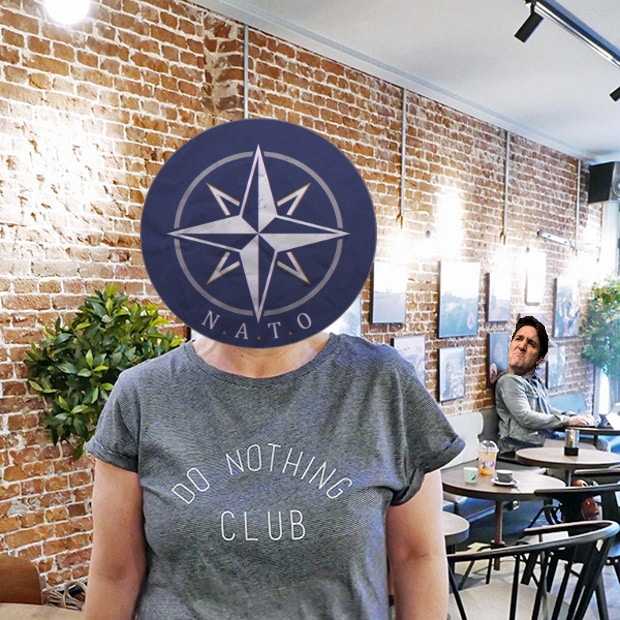
On Tuesday, Prime Minister Justin Trudeau continued his tour of Europe to “work closely with allies to strengthen NATO.” But even as Canada places 500 troops in Latvia and pledges CF-18s for Romania, there is an elephant in the room whenever Trudeau talks to NATO members about collective security: He happens to represent a country that has spent more than a generation phoning in its NATO commitments.

Share

Russia Should Worry: The US Military Has Activated Its Strategic Materiel Stockpile

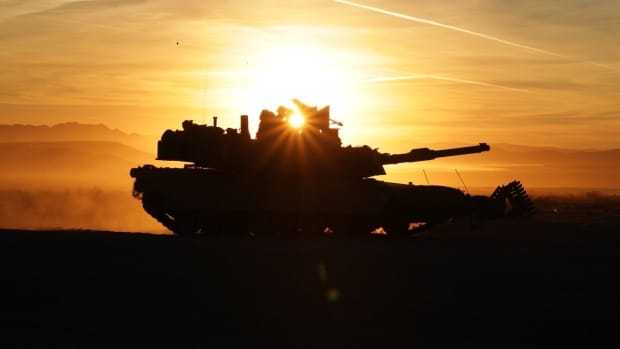
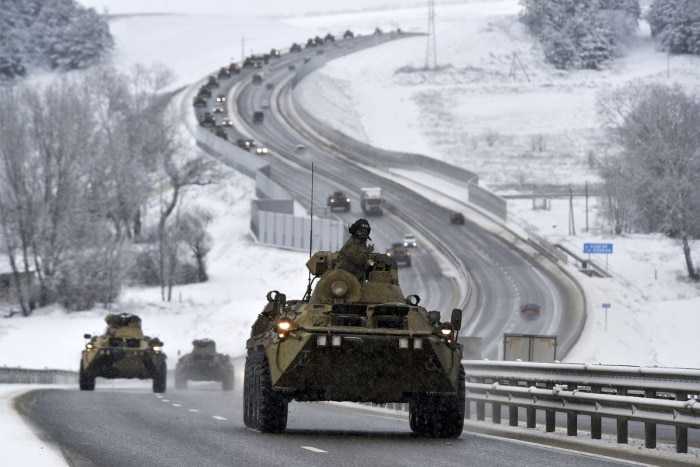
For the past weeks, the 405th Army Field Support Brigade has been preparing for the incoming troops by activating the Army Prepositioned Stock-2 sites, which are capable of outfitting an entire armored brigade combat team.

The strategic reserves at the Army Prepositioned Stock-2 sites include hundreds of M1 Abrams tanks, M2 Bradley Fighting Vehicles, Joint Light Tactical Vehicles, Paladin M109A6 self-propelled howitzers, supply trucks, and other vehicles.

Share

Blinken: NATO Countries Have ‘Green Light’ to Send Fighter Jets to Ukraine

Secretary of State Antony Blinken said Sunday on CBS’s “Face The Nation” that the United States has given the “green light” to NATO countries who have wanted to provide fighter jets to Ukraine.

Russia has warned countries offering airfields to Ukraine would be entering the ongoing conflict.

The very entity that Putin is fighting against. It’s WW3, intentionally.

Share

Germany’s army: Will €100 billion make it strong?

At first, only two black dots are visible in the bright blue sky above the Eifel region in the far west of Germany. Then, the dots turn into the shapes of two F-35 fighter jets, the roar of their engines quickly growing louder. The jets are coming from the east, where they have been flying patrols over Poland near the Ukrainian border and are now heading back toward the US Air Force Base Spangdahlem.

That’s where US troops have deployed 12 of the aircraft to monitor NATO airspace over Eastern Europe in the face of Russian aggression.

Share

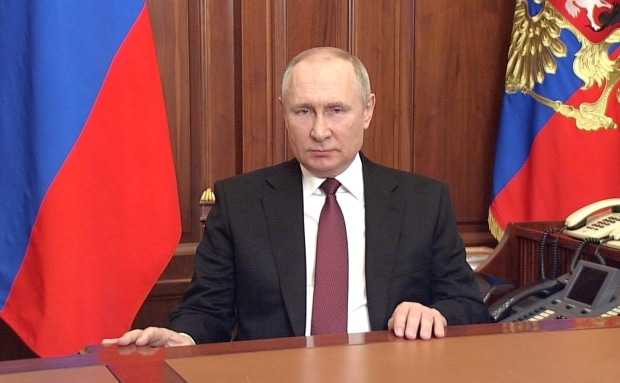
Address by the President of the Russian Federation

I will begin with what I said in my address on February 21, 2022. I spoke about our biggest concerns and worries, and about the fundamental threats which irresponsible Western politicians created for Russia consistently, rudely and unceremoniously from year to year. I am referring to the eastward expansion of NATO, which is moving its military infrastructure ever closer to the Russian border.

Share

What’s NATO’s article 4 and why are people talking about it?

Article 4 of the NATO treaty covers the case when a member state feels threatened by another country or a terrorist organization. The 30 member states would then start formal consultations at the request of the threatened member. The talks, would look at whether a threat exists and how to counter it, with decisions arrived at unanimously. Article 4 does not, however, mean there would be direct pressure to act.

This consultation mechanism has been triggered several times in NATO’s history. For instance, by Turkey one year ago, when Turkish soldiers were killed in an attack from Syria. At that time, NATO decided to consult, but did not take any action.

Poor Ukraine

Share

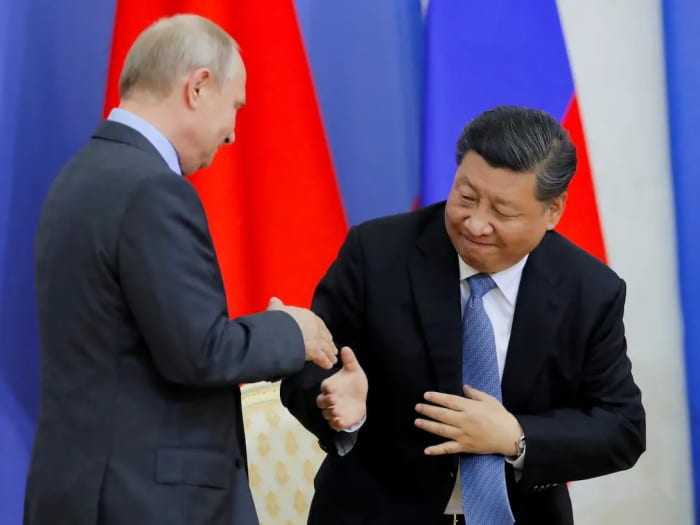
Xi and Putin urge NATO to rule out expansion as Ukraine tensions rise

China’s Xi Jinping and Vladimir Putin of Russia have signed a joint statement calling on the west to “abandon the ideologised approaches of the cold war”, as the two leaders showcased their warming relationship amid a tense standoff with the west before the Beijing Winter Olympics.

In the joint statement released by the Kremlin, Putin and Xi called on Nato to rule out expansion in eastern Europe, denounced the formation of security blocs in the Asia Pacific region, and criticised the Aukus trilateral security pact between the US, UK and Australia.

The two leaders met for the 38th time since 2013. The two countries also pledged to step up cooperation to thwart “colour revolutions” and external interference, and vowed to further deepen “back-to-back” strategic coordination.

Share

Europe: the little kid’s table at the Ukraine talks

It’s past time for the continent to step up and take charge of its own defense

While American and Russian officials are yelling at one another in the UN Security Council chamber, another international actor has found itself at the little kid’s table: Europe.

It’s possible the phrase “little kid’s table” is too harsh. To be fair, French President Emmanuel Macron is at least in direct communication with Russian President Vladimir Putin and urging his European colleagues to formulate a joint European negotiating position on the Ukraine question. France is also a chief mediator of the Normandy Format, which seeks to resolve the eight-year conflict in Ukraine’s Donbas region.

Share

The disarray of the West

The Russia-Ukraine crisis has exposed the fraying of the Western alliance.

Representatives of the ‘West’, from the US and NATO to the European powers, all dialled in to Monday’s confab to discuss the Ukraine crisis. US president Joe Biden emerged afterwards determined to put on a united front. ‘I had a very, very, very good meeting’, he said, adding, ‘total unanimity with all the European leaders’.

This is at best wishful thinking. If anything, the Russia-Ukraine confrontation has exposed precisely the absence of unanimity among members of the Western alliance. Each nation and each institution has signally pursued its own divergent objectives, often negotiating and talking to Moscow independently, and, in the process, crossing wires, muddying waters and taking us further away from any realistic solution.

Share

Will America have to go it alone? Biden fears NATO won’t let him deploy troops to protect Ukraine

Joe Biden fears that his plan to deploy as many as 8,500 troops to Eastern Europe might be blocked by NATO countries that do not want to enrage Vladimir Putin.

The U.S. president wants to deploy the US forces to countries neighboring Ukraine as part of a NATO force to deter further aggression by Putin.

But he is concerned that the move might be blocked by member countries that fear hosting the troops and enraging Putin, or by countries such as Germany that rely on Russia for 50 per cent of their gas.

Share

How Russia’s pipeline politics could split the alliance around Ukraine

Germany’s upcoming decision on whether to certify the controversial Russian-owned Nord Stream 2 pipeline is rapidly emerging as a key element in high-stakes diplomatic efforts to dissuade Moscow from invading Ukraine.

Delaying or cancelling the $11 billion project would have a significant impact on the Russian economy, depriving it of $3 billion US in annual revenue.

It also could serve to divide Ukraine’s allies as Russia continues to increase the pressure on the former Soviet bloc state.

Share

New NATO Strategy Contends with ‘Rise of China’ for First Time

The next strategic guidance published by the North Atlantic Treaty Organization (NATO) will aim to contend with expanding Chinese influence abroad. It will be the first time that the alliance makes China a strategic priority. Experts say that firm, principled engagement will be necessary.

The 2022 Strategic Concept will only be the fourth unclassified strategy released by NATO. The last was released in 2010. It is set to be adopted in June of this year at the Madrid Summit.

Canada was left out of AUKUS, likely because under the Liberal Party we are considered a stooge of Communist China. NATO has members whose self-interest will trump treaty obligations, look no further than Germany and Canada declining to send arms to the Ukraine as precedence. Count on Germany and Canada to line up with NATO’s China appeasers.

Share

Germany Shows Lack of Resolve Against Russian Threats

It refuses to provide arms to Ukraine while other NATO members step up to do so.

Fears are rising that Germany is failing to do enough to prevent a Russian invasion and failing to aid Ukraine in the case of an attack amid warnings from the White House that Russian troops could invade at any time.

U.S. officials say there is evidence Russia is planning to overthrow Ukraine’s government and take Kyiv, CNN reported Tuesday. Russia is also deploying troops into Belarus — a development that U.S. Ambassador to the United Nations Linda Thomas-Greenfield said Tuesday shows Russia “is making moves that would suggest that they have plans to invade.”

Share

If Russia invades Ukraine, Germany must pay the price

Pipeline politics have undermined Europe’s strategic advantage over Russia

A pipeline of natural gas from Russia to the West is also, in effect, a pipeline of money from the West to Russia. Neither side can cut off supplies to the other side without cutting itself off.

It’s a co-dependent relationship that has helped to keep to peace for decades. Pipeline politics has been especially helpful to the countries between Russia and Germany — and, in particular, Poland and Ukraine.

Share

Russia, at an Impasse With the West, Warns It Is Ready to Abandon Diplomacy

VIENNA — Russian officials signaled that they could abandon diplomatic efforts to resolve the security crisis surrounding Ukraine, bringing a whirlwind week of European diplomacy to an ominous end and deflating hopes that negotiators could forge a path toward easing tensions in Eastern Europe.

One senior Russian diplomat said that talks with the West were approaching a “dead end,” while another said the Kremlin would wait until it receives written responses next week to its demands from Washington and from NATO before deciding how to proceed.

It was clear that Russia’s next move would be up to President Vladimir V. Putin, who, his spokesman said on Thursday, was being briefed regularly this week on negotiations with the West.

Share