
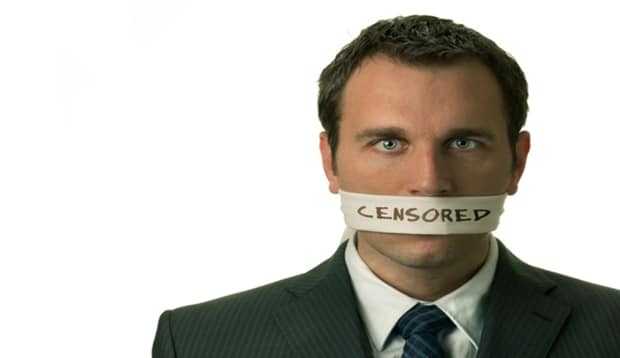
Are you ready for this week’s absurdity? Here’s our Friday roll-up of the most ridiculous stories from around the world that are threats to your liberty, risks to your prosperity… and on occasion, inspiring poetic justice.
Are you ready for this week’s absurdity? Here’s our Friday roll-up of the most ridiculous stories from around the world that are threats to your liberty, risks to your prosperity… and on occasion, inspiring poetic justice.

The Liberal government’s Bill C-36 would let the Canadian Human Rights Commission prosecute people for online speech, and would also give courts the power to take away liberty over fear someone might commit a hate-motivated offence. Former human rights commission defendant Ezra Levant joined True North’s Andrew Lawton to discuss Bill C-36, which Ezra says is the “legislation of cancel culture.”
Canada’s ruling Liberal government announced on Wednesday that it plans to make online hate speech a crime punishable by as much as $20,000 (roughly $16,250 US) for the first offense and $50,000 ($40,600 US) for the second. The proposal would punish social media users who broke the law but exempt social media companies that host such content from fines.
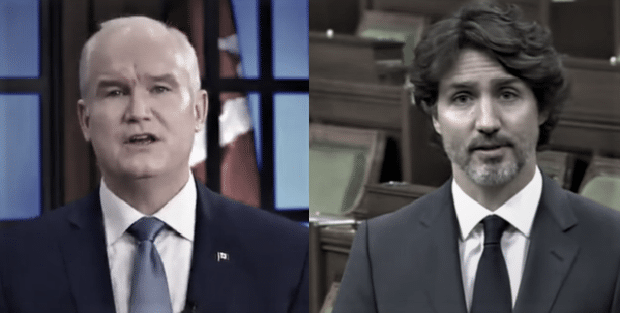
They have an opportunity to reconsolidate some of the lost conservative vote, and focus the attention of the nation on a true debate over freedom of expression and the limits of government power.
The trend in all of this legislation is clear: More government control, less freedom. And C-36 takes that to a terrible new level.
The Liberals have introduced a bill to tackle online hate by amending Canada’s Criminal Code and Canadian Human Rights Act.
Bill C-36 would allow a person to appear before a provincial court, with the Attorney General’s consent, if the person fears that another will commit an offence “motivated by bias, prejudice or hate based on race, national or ethnic origin, language, colour, religion, sex, age, mental or physical disability, sexual orientation, gender identity or expression, or any other similar factor.”
 It’s Section 13 with a Hatey Face.
If passed then pointing out that sectarian violence, honour killings, the murder of apostates and gays along with all the other ways Islam enriches the world will make you a criminal.
Some, who should know better, believe this law will prevent or at least punish those who vilify Israel as an apartheid state etc.
The gatekeepers won’t allow that to happen. Instead this dangerous legislation will be used to enforce sharia law. Dissenting opinions deemed objectionable such as criticism of multiculturalism and immigration policy will be silenced based on the whims of the anointed.
Your right to free speech will be the collateral damage of this abusive law and make no mistake that was the intention all along.
We are fucked no?
“It’s worse than #BillC10. @s_guilbeault goes further with #BillC36. This is only the start.”
PODCAST: Law proposes house arrest and $70K fines for internet publishers, bloggers, Facebook & Twitter users. @AlexpiersonAMP and Blacklock’s Reporter. https://t.co/hBWaFBXQFz #cdnpoli pic.twitter.com/TeqiW2qeVM— Blacklock's Reporter (@mindingottawa) June 24, 2021

Bill C-10 is the first in Canada to regulate legal internet content. The bill would see the CRTC monitor as public broadcasts all YouTube videos intended for private viewing.

“I think Canadians need to step up in a way that’s real,” said Mohammed Hashim, executive director of the Canadian Race Relations Foundation, in an interview with The West Block‘s Mercedes Stephenson.

All members of the Liberal Party, the New Democrats, and the Bloc Quebecois voted against a Conservative amendment to Bill C-10 that would have created clearer stipulations that would count user-generated content as an exception from Bill C-19’s sweeping powers.

In a recent op-ed published by CNBC, Facebook Vice President of Global Affairs Nick Clegg outlined the values that Facebook believes it must promote worldwide. Clegg stated that Facebook focuses on promoting American values such as “free expression,” a statement many would find ironic considering the allegations of censorship Facebook has faced in recent years.

The CRTC yesterday released its wholesale Internet rates decision, shocking the industry and consumer groups by reversing its 2019 ruling and virtually guaranteeing increased costs for consumers and less competition for Internet services. Indeed, within hours, TekSavvy, one of the largest independent providers, announced that it was withdrawing from the forthcoming spectrum auction and would no longer offer mobile services. In other words, the competitive and consumer cost reverberations from the decision will impact both broadband and wireless services. When the increased costs coming from Bill C-10 for Internet services are added to the equation, the Internet could get a lot more expensive in Canada.
The Liberals will soon unveil new legislation to combat ‘hate speech’ by regulating online media.
Despite ample media attention, hate crimes in Canada are a tiny percentage of overall criminality.
Why Do the Liberals Love Hate Speech Laws?@c2cjournalhttps://t.co/WMkbGQUebM
— Maxime Bernier (@MaximeBernier) May 26, 2021

For a month, the federal government has been under fire over its broadcasting bill C-10 and its implications for free speech. Peter Menzies, a former commissioner of the Canadian Radio-television and Telecommunications Commission, said the bill “doesn’t just infringe on free expression, it constitutes a full-blown assault upon it and, through it, the foundations of democracy.” The National Post’s Anja Karadeglija examines the issues and what’s at stake.
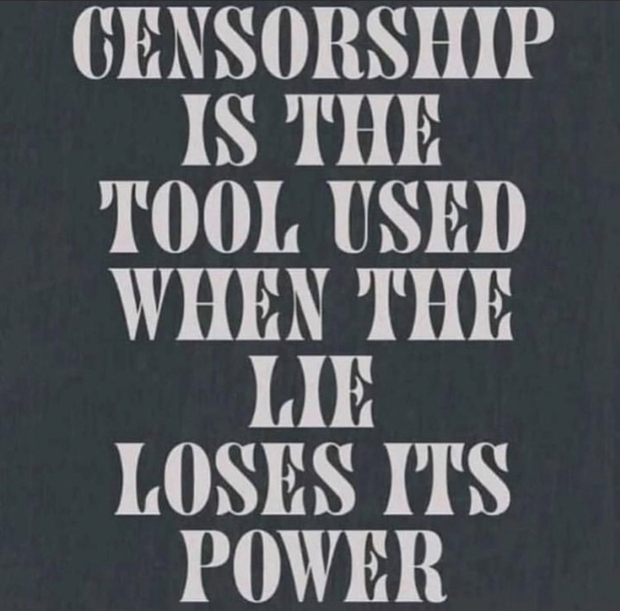
“Two Facebook Insiders have come forward with internal company documents detailing a plan to curb “vaccine hesitancy” (VH) on a global scale.”
“The stated goal of this feature is to “drastically reduce user exposure” to VH comments. Another aim of the program is to force a “decrease in other engagement of VH comments including create, likes, reports [and] replies.”
Lametti believes that parliament can affect – i.e., limit, Charter Rights and Freedoms in the process of legislation if it is determined that these limitations are “in the broader public interest.”
“This is entirely legitimate. The rights and freedoms guaranteed in the Charter are not absolute but subject to reasonable limits, so long as those limits can be demonstrably justified,” he told the committee.
