LAWTON: Opposition to the Trudeau Liberals is an illusion

The Liberal government’s internet regulation bill, C-10, has gone through a convoluted path.

First, user-generated social media content was exempt.

Then, that exemption was stripped away during a heritage committee meeting.

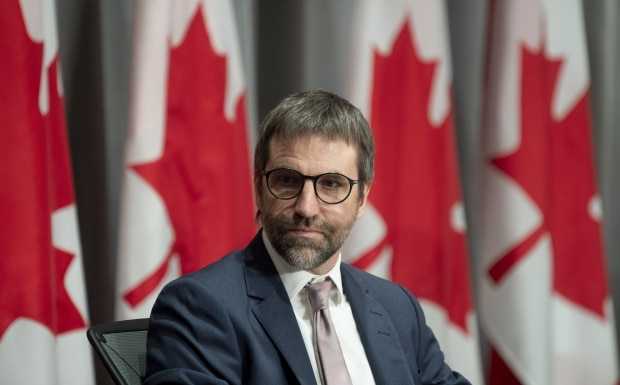
Then, Minister Steven Guilbeault said the exemption wasn’t necessary (ignoring the inconvenient fact that he had presented it as essential when it was first put in the bill.)

Then, Guilbeault changed his mind – again – and promised to exempt content Canadians post to social media from regulatory oversight by the Canadian Radio-television Telecommunications Commission after all.

Confused yet?

Share

Not Just Big Tech: Government Memo Shows Bill C-10 Targets News Sites, Podcast and Workout Apps, Adult Websites, Audiobooks, and Sports Streamers for CRTC Regulation

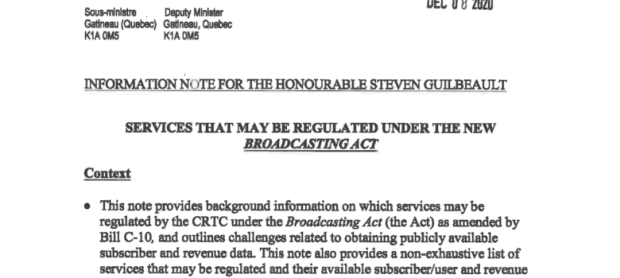
Canadian Heritage Minister Steven Guilbeault has tried to deflect public concern with the regulation of user generated content under Bill C-10 by claiming the intent is to make the “web giants” pay their fair share. Yet according to an internal government memo to Guilbeault signed by former Heritage Deputy Minister Hélène Laurendeau released under the Access to Information Act, the department has for months envisioned a far broader regulatory reach. The memo identifies a wide range of targets, including podcast apps such as Stitcher and Pocket Casts, audiobook services such as Audible, home workout apps, adult websites, sports streaming services such as MLB.TV and DAZN, niche video services such as Britbox, and even news sites such as the BBC and CPAC.

Share

Think Regulating User Generated Content in Bill C-10 Is Just an Inadvertent Mistake? Think Again

Over the past week, the Standing Committee on Canadian Heritage has repeatedly been told that Canadian cultural groups are among the strongest supporters of freedom of expression and would never think of supporting legislation that undermines that foundational democratic principle. Yet the reality is that some of the same cultural groups that now downplay the impact of Bill C-10 on expression, lobbied the government to remove all user generated content safeguards. In other words, rather than support freedom of expression for all Canadians, some envisioned using the Broadcast Act to regulate both users and user generated content.

Share

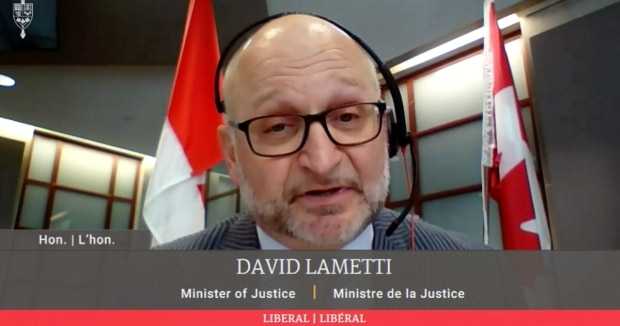
David Lametti stresses Charter rights can be limited in “public interest” at C-10 hearing

Justice Minister David Lametti is reminding members of parliament that constitutional rights and freedoms can be limited.

During an appearance before the House of Commons heritage committee during its hearings on internet regulation bill C-10, Lametti emphasized there are “legitimate” ways in which legislation can infringe the Charter of Rights and Freedoms, including freedom of expression.

h/t Marvin

Share

Guilbeault says Bill C-10 won’t breach free speech, citing Justice Department study

Heritage Minister Steven Guilbeault is doubling down on his controversial new broadcasting bill at a parliamentary committee hearing, citing a Justice Department analysis to reiterate the legislation would not affect free speech online.

Share

Bill C-10 doesn’t pose free speech concern despite social media impact, justice minister finds

Bill C-10’s amendments regulating social media websites Canadians use don’t pose any charter-related free speech concerns, Canada’s Justice Minister Davidsaid in the second charter review of the bill.

Share

Bill C-10 opens the door for regulating government accountability

Canadians can choose to watch virtually anything from anywhere in the world online. And they can share virtually any opinion globally through their cellphone. It’s astonishing freedom.

But the federal government sees a problem. Canadians aren’t watching enough of the right stuff and sometimes they say the wrong things. So, the Liberal government introduced Bill C-10 to give the Canadian Radio-Television and Telecommunications Commission more power to oversee what we’re watching and sharing to make sure it conforms to government-approved standards.

Share

Ontario medical regulator threatens to punish doctors for criticizing lockdowns

The College of Physicians and Surgeons of Ontario (CPSO) plans to investigate physicians who speak out against government lockdown measures, according to a statement issued Friday.

“The college is aware and concerned about the increase of misinformation circulating on social media and other platforms regarding physicians who are publicly contradicting public health orders and recommendations,” said CPSO’s statement.

Share

Peter Menzies: Who’s killing free internet speech? Canada’s culture industry

Canada’s cultural sector, long a champion of rights and social justice, now finds itself — despite Monday’s government pullback — in the awkward position of having inspired the mugging of free speech and expression on the internet.

Share

GUNTER: Here’s why Bill C-10 is such a big problem

Understand one thing: If the Liberals are able to pass Bill C-10 – an update of the Broadcasting Act – Canada will have the most-regulated Internet in the free world.


“The plan is not for us to regulate all of the Internet,” Toronto Liberal MP Julie Dabrusin, told the Commons Heritage committee this week. Dabrusin is parliamentary secretary to the Minister of Heritage, Montreal Liberal MP Steven Guilbeault.

Share

Why are the police handcuffing street preachers?

Why are the police handcuffing street preachers?

British police are arresting and investigating people over entirely legal speech.

This week police in Uxbridge, Greater London, handcuffed, arrested and detained a 71-year-old grandfather for fear he might have offended someone.

Naturally, the whole incident was filmed and uploaded to YouTube, where we can watch in horror at our hard-fought freedoms slipping through our fingers.

Share

Jen Gerson: Do the Liberals not have other priorities right now?

Jen Gerson: Do the Liberals not have other priorities right now?

Nah, let’s just regulate the Internet.

As one of Ontario’s hospitals almost runs out of oxygen, and our defence minister announces a review of sexual misconduct in the military, the Liberals have decided that this seems like as good a time as any to fix the Internet.

Or, more specifically, the Broadcasting Act, which is currently before committee; the reforms to the act have been presented as a way to expand things like content requirements and other Canadian norms to digital streaming services like Netflix and Disney+. This is misguided for a host of reasons, but well within the usual bounds of nanny-state nonsense we already generally accept from our government. 

Share

Trudeau’s plan for the Internet: More patriotic propaganda, less choice for users

Several years ago, Prime Minister Justin Trudeau quipped that he sees Canada as the world’s “first postnational state.” It’s become an iconic catchphrase of his tenure — admired by liberals as a mantra of inclusivity; mocked by conservatives as an admission of the vacuousness of progressivism.

It’s a fine debate to have but, in the context of Trudeau, it’s also fairly pointless, given the prime minister has never shown much interest in actually governing in a postnational way. His is, in fact, a quite explicitly nationalist government that has repeatedly shown itself happy to use the power of the state to push a particular notion of correct patriotic behavior.

Share