
Germany: Industry Moving Abroad Amid Rising Energy Prices

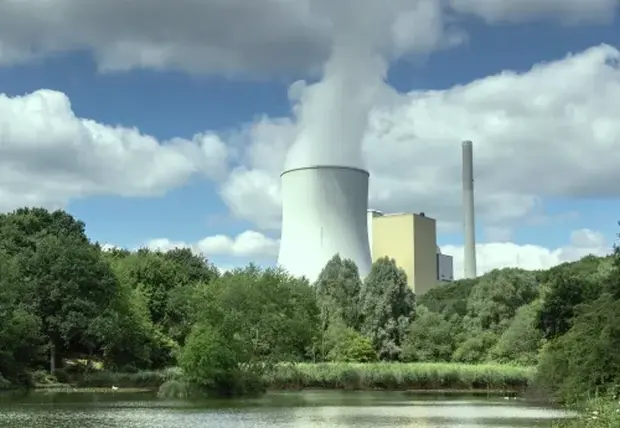
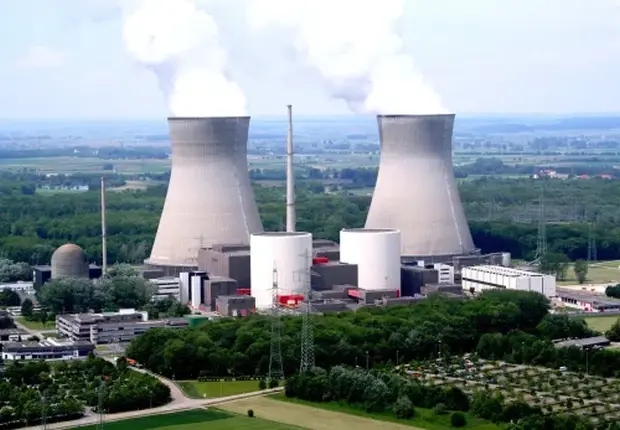
Europe’s largest economy, which is already in choppy waters, appears to be headed for worse times as it rapidly loses its attractiveness as an industrial location. Germany’s sky-high energy prices, precipitated by a lack of cheap natural gas and improvident anti-nuclear and ‘green’ energy policies enacted by the left-liberal government, have had a devastating impact on the country’s industry, according to a new study.

The study, carried out by the consulting firm Deloitte with the support of the Federal Association of German Industry revealed on Tuesday, November 14th, that two-thirds of German companies surveyed had already relocated parts of their value-added chain abroad, the Berlin-based daily Die Welt reported.

Share

Germany pays a high price for reducing its energy

The country’s industry is struggling to reach previous levels

Based on its current storage, Germany looks set to make it through another winter without Russian pipeline gas, demonstrating that the fears of the past two years were unmerited. According to a new poll, Germans are no longer worried about potential gas shortages. Policy experts have come to hold the same view, provided the country isn’t subject to a combination of very unlikely factors, such as a complete halting of LNG imports or an enduring cold snap this winter. Alas, it would be premature to claim that the energy question has been finally resolved to Germany’s benefit.

Share

Meet Meredith Angwin, the grandmother changing the energy industry

The self-published grandmother saw what almost no one else did: the coming downfall of the American electrical system

Along a twist in the Connecticut River within an old-style colonial Vermont home lives Meredith Angwin, the Jewish grandmother who saw what almost no one else did: the coming downfall of the American electrical system.

Three years ago, Angwin self-published Shorting the Grid: The Hidden Fragility of Our Electric Grid, the first-ever explanation for laymen of America’s labyrinthine, abstruse power markets. Her diagnosis was simple and troubling: when America moved away from the monopoly utility system in the Nineties toward restructured electricity markets, all players were divested from the responsibility of keeping the lights on. As heavily subsidized renewables outbid reliable nuclear and coal plants in the market, the grid would become overly reliant on just-in-time natural gas and imports from neighbors for reliability.

Share

GUNTER: Feds overstepping bounds on pipeline and energy projects

Back in March, the Supreme Court was hearing arguments in the federal government’s appeal of an Alberta court decision that struck down Ottawa’s Impact Assessment Act (IAA), often called the “No More Pipelines” law.

The Alberta Court of Appeal, which is not a particularly anti-Ottawa court, had ruled that while climate change posed an “existential threat” to the planet, the no-more-pipelines law posed “another existential threat” – to the existence of “Canada itself.”

Share

Ottawa urges U.S. appeals court to reverse order threatening to shut down Enbridge’s Line 5 pipeline

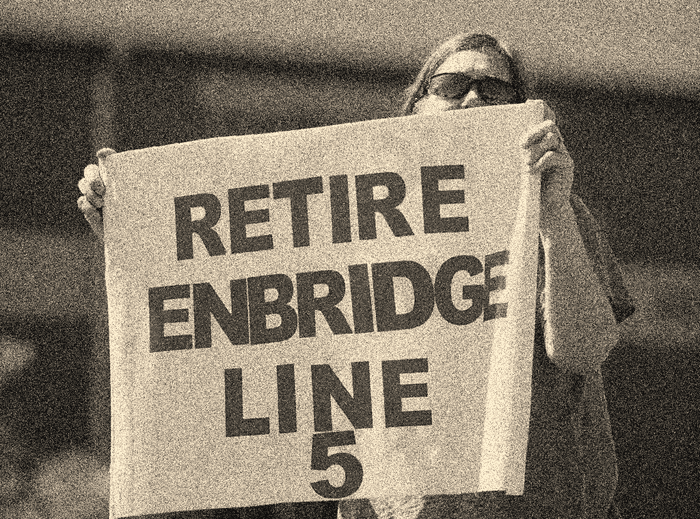
Ottawa is urging a U.S. appeals court to reverse a Wisconsin judge’s order that threatens to shut down the Line 5 cross-border pipeline by June 2026.

Forcing a shutdown would violate Canada’s treaty rights, government lawyers argue in an amicus brief filed today with the U.S. Seventh Circuit Court of Appeals.

A Wisconsin court ruling in June gave Calgary-based Enbridge Inc. an ultimatum: reroute the pipeline around an Indigenous reserve within three years or shut it down.

Share

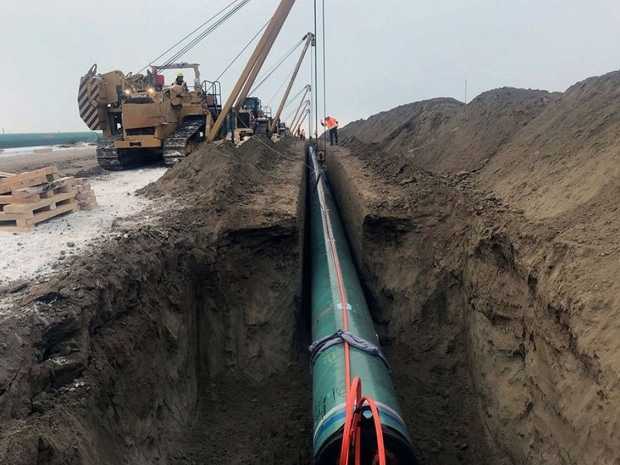
New hurdle signals more cost overruns for Trans Mountain’s controversial pipeline

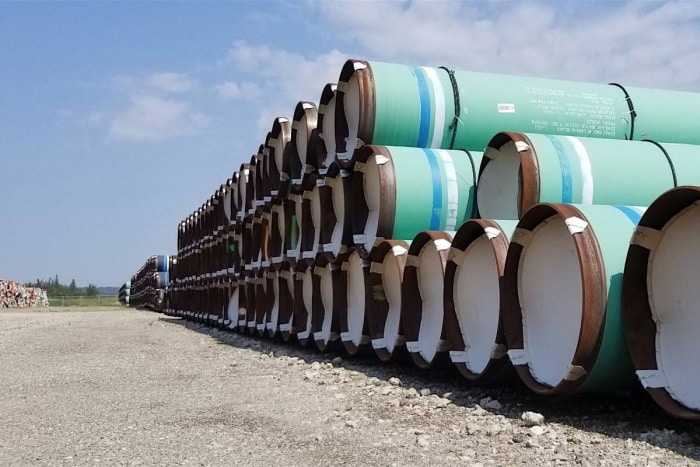
There is a new and significant hurdle facing the massively over-budget and contentious Trans Mountain pipeline expansion project running through Alberta and British Columbia.

The Stk’emlúpsemc te Secwépemc, a First Nation in the Interior of B.C., near Kamloops, is disputing a proposed change by Trans Mountain to the pipeline route through an area known as Pípsell.

Share

Why is the green movement targeting energy security?

Stopping domestic fossil fuel production won’t solve climate change

The energy crisis continues to hit Europe hard. In particular, the German economy is still reeling after losing its access to cheap Russian gas.

However, it’s not just Vladimir Putin’s war that’s to blame. A chart posted on X by Daniel Kral shows that a big part of Europe’s problem is self-inflicted. Just 10 years ago the EU (excluding the UK) was producing more than 30% of its demand for natural gas, but since then the figure has slumped to less than 15%. The timing could hardly be worse.

REMEMBER TO DONATE TO BLAZINGCATFUR’S FUNDRAISER
Share

Europe’s Climate Consensus Is Unraveling

The departure of EU ‘climate’ Commissioner Frans Timmermans—who will be taking his chances in the upcoming Dutch election—may well be a pivotal moment for the future of ‘green’ politics. Timmermans is the face of the European Union’s drive for ever more intrusive regulations that are meant to combat climate change—regulations that are being met with resistance from member states. Despite the Commission’s best efforts to push the Green Deal, exorbitant economic costs and voter discontent have sparked a renewed interest in nuclear energy throughout Europe.

Share

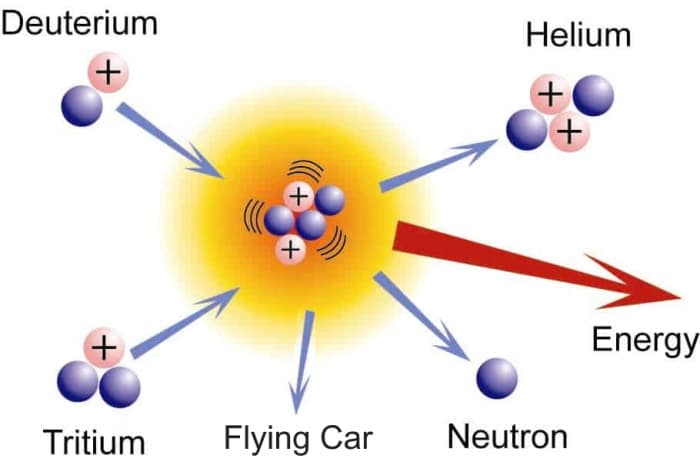
US scientists achieve net energy gain for second time in a fusion reaction

US scientists have achieved net energy gain in a fusion reaction for the second time since December last year, the Lawrence Livermore National Laboratory said on Sunday.

Scientists at the California-based lab repeated the breakthrough in an experiment in the National Ignition Facility (NIF) on 30 July that produced a higher energy yield than in December, a Lawrence Livermore spokesperson said.

Final results are still being analyzed, the spokesperson added.

Still the usual “Decades away from practical deployment.”

Share

Elon Musk’s Latest Mission: Rev Up the Electricity Industry

Elon Musk wants more power—literally.

The man behind the race to replace gasoline-fueled cars with electric ones is worried about having enough juice.

In recent days he has reiterated those concerns, predicting U.S. consumption of electricity, driven in part by battery-powered vehicles, will triple by around 2045. That followed his saying earlier this month that he anticipates an electricity shortage in two years that could stunt the energy-hungry development of artificial intelligence.

Share

Canada’s looming power problem is massive but not insurmountable: report

Canada must build more electricity generation in the next 25 years than it has over the last century in order to support a net-zero emissions economy by 2050, says a new report from the Public Policy Forum.

Reducing our reliance on fossil fuels and shifting to emissions-free electricity to propel our cars, heat our homes and run our factories will require doubling — possibly tripling — the amount of power we make now, the federal government estimates.
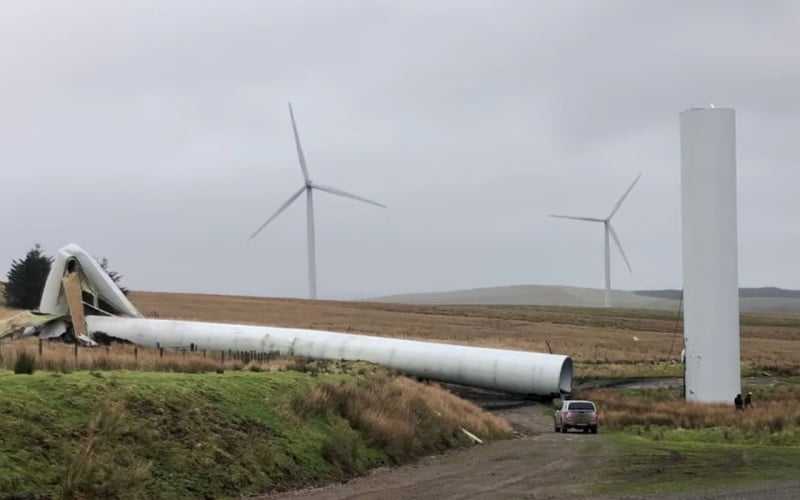
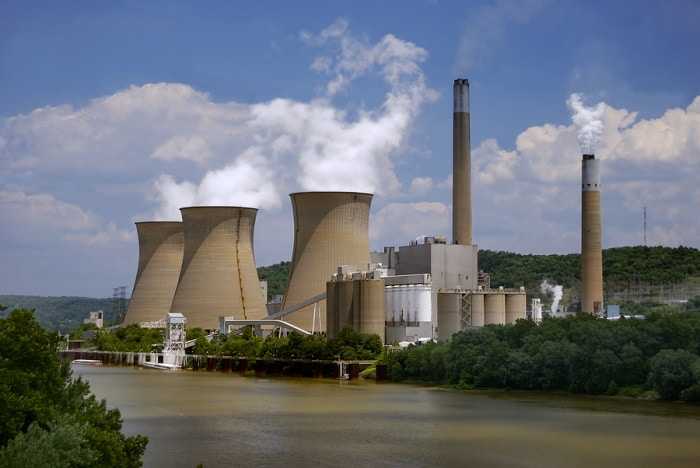
“Imagine every dam, turbine, nuclear plant and solar panel across Canada and then picture a couple more next to them,” said the report, which will be published Wednesday.

Pie in the sky thinking on display.

Share

Trudeau government snubs global LNG conference in Vancouver

Imagine being the federal minister in charge of the energy file and skipping a major world conference on a lower carbon that was happening in your own backyard.

This isn’t an imaginary scenario, the minister who did this is Jonathan Wilkinson, Justin Trudeau’s minister of natural resources.

Share

Randall Denley: Ontario finally dumps the Liberals’ naive green-energy ideology

The age of energy ideology is over in Ontario, replaced by power pragmatism. The Ontario government’s new and ambitious plan to meet the province’s power needs until 2050 draws on pretty much every known technology to meet a demand for power that could double by that year.

One doesn’t have to look too far back to remember the era of overhyped and overpriced wind and solar projects that former premier Dalton McGuinty’s Liberal government was so eager to foist off on Ontarians. Across the province, the countryside is scarred with wind farms and solar installations. It was the sort of approach that a government could toy with, knowing that the province had surplus power so it didn’t need to rely on wind and solar.

Share

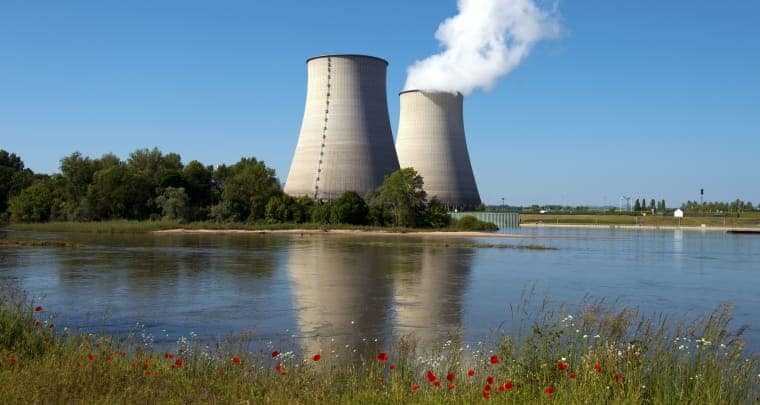
Ontario looks to go ahead with three more small modular nuclear reactors

Ontario Energy Minister Todd Smith announced Friday that the province is formally seeking approvals for three more small modular nuclear reactors at its Darlington power plant, where it had already put plans in place for one unit of the novel technology.

Provincially-owned Ontario Power Generation had always contemplated building a total of four of the new units, and had begun clearing enough land for the enlarged project east of the existing Darlington nuclear plant, in Clarington, Ont., east of Toronto. But until Friday, it had been formally proceeding with just one of the new units, the country’s first.


I think SMNR’s are a great idea, better than Wind and Solar by far.

But will the regulatory burden of environmental assessments & endless consultations take a decade to complete before a shovel is even picked up as with the earlier full sized reactor announced this week?

Share

Has the West lost control of oil?

The Opec powers are forming new alliances

Oil might be a source of power, but trying to control its price is a politically hazardous business. Led by the odd pairing of the Saudi Crown Prince, Mohammad Bin Salman (MBS), and Vladimir Putin, the Opec Plus oil producers’ cartel exists to maintain a price floor for its fractious members in an energy environment where oil prices have crashed three times over the past two decades. But its importance in a geopolitical world defined by Sino-American competition is beginning to extend well beyond the gyrations of oil markets. Opec Plus has remained resilient even as the Beijing-Moscow-Tehran axis has hardened since Russia’s invasion of Ukraine, as well as the recent Chinese-brokered rapprochement between Saudi Arabia and Iran. This raises questions about whether Saudi Arabia is now defecting into the anti-Washington camp.

Share