
China’s Drug Attack on the US

The Chinese have a very long memory. And a strong sense of history.

If only Americans possessed both, for we would be able far better to understand the enormous consequences of the lethal drug abuse harming America from the massive quantities of death-dealing fentanyl being smuggled into our country, with its origins often a Chinese lab.

The Chinese know full well that a society’s addiction to drugs can unravel a proud nation, stripping away its very sovereignty. When opium was brought to China in the 1700s, the British quickly used the drug as a means of gaining an economic advantage over its new trading partner. The addiction to the drug was so explosive that the Chinese emperor eventually sought to ban it. When his military destroyed warehouses full of the drug, the British responded with a crushing naval attack that became known as a series of Opium Wars.

Share

China’s electric car market is booming but can it last?

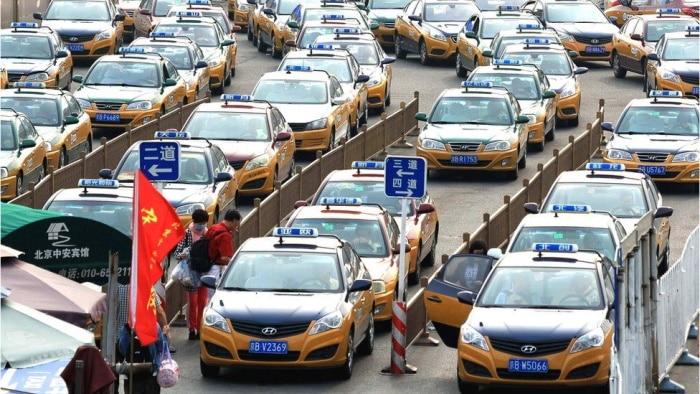
If you want to understand how governments can fuel the rise of new technologies, look no further than the taxi fleets of Beijing.

Five years ago, the city revealed plans to ban the introduction of fossil fuel-powered taxis. Today, thousands of the cars run on batteries instead. And the drivers of these electric vehicles (EVs) don’t have to worry about wasting time at charging stations, either.

Many electric taxis in Beijing, and dozens of other Chinese cities, just go to a battery-swapping station where a machine plucks out the depleted battery and installs a charged one in mere minutes.

Share

British Spy Chief Calls Communist China’s Tech Aims a ‘Threat to Us All’

LONDON — The head of Britain’s cyber-intelligence agency is accusing Communist China of using its economic and technological clout to clamp down at home and exert control abroad, saying Beijing’s aggressive stance is driven by fear and poses “a huge threat to us all.”

The director of Britain’s Government Communications Headquarters, an intelligence agency, Jeremy Fleming, says Beijing’s Communist authorities are seeking to “shape the global tech ecosystem,” using technologies such as digital currencies and satellite systems to control China’s population and increase its influence around the world.

Share

UN Human Rights Vote Reveals China’s Power and the West’s Decline

Reports show which countries fear China more than they respect the United States.

The so-called “global community” that Western liberals frequently look to for formulating and implementing “global governance” showed its true colors by voting down a proposal by the United States, Britian, Canada, and other, mostly Western, countries to debate a UN report on human rights abuses and alleged crimes against humanity committed by the Chinese Communist Party (CCP) against its Muslim Uyghur population in China’s Xinjiang province. The vote in the UN Human Rights Council was 17 for debate, 19 against, and 11 abstaining. CNBC reports that the defeat of the motion to debate marks the second time in the council’s 16-year history that such a motion has been defeated. The vote was a victory for China and a defeat for the United States and the West.

Share

China: The Immovable Supreme Leader

When he took over as China’s leader 10 years ago, President Xi Jinping was hailed by Western experts and media as a man who would open the path for major political reforms to reflect the rising tiger’s economic transformation. Some even saw him as a wiser version of Mikhail Gorbachev and speculated that he might adopt the end-of-history narrative by accepting democratization as the only option for a modern industrial power.

A decade later, however, we know how wrong those assessments of Xi were. As he prepares for the coming National Conference of the Chinese Communist Party (CCP) starting 16 October, Xi may be the subject of another misunderstanding. This time he is presented as an ambitious autocrat whose dream of world domination threatens the fragile world order in place since the end of the Cold War.

Share

Public Safety Minister Evades Responding to Questions About Reports of Unofficial Chinese Police Stations in Canada

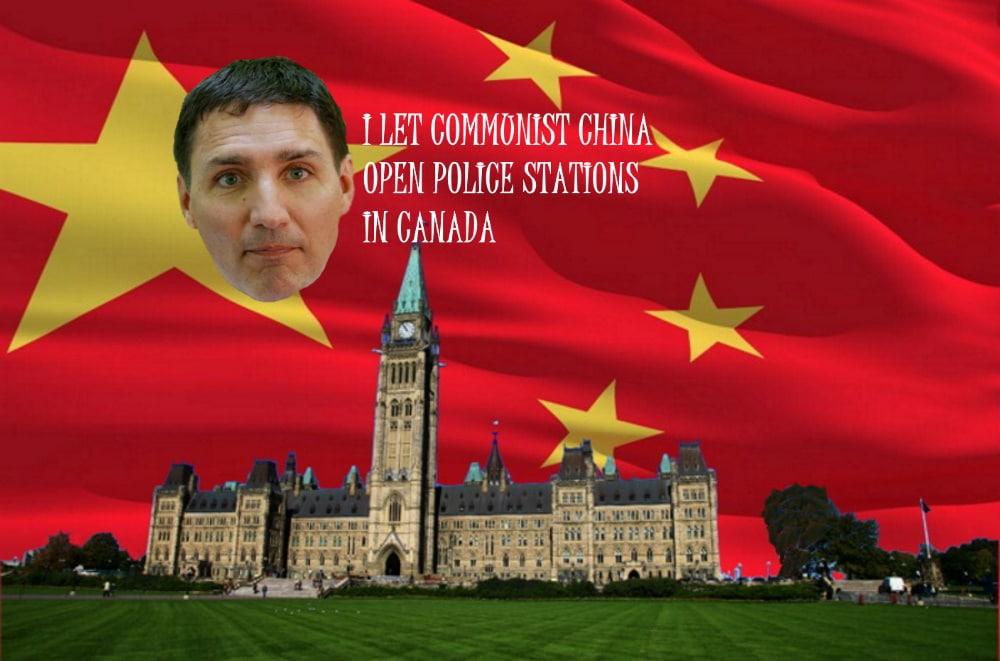
Public Safety Minister Marco Mendicino gave no response when pressed by Conservative MP Michael Chong on what the Liberal government is going to do regarding allegations that communist China is operating unofficial overseas police stations on Canadian soil.

“The government’s priorities are descending into farce,” Chong said during question period in the House of Commons on Sept. 6.

“They won’t allow U.S. officers into Canada to reopen Nexus offices even though we have an agreement and the United States is an ally. Meanwhile, Iranian officers freely come to this country to intimidate Canadians because [the government] won’t list the IRGC [Islamic Revolutionary Guard Corps], and now we find out that police officers from the People’s Republic of China are operating out of three offices illegally open in Canada, intimidating Canadians.

Share

CCP Runs Police Outpost in New York City, Part of Global Network of Transnational Repression: Report

Chinese authorities have opened at least one “overseas police service station” in the United States as part of the Chinese Communist Party’s (CCP) global transnational repression, according to human rights group Safeguard Defenders.

“These operations eschew official bilateral police and judicial cooperation and violate the international rule of law, and may violate the territorial integrity in third countries involved in setting up a parallel policing mechanism using illegal methods,” the Spain-based group said in a recent report.

Share

Canadian Government Official Responds to Reports of Unofficial Chinese Police Stations in Toronto

An investigation into allegations that communist China is operating unofficial overseas police stations in Canada is underway, officials say.

Testifying before the parliamentary Canada-China committee on Sept. 4, Weldon Epp, director general for Global Affairs Canada’s North Asia and Oceania Bureau, said should the allegations be proven true, the activity would “fall outside of any legitimate police-to-police liaison role” between the two countries, and that Ottawa would make “serious representations” to Beijing.

Share

Zero COVID is destroying China

China had a good run both in the media and with our elites for over 3 decades–because there was a ton of money to be made and as with all gold rushes the damage is ignored.

Our tech companies rely on the country, our consumer products often come from there, and our entertainment and sports industries have grown reliant on their patronage. It turns out that the bargain we made with the country had larger downsides than expected.

Share

America’s Dependence on China Is a Crisis in the Making

America’s supply chain crisis is far from over. Persistent backlogs at West Coast ports have led shippers to reroute their cargoes to the east. As a result, container ships now sit offshore at ports such as New York, Houston, and Savannah, waiting in queue to offload.

What first triggered the unfamiliar phenomenon of our barren shop shelves was COVID-19 and a series of ill-advised policies implemented to “stop the spread.” Suddenly, there were too few dockworkers, too few warehouse workers, and too few truckers, creating what Lori Fellmer, chair of the ocean committee for the National Industrial Transportation League, called “a horror show.”

Share

Unofficial Chinese Police Stations in Canada Likely Number More Than 3, Says Report Co-Author

The Chinese regime has likely established more unofficial overseas police stations in Canada than the three in Toronto identified in a report by a human rights NGO, a co-author of the report says.

Spain-based Safeguard Defenders published a report in September warning of the regime’s “long-arm policing” around the world through what’s been dubbed the “110 overseas police stations”—an operation named after the police emergency phone number, 110, in China.

Share

Is China about to turn on Russia?

President Xi can’t afford to isolate the West

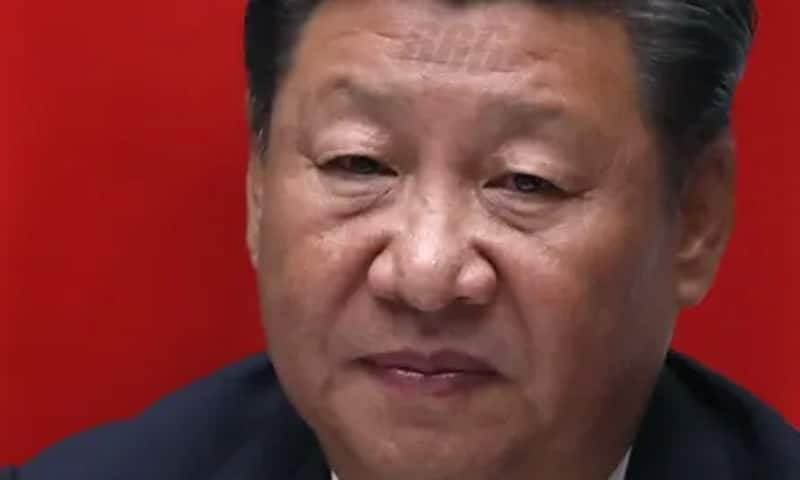
After managing a strained smile and handshake for the cameras, President Xi Jinping walked away from Vladimir Putin with a face like stone. By most accounts, the recent meeting in Uzbekistan between the two leaders, who once spoke of each other as “best friends” and “bosom buddies,” was frosty. In a remarkable admission, Putin acknowledged that the Chinese leader had arrived with “questions and concerns” about the course of Russia’s war in Ukraine. Putin promised to better explain “our position on this issue, although we have talked about it before”.

Share

Sabrina Maddeaux: How hard can it be for the Liberals to say Chinese laws don’t apply in Canada?

The federal Liberals have long shied away from confrontation with the Chinese Communist Party (CCP), but, as with all bullies, acquiescing to them results not in peace, but undaunted escalation.

The LPC promise love China long time.

Share