
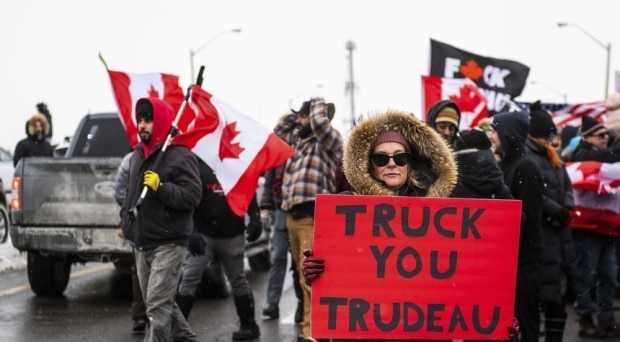
When members of the Trudeau government insist they relied on advice from police before they brought in the Emergencies Act in February to clear a truckers’ convoy from downtown Ottawa, they’re, um, not being exactly truthful.
When members of the Trudeau government insist they relied on advice from police before they brought in the Emergencies Act in February to clear a truckers’ convoy from downtown Ottawa, they’re, um, not being exactly truthful.
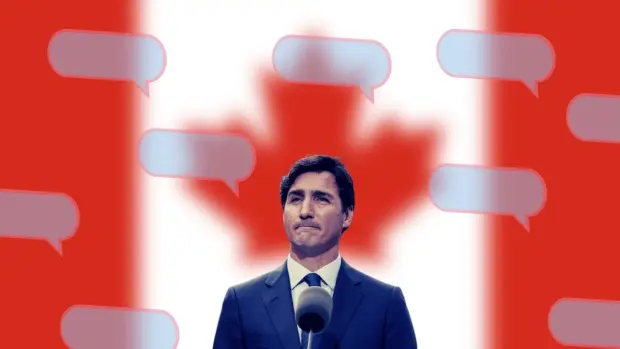
The editorial board of Canada’s Globe and Mail has voiced criticism of the way Prime Minister Justin Trudeau plans to tackle “online harms,” saying that it remains unclear who would be the target of these future laws, or how they would work.
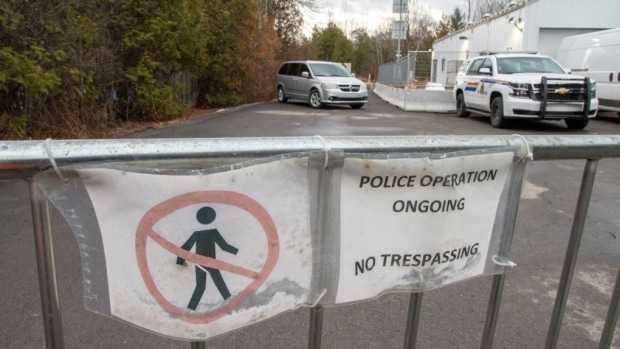
Closing an unofficial border crossing in southern Quebec will not slow the arrival of asylum seekers, Prime Minister Justin Trudeau said Thursday.
“If we close Roxham Road, people will cross elsewhere,” he told reporters in Ottawa. “We have an enormous border, and we’re not going to start arming or putting fences on it.”
On Wednesday, Quebec Premier François Legault called for Trudeau to close the makeshift crossing south of Montreal, saying that the province doesn’t have the capacity to care for migrants as they wait for their refugee claims to be processed.
Prime Minister Justin Trudeau has been eyeing a wealth tax to pay for his government’s spending spree. Heavily redacted documents obtained by the Canadian Taxpayers Federation under an access to information request show the prime minister asked for analysis of a $60-billion wealth tax. With deficits looming to the far horizon, it must be a tempting cash grab.
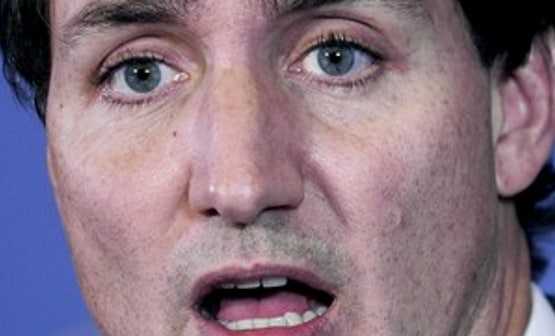
In an editorial for the Epoch Times, Patricia Adams and Lawrence Solomon describe Canada as the world’s largest prison and Prime Minister Justin Trudeau as “the world’s foremost jailer.” In a country of 38 million, they write, reprising a Justice Centre bulletin, 6 million unvaccinated citizens are forbidden to travel by train, ship or plane and are effectively prevented from leaving the country, which is to say that a cohort of over 15 percent are prisoners in their own land.
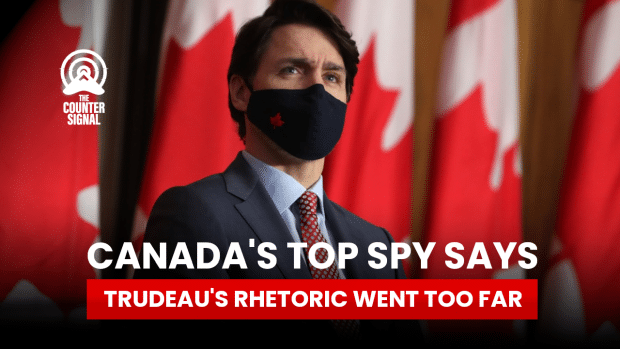
During a SECU Committee meeting, Richard Fadden, the former Deputy Minister of National Defence and Security Advisor, said that Trudeau went too far with his rhetoric when he called Freedom Convoy supporters a “fringe minority” with “unacceptable views” and that it was “not helpful.”
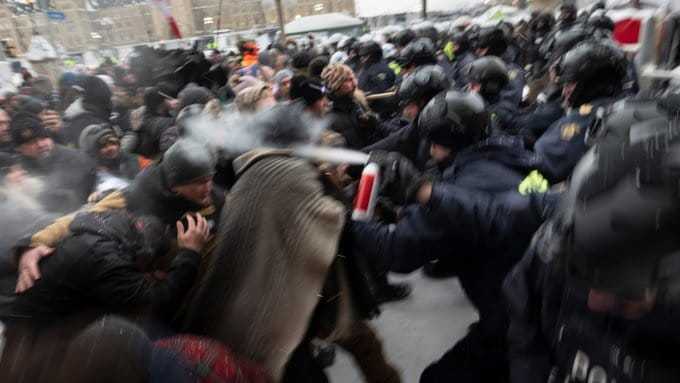
“When you have the truth on your side, you don’t need to keep coming up with a bunch of new and easily-discredited ‘justifications’ for your actions.
Unfortunately for the Trudeau government, the truth is against them.
Hence, they flail around attempting to explain why they were so eager to take away the rights and freedoms of Canadians and use authoritarian state power to try and quash dissent.”
The Liberal government funnelled more than a billion-and-a-half taxpayer dollars into various United Nations bodies, and millions into the World Economic Forum (WEF) last year, public accounts data shows.
According to the transfer payments section of the 2020-2021 Public Accounts of Canada, the WEF received $2,915,095 from Canadian taxpayers in the form of grants and contributions.

Quebec is asking the federal government to close a wooded border crossing south of Montreal because the province can’t handle the number of asylum seekers entering the country.
Premier Francois Legault says more than 100 refugee claimants are entering Quebec every day from the United States through a rural path called Roxham Road.
The popular unofficial border crossing was closed when the pandemic hit in March 2020 and reopened last November.
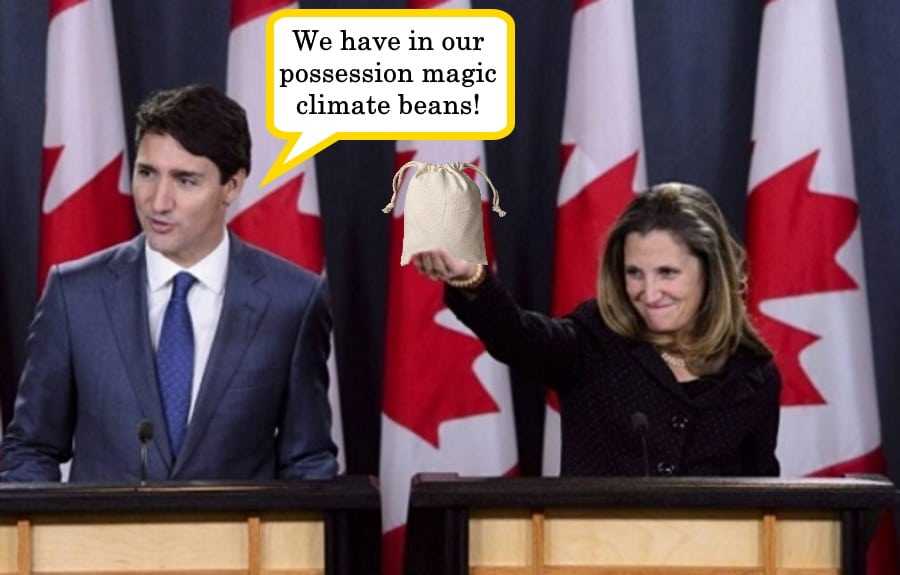
The public policy landscape is littered with the wreckage of ideas that didn’t work out the way their architects intended. It might convince lesser mortals than our politicians and their claque that good intentions are not sufficient. But at least they meant well. Which you can’t say about unaffordable gasoline.
CSIS was concerned by the threat of ideologically motivated, violent extremism and the potential for serious harmful acts in relation to the trucker convoy, says the head of the national intelligence agency.
David Vigneault, Canadian Security Intelligence Service director, told a special committee of parliamentarians examining the invocation of the federal Emergencies Act on Tuesday that this form of extremism, which he referred to as IMVE, represents a significant national-security threat.
… “IMVE is a threat that thrives on division and festers in the online space. But the hateful online rhetoric associated with these views is spilling over into the real world.”
In the leadup to the convoy, CSIS closely monitored known IMVE actors to assess any threat of serious acts of violence, Mr. Vigneault said, adding that this was informed by context. For example, he said, the intelligence agency has observed a rise in anti-authority, violent rhetoric, particularly in relation to pandemic public-health measures.
God Forbid anyone tells Junior where to stuff it. Vigneault is the most political of CSIS directors to date, dutifully criminalizing dissent on behalf of the Liberal Party. Go incognito.
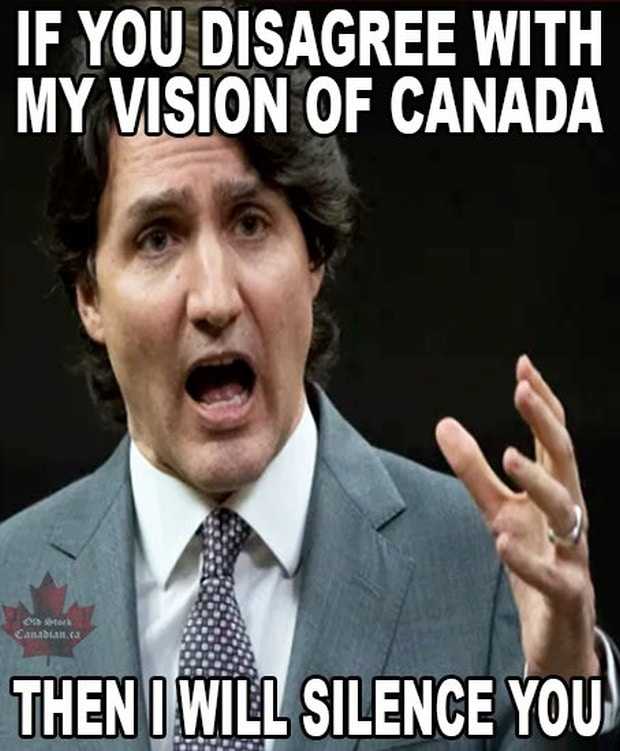
Justin Trudeau and the Liberal government often talk about fighting ‘misinformation’ and ‘disinformation’.
When they do so they aren’t talking about persuasion or respectful disagreement.
Rather, they’re talking about using the power of the government to define what is and isn’t ‘truth’.
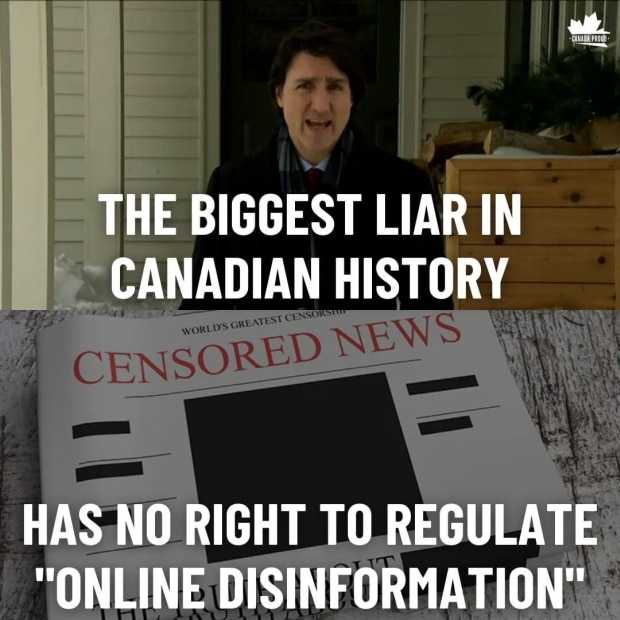
The federal government’s broad push to regulate the internet has the support of a majority of Canadians, according to a new survey, even though the details of Ottawa’s plans are generating strong pushback from policy experts.

The federal government’s broad push to regulate the internet has the support of a majority of Canadians, according to a new survey, even though the details of Ottawa’s plans are generating strong pushback from policy experts.
The House of Commons is currently studying two separate pieces of legislation proposing the regulation of online news remuneration and streaming services. It is also in the process of drafting a third bill that will aim to combat various online abuses, including hate speech, terrorist content and child pornography.
A Nanos Research poll commissioned by The Globe and Mail found that 55 per cent of Canadians support or somewhat support greater government regulation of the internet, while 37 per cent oppose or somewhat oppose such regulation and 8 per cent said they are unsure.
I am not buying this poll. Go Incognito.
For Canadians, higher gas prices represent another hit to our finances.
By increasing transportation costs, surging gas prices mean people have less money available for anything else.
And of course, higher fuel prices push up the cost of food, clothing, and nearly everything else. Since companies must transport goods and find it more expensive to do so, they are left with no choice but to pass on that cost to consumers.
This pushes people into a binary choice:
Continue to drive and cut back on other expenses, or cut back on driving.
Both ‘choices’ represent a narrowing of financial freedom and personal freedom.
