Trudeau and Ford should attach personal fortunes to EV corporate welfare

Last week, with their latest tranche of corporate welfare for the electric vehicle (EV) sector, the Trudeau and Ford governments announced a $5.0 billion subsidy for Honda to help build an EV battery plant and ultimately manufacture EVs in Ontario. Here’s a challenge: if politicians in both governments truly believe these measures are in the public interest, they should tie their personal fortunes with the outcomes of these subsidies (a.k.a. corporate welfare).

Share

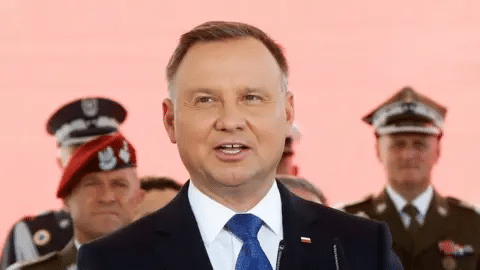
‘Polish voice is on the rise’: The European leader pushing Trudeau to spend more on defence

More than a million people of Polish descent live in Canada. In the rural community where I grew up in southwestern Ontario, there was a Polish hall where I was sometimes recruited to serve up cabbage rolls and pierogis.

Back then, that Polish cohort didn’t stand out from the rest of their European peers — the Belgians, the Germans, the Hungarians. Today, Poland’s role in assisting Ukraine has been a game-changer; the country shares a 200-plus kilometre border with Russia and is the logistical hub for the transportation of military equipment and refugees from Ukraine.

Share

Trudeau ‘absolutely’ best person to lead the Liberals in next election says man whistling past graveyard

Trudeau ‘absolutely’ best person to lead the Liberals in next election: LeBlanc says

Cabinet minister Dominic LeBlanc insists he’s not planning a leadership campaign to head the Liberal party, should current leader and Prime Minister Justin Trudeau resign, seemingly quashing rumours he’s planning to make a move for his boss’ job.

LeBlanc — who serves as the minister of public safety, democratic institutions, and intergovernmental affairs — told CTV’s Questions Period host Vassy Kapelos in an interview airing Sunday that Trudeau should “absolutely” remain as Liberal leader in the next election.

Share

Justin Trudeau didn’t start the fire. But the Prime Minister helped stoke Canada’s political polarization

Justin Trudeau led the federal Liberals into the 2015 election on a promise to give the middle ground back to Canadians.

Before long, there was less middle ground.

It had already been shrinking for years when Mr. Trudeau became the Liberal Leader in 2013. He didn’t cause the polarization of Canadian politics, but he noticed it, acted on it, nudged it along. By 2021, that polarization came not only to save his career, but to define it.

Share

Trudeau Government Doing ‘Poor’ Job on Energy Plans, 60 Percent of Canadians Say

Nearly 60 percent of Canadians believe Canada is doing a poor job in developing a shared long-term vision for the country’s energy future, a new poll has found.

Thirty percent of those surveyed say Ottawa is doing a “poor” job, and 29 percent say it is doing a “very poor” job, of planning for the country’s future energy needs, according to a poll conducted by Nanos Research.

Share

US shared ‘gobsmacking’ lab leak evidence with Canada, New Zealand, UK & Australia at height of Covid-19 pandemic

The United States shared “gobsmacking” evidence with Britain at the height of the Covid-19 pandemic that suggested a “high likelihood” that the virus had leaked from a Chinese lab, The Telegraph can reveal.

Five Eyes intelligence-sharing nations were convened in Jan 2021 to discuss the possibility of a “lab leak”, as the US warned that China had covered up research on coronaviruses and military activity at a laboratory in Wuhan.

In a previously unreported phone call in Jan 2021, Mike Pompeo, the former US secretary of state, presented evidence that supported the lab leak theory to his counterparts, Dominic Raab, then the Foreign Secretary, and representatives from Canada, New Zealand and Australia.

Share

More Star Reporters Have Written About Diagolon Than The Group Has Members

Pierre Poilievre has been accused of flirting with Diagolon. Here’s what the extremist group thinks of that

The question of Pierre Poilievre’s ties — real or otherwise — to an extremist online group known as Diagolon are back in the spotlight with Prime Minister Justin Trudeau accusing him of welcoming “the support of conspiracy theorists and extremists.”

But does Diagolon actually support Poilievre? The loosely organized online group trades in virulently racist and antisemitic rhetoric and has been described as “extremist” by the U.S. State Department. It is also not shy about expressing its views.

Share

Parliamentary report on Emergencies Act decision is 18 months past due — and counting

For a committee struck to review an emergency, the approach to reporting back to Canadians has been less than urgent.

The erstwhile group of senators and MPs studying the federal government’s invocation of the Emergencies Act over the “Freedom Convoy” was supposed to present its findings in December.

December of 2022, that is.

Share

Foreign interference: Who knew what when? You’ll have to wait until the inquiry’s final report

Given an impossibly short deadline to complete the initial report of the public inquiry on foreign interference in federal elections – just two weeks from the close of hearings to publication – Justice Marie-Josée Hogue has elected to punt on some of the key questions she was expected to address until her final report at the end of the year.

That, at least, must be the hope. This first instalment is, perhaps understandably, largely a “what we heard” exercise, summarizing the evidence while for the most part withholding judgment on what it all means.

Share

Acting like a petulant child paid off for Pierre Poilievre. Canada may not be so lucky says Liberal hack

It was quite a week in Canadian politics.

On Monday, Conservative Leader Pierre Poilievre, who polls suggests could win a majority government with more than 200 seats in the next election, suggested he will invoke the notwithstanding clause if he becomes prime minister.

Share

Some 2019 candidates ‘appeared willing’ to engage with foreign interference: Hogue inquiry

A handful of candidates in Canada’s 2019 federal election “appeared willing” to go along with foreign interference schemes, a federal public inquiry has found.

Commissioner Marie-Josée Hogue’s preliminary report, released Friday, concluded that while hostile states attempted to covertly influence the 2019 and 2021 general elections, those efforts did not change which party took power.

Share

How China, India and other actors ‘tainted’ Canadian elections

OTTAWA – Public Inquiry into Foreign Interference commissioner Marie-Josée Hogue concluded in her first report released Friday that the 2019 and 2021 federal elections were “tainted” by the “stain” of foreign interference, though it ultimately did not affect the overall result.

Her report also points to five countries — China, Russia, India, Pakistan and Iran — who are key threat actors against Canada and details some of their methods used to influence foreign countries.

Share

Death threats. A toxic culture. Is it any wonder MPs are saying, ’‘politics is no longer for me’?

They made Justin cry.

It used to be that when politicians announced they were stepping down, you got a glimpse of the kinder, gentler side of politics — the joy of public service, the friendships made across party lines.

Now, though, I’ve come to dread learning why many politicians are packing it in — the threats to their safety and mental health, and how the job may not be worth the sacrifice. No longer are we seeing the best side of politics; we’re seeing the worst.

Share

Trudeau’s Canada: More than half of Canadians say freedom of speech is under threat, new poll suggests

A new poll suggests a majority of Canadians feel their right to freedom of speech is in danger.

The Leger online survey found 57 per cent of respondents who said free speech in Canada is under threat.

Of those, 34 per cent said it was “somewhat” threatened, while 23 per cent said they consider the threat a serious one.

Share